As individuals progress through their later years, the pursuit of sustained physical vitality and functional independence becomes an increasingly critical aspect of overall well-being. A natural physiological process known as sarcopenia, characterized by age-related muscle loss, can significantly impact an individual’s ability to perform daily activities with ease and confidence. Among the various muscle groups vital for maintaining mobility, balance, and posture, the gluteal muscles stand out as a foundational powerhouse. While many forms of exercise contribute to muscle preservation, targeted, accessible methods are particularly valuable for older adults seeking to bolster their strength effectively and safely.
The gluteal complex comprises three primary muscles: the gluteus maximus, gluteus medius, and gluteus minimus. Together, these muscles play a crucial role in hip extension, abduction, and external rotation, movements essential for walking, climbing stairs, standing up from a seated position, and maintaining pelvic stability. Weakness in these muscles, often exacerbated by prolonged sitting or a general decline in physical activity, can lead to a host of issues, including poor posture, lower back pain, compromised balance, and an increased risk of falls. This phenomenon, sometimes colloquially referred to as "gluteal amnesia" or "sleepy glutes," describes a state where these vital muscles become underactive, forcing other muscle groups to compensate, which can lead to inefficient movement patterns and potential injury.
Recognizing the profound impact of gluteal strength on an individual’s quality of life, particularly after the age of 60, fitness experts often recommend incorporating specific exercises designed to activate and strengthen this region. A particularly effective and highly accessible modality gaining traction is chair-based exercise. This approach leverages the stability and support of a chair to enable targeted muscle engagement, minimize the risk of imbalance, and provide a secure environment for strengthening movements. For many older adults, or those recovering from injuries, the idea of traditional gym equipment or complex floor exercises can be daunting; chair exercises offer a gentle yet potent alternative that can be performed conveniently at home.
Terry Tateossian, a distinguished Certified Lifestyle Medicine Coach, Trainer, and Nutritionist specializing in women’s health for individuals over 40, and the founder of THOR – The House of Rose, emphasizes the unique advantages of this exercise style. Her extensive background in advanced training underscores her holistic approach to fitness and wellness, particularly concerning the challenges of middle-aged weight management and muscle preservation. According to Tateossian, while many forms of physical activity offer benefits, chair exercises provide a direct and efficient pathway to rebuilding gluteal strength due to their capacity for focused muscle activation and progressive overload.
It is important to contextualize this perspective without dismissing other valuable forms of movement. Yoga, for instance, is widely celebrated for its comprehensive benefits, including enhanced flexibility, improved balance, core strength, stress reduction, and mental well-being. It is a practice that Tateossian herself recommends to many of her clients, particularly for its holistic impact on physical and mental health. However, as she points out, the primary mechanism through which traditional yoga builds strength differs significantly from the targeted, strength-focused approach of specific chair exercises. Yoga typically emphasizes sustained holds and gentle stretching, which certainly contribute to muscle endurance and stability, but it is not primarily designed to induce strength gains through progressive overload—the principle of gradually increasing the demand on the muscle to stimulate growth and adaptation. Chair exercises, by contrast, can be meticulously structured to concentrate the load directly onto the gluteal muscles, facilitating more rapid and deliberate strength development. This deliberate concentration of effort is key to "overloading" the muscle in a progressive manner, a fundamental principle for effective strength building.
For those aiming to specifically enhance gluteal power and functional strength, Tateossian outlines five highly effective chair-based exercises that can be integrated into a regular fitness regimen. These movements are designed not only to activate the glutes but also to translate directly into improved daily function, promoting greater autonomy and reducing the effort required for common tasks.
1. Sit-to-Stand Maneuver:
This exercise, deceptively simple in its appearance, is arguably the most crucial for maintaining functional independence in later life. It directly mimics the natural movement patterns required to transition from a seated position to standing, a fundamental activity encountered countless times throughout the day—from rising off a sofa, exiting a car, or using restroom facilities. By focusing on performing the sit-to-stand without relying on arm support, individuals compel their gluteal muscles, along with quadriceps and hamstrings, to bear the primary load. This action systematically engages the posterior chain, strengthening the muscles in the precise manner needed for real-world application. Regular practice of this movement enhances lower body strength, improves balance, and instills a sense of self-sufficiency, reducing the risk of falls associated with weak leg and glute muscles. To progress, one can try using a lower chair, slowing down the movement, or holding light weights.
2. Chair-Supported Standing Hip Extensions:
This exercise offers an excellent method for isolating the gluteus maximus, the largest of the gluteal muscles, which is primarily responsible for hip extension. By using a chair for support, individuals can maintain balance and stability, allowing for a pure, focused hip extension movement without undue compensatory involvement from the quadriceps. To perform, stand facing the back of a sturdy chair, holding onto it for support. Keeping the leg straight or with a slight bend, extend one leg backward, squeezing the glute at the top of the movement. The controlled nature of this exercise ensures that the effort is concentrated where it’s most needed, effectively targeting the gluteal muscles to improve their power and endurance. This movement is critical for the propulsion phase of walking and running, and for climbing stairs.
3. Chair-Supported Standing Side Leg Lifts:
Addressing lateral hip stability is paramount for a confident and stable gait, particularly as we age. The gluteus medius and minimus, located on the side of the hips, are responsible for hip abduction—moving the leg away from the body—and play a vital role in stabilizing the pelvis during walking. Weakness in these muscles can lead to a characteristic "waddling" gait, where the pelvis drops on the side of the swinging leg. Chair-supported standing side leg lifts directly target these crucial abductor muscles. Standing beside a chair and holding it for support, lift one leg out to the side, maintaining a straight posture and avoiding leaning. This exercise not only strengthens the working leg’s abductors but also significantly enhances the stability of the standing leg, contributing to improved balance and a more secure, less compensatory walking pattern.
4. Seated Glute Squeeze Hip Abductions:
In an increasingly sedentary world, many individuals spend extensive periods sitting, which can lead to a phenomenon where the gluteal muscles become less active and less responsive—the aforementioned "sleepy glutes." This exercise directly addresses this issue by re-engaging and "waking up" these dormant muscles. Performed while seated, it involves placing a small resistance band around the knees or simply pressing the knees outwards against an imaginary resistance, then squeezing the glutes while simultaneously pressing the knees apart. These isometric squeezes and abductions are highly effective in reactivating the neuromuscular pathways that control the glutes. By intentionally concentrating on contracting these muscles in a seated position, individuals can improve their ability to consciously activate their glutes, leading to better engagement during other movements and everyday activities.
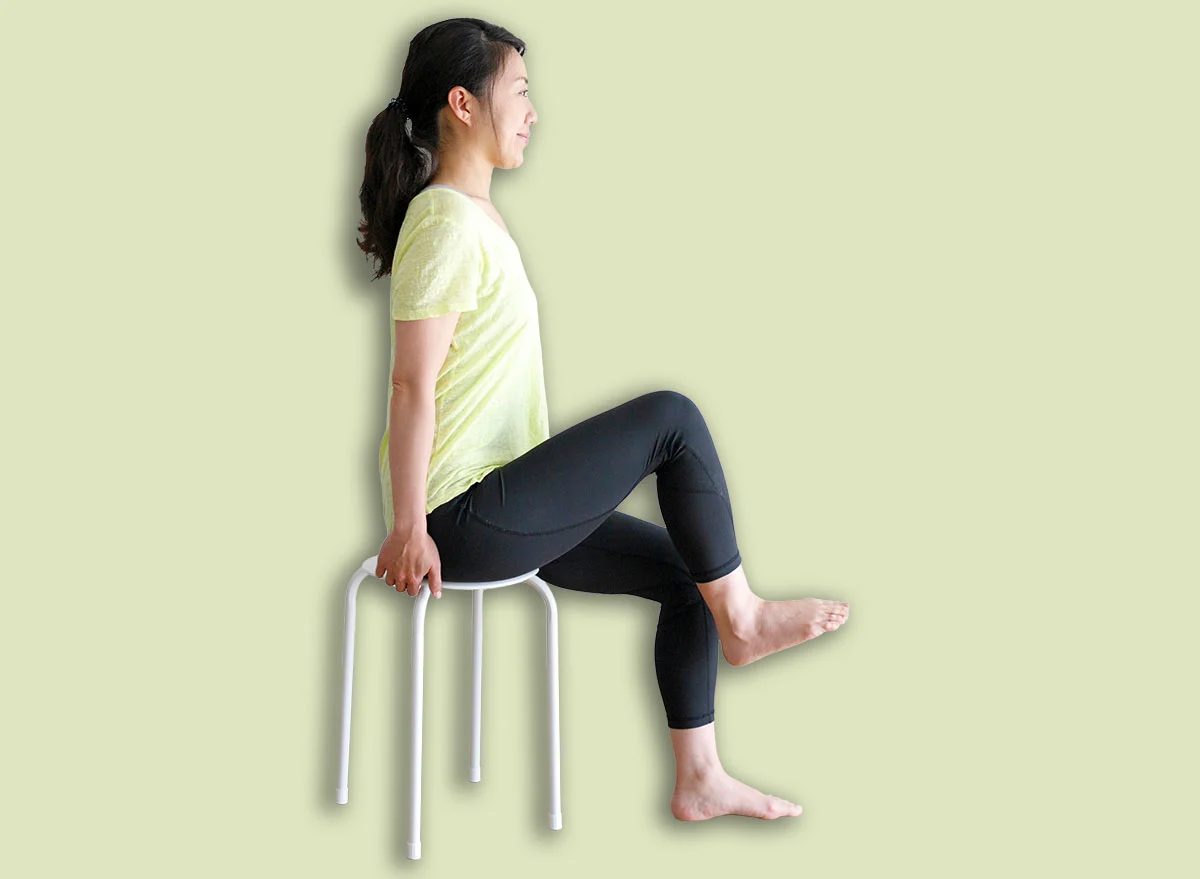
5. Seated Pilates Chair Marches With Glute Engagement:
Efficient walking requires precise coordination between the gluteal muscles and the hip flexors. As one leg lifts forward (hip flexion), the glute on the opposite side fires to stabilize the pelvis and propel the body forward. This synchronized pattern is fundamental to a smooth, stable, and powerful gait. The seated Pilates chair march is designed to rebuild and refine this essential coordination. While seated, lift one knee towards the chest, engaging the hip flexors, while simultaneously focusing on activating the glute on the opposite side, pressing it firmly into the chair. This action mimics the contralateral glute engagement that occurs with every step. By practicing this specific coordination in a controlled, seated environment, individuals can significantly improve their gait mechanics, leading to a stronger, more stable, and more efficient walking stride, ultimately enhancing overall mobility and reducing the risk of stumbles.
Incorporating these chair-based exercises into a regular routine offers a safe, effective, and highly accessible pathway to significant gluteal strength restoration, particularly for adults over 60. While these exercises provide a targeted approach, they are best viewed as part of a comprehensive fitness strategy that may also include other forms of movement like yoga for flexibility and balance, cardiovascular activity for heart health, and a balanced nutritional intake. Consulting with a healthcare professional or a certified fitness expert before embarking on any new exercise program is always advisable, ensuring that the chosen activities are appropriate for individual health conditions and fitness levels. By proactively engaging in such strength-building practices, older adults can cultivate not only stronger glutes but also a stronger foundation for a vibrant, independent, and active life.
About the Author