As individuals advance into their later decades, maintaining robust physical capacity, particularly in the lower body, becomes increasingly crucial for preserving independence and overall quality of life. The natural physiological process of aging often brings with it sarcopenia, the progressive loss of muscle mass and strength, which can significantly impair mobility, elevate the risk of falls, and diminish the ability to perform daily activities with ease. While traditional strength training regimens often involve demanding exercises like squats, which can be intimidating or physically challenging for some older adults, a more accessible and equally effective approach can begin right at home, even before stepping out of bed. This article explores a series of gentle yet potent movements designed to rebuild foundational leg strength, enhance stability, and foster greater functional independence for those over the age of sixty, demonstrating that consistent, low-barrier activity can yield profound benefits.
The concept of integrating physical activity into the earliest moments of the day offers a unique advantage: it capitalizes on the convenience and inherent support of the sleeping environment. For many, the thought of an intense workout can be a significant psychological and physical hurdle. However, initiating movement from a reclined or seated position on a bed dramatically reduces perceived barriers, making adherence to a regular exercise routine far more sustainable. This approach not only gently rouses the musculoskeletal system but also primes the muscles and joints for the day’s demands, acting as a crucial preliminary step towards more complex movements. It acknowledges that the journey to improved strength doesn’t always necessitate a gym membership or specialized equipment; sometimes, the most effective starting point is the most comfortable and accessible one.
A primary focus of these bedside exercises is to engage muscle groups vital for balance, posture, and gait. These include the glutes, quadriceps, hamstrings, and hip stabilizers, all of which are instrumental in executing fundamental movements such as walking, rising from a chair, and maintaining equilibrium. By progressively strengthening these areas through controlled, mindful movements, individuals can counteract the effects of disuse and age-related decline, fostering a greater sense of confidence and capability in their daily lives. The following exercises are structured to provide a comprehensive lower-body workout, emphasizing safety, effectiveness, and ease of integration into any morning ritual.
Pelvic Lift (Glute Bridge)
The Pelvic Lift, commonly known as the glute bridge, is an outstanding foundational exercise for activating the posterior chain, particularly the gluteal muscles and hamstrings. In an era where prolonged sitting is common, these muscles can become underactive, leading to imbalances and contributing to lower back discomfort. This movement serves as an efficient wake-up call for these crucial muscle groups, promoting hip extension and contributing to a more stable pelvis. Regular performance of the pelvic lift can significantly enhance lower-body power and improve the body’s ability to stabilize the lumbar spine.
- Muscles Engaged: Gluteus maximus, hamstrings, and core stabilizing muscles.
- Execution Guidance: Lie supine with knees bent, feet flat on the bed, hip-width apart, and arms resting at your sides. Gently press through your heels to elevate your hips off the bed until your body forms a straight line from shoulders to knees. Focus on squeezing the glutes at the peak of the movement. Slowly lower your hips back to the starting position with control.
- Progression: To increase the challenge, pause briefly at the top of the lift, or try a single-leg variation once comfortable.
- Recommendations: Perform 3 sets of 12 to 15 repetitions, with approximately 45 seconds of rest between sets.
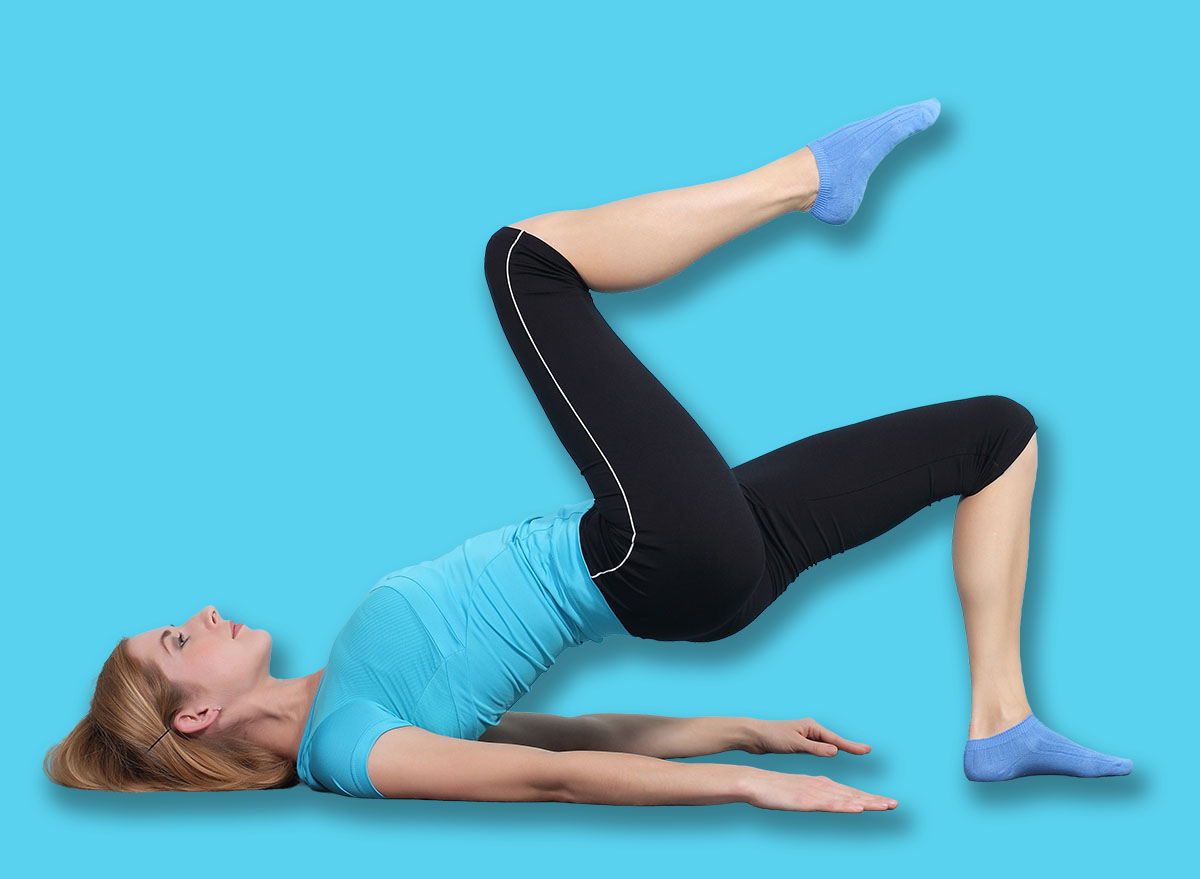
Single-Leg Pelvic March (Glute Bridge Marching)
Building upon the stability established by the basic pelvic lift, the Single-Leg Pelvic March introduces a dynamic element that intensifies the demand on hip and core stability. While maintaining the elevated pelvic position, the act of lifting one foot off the bed challenges the stabilizing muscles of the standing leg and trunk to work harder, preventing rotational movement in the hips. This variation is instrumental in developing unilateral strength and coordination, which directly translates to improved balance during activities like walking or climbing stairs, where weight is momentarily shifted to a single leg.
- Muscles Engaged: Glutes, hamstrings, and deep core stabilizers.
- Execution Guidance: Begin in the elevated pelvic lift position. From this stable bridge, slowly lift one foot a few inches off the bed, maintaining a level hip line. Hold for a moment, then gently return the foot to the bed before repeating with the opposite leg. The focus should be on controlled movement and minimizing any rocking of the hips.
- Progression: Increase the duration of the single-leg hold or perform the movement with a slower tempo.
- Recommendations: Complete 3 sets of 10 to 12 marches per leg, resting for about 45 seconds between sets.
Seated Transitions (Sit-to-Stand)
The ability to move from a seated to a standing position gracefully and without assistance is a cornerstone of functional independence. The Seated Transition exercise, or sit-to-stand, directly targets and reinforces this essential daily pattern. It demands synchronized effort from the quadriceps, glutes, and hip flexors, while also engaging core musculature for postural support. Regular practice of this movement not only strengthens the primary leg muscles but also hones balance and proprioception, crucial components in fall prevention. Performing this exercise from the edge of the bed or a sturdy chair provides a safe and accessible platform for practice.
- Muscles Engaged: Quadriceps, glutes, hamstrings, and core.
- Execution Guidance: Sit upright on the edge of your bed or a stable chair with feet flat on the floor, hip-width apart. Lean slightly forward, engaging your core, and push through your heels to rise to a standing position. Maintain a tall chest throughout the movement. Control your descent back to the seated position, avoiding simply collapsing.
- Progression: Reduce reliance on arm support, or perform the movement with a slower tempo, pausing at the bottom or top.
- Recommendations: Execute 3 sets of 10 to 12 repetitions, with a 45-second rest period separating each set.
Lateral Leg Raises (Side-Lying Leg Lifts)
Often overlooked, the muscles on the outer aspect of the hips and glutes, primarily the gluteus medius and minimus, are critical for lateral stability and preventing the pelvis from dropping during walking. Lateral Leg Raises effectively target these muscles, which are vital for maintaining proper hip alignment and ensuring a stable gait. Strengthening these hip abductors can dramatically improve overall lower-body stability and coordination, reducing the risk of lateral imbalances and falls.
- Muscles Engaged: Gluteus medius, gluteus minimus, and hip stabilizers.
- Execution Guidance: Lie on your side on the bed with your body in a straight line, supported by your forearm. Stack your hips and knees, keeping the lower leg slightly bent for stability. Keeping your top leg straight, slowly lift it towards the ceiling, leading with the heel and avoiding any rocking of the torso. Lower the leg with control.
- Progression: Incorporate a resistance band around the thighs for added challenge, or perform pulse raises at the top of the movement.
- Recommendations: Complete 3 sets of 12 to 15 repetitions per leg, resting for approximately 30 seconds between sets.
Supported Lunges (Supported Split Squats)
The Supported Lunge introduces a unilateral strength challenge while offering the crucial benefit of external support, making it suitable for those developing balance. This exercise demands that each leg work independently to manage body weight, which is essential for correcting muscular imbalances between the left and right sides of the body. By holding onto the bed or a sturdy piece of furniture, individuals can focus on proper form and muscle engagement without the added concern of losing balance, gradually building confidence for unassisted single-leg movements.
- Muscles Engaged: Quadriceps, glutes, hamstrings, and hip flexors.
- Execution Guidance: Stand facing the side of your bed or a stable surface, holding on for support. Step one leg backward into a staggered stance, ensuring a comfortable distance between your feet. Keeping your front heel planted and your chest upright, slowly lower your hips until both knees are bent at approximately 90-degree angles. Push through your front heel to return to the starting position.
- Progression: Gradually reduce your reliance on the support, or introduce pauses at the bottom of the lunge.
- Recommendations: Perform 3 sets of 8 to 10 repetitions per leg, allowing for 45 seconds of rest between sets.
Beyond the Exercises: Fostering Holistic Strength and Well-being
While these bed-based exercises form a powerful foundation for rebuilding leg strength, their effectiveness is significantly amplified when integrated into a broader lifestyle approach focused on overall health and well-being. Consistency remains paramount; even short, regular bouts of movement are more beneficial than infrequent, intense sessions. Establishing a daily routine, perhaps right after waking, can embed these movements into a habit that the body anticipates and thrives on.
Furthermore, attention to other aspects of health is crucial. Adequate protein intake supports muscle repair and growth, a critical factor in combating sarcopenia. Hydration plays a vital role in joint lubrication and cellular function, while sufficient sleep allows the body to recover and rebuild muscle tissue. Listening to one’s body, respecting limitations, and avoiding movements that cause pain are non-negotiable principles for safe and sustainable progress. Consulting with a healthcare professional or a certified fitness specialist before embarking on any new exercise program is always advisable, particularly for individuals with pre-existing health conditions.
In conclusion, the journey to enhanced leg strength and mobility in later life does not have to be arduous or intimidating. By embracing accessible, gentle, and consistent bedside movements, individuals over sixty can proactively counter age-related muscle decline, bolster their balance, and regain confidence in their physical capabilities. These simple yet profound exercises offer a gateway to greater independence, improved quality of life, and a renewed sense of vitality, proving that the path to a stronger, more stable future can indeed begin with the first movements of the day.
About the Author