Continental Victory: Wild Polio Declared Vanquished in Africa, Global Eradication Nears
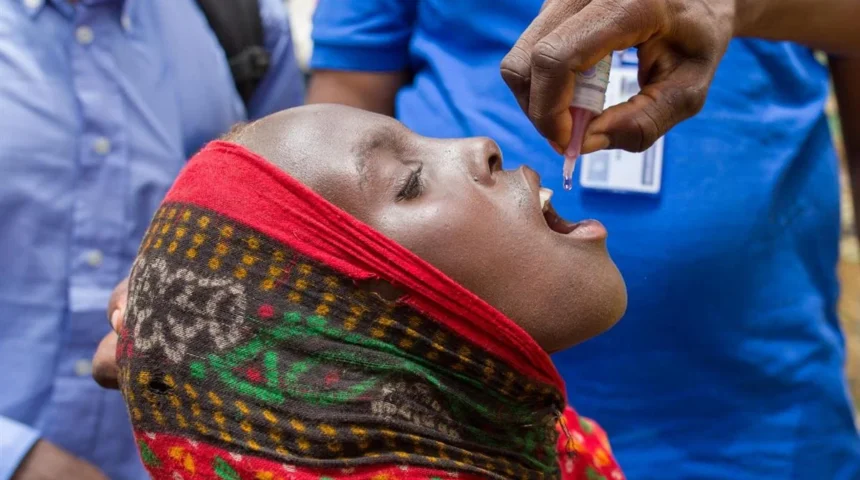
In a momentous declaration for global public health, the World Health Organization’s African Region has officially achieved certification as free from the indigenous wild poliovirus. This monumental milestone, confirmed by the Africa Regional Certification Commission following four consecutive years without a single reported case, signifies a profound triumph over a debilitating disease that has historically plagued communities across the continent. With this achievement, five out of the six WHO regions, collectively encompassing over ninety percent of the world’s population, are now liberated from the wild strain of the poliovirus, propelling humanity significantly closer to the ultimate goal of complete global eradication. This landmark moment leaves only two nations worldwide, Pakistan and Afghanistan, where the transmission of wild poliovirus persists, underscoring the focused efforts now required to complete the mission.
The Global Polio Eradication Initiative (GPEI), a broad public-private coalition dedicated to eliminating polio, extended its profound congratulations to the forty-seven national governments within the WHO African Region for their unwavering commitment and the successful realization of this objective. This collective victory is not merely a statistical benchmark but represents countless hours of dedicated work, innovative strategies, and profound human resilience in the face of significant challenges. Dr. Tedros Adhanom Ghebreyesus, the Director-General of the World Health Organization, articulated the sentiment, hailing the cessation of wild poliovirus in Africa as one of the most substantial public health achievements of the contemporary era. He emphasized its powerful capacity to inspire and galvanize efforts towards the complete global eradication of polio, extending gratitude to the diverse array of stakeholders—governments, healthcare professionals, community volunteers, traditional and religious leaders, and parents—whose collaborative endeavors were instrumental in expelling wild polio from the African continent.
Polio, or poliomyelitis, is a highly infectious disease caused by the poliovirus. It primarily affects young children, invading the nervous system and potentially causing irreversible paralysis within hours. Historically, it has been a terrifying global scourge, leaving millions disabled and claiming numerous lives. The development of effective vaccines in the mid-20th century, notably by Jonas Salk and Albert Sabin, transformed the fight against polio, making eradication a tangible goal. The GPEI, established in 1988, formalized this global ambition, bringing together national governments and key partners including the WHO, Rotary International, the U.S. Centers for Disease Control and Prevention (CDC), UNICEF, the Bill & Melinda Gates Foundation, and Gavi, the Vaccine Alliance. This formidable partnership has orchestrated vast immunization campaigns, surveillance networks, and logistical feats unparalleled in public health history.
The journey to eliminate wild poliovirus in Africa was fraught with immense complexities. The continent, characterized by its vast geographical expanse, diverse populations, and dynamic socio-political landscapes, presented unique obstacles to comprehensive vaccination coverage. High levels of internal and cross-border population movement posed continuous challenges for tracking and immunizing transient communities. Furthermore, regions affected by conflict and insecurity often rendered access to health services, including vaccination teams, exceedingly difficult or outright impossible, leaving vulnerable populations unprotected. The virus’s inherent capacity for rapid spread and its ability to traverse borders necessitated sophisticated and highly coordinated regional responses, demanding an exceptional level of leadership and innovative problem-solving from affected nations and their partners.
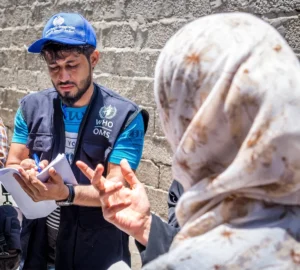
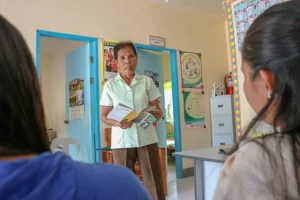
Overcoming these formidable barriers required a multifaceted approach. Countries within the region implemented robust surveillance systems to detect and track every potential case, ensuring that no wild poliovirus went unnoticed for extended periods. Strategic immunization campaigns, often targeting millions of children multiple times a year, were meticulously planned and executed. These efforts were bolstered by the deployment of dedicated health workers and community volunteers who navigated challenging terrains, often on foot, to reach remote villages and isolated communities. Innovative strategies, such as mobile vaccination clinics and integrated health camps, were employed to adapt to local contexts and maximize reach. Crucially, strong political will and cross-border collaboration among the 47 nations proved pivotal in harmonizing efforts and preventing the virus from re-establishing itself in cleared areas.
The sustained generosity and collective commitment of a wide spectrum of donors played an indispensable role in underpinning this monumental achievement. Governments, private sector entities, multilateral institutions, and philanthropic organizations channeled substantial financial resources and expertise into the GPEI’s African operations. This sustained investment was instrumental in constructing and reinforcing the critical public health infrastructure that enabled the African region to administer polio vaccines to more children than ever before, ultimately leading to the defeat of wild polio. A significant historical moment underscoring this commitment dates back to 1996, when former South African President Nelson Mandela joined forces with Rotary International, the GPEI, and various African governments to launch a renewed push for polio eradication on the continent, imbuing the effort with unparalleled moral authority and global visibility.
Holger Knaack, then President of Rotary International, reflected on the significance of this accomplishment, noting that in a year marked by global health challenges, the certification of the African region as wild poliovirus-free stands as a beacon of hope and progress. It vividly demonstrates what can be achieved through unwavering collaboration and steadfast perseverance. He reiterated that the milestone achieved since Mandela’s involvement in 1996 serves as irrefutable evidence that polio eradication is indeed attainable, provided the global community remains resolute in its commitment to completing the task. Knaack called upon all stakeholders to collectively harness their energies to overcome the remaining obstacles and fulfill the promise of a world entirely free of polio.
Beyond the immediate success of eradicating wild poliovirus, the extensive infrastructure and specialized expertise developed during the campaign have yielded far-reaching benefits for Africa’s broader public health landscape. The polio program’s robust surveillance networks, cold chain logistics for vaccine delivery, laboratory diagnostic capabilities, and community engagement mechanisms have proven invaluable in strengthening the continent’s overall capacity to respond to various health threats and outbreaks. This foundational infrastructure played a crucial role, for instance, in supporting the African region’s response to the COVID-19 pandemic, providing pre-existing frameworks for disease surveillance, contact tracing, and community mobilization. Furthermore, the systematic outreach established for polio vaccination has significantly bolstered routine immunization programs against other vaccine-preventable diseases, safeguarding children against a wider array of illnesses.
While the elimination of wild poliovirus from Africa marks an extraordinary milestone, the global fight against polio is not yet over, and vigilance remains paramount. The continued existence of wild poliovirus transmission in Pakistan and Afghanistan poses a persistent threat, as viruses know no borders and can easily be reintroduced into previously cleared areas. Moreover, a distinct challenge arises from circulating vaccine-derived poliovirus type 2 (cVDPV2). Unlike wild poliovirus, cVDPV2 emerges in rare instances when the attenuated live virus in oral polio vaccine (OPV) mutates in under-immunized populations and regains its ability to cause paralysis and spread. This particular strain is currently prevalent in sixteen countries within the African region, highlighting areas where immunity levels are insufficient. Pockets of low immunity provide fertile ground for such strains to circulate and pose a significant risk, a threat amplified by the interruptions to routine vaccination schedules caused by the COVID-19 pandemic, which have left communities more vulnerable to cVDPV2 outbreaks.
The GPEI continues to issue a resounding call to nations and donor communities to maintain unwavering vigilance against all forms of polio. Until every single strain of the virus is eradicated globally, the remarkable progress achieved against polio worldwide remains susceptible to reversal. The African Region’s resounding success against the wild poliovirus unequivocally demonstrates that progress against even the most formidable global health challenges is not only possible but achievable through concerted effort, strategic investment, and enduring partnerships. The GPEI expresses profound gratitude to every individual, partner organization, donor, and country whose invaluable contributions converged to realize this incredible and inspiring achievement, reaffirming the collective commitment to securing a polio-free future for every child, everywhere.
Related posts:

Related News