Epigenetic Stability in World’s Oldest Land Animal Offers Novel Insights into Extreme Longevity
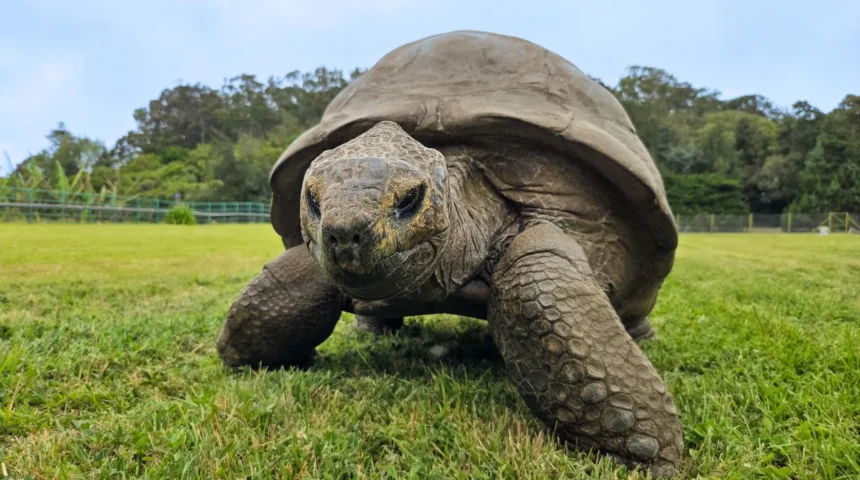
On the remote volcanic outpost of St. Helena, a British Overseas Territory in the South Atlantic, resides a venerable creature whose existence defies conventional understanding of time. Jonathan, an Aldabra giant tortoise (Aldabrachelys gigantea), is estimated to be approximately 194 years old, securing his place as the longest-living terrestrial animal known to humanity. Believed to have hatched around 1832, his life has spanned nearly two centuries, witnessing profound global transformations from the Victorian era to the digital age. This extraordinary longevity has long captivated observers, and now, a groundbreaking scientific investigation into his biological makeup is beginning to unravel the fundamental mechanisms underpinning such an unparalleled lifespan.
For decades, scientists have sought to comprehend how certain species exhibit exceptional longevity, remaining robust and vital far beyond the typical lifespan of their biological kin. Jonathan presents a living paradox: an organism that has endured for an epoch, yet continues to function with remarkable resilience. A recent comprehensive study, published in the prestigious journal Science Advances, delves into the cellular architecture of this centenarian reptile, revealing critical genetic and epigenetic signatures that may hold the key to his enduring vitality. The central revelation points towards an astonishing stability in the regulatory processes governing his genetic expression, a stark contrast to the age-related decline observed in most living organisms.
Epigenetics, a burgeoning field in molecular biology, explores how environmental and internal factors can influence gene activity without altering the underlying DNA sequence itself. Think of it as a sophisticated control system, a layer of chemical modifications that dictate which genes are ‘switched on’ or ‘switched off’ in different cells and at various stages of life. As organisms age, these epigenetic marks typically undergo significant shifts, a phenomenon known as epigenetic drift. This drift can disrupt crucial cellular functions, leading to cellular senescence, tissue degradation, and an increased susceptibility to a host of age-related maladies, including neurodegenerative conditions, cardiovascular disease, and cancer. The integrity of an organism’s epigenome is therefore considered paramount to maintaining health and vitality throughout its life cycle.
What researchers uncovered in Jonathan’s biology was a striking deviation from this age-associated epigenetic instability. By meticulously comparing his epigenomic profile with those of younger Aldabra giant tortoises, the team observed an extraordinary preservation of regulatory mechanisms responsible for fundamental cellular maintenance. Specifically, the genetic controls associated with DNA repair pathways and metabolic regulation exhibited a remarkable constancy, closely mirroring the patterns found in his much younger counterparts. This suggests that Jonathan’s biological machinery has managed to resist the widespread epigenetic dysregulation typically accompanying advanced age, effectively preserving the functional efficiency of his cells and tissues over an exceptionally prolonged period.
Beyond the stability of his epigenome, the investigation also pinpointed a significant number of unique genetic variants within Jonathan’s DNA. A total of 287 distinct genetic markers were identified, all of which are believed to confer protective benefits against the manifold effects of biological aging. These specific variations play crucial roles in several essential cellular processes that are intimately linked to longevity. They are implicated in enhancing the efficacy of DNA damage repair mechanisms, mitigating chronic inflammation – a known accelerator of aging – optimizing insulin signaling, and bolstering the body’s natural defenses against the proliferation of cancerous cells. These findings collectively paint a picture of an organism exquisitely adapted at a molecular level to resist the corrosive forces of time.
The ambitious project was spearheaded by Kallel, a US-based non-profit organization dedicated to advancing longevity research and translating scientific discoveries into accessible health interventions. Publishing their findings in Science Advances, a highly respected multidisciplinary scientific journal, underscores the rigor and significance of this initial exploration into the giant tortoise epigenome – a first of its kind. Dr. Justin Gerlach, a distinguished researcher from Peterhouse at the University of Cambridge, played a pivotal role in the study. Dr. Gerlach, whose decades of work have focused on the ecology and conservation of giant tortoises, transitioned his expertise to delve into the intrinsic biological mechanisms underpinning their exceptional lifespans, marking a new frontier in his research.
Stephen Clark, MD, PhD, founder of Kallel and the study’s senior author, articulated the profound implications of these discoveries. "Nature has already engineered solutions to the profound challenges of aging in myriad ways, and Jonathan’s genome offers an unparalleled blueprint for cellular resilience," Dr. Clark commented. He emphasized Kallel’s commitment to bridging the gap between evolutionary insights and practical, affordable therapeutic solutions for the general populace. "Aging is not merely a natural process; it is the most significant risk factor for nearly every chronic disease that afflicts humanity. Through the invaluable support of our philanthropic partners, our aim is to democratize access to advanced longevity medicine, making these breakthroughs available to everyone, not just a privileged few," he added, highlighting the organization’s humanitarian mission.
The revelations from Jonathan’s unique biology ignite considerable optimism within the scientific community regarding the future of human health. By elucidating the specific biological systems and regulatory pathways that enable certain animals to maintain health and vigor for extraordinarily extended durations, researchers hope to uncover novel protective mechanisms. These insights could potentially inform the development of innovative pharmacological interventions or gene therapies designed to decelerate age-related cellular deterioration, prevent the onset of chronic degenerative diseases, and ultimately extend the period of healthy, active living in humans. While the path from comparative biology to clinical application is often long and complex, Jonathan’s genetic and epigenetic profile offers a compelling roadmap for future translational research in the burgeoning field of geroscience.
Jonathan’s existence is not merely a scientific marvel; it is a living chronicle. He has spent the vast majority of his nearly two centuries residing on the lush grounds of Plantation House, the official residence of St. Helena’s Governor. His journey to this secluded island began approximately 144 years ago, when he arrived from the Seychelles as a diplomatic gift. At the time of his arrival, he was already a fully grown adult, a detail that provided early, compelling evidence of his advanced age and contributed to the meticulous estimations of his birth year. Over his long tenure, Jonathan has become an emblematic figure of St. Helena, a gentle giant observing the ebb and flow of human history from his serene, verdant enclosure.
Giant tortoises, particularly those native to the remote archipelagos of the Galapagos and the Seychelles, represent some of the last surviving lineages of a once-widespread group of colossal reptiles. For millennia, these magnificent creatures played dominant ecological roles across many island ecosystems, acting as key herbivores, seed dispersers, and landscape engineers. Their long lifespans, slow metabolisms, and robust physiology are believed to be evolutionary adaptations to the unpredictable environments of isolated islands, where resources could fluctuate dramatically. Today, these ancient survivors, including the Aldabra giant tortoise, are considered living fossils, offering invaluable insights into evolutionary biology and the strategies life employs to thrive against the odds. Their vulnerability to human activities, however, underscores the critical importance of conservation efforts to preserve these unique biological treasures.
Dr. Gerlach eloquently conveyed the unique experience of studying such a long-lived individual. "There are few creatures on Earth that possess the capacity to illuminate the intricacies of aging more profoundly than the giant tortoises of the Galapagos and Seychelles islands," he reflected. He added a poignant observation: "Engaging with a truly ancient giant tortoise like Jonathan is an immense privilege. One develops a profound sense of the tortoise acting as a collaborator in the scientific endeavor, rather than merely a subject of study." This perspective highlights the deep respect and wonder that such extraordinary animals inspire, recognizing their active contribution to humanity’s quest for knowledge.
Jonathan, the venerable inhabitant of St. Helena, stands as a testament to nature’s incredible capacity for extreme longevity. His unusually stable genetic and epigenetic regulation provides an unprecedented window into the biological mechanisms that underpin sustained cellular resilience over centuries. As research continues to decode the intricacies of his enduring vitality, the insights gleaned from this remarkable creature promise to not only deepen our understanding of aging across the tree of life but also to inspire novel strategies for fostering healthier, longer lives for humans. In Jonathan, we find not just the oldest known land animal, but a living library of evolutionary wisdom, patiently awaiting the full deciphering of his secrets.

Related News