Neural Network Mimicry Reveals Fundamental Discrepancies with Biological Visual Processing.
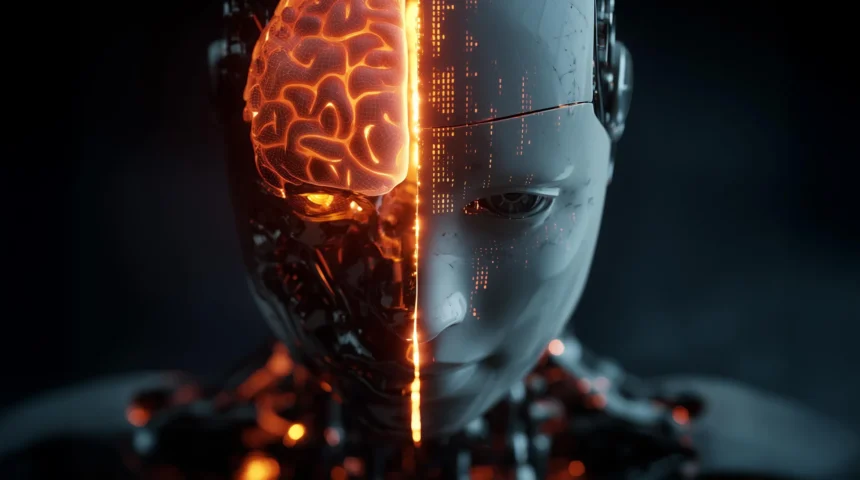
For decades, the field of artificial intelligence has drawn significant parallels to the workings of the human brain, particularly in its ability to process visual information. Researchers have widely adopted artificial neural networks (ANNs), sophisticated computational systems designed to perform complex tasks like object recognition, as powerful tools for dissecting the intricate mechanisms of biological vision. These models have proven exceptionally valuable in neuroscience due to their demonstrated capacity to replicate observed patterns of neural activity, leading to the widespread characterization of AI as "brain-like." However, a recent investigation conducted by scientists at York University has brought this long-held assumption under critical scrutiny, uncovering a substantial divergence in how these AI systems and the human brain actually process visual input.
The central tenet of the York University study, published in the esteemed journal Nature Machine Intelligence, revolves around a novel testing methodology designed to move beyond mere predictive accuracy. While previous research predominantly focused on assessing how well ANNs could forecast the electrical signals generated by neurons in the brain, the new study proposed a reciprocal approach. The research team hypothesized that if ANNs were indeed truly analogous to the brain in their functional architecture, then the relationship between their internal states and neural activity should be bidirectional. In other words, just as AI could predict brain responses, the patterns of brain activity themselves should be capable of predicting the internal operations of the AI models.
This innovative approach, termed "reverse predictivity testing," was developed to uncover similarities and differences that might elude conventional comparative methods. The study’s senior author, Assistant Professor Kohitij Kar from York University, explained that the prevailing scientific consensus had largely rested on a unidirectional validation: "Until now, scientists mostly tested this in one direction. They asked whether AI models can predict brain activity." The new research aimed to flip this paradigm, asking: "Can recorded brain activity predict what is happening inside the AI models?"
To rigorously test this hypothesis, the research team, which included Postdoctoral Fellow Sabine Muzellec, a participant in York’s Connected Minds program, curated an extensive and diverse dataset of visual stimuli. This collection comprised 1,320 high-resolution natural photographs alongside meticulously crafted synthetic images. These images featured ten familiar subjects—a bear, an elephant, a face, an apple, a car, a dog, a chair, a plane, a bird, and a zebra—presented against a broad spectrum of naturalistic backgrounds, encompassing both indoor and outdoor environments. Furthermore, to probe the robustness of the AI models and their comparison to biological vision, the researchers introduced an additional 300 images that depicted these same subjects in various stylistic interpretations, including simple outlines, detailed drawings, abstract representations, and even artistic renderings. This comprehensive visual library was designed to challenge the models across different levels of abstraction and detail.
The findings from this ambitious experimental design yielded a striking revelation: a significant chasm between the internal computational strategies employed by widely used AI models and the actual mechanisms governing biological visual perception. While the ANNs demonstrated considerable proficiency in predicting the responses of recorded neurons, a key indicator of their ability to mimic brain function, the inverse proved to be far less accurate. When the researchers attempted to use the recorded neural activity to predict the internal states and processing within the AI models, the predictive power was notably diminished.
This asymmetry was particularly compelling because the researchers observed no comparable disparity when comparing neuronal activity across different biological brains. "The results were striking," stated Professor Kar. "While AI models can predict the neurons we recorded in the brain fairly well, the brain cannot equally predict many of the model’s internal features. Interestingly, this is not the case when neurons from one brain is compared against ones from another brain." This crucial distinction implies that ANNs may achieve similar outcomes to the brain by leveraging entirely different internal computational pathways, a fundamental divergence from the presumed biological likeness.
The implications of this discovery are far-reaching, particularly for the continued advancement of artificial intelligence and its integration into scientific research. Professor Kar cautioned that if researchers persist in refining AI models based solely on their capacity to predict neural activity, the cumulative differences between these artificial systems and actual primate brains could widen over time. This growing discrepancy risks undermining the foundational rationale for employing these computational tools in neuroscience: to construct accurate and explanatory models of brain function. The study’s findings suggest that current AI systems might be employing internal strategies for solving visual tasks that are not mirrored in the biological brain. Conversely, the aspects of AI models that do show alignment with neural activity are also more predictive of genuine human behavior, highlighting a nuanced relationship.
The impact of this research extends beyond the realm of computer vision, permeating various interdisciplinary applications where AI models are increasingly utilized. These include their use in designing experiments, studying human behavior, and investigating complex neurological and psychological conditions. Many of these critical applications are predicated on the implicit assumption that AI models process information in a manner analogous to the human brain. Should this assumption prove to be flawed, there is a considerable risk that researchers could arrive at misleading conclusions, drawing insights from models that appear superficially accurate but operate on fundamentally different underlying principles.
Sabine Muzellec elaborated on the significance of these findings: "Our findings challenge how similar current AI systems really are with the primate brain. We show that models that were previously thought to be brain-like rely on internal components that the brain does not appear to use. We provide a well-vetted diagnostic metric for the field." The development of AI systems that can more faithfully reproduce the intricate functioning of the human brain holds immense potential for advancing research into a wide array of conditions, from post-traumatic stress disorder to autism spectrum disorder. For the present, however, the newly identified discrepancies necessitate a cautious approach when utilizing existing AI models to probe human behavior or guide clinical research.
The concerns raised by this study may also extend to other branches of neuroscience that employ similar AI architectures. Artificial intelligence models are already integral to research in auditory processing, language comprehension, and motor control. If these systems, too, rely on internal processes that deviate from their biological counterparts, the scientific community may need to re-evaluate the extent to which these models can elucidate the complexities of the nervous system.
Rather than advocating for the abandonment of artificial neural networks, the York University study offers a constructive path forward, providing a framework for enhancing their utility and scientific credibility. By precisely identifying which features within an AI model correspond to actual neural activity, researchers can strategically refine their efforts to develop systems that more accurately reflect the biological mechanisms underpinning perception. "Our approach helps identify which parts of an ANN truly match brain activity, allowing us to build more reliable models for understanding how people see and interpret the world," Professor Kar explained. "This is especially important for our autism research program, which builds on models of the neurotypical brain as a baseline." Establishing accurate models of neurotypical brain function is paramount for researchers investigating potential differences in perception and information processing observed in conditions such as autism.
To facilitate the practical application of their discoveries, the research team has made a publicly accessible testing toolkit available. This resource empowers AI developers to rigorously evaluate their own models and pinpoint areas for improvement, fostering a more robust and biologically grounded approach to AI development. The study’s publication in Nature Machine Intelligence signifies a pivotal moment, introducing a novel methodology for AI evaluation that transcends mere task performance. The researchers champion the critical importance of understanding whether AI arrives at its solutions through processes that genuinely mirror those of the brain. This groundbreaking discovery is poised to guide the creation of a new generation of AI models that not only possess impressive world-recognition capabilities but also offer a more faithful representation of how the human brain constructs its understanding of the visual environment.

Related News