
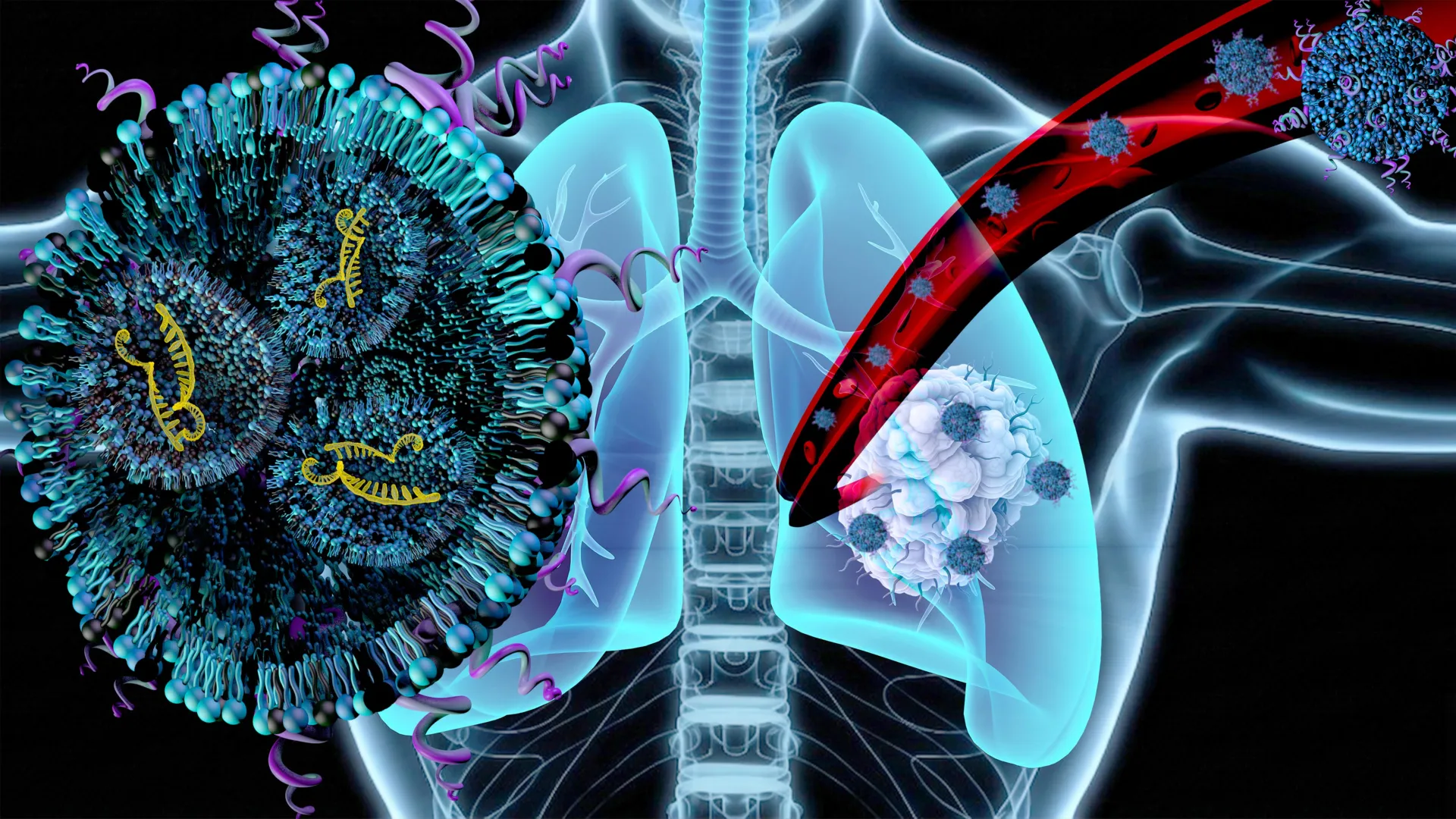
Oregon State University scientists have unveiled a groundbreaking experimental treatment strategy designed to confront the dual challenges of lung cancer and the debilitating muscle atrophy frequently associated with advanced malignancies. This innovative approach, detailed in the Journal of Controlled Release, leverages specially engineered lipid nanoparticles to precisely deliver therapeutic genetic material directly to cancerous growths within the lungs. The research represents a significant leap forward in targeted drug delivery, particularly for mRNA-based therapies that have historically struggled with systemic distribution to specific tumor sites.
The core of this novel intervention lies in its ability to address two critical aspects of cancer pathology simultaneously: suppressing tumor growth and counteracting cancer cachexia, a severe wasting syndrome that profoundly impacts patient prognosis and quality of life. The research team, spearheaded by Oleh Taratula and Yoon Tae Goo from OSU’s College of Pharmacy, developed sophisticated nanocarriers encapsulating messenger RNA (mRNA) sequences for follistatin. Upon reaching lung tumors, this mRNA instructs the local cells to synthesize follistatin, a protein with multifaceted biological functions, including inhibiting tumor expansion and fostering the regeneration of muscle tissue.
Lung cancer remains a formidable global health crisis, standing as the third most prevalent cancer in the United States, yet tragically, it is the leading cause of cancer-related fatalities. Projections from the American Cancer Society estimate approximately 230,000 new diagnoses annually in the U.S., with a devastating death toll of around 125,000 individuals each year. While skin cancer holds the top spot for overall incidence, and prostate or breast cancer for specific genders, lung cancer’s lethality underscores an urgent need for more effective and less invasive treatment modalities. The lifetime risk of developing lung cancer is roughly 5%, with a significantly elevated risk observed in smokers. Current therapeutic landscapes for lung cancer often involve surgery, chemotherapy, radiation, targeted therapy, and immunotherapy, each with its own set of challenges and side effects. The complexity of the disease, often diagnosed at advanced stages, further complicates treatment success.
Beyond the direct threat of the tumor itself, a substantial proportion of cancer patients, particularly those with lung malignancies, contend with cancer cachexia. This severe metabolic disorder is characterized by involuntary weight loss, profound skeletal muscle depletion, and a reduction in adipose tissue. Unlike typical weight loss from reduced food intake, cachexia persists even when caloric consumption is adequate, signifying a fundamental disruption in metabolism driven by systemic inflammation and altered hormonal signaling. The consequences of cachexia are dire: it can compromise a patient’s ability to tolerate aggressive treatments, diminish their physical function and independence, severely degrade their quality of life, and is directly implicated in up to 30% of cancer-related deaths. Current therapeutic options for cachexia are limited and often insufficient, making an integrated treatment approach highly desirable.
The scientific community has long grappled with the challenge of delivering mRNA-based therapeutics effectively and specifically to lung tumors via systemic administration. A major hurdle has been the propensity of conventional lipid nanoparticles (LNPs), which are fatty acid-based microscopic vesicles, to accumulate predominantly in the liver rather than reaching the intended cancer cells. This off-target accumulation not only reduces the therapeutic efficacy at the desired site but can also lead to unwanted side effects. The OSU team’s innovation directly confronts this obstacle.
Their lipid nanoparticles are administered intravenously, navigating the bloodstream to reach their target. Crucially, the nanoparticles’ success in homing in on lung tumors is partly attributed to their interaction with vitronectin, a glycoprotein naturally present in blood serum. As Taratula elucidated, "We discovered that these LNPs bind vitronectin in the bloodstream, which subsequently guides them towards lung cancer tumors through interactions with integrin receptors that are overexpressed on the tumor cell surface." Integrin receptors are vital cell surface proteins that facilitate cell-to-cell and cell-to-extracellular matrix adhesion, playing a crucial role in cellular signaling and environmental responsiveness. Their overexpression on tumor cells provides a unique "address" for targeted delivery.
This sophisticated targeting mechanism represents a significant breakthrough. By harnessing the vitronectin-integrin axis, the researchers have developed LNPs that exhibit a remarkable specificity for lung cancer cells. The practical implications of this improved delivery were evident in preclinical models, where the experimental therapy achieved an approximately 2.5-fold greater reduction in tumor burden compared to conventional LNP formulations that typically sequester in the liver. This enhanced efficacy underscores the potential of their design to overcome a long-standing impediment in the field of systemic mRNA therapeutics.
The choice of follistatin mRNA as the therapeutic payload is central to the dual-action nature of this treatment. Follistatin is a naturally occurring protein known for its ability to bind and neutralize myostatin, a protein that inhibits muscle growth. By counteracting myostatin, follistatin promotes anabolic processes, leading to increased muscle mass—a critical intervention for cachexia. Simultaneously, research indicates follistatin’s capacity to interfere with signaling pathways implicated in tumor proliferation and survival, thus contributing to anti-cancer effects. This unique combination makes follistatin an ideal candidate for a single agent addressing both cancer progression and its debilitating systemic complications.
"By encapsulating follistatin mRNA within our LNPs, we have engineered a therapy that simultaneously addresses both lung cancer and cancer cachexia, all without observable adverse effects in our preclinical models," Taratula affirmed. This dual therapeutic approach holds immense promise for patients who currently face a stark choice between treatments for their cancer and managing the severe wasting that often accompanies it. The ability to tackle both pathologies with a single, targeted intervention could dramatically improve treatment outcomes, reduce systemic toxicity, and enhance patients’ overall quality of life.
It is important to contextualize these exciting findings within the broader framework of drug development. The results, while highly encouraging, are currently at the preclinical stage, meaning the treatment has undergone testing in laboratory settings and animal models but has not yet progressed to human clinical trials. The path from preclinical success to a licensed therapeutic is rigorous and lengthy, requiring extensive further studies to meticulously assess the treatment’s safety profile, optimal dosing, and long-term efficacy in human subjects. These subsequent phases of research are essential before regulatory approval for widespread clinical use can be considered.
The interdisciplinary nature of this research is also noteworthy. In addition to the leading researchers, contributions were made by Vladislav Grigoriev, Tetiana Korzun, Ammar Salem, Kongbrailatpam Shitaljit Sharma, Prem Singh, Chrissa Kioussi, and Olena Taratula from the College of Pharmacy, alongside Daniel Marks from Endevica Bio, a company specializing in peptide therapies. This collaborative effort was made possible through vital financial support from the National Cancer Institute, the Eunice Kennedy Shriver National Institute of Child Health and Human Development, and the National Research Foundation of Korea, highlighting the collaborative and resource-intensive nature of cutting-edge biomedical research. The journey ahead involves meticulous validation and translation, but the initial findings offer a beacon of hope for a future where lung cancer and its devastating systemic effects can be combated more effectively and comprehensively.
About the Author









