As individuals advance through their later decades, maintaining physical vitality becomes an increasingly critical component of overall well-being and autonomy. A silent, yet profound, physiological shift known as sarcopenia—the progressive and generalized loss of skeletal muscle mass and strength—begins to accelerate significantly, often unnoticed until its effects impair daily activities. This age-related muscular decline is not merely an aesthetic concern; it profoundly impacts mobility, balance, metabolic health, and ultimately, an individual’s capacity to live independently and engage in beloved pursuits. While the notion of rigorous weight training might seem daunting or even inappropriate for older adults, contemporary fitness science, supported by expert insights, suggests that highly effective and accessible resistance training protocols exist that can not only mitigate but actively reverse years of muscle deterioration, often with greater efficacy and safety than conventional heavy lifting.
The journey of muscle loss typically commences much earlier than many realize, with a noticeable reduction of approximately three to eight percent of muscle mass occurring each decade following the age of 30. This rate intensifies considerably after age 60 or 65, transforming a gradual decline into a more precipitous one. The implications extend far beyond diminished strength; reduced muscle mass is a primary contributor to decreased mobility, an elevated risk of falls, slower recovery from illness or injury, and a decline in overall metabolic function. Functionally, this can translate into difficulties performing everyday tasks such as rising from a chair, carrying groceries, or navigating stairs, progressively eroding an individual’s quality of life and self-sufficiency. Addressing this challenge proactively is paramount for fostering a vibrant and independent lifestyle throughout one’s senior years.
Expert consensus increasingly points towards structured resistance exercise as the most potent intervention against sarcopenia. However, the perception that this necessitates heavy barbells, complex machinery, or an intimidating gym environment can be a significant barrier for many older adults. Jacob Siwicki, a respected fitness professional with certifications from the National Council on Strength and Fitness (NCSF) and the Aerobics and Fitness Association of America (AFAA), advocates for a more practical and sustainable approach. Siwicki, who has extensive experience in fitness instruction and a background in economics and collegiate athletics, highlights that substantial benefits can be garnered through minimalist resistance training. He emphasizes that the efficacy of an exercise program for older adults hinges more on consistency, proper form, and the strategic engagement of major muscle groups rather than the sheer magnitude of weight lifted. His methodology underscores that a few fundamental movements, executed correctly and regularly, can yield remarkable improvements in muscle mass, strength, and functional capacity.
The beauty of this approach lies in its accessibility. Forget the notion of needing a dedicated home gym or an expensive membership. Siwicki underscores that a simple chair, a pair of light dumbbells (or even household items like water bottles or detergent jugs for initial resistance), and a modest amount of clear space are often all that is required to establish an effective strength-building routine. This ease of access significantly lowers the entry barrier, making it more feasible for individuals to initiate and, crucially, maintain their exercise regimen. The consistent application of resistance, even if relatively light, stimulates muscle protein synthesis, leading to hypertrophy (muscle growth) and improved neuromuscular efficiency, which collectively contribute to enhanced strength and endurance.
Let’s delve into four foundational exercises that exemplify this accessible, high-impact resistance training philosophy, each targeting crucial muscle groups vital for maintaining functional strength and preventing age-related decline:
1. The Squat Variation
The squat is often hailed as a "king" of exercises due to its comprehensive engagement of major lower body muscles, including the quadriceps, hamstrings, and glutes. For older adults, mastering a squat variation is foundational for maintaining independence. The ability to confidently sit down and stand up from a chair, use the toilet, or recover from a fall relies heavily on strong, coordinated lower body muscles. Traditional squats can be challenging due to balance or mobility limitations. Therefore, chair squats or box squats are excellent modifications.
- Execution Focus: Begin by positioning a sturdy chair behind you. Stand with feet shoulder-width apart, toes pointing slightly outward. Initiate the movement by pushing your hips back as if you are about to sit down, keeping your chest lifted and spine neutral. Descend slowly until your glutes lightly touch the chair, then drive through your heels to return to a standing position. The chair provides a physical target and a safety net, allowing for controlled movement and building confidence.
- Benefits for Seniors: This exercise directly translates to improved ability in rising from seated positions, climbing stairs, and enhancing overall leg strength, which is critical for walking stability and fall prevention.
- Progression: As strength improves, individuals can gradually reduce reliance on the chair, hold light dumbbells or water bottles for added resistance, or increase the number of repetitions and sets.
2. The Deadlift Variation
While the name "deadlift" might evoke images of immense weights and powerlifting, its fundamental movement pattern is incredibly functional and beneficial for spinal health, posterior chain strength (glutes, hamstrings, lower back), and grip strength—all critical for daily living. A properly executed deadlift teaches the body to lift objects from the floor safely, using the powerful muscles of the legs and glutes rather than straining the back. For older adults, a Romanian deadlift (RDL) or sumo deadlift with light weights is often preferred due to reduced range of motion and emphasis on hamstring and glute activation.
- Execution Focus: Stand with feet hip-width apart, knees slightly bent, holding light dumbbells or water bottles in front of your thighs. Keeping a slight bend in the knees and maintaining a straight back, hinge at your hips, allowing the weights to descend towards the floor. Feel the stretch in your hamstrings. Only go as far as your flexibility allows without rounding your back. Engage your glutes and hamstrings to pull yourself back up to the starting position, squeezing your glutes at the top.
- Benefits for Seniors: This exercise significantly strengthens the muscles responsible for lifting objects, improving posture, and protecting the lower back from injury during everyday tasks. It also enhances hip mobility, which is crucial for dynamic movement and balance.
- Progression: Start with bodyweight or very light objects, focusing purely on form. Gradually increase the weight as strength and confidence grow, always prioritizing a neutral spine.
3. The Chest Press Variation
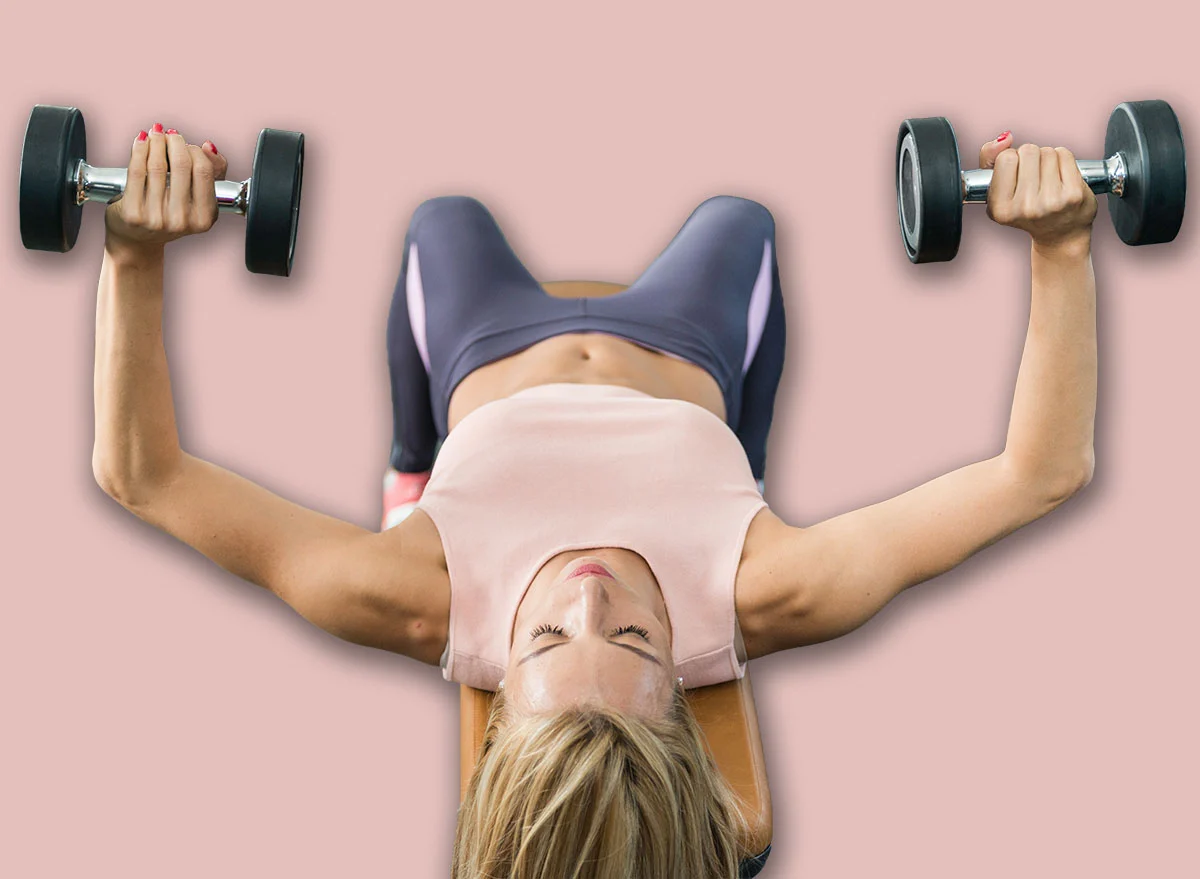
Chest presses primarily target the pectoralis major (chest muscles), anterior deltoids (front of shoulders), and triceps. These muscles are essential for pushing movements, which are integral to daily life—from pushing open a heavy door to getting up from the floor, or even simply maintaining good posture. For those without access to a bench or heavy weights, a floor press or a seated dumbbell press offers an excellent alternative.
- Execution Focus: Lie on your back on the floor, knees bent, feet flat on the ground. Hold a dumbbell or weighted object in each hand, palms facing each other or forward, with your elbows resting on the floor slightly wider than your shoulders. Press the weights directly upwards until your arms are fully extended, then slowly lower them back down to the starting position, maintaining control. Alternatively, perform this seated in a sturdy chair, pressing weights forward or overhead.
- Benefits for Seniors: Strengthening these muscles improves the ability to push objects, enhances upper body stability, and contributes to better posture, counteracting the common tendency to develop a rounded upper back with age.
- Progression: Begin with very light weights, or even just the movement without weights, to perfect the form. As strength increases, gradually increase the weight or the number of repetitions.
4. The Row Variation
Rows are a vital exercise for strengthening the muscles of the upper back (latissimus dorsi, rhomboids, trapezius) and biceps. These muscles are crucial for pulling movements, which are equally important as pushing movements in daily life—think opening a car door, pulling something towards you, or maintaining shoulder health and stability. For older adults, bent-over rows with light dumbbells or resistance bands are highly effective.
- Execution Focus: Stand with feet hip-width apart, knees slightly bent, and hinge forward at your hips, maintaining a straight back, until your torso is nearly parallel to the floor (or as far as comfortable without rounding your back). Let your arms hang straight down, holding a dumbbell or weighted object in each hand, palms facing each other. Pull the weights up towards your chest, squeezing your shoulder blades together at the top of the movement. Slowly lower the weights back down with control. Alternatively, a seated cable row or resistance band row can be performed.
- Benefits for Seniors: This exercise directly combats the postural imbalances often associated with prolonged sitting, strengthening the muscles that retract the shoulder blades and support the spine. It improves upper back strength, promotes better posture, and enhances the ability to perform pulling tasks.
- Progression: Focus on controlled movements and feeling the engagement in the back muscles. Increase repetitions or very gradually increase the weight as strength develops, ensuring proper form is maintained.
Beyond these specific exercises, the overarching message for older adults is one of empowerment. Maintaining muscle mass and strength is not about chasing peak performance but about preserving functional capacity and enhancing the quality of life. Consistent engagement with accessible resistance training, even for short durations several times a week, can yield significant dividends, helping to reverse the clock on muscle loss and restore a decade’s worth of strength. This proactive approach, coupled with adequate protein intake and a balanced diet, forms a robust defense against the challenges of aging, ensuring that the later years are characterized by activity, independence, and sustained well-being. By embracing these simple yet profound strategies, older adults can reclaim their physical prowess and continue to enjoy the activities and hobbies that enrich their lives.
About the Author