
As individuals advance into their later years, maintaining autonomy and the capacity to perform routine activities becomes increasingly pivotal for overall well-being and quality of life. Among these fundamental actions, the ability to transition effortlessly from a seated to a standing position stands out as a critical indicator of functional independence. This seemingly simple movement, known as sit-to-stand, underpins countless daily tasks, from rising from a dining chair or sofa to exiting a vehicle or using restroom facilities. When this capacity diminishes, it can profoundly impact an individual’s confidence, social engagement, and even personal safety. Fortunately, specialized training approaches exist that can effectively restore and enhance this vital strength, allowing older adults to reclaim their freedom of movement without the need for complex gym equipment or high-impact routines.
For decades, leading fitness educators and veteran personal trainers have observed a common apprehension among clients over the age of 65 regarding the gradual decline in their physical capabilities. This concern frequently centers on the increasing difficulty of standing up unassisted, a challenge that underscores a deeper fear of losing self-sufficiency. Experts in geriatric fitness emphasize that while this decline is often associated with aging, it is not an irreversible process. With the right strategies and consistent effort, the essential strength required for stable standing can be not only preserved but significantly improved, often more effectively through tailored, accessible methods than through more strenuous, conventional exercises.
The gradual erosion of sit-to-stand strength in older populations is a multifaceted issue, stemming from a combination of physiological changes and behavioral patterns. One primary factor is sarcopenia, the age-related loss of muscle mass and strength. As individuals age, they naturally experience a reduction in muscle fiber size and number, particularly fast-twitch fibers crucial for powerful movements. This physiological shift is often exacerbated by a decrease in physical activity. When daily routines involve less frequent standing or involve compensatory movements—such as pushing off armrests or tables—the leg muscles are simply not engaged adequately. This disuse atrophy further accelerates muscle weakening, creating a downward spiral where reduced strength leads to reduced activity, which in turn leads to further strength loss.
Beyond the physiological, psychological elements also play a significant role. A prior instance of instability, a stumble, or even a fall can instill a profound fear, leading to protective behaviors. Individuals might become overly cautious, tensing their bodies during movements, or attempting to rush the standing process, both of which can disrupt natural biomechanics and actually make the action more difficult and less stable. Another common indicator of diminishing strength is the uncontrolled descent into a chair, where individuals "drop" rather than lowering themselves smoothly. This points to a specific weakness in eccentric muscle control, the ability of muscles to lengthen under tension, which is crucial for safe and controlled movements. Addressing these combined factors requires an approach that is both physically effective and psychologically reassuring.
In the realm of functional fitness for older adults, the debate often arises between general strength exercises and movements that directly mimic everyday activities. While exercises like squats are widely recognized for their efficacy in building lower body strength, they may not always be the most appropriate starting point for an older individual struggling with basic transitions. Traditional squats, especially when performed with external loads or deep ranges of motion, can pose an undue risk of strain or fall for someone already experiencing instability. Furthermore, the biomechanics of a conventional squat differ subtly from the precise movement pattern required to rise from a chair. The specific forward lean, weight shift, and sequential muscle activation are best rehearsed through an exercise that replicates these exact dynamics.

This is where chair-based exercises demonstrate their superior efficacy for restoring sit-to-stand capability. By directly engaging the muscles and movement patterns involved in rising from a seated position, these exercises provide highly specific training. The presence of the chair as a "safety net" behind the individual offers a critical psychological and physical advantage. It allows for intentional effort and progressive challenge without the looming fear of losing balance and falling, fostering confidence and encouraging greater muscular engagement. This specificity and inherent safety make chair-based movements an ideal foundation for rebuilding functional strength, directly translating to improved performance in daily living tasks.
Let us explore four foundational chair-based movements that are highly effective in targeting the muscle groups and movement patterns essential for robust sit-to-stand ability:
-
Assisted Vertical Ascent (Chair Sit-to-Stand): This exercise is the cornerstone of the program, directly mirroring the desired outcome. It strengthens the primary movers of the lower body—the quadriceps, hamstrings, and gluteal muscles—within the exact range of motion used during a real-life standing event.
- Execution: Begin by sitting upright on a sturdy, stable chair with your feet flat on the floor, hip-width apart, and slightly beneath your knees. Lean your torso slightly forward, shifting your weight over your feet. Engage your core, then press through your heels to initiate the rise, driving upwards until you are fully standing. Control the descent by slowly lowering yourself back to the chair, ensuring your glutes lightly tap the seat before rising again.
- Optimal Performance: Focus on a smooth, controlled motion both upwards and downwards. Avoid using your hands for support unless absolutely necessary, gradually reducing reliance over time. Keep your chest lifted and avoid hunching.
- Common Errors: Rushing the movement, allowing knees to cave inward, or failing to engage the glutes effectively during the upward drive.
- Recommendation: Aim for 8 to 10 repetitions, focusing on quality over quantity.
-
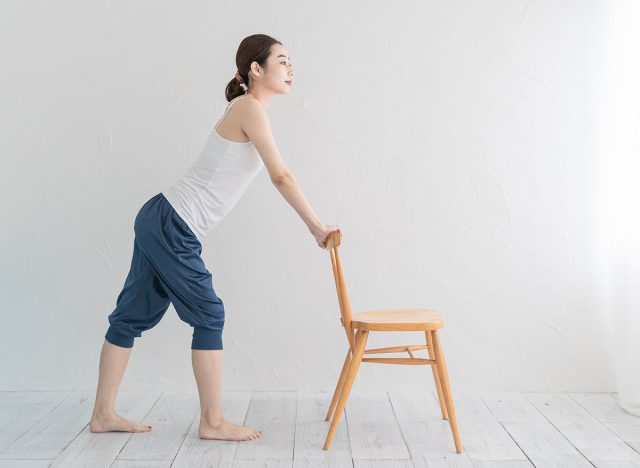
Controlled Chair Descent (Chair-Supported Mini-Squat): This variation allows for a targeted overload of the muscles involved in lowering the body, enhancing eccentric control and building strength in the mid-range of the standing motion. The chair acts as a depth guide and a crucial safety anchor.
- Execution: Stand in front of a sturdy chair, feet hip-width apart. Keeping your back straight and chest up, slowly bend your knees and hips as if you are about to sit down. Control the movement until your glutes just graze the chair seat, or hover an inch above it, then reverse the motion to stand back up.
- Optimal Performance: Maintain an upright posture throughout, imagining you are sitting back into the chair rather than just dropping straight down. Control the entire movement, especially the lowering phase.
- Common Errors: Letting your knees extend too far forward past your toes, or losing control on the descent.
- Recommendation: Perform 8 to 10 repetitions, emphasizing the controlled lowering phase.
-
Seated Quadriceps Extension: The quadriceps, located at the front of the thigh, are paramount for straightening the leg and providing the necessary power to lift the body from a seated position. This exercise isolates and strengthens these critical muscles.
- Execution: Sit comfortably on a sturdy chair with your back supported and feet flat on the floor. Slowly extend one leg straight out in front of you, flexing your quadriceps at the top of the movement. Hold this extended position for a full two seconds, really squeezing the muscle, then slowly lower your foot back to the starting position.
- Optimal Performance: Ensure the movement is deliberate, without relying on momentum. The two-second hold at the peak of the extension is crucial for maximizing muscle activation and strength gains.
- Common Errors: Swinging the leg or rushing the eccentric (lowering) phase.
- Recommendation: Complete 10 to 12 repetitions on each leg before switching.
-
Standing Calf Elevation (Calf Raise): While often overlooked in functional strength, strong calves and ankles are essential for the final push required to achieve full standing stability and for maintaining balance once upright. This exercise builds the propulsive power and steadiness needed to prevent wobbling.
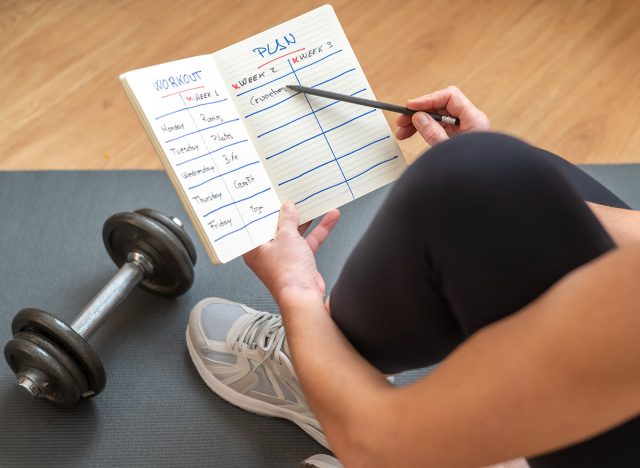
- Execution: Stand tall, holding onto the back of a sturdy chair or a wall for balance and support. With feet hip-width apart, slowly lift yourself onto the balls of your feet, raising your heels as high as comfortably possible. Hold briefly at the top, then slowly lower your heels back to the floor with control.
- Optimal Performance: Focus on a smooth, controlled elevation and descent. Avoid bouncing or relying on momentum. Feel the engagement in your calf muscles.
- Common Errors: Rushing the movement, not achieving full range of motion, or losing balance.
- Recommendation: Perform 12 to 15 repetitions.
Integrating these exercises into a consistent weekly routine is key to realizing their full benefits. A frequency of three to four times per week is generally recommended, with a day of rest interspersed between sessions to allow for muscle recovery and growth. It is during these recovery periods, not during the workout itself, that the body adapts and builds strength. Start modestly, perhaps with one set of each exercise, and gradually increase to two or three sets over several weeks as your strength and confidence grow. The entire session should be relatively brief, typically lasting between 10 to 15 minutes, making it highly achievable to fit into a busy schedule. Always ensure the chair used is robust and does not slide, and crucially, pay attention to your body. Any discomfort beyond a normal muscle exertion should prompt you to stop and consult with a healthcare or fitness professional.
Patience and self-awareness are vital components of this journey. In the initial two to three weeks, much of the noticeable improvement will stem from neurological adaptations. Your nervous system becomes more efficient at recruiting and coordinating existing muscle fibers, leading to a surprisingly early sensation of increased steadiness when standing. By the six-to-eight-week mark, more significant physiological changes begin to occur, with actual muscle strength increasing. This is when you’ll likely observe tangible progress, such as reduced reliance on armrests and greater ease in rising from lower or softer seating surfaces. The profound truth of strength training, particularly as we age, is its transient nature; gains will diminish if regular practice ceases. Therefore, integrating these movements as a consistent part of your weekly regimen is not merely an exercise program, but a commitment to sustained independence and enhanced quality of life. By embracing these accessible, targeted strategies, seniors can confidently navigate their daily environment, fostering a deeper sense of self-reliance and well-being.
About the Author










