
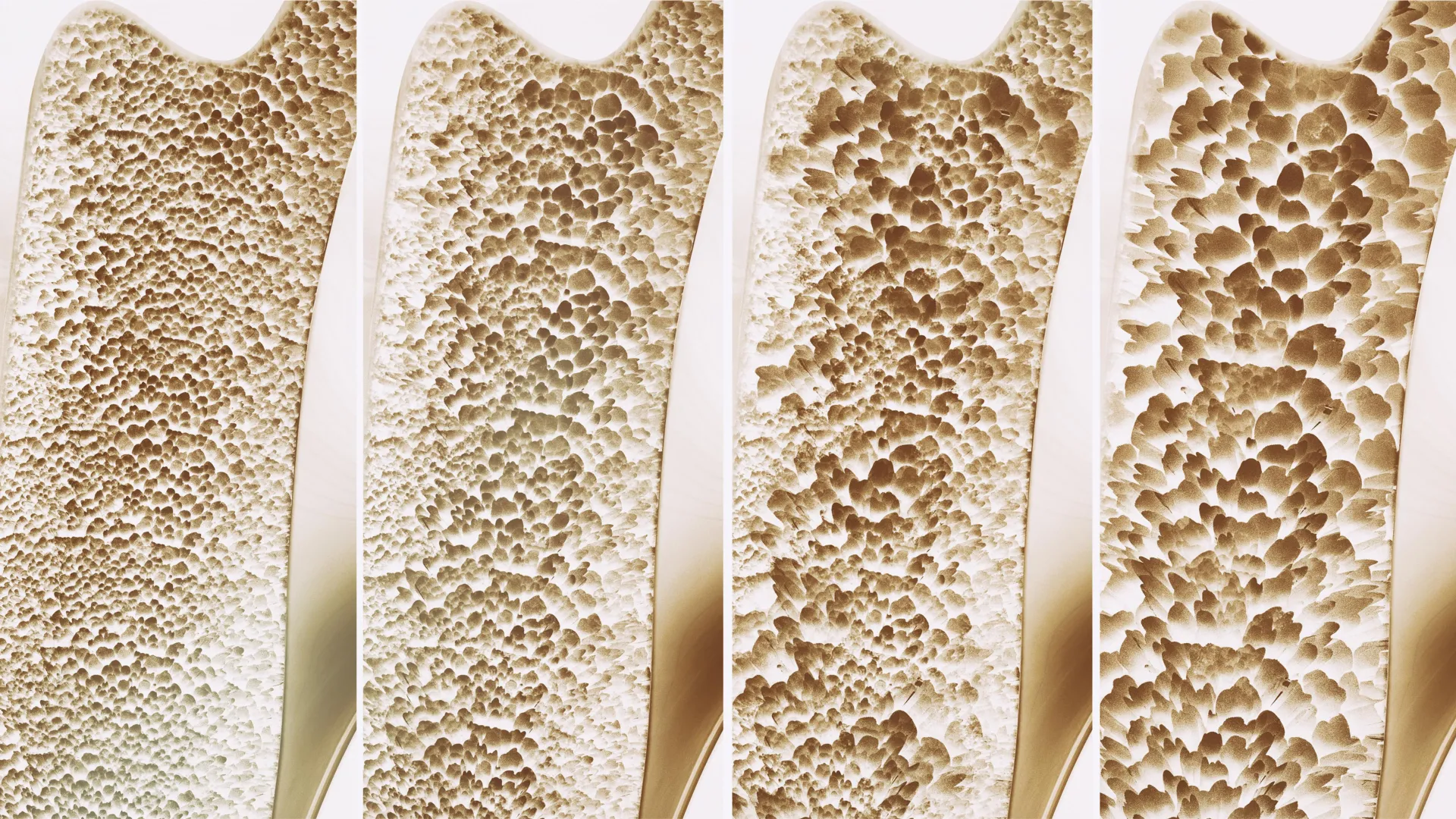
A significant scientific advancement from Leipzig University has illuminated a novel pathway for addressing age-related musculoskeletal deterioration, specifically identifying the GPR133 receptor as a critical regulator of both bone density and muscle strength. This discovery offers a promising new direction for developing therapeutic interventions against conditions such as osteoporosis and sarcopenia, which collectively impact millions globally and represent substantial public health challenges. The research introduces a specific compound, AP503, capable of stimulating GPR133, demonstrating its potential to simultaneously enhance the structural integrity of the skeleton and the functional capacity of skeletal muscles.
Osteoporosis, characterized by diminished bone mineral density and microarchitectural degradation, renders bones brittle and highly susceptible to fractures, even from minor trauma. This debilitating condition disproportionately affects older adults, with postmenopausal women facing an elevated risk due due to estrogen decline. In Germany alone, approximately six million individuals are currently diagnosed with osteoporosis, predominantly women. The pervasive nature of this disease places a considerable burden on healthcare systems and significantly compromises the quality of life for those affected, leading to chronic pain, loss of independence, and increased mortality following hip fractures. Despite the availability of several therapeutic agents, existing treatments often present limitations, including potential side effects, restricted durations of use, and varying degrees of efficacy across patient populations. This persistent unmet need underscores the urgency for identifying innovative biological targets that can yield safer, more effective, and long-term solutions for preserving or regenerating bone tissue.
In this context, scientists at Leipzig University embarked on an investigation into adhesion G protein-coupled receptors (aGPCRs), a relatively under-explored subfamily within the vast landscape of G protein-coupled receptors (GPCRs). GPCRs represent the largest family of cell surface receptors in humans, playing pivotal roles in nearly every physiological process and serving as targets for a substantial portion of currently marketed drugs. Adhesion GPCRs, distinguished by their large extracellular domains and complex signaling mechanisms, are increasingly recognized for their involvement in cell-cell adhesion, cell-matrix interactions, and mechanosensation – the process by which cells convert mechanical stimuli into biochemical signals. Among these, GPR133 emerged as a focal point for its previously unrecognized, yet profound, involvement in skeletal homeostasis.
Professor Ines Liebscher, the lead investigator of the study from the Rudolf Schönheimer Institute of Biochemistry at the Faculty of Medicine, explained the critical evidence linking GPR133 to bone health. "Our genetic studies revealed that mice with impaired GPR133 function exhibit signs of premature bone density loss, strikingly similar to the pathology observed in human osteoporosis," Professor Liebscher stated. This direct correlation provided compelling initial evidence for the receptor’s importance. The team’s subsequent efforts concentrated on exploring whether direct activation of GPR133 could counteract this degenerative process. Using a sophisticated computer-assisted screening methodology, researchers identified AP503, a compound capable of selectively stimulating GPR133. This advanced computational approach allowed for the rapid identification of molecules that could potentially interact with the receptor, significantly accelerating the drug discovery pipeline compared to traditional methods.
The therapeutic potential of AP503 was rigorously tested in preclinical models. In a series of experiments, the compound was administered to both healthy mice and those engineered to display osteoporosis-like bone loss. The results were remarkably consistent and highly encouraging: AP503 administration led to a significant increase in bone strength across both cohorts. This outcome is particularly noteworthy because it suggests that GPR133 stimulation not only fortifies healthy bone but also has the capacity to reverse the effects of existing bone deterioration, a crucial aspect for any prospective osteoporosis treatment.
At the cellular level, GPR133 exerts its influence by modulating the intricate balance of bone remodeling, a continuous process vital for maintaining skeletal integrity throughout life. Bone tissue is dynamically renewed through the coordinated actions of two principal cell types: osteoblasts, responsible for synthesizing and depositing new bone matrix, and osteoclasts, which resorb old or damaged bone tissue. A healthy skeleton depends on a finely tuned equilibrium between bone formation and bone resorption. When this balance is disrupted, typically shifting towards excessive resorption or insufficient formation, conditions like osteoporosis arise.
The research indicates that GPR133 functions as a mechanosensor within bone tissue, responding to physical forces and complex intercellular communications. Upon activation, GPR133 initiates intracellular signaling cascades that favor bone formation. Specifically, its stimulation enhances the activity and proliferation of osteoblasts while simultaneously attenuating the bone-resorbing activity of osteoclasts. This dual action effectively shifts the balance towards net bone accretion, leading to increased bone mineral density and improved structural resilience. The compound AP503 appears to faithfully mimic this natural activation process of GPR133, offering a pharmacological means to restore or enhance this critical bone remodeling equilibrium. This mechanistic insight underpins the promise of AP503 as a novel therapeutic agent, particularly for conditions such as postmenopausal osteoporosis, where declining estrogen levels accelerate bone loss in women by disturbing this delicate cellular balance.
Beyond its implications for skeletal health, the findings suggest a broader therapeutic scope for AP503 and GPR133. An earlier study conducted by researchers at Leipzig University had already established that activation of GPR133 with AP503 also contributes to the strengthening of skeletal muscle. This parallel effect is of immense clinical significance, as muscle weakness (sarcopenia) frequently co-occurs with osteoporosis, particularly in the aging population, a condition often termed osteosarcopenia. Both conditions contribute synergistically to increased frailty, diminished mobility, and a higher risk of falls and fractures.
Dr. Juliane Lehmann, the lead author of the current study and a researcher at the Rudolf Schönheimer Institute of Biochemistry, emphasized this synergistic potential. "The newly demonstrated parallel strengthening of bone, coupled with our previous findings on muscle enhancement, unequivocally highlights the substantial potential this receptor holds for medical applications, particularly for an aging demographic," Dr. Lehmann remarked. A treatment capable of simultaneously improving both bone and muscle strength would represent a paradigm shift in managing age-related musculoskeletal decline. Stronger muscles not only enhance mobility and stability, reducing the likelihood of falls, but also contribute to overall physical independence and quality of life. Concurrently, stronger bones provide a robust framework, significantly mitigating the vulnerability to fractures that can lead to severe morbidity and mortality in older adults.
The interdisciplinary team at Leipzig University is now actively pursuing several follow-up projects aimed at comprehensively unraveling the intricacies of GPR133 function. These investigations include detailed structural biology studies to understand how GPR133 interacts with its ligands and how its activation translates into specific cellular responses. Researchers are also meticulously exploring whether AP503 could have therapeutic utility in other disease contexts beyond osteoporosis and sarcopenia, given the widespread presence and diverse functions of adhesion GPCRs throughout the body. Furthermore, efforts are underway to identify the endogenous ligands that naturally activate GPR133, which could provide additional avenues for therapeutic manipulation.
Leipzig University boasts a long-standing and distinguished history in the field of adhesion G protein-coupled receptor research. For over a decade, the institution has prioritized this area of study through its Collaborative Research Center 1423, titled "Structural Dynamics of GPCR Activation and Signaling." This comprehensive program focuses on deciphering the molecular mechanisms by which these receptors undergo conformational changes, become activated, and transduce signals within cells. Through sustained investment and expertise, Leipzig University has solidified its international reputation as a preeminent center for cutting-edge research in this complex and therapeutically relevant domain. This latest discovery on GPR133 stands as a testament to the university’s enduring commitment to advancing fundamental biological understanding and translating it into practical medical innovations for global health challenges. The path from preclinical findings to approved therapies is often long and arduous, but the compelling evidence surrounding GPR133 and AP503 lays a robust foundation for future clinical development, offering a beacon of hope for millions grappling with debilitating musculoskeletal conditions.
About the Author









