
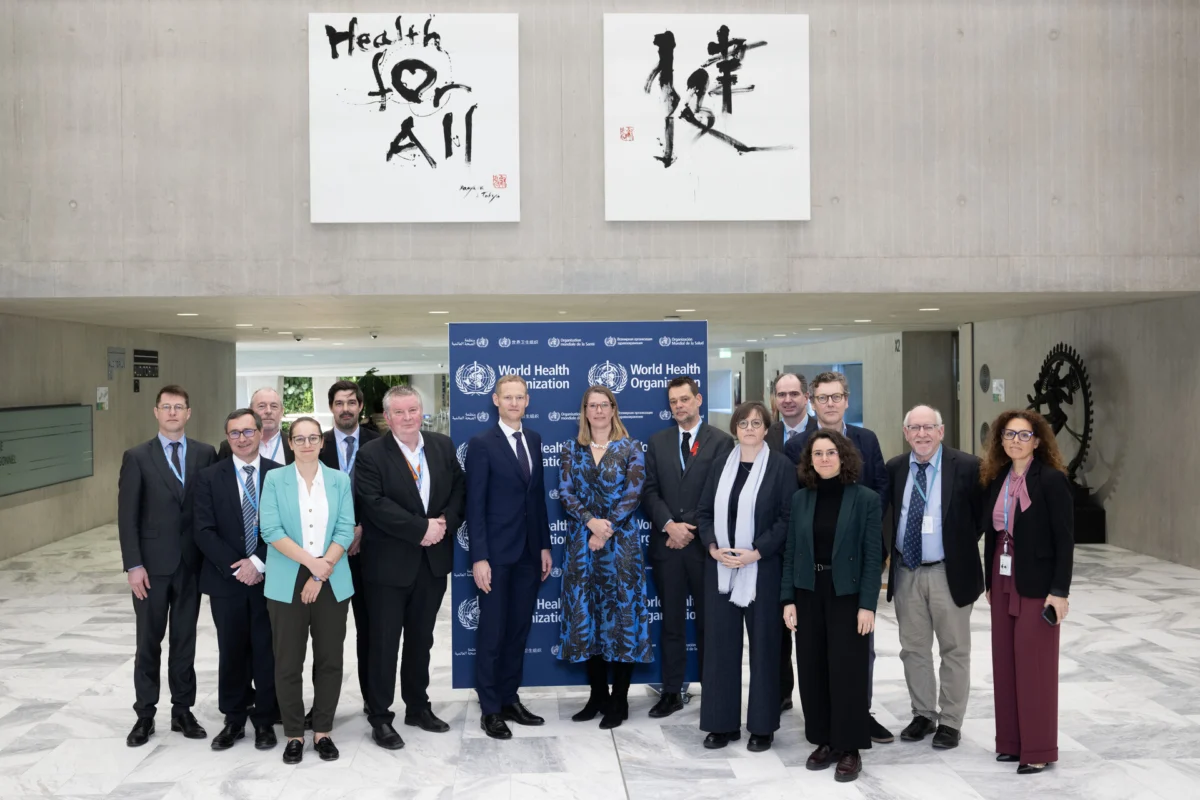
A recent high-level strategic engagement between Belgium and the World Health Organization (WHO) has underscored a mutual commitment to fortifying global health initiatives, charting a course for intensified collaboration across critical areas. Over a concentrated three-day period, delegates from both entities convened to meticulously assess the trajectory of their enduring partnership, reaffirming their dedication to advancing universal health coverage (UHC), reinforcing health systems worldwide, and ensuring equitable access to essential medical technologies, including vaccines and medicines. This dialogue, characterized by its comprehensive scope, served as a vital platform for aligning strategic objectives within the context of a rapidly evolving global health landscape.
The Belgian delegation, led by His Excellency Christophe Payot, the Ambassador of Belgium to the United Nations and other international organizations in Geneva, participated actively in discussions spanning a spectrum of strategically significant issues. These deliberations aimed at harmonizing the WHO’s overarching strategic directions with Belgium’s developmental cooperation priorities. A distinguishing feature of Belgium’s participation was the presence of representatives not only from the federal government but also from the Flemish and Walloon regional governments, showcasing a unified national approach to global health advocacy and support. From the WHO side, senior leadership and technical specialists from its Headquarters were joined by experts from the Regional Offices for Africa and Europe, providing a holistic perspective on global health challenges and programmatic implementation.
One of the cornerstone discussions revolved around the critical imperative of accelerating fair and widespread availability of vaccines, pharmaceuticals, and health technologies. The participants received an update on the progress and tangible outcomes generated by Belgium’s funded Access to Medicines programme. The WHO elucidated its operational methodologies and the inherent challenges encountered in real-world settings, citing country-level execution examples from Senegal. Furthermore, the organization provided a detailed exposition of its policy frameworks and ongoing endeavors aimed at fostering equitable access and promoting local production capabilities for health commodities. Both parties unequivocally acknowledged the shared objective of ensuring the long-term viability of the Access to Medicines initiative, recognizing that strategic market interventions are paramount for sustained success in this domain. This aspect of market shaping is understood as a deliberate set of actions designed to influence the supply, demand, and pricing of essential health products to ensure they are affordable and available where most needed, particularly in low-resource settings.
The profound lessons learned from recent global health crises underscored the urgency of another pivotal area of discussion: health emergencies and the architecture for pandemic prevention, preparedness, and response. The dialogue delved into the WHO’s indispensable role in strengthening the international framework for managing health emergencies, encompassing prevention, readiness, rapid response, and resilience building. A significant component of this conversation included the ongoing negotiations for a global pandemic agreement, a landmark instrument designed to enhance international cooperation and equity in responding to future pandemics. The "One Health" approach also featured prominently, emphasizing the interconnectedness of human, animal, and environmental health as a foundational principle for preventing zoonotic disease spillover and mitigating biological risks. To illustrate its critical on-the-ground work, the WHO presented a detailed overview of its emergency response activities in Gaza, providing a stark reminder of the organization’s operational challenges and humanitarian impact. The discussions also broadened to address the escalating threats posed by accelerated biological risks and emerging zoonoses, alongside the WHO’s proactive engagement in risk assessment and mitigation strategies.

Universal Health Coverage (UHC) remained a central theme, reflecting its status as a core ambition of global health policy. Participants meticulously reviewed the achievements of the UHC-Partnership, a collaborative initiative supported by Belgium, specifically highlighting outcomes from the 2021-2024 period within Belgium’s partner countries. The conversation then transitioned to delineating future pathways, exploring opportunities for enhanced collaboration at the country level. This included the potential for greater synergy between WHO country office programs and Belgium’s bilateral cooperation initiatives. Concrete examples, such as a summary of the work and challenges encountered in the Democratic Republic of Congo, provided valuable insights into the complexities of implementation. The visiting delegation also received an informative briefing on the WHO’s policy directives and programmatic efforts concerning mental health integration within primary healthcare systems, a crucial component of holistic UHC.
Beyond these primary areas, the review extended to other significant programs supported by Belgium, including efforts addressing Neglected Tropical Diseases (NTDs) and advancing Sexual, Reproductive Health, and Rights (SRHR). The discussions consistently emphasized the imperative of an evidence-based approach in these fields, ensuring that interventions are guided by robust data and research for maximum effectiveness and impact. The comprehensive nature of Belgium’s support across such diverse health areas demonstrates a deep and multifaceted commitment to global health equity.
The profound appreciation for Belgium’s unwavering commitment and active engagement was palpable throughout the dialogue. Dr. Catharina Boehme, Assistant Director-General for External Relations and Governing Bodies at the WHO, extended her gratitude, stating, "We deeply value your consistent support, candor, and resolute dedication to global health. Your contributions to our operational efforts in nations such as Mozambique and Senegal stand as clear testaments to the vital work we collectively achieve." This sentiment was echoed by Belgian officials, reflecting a shared sense of accomplishment and purpose. Mr. Koen Van Acoleyen, Minister Counselor at the Permanent Representation of Belgium to the UN, remarked, "Having listened intently to the leadership and experts of the WHO, we now possess a more profound understanding of their navigation through these demanding periods. It is an honor to journey alongside them in this endeavor."
Looking ahead, the partners engaged in forward-thinking discussions concerning the future architecture of the Belgium-WHO collaboration framework and a forthcoming multi-year agreement. This included making strides towards the formulation of a renewed WHO-Belgium Country Cooperation Strategy, designed to further streamline and enhance their joint efforts on the ground. A shared vision emerged that reinforced the importance of Universal Health Coverage and the strengthening of health systems as central tenets of the WHO’s 14th General Programme of Work (GPW14) ambitions. These core areas will be integrated as essential priorities within the WHO’s ongoing strategic planning and resource allocation processes.
The dialogue concluded with a strong affirmation of mutual trust and the strategic importance of sustained multilateralism in addressing global health challenges. Mr. Dirk Brems, Director of Thematic and Multilateral Cooperation at the Directorate-General Development Cooperation and Humanitarian Aid, articulated this perspective, stating, "We recognize the WHO as a trustworthy and indispensable partner in the global health arena. We felt a sense of pride upon hearing the critical impact of our support on the Organization’s efforts at country, regional, and global scales. It is essential that we continue these vital conversations as we traverse uncharted territories, and we eagerly anticipate our continued collaboration for robust and enduring multilateral engagement." This high-level exchange not only cemented existing bonds but also laid a strategic foundation for a more resilient, equitable, and prepared global health future, underpinned by the steadfast partnership between Belgium and the WHO.
About the Author












