
As the body ages, maintaining physical comfort and achieving consistent, high-quality sleep often present increasing challenges. For many individuals over the age of sixty, persistent joint discomfort and restless nights become unwelcome companions, significantly impacting overall quality of life. While the natural inclination might be to avoid movement when experiencing aches, a counterintuitive yet highly effective strategy involves incorporating gentle, targeted flexibility routines into the evening schedule. These pre-bedtime movements offer a multifaceted approach to mitigating musculoskeletal stiffness, enhancing joint lubrication, and preparing the body and mind for a more profound and uninterrupted slumber.
The prevalence of joint-related issues, such as osteoarthritis, tends to escalate with age, affecting millions globally. This condition, characterized by the gradual breakdown of cartilage, leads to pain, swelling, and reduced range of motion. Simultaneously, sleep architecture shifts in later life, often resulting in lighter, more fragmented sleep patterns. The bidirectional relationship between pain and sleep is well-documented: chronic pain disrupts sleep, and insufficient sleep can exacerbate pain perception, creating a challenging cycle. Addressing both simultaneously through a mindful evening routine can yield substantial benefits.
The physiological mechanisms through which gentle stretching impacts both joint health and sleep quality are intricate and profound. When muscles are lengthened and joints are gently mobilized, several positive responses are triggered within the body. Firstly, stretching helps to increase blood circulation to the muscle tissues and around the joints. Enhanced blood flow delivers vital oxygen and nutrients while simultaneously assisting in the removal of metabolic waste products that can contribute to soreness and inflammation. This improved circulation can reduce stiffness, particularly after periods of inactivity such as sitting throughout the day, and prepare the joints for a less restricted night.
Beyond the localized physical benefits, stretching exerts a powerful influence on the nervous system. Portia Page, a respected Balanced Body Educator and NCPT, highlights how purposeful movement acts as a "love letter to your nervous system." Unlike more stimulating forms of exercise, gentle stretching actively guides the body into a parasympathetic state, often referred to as the "rest and digest" mode. This contrasts sharply with the sympathetic nervous system’s "fight or flight" response, which is characterized by heightened alertness and stress. By initiating the parasympathetic response, stretching signals to the body that it is safe to relax and release accumulated tension. This transition is critical for both pain relief and sleep preparation.
In this parasympathetic state, the body undergoes a series of calming physiological changes. The heart rate naturally decelerates, and levels of the stress hormone cortisol begin to decline. Simultaneously, the brain is prompted to increase the production of essential neurochemicals like melatonin, the hormone primarily responsible for regulating sleep-wake cycles, and serotonin, a neurotransmitter associated with feelings of well-being and calmness. This hormonal shift, coupled with improved circulation and a reduction in muscular and articular tension, creates an optimal internal environment for drifting into restorative sleep. The "softening effect" of stretching effectively quiets racing thoughts, slows the breath, and eases the body from the day’s demands, fostering a deep sense of mental and physical tranquility.
Integrating these seven specific, gentle stretches into an evening regimen can significantly enhance joint comfort and promote more restful nocturnal repose for individuals over the age of sixty. It is crucial to approach each movement with mindfulness, listening to the body’s signals, and avoiding any sensation of pain. Holding each stretch for approximately 20 to 30 seconds, while breathing deeply and smoothly, maximizes its therapeutic potential.
1. Gentle Cervical Rotations (Seated Neck Rolls):
Commence this routine seated comfortably, ensuring your spine is elongated. Slowly tilt your head, bringing your right ear towards your right shoulder, feeling a gentle stretch along the left side of your neck. Hold briefly, then return to the center. Repeat on the opposite side. Next, gently roll your chin towards your chest, allowing the back of your neck to lengthen. Conclude by slowly rotating your head to look over one shoulder, then returning to center before repeating on the other side. This sequence targets tension in the neck and upper trapezius muscles, areas often strained by daily activities, contributing to headaches and sleep disturbances. The controlled movement enhances flexibility in the cervical spine, promoting relaxation for the entire head and neck region.
2. Upper Body Release (Shoulder Rolls and Arm Cross Stretch):
Remain seated or stand comfortably. Begin by rolling your shoulders backward in large, circular motions for several repetitions, then reverse the direction, rolling them forward. This dynamic movement helps to lubricate the shoulder joints and release stiffness in the upper back. Following this, extend one arm straight across your chest. Use your opposite hand to gently press on the extended arm, drawing it closer to your body. You should feel a stretch in the shoulder and upper arm. Hold, then switch arms. This combination addresses stiffness in the shoulder girdle, improving range of motion crucial for comfortable daily movements and sleep positions, while the arm cross specifically targets the deltoids and upper back.
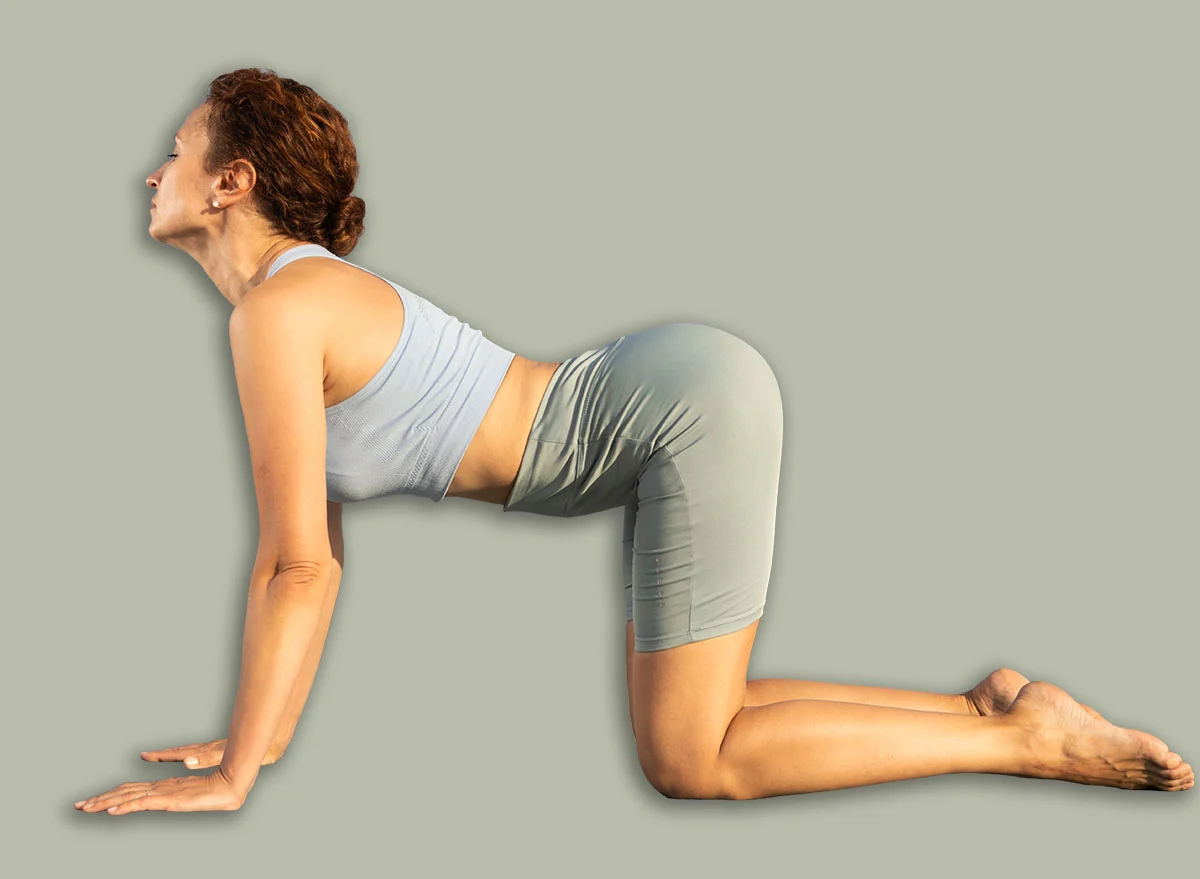
3. Spinal Undulation (Cat-Cow Pose):
Transition onto your hands and knees in a tabletop position, aligning your wrists directly beneath your shoulders and your knees beneath your hips. Ensure your back is flat. As you inhale, gently drop your belly towards the floor, lifting your chest and tailbone towards the ceiling, creating an arch in your lower back (Cow pose). As you exhale, round your spine upwards towards the ceiling, tucking your chin to your chest and engaging your abdominal muscles (Cat pose). Flow between these two positions with your breath, allowing your spine to articulate fluidly. This foundational spinal mobility exercise enhances flexibility through the entire vertebral column, stimulates cerebrospinal fluid flow, and coordinates movement with breath, which helps to calm the nervous system and is particularly beneficial for lower back stiffness.
4. Extended Lumbar and Lateral Stretch (Child’s Pose with Side Reach):
From the tabletop position, sink your hips back towards your heels, allowing your torso to rest between or on top of your thighs. Extend your arms forward on the mat, resting your forehead gently on the floor (standard Child’s Pose). To add the side reach, walk both hands slowly over to one side, feeling a deeper stretch along the opposite side of your torso and lower back. Hold, then return to center and repeat on the other side. This deeply restorative pose gently stretches the lower back, hips, and thighs. The side reach extends this benefit to the obliques and latissimus dorsi muscles, decompressing the spine and promoting a sense of groundedness, which can significantly reduce nocturnal discomfort.
5. Hip and Gluteal Release (Figure Four Stretch):
Lie on your back with your knees bent and feet flat on the floor. Lift one leg and place the ankle of that leg onto the thigh of the opposite leg, just above the knee, creating a "figure four" shape. Gently draw the uncrossed knee towards your chest, either by placing your hands behind the thigh of the standing leg or by holding the shin. You will feel a stretch in the gluteal muscles and outer hip of the crossed leg. Maintain gentle pressure, ensuring no strain in the knee joint. Hold, then release and switch sides. This stretch effectively targets the piriformis and gluteal muscles, which are vital for hip mobility and can help alleviate sciatic nerve discomfort that often contributes to joint pain and restless legs, improving comfort during sleep.
6. Gentle Spinal Decompression (Reclined Spinal Twist):
Remain lying on your back. Draw both knees towards your chest. Extend your arms out to the sides in a ‘T’ shape, palms facing up. Gently lower both knees to one side, allowing your spine to softly twist. You can turn your head in the opposite direction of your knees for an added neck stretch, if comfortable. Keep both shoulders as grounded as possible. Hold this gentle twist, allowing your lower back and torso to release. Return to the center and repeat on the other side. This gentle spinal twist mobilizes the thoracic and lumbar spine, promoting detoxification and easing tension in the back, often associated with prolonged sitting or standing. It can also aid digestion and calm the abdominal area, further contributing to a peaceful state.
7. Restorative Leg Elevation (Legs-Up-The-Wall Pose):
Carefully position yourself so that your hips are close to a wall, and your legs are extended straight up the wall, forming an ‘L’ shape with your body. You can place a cushion under your hips for added comfort. Rest your arms comfortably by your sides, palms facing up. Allow your body to fully relax in this inversion, focusing on deep, even breaths. This pose encourages venous return from the legs, reduces swelling in the ankles and feet, and profoundly calms the nervous system. It is excellent for tired legs and feet, and its deeply relaxing nature signals the body to transition smoothly into sleep, providing a sense of lightness and tranquility.
Integrating these evening flexibility routines into your daily life can transform the nightly experience for individuals over sixty. Beyond the immediate relief from joint stiffness and improved sleep initiation, consistent practice fosters greater overall flexibility, enhanced body awareness, and a profound sense of well-being. It is always advisable to consult with a healthcare professional or a qualified physical therapist before embarking on any new exercise regimen, especially if you have pre-existing medical conditions or chronic pain. Listening intently to your body, performing movements without pain, and focusing on gentle, controlled breathing are paramount to reaping the full benefits of these restorative nightly rituals. By prioritizing this mindful movement practice, seniors can unlock greater comfort, deeper rest, and an enriched quality of life as they navigate their golden years.
About the Author










