As global demographics shift towards an aging population, the discourse around healthy longevity increasingly emphasizes not just lifespan, but "health span" – the number of years lived in good health, free from significant disease and disability. A cornerstone of this extended health span is the maintenance of functional strength, particularly as individuals navigate their sixth decade and beyond. The gradual, age-related decline in muscle mass and strength, medically termed sarcopenia, is a ubiquitous process that, if left unchecked, can profoundly impact an individual’s capacity for independent living, increase the risk of falls, and diminish overall quality of life. However, this decline is not an inevitable fate; proactive engagement with physical activity, especially resistance training, can significantly mitigate its effects. Understanding one’s current physical capabilities is the crucial first step in any effective strategy for preserving muscular resilience and functional autonomy.
While sophisticated laboratory tests exist, simple, self-administered functional assessments performed in the comfort of one’s home offer valuable insights into foundational strength levels. These practical checks are designed to evaluate an individual’s proficiency in fundamental human movement patterns, reflecting the physical demands of daily life rather than maximal lifting capacity. They provide a clear, actionable snapshot of where an individual stands, highlighting areas of strength to be maintained and specific weaknesses to be addressed. A seasoned fitness professional often prioritizes these bodyweight evaluations because they reveal an individual’s command over their own physique, their ability to generate force against a surface, and their facility in leveraging the powerful muscles of the hips and legs—skills indispensable for navigating the environment with confidence and ease. These diagnostic exercises serve a dual purpose: they not only pinpoint areas requiring development but also inherently build strength as they are practiced. Executing a repetition with controlled movement, adequate range, and coordinated effort signals robust physiological function. Conversely, struggling with a movement provides immediate, unambiguous feedback, indicating a clear starting point for improvement and guiding subsequent training efforts. This article delineates three such pivotal strength markers, explaining their significance, proper execution, and how to adapt them for continuous progress.
The Bodyweight Squat: A Pillar of Lower Body Autonomy
The ability to perform a bodyweight squat effectively is arguably one of the most vital indicators of lower body strength and mobility, directly correlating with a myriad of everyday actions. Consider the seemingly mundane tasks of rising from a seated position, retrieving an object from the floor, or ascending a flight of stairs—each relies heavily on the integrated function of the hips, knees, and ankles, all working synergistically to support and move the body. A well-executed squat demonstrates not only the muscular strength of the quadriceps, glutes, and hamstrings but also the requisite mobility in the major joints and stability in the core. It is a profound testament to an individual’s continued capacity to interact independently with their environment.
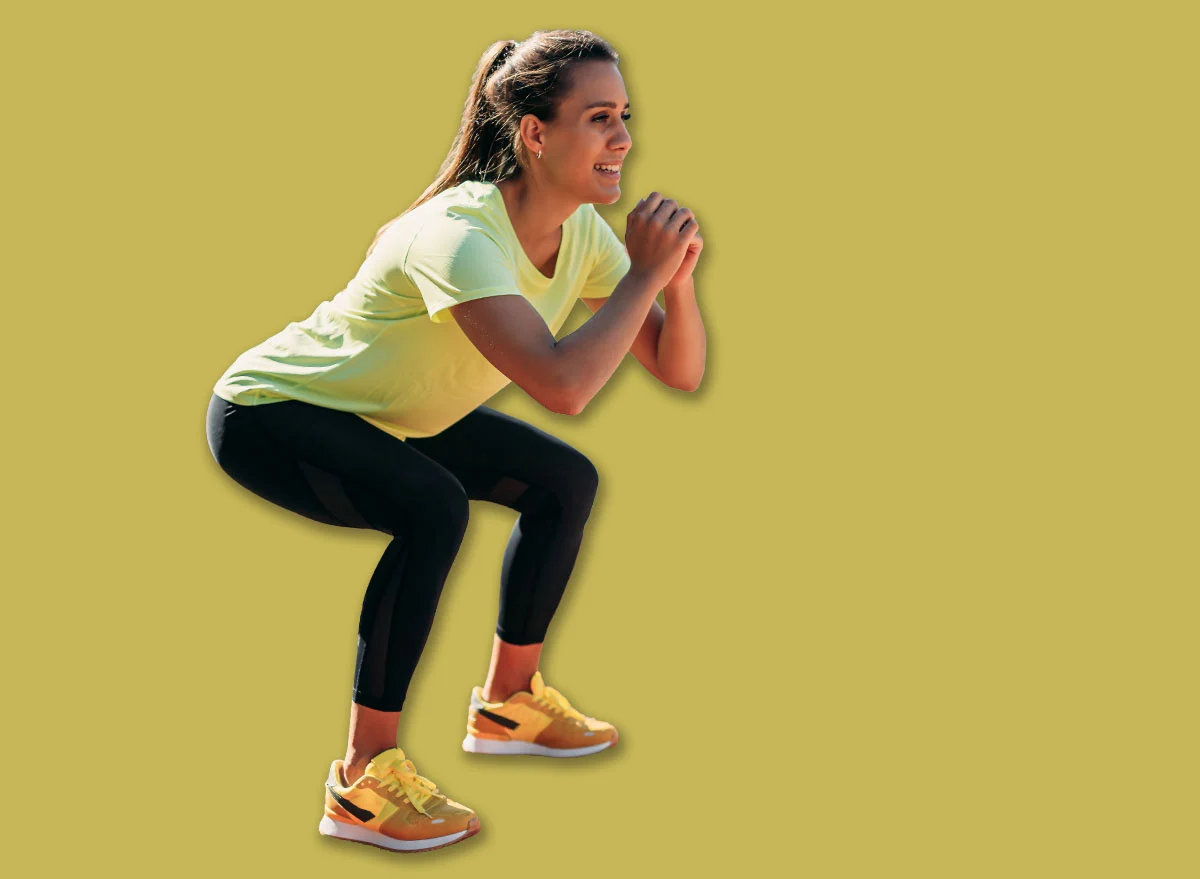
From a biomechanical perspective, the squat involves a coordinated flexion of the hips and knees, followed by powerful extension. It engages the large muscle groups of the lower body, including the gluteus maximus, quadriceps femoris, and hamstrings, along with significant contribution from the core musculature to stabilize the spine. When performing this assessment, stand with feet roughly shoulder-width apart, toes pointing slightly outward. Initiate the movement by pushing the hips back and bending the knees simultaneously, as if aiming to sit into a chair. Maintain a neutral spine throughout, ensuring the chest remains upright and the gaze is forward. Descend to a comfortable depth, ideally where the thighs are parallel to the floor or slightly below, without experiencing pain or significant loss of form. Drive through the heels and midfoot to return to the standing position, fully extending the hips and knees.
If the full range of motion is challenging, variations like the chair squat or box squat are excellent starting points, where a chair or box provides a target for depth and a resting point if needed. Slowing the tempo of the movement can also enhance muscle engagement and control. Aim for 2 to 3 sets of 8 to 12 repetitions, focusing intently on maintaining foot stability throughout the entire movement. Difficulty with this exercise might suggest compromised hip or knee mobility, diminished lower body power, or inadequate core stability, all of which contribute to an elevated risk of falls and reduced ease in daily activities.
The Push-Up: Upper Body Resilience and Core Synergy
The push-up, a fundamental exercise for upper body pressing strength, often has its real-world utility underestimated. Its benefits extend far beyond athletic prowess, playing a critical role in functional independence. Imagine pushing open a heavy door, bracing oneself against a counter for support, or, critically, pushing oneself up from the floor after a stumble or fall. These actions all demand robust upper body pressing power, combined with significant core stability. The push-up is a comprehensive compound movement that simultaneously activates the chest (pectoralis major), shoulders (anterior deltoids), and triceps, while rigorously engaging the abdominal muscles to maintain a rigid, plank-like body position. This makes it an exceptional test of integrated full-body control.
To perform a standard push-up, begin in a plank position with hands slightly wider than shoulder-width apart, fingers pointing forward, and the body forming a straight line from head to heels. Engage the core to prevent the hips from sagging or arching. Lower the chest towards the floor by bending the elbows, keeping them tucked at roughly a 45-degree angle relative to the torso. The goal is to lower until the chest is just above the floor, or as far as comfortable without compromising form. Exhale and press through the hands to return to the starting plank position, maintaining the straight body alignment.

Challenges with a full push-up do not preclude its benefits. Numerous scalable variations allow individuals to build strength progressively. Wall push-ups, performed standing and pressing against a wall, reduce the resistance significantly. Incline push-ups, using a sturdy table, bench, or countertop, offer a more challenging progression as the angle of the body decreases relative to the floor. Knee push-ups, where the knees remain on the ground, further reduce the load while still targeting the primary muscles. The emphasis should always be on maintaining a straight line from the head to the knees (for knee push-ups) or heels (for full push-ups) throughout the entire range of motion. Two to three sets of 5 to 10 repetitions are generally recommended. Difficulty with the push-up can signal weakness in the pectoral muscles, deltoids, or triceps, or insufficient core stability, potentially impacting the ability to regain an upright position after a fall or perform tasks requiring upper body pushing force.
The Glute Bridge: Posterior Chain Power and Spinal Protection
The gluteal muscles—the gluteus maximus, medius, and minimus—are the largest and most powerful muscle group in the human body, serving as critical engines for hip extension, external rotation, and abduction. Their strength is fundamental to almost every propulsive lower body movement and plays a vital role in maintaining upright posture and protecting the lower back. Activities like walking, running, climbing stairs, and transitioning from a seated or lying position all heavily rely on robust glute activation. The glute bridge provides an accessible yet highly effective method not only to strengthen these essential muscles but also to assess an individual’s capacity to engage the glutes effectively without over-relying on the lumbar spine.
To perform the glute bridge, lie on your back with knees bent, feet flat on the floor approximately hip-width apart and positioned close enough to the glutes so you can almost touch your heels with your fingertips. Ensure the lower back is pressed gently into the floor. Before initiating the movement, consciously engage your abdominal muscles, as if bracing for a gentle punch. This pre-activation helps to stabilize the core and prevent the lower back from arching excessively. Drive through your heels, squeezing your glutes to lift your hips off the floor until your body forms a straight line from your shoulders to your knees. Avoid hyperextending the lower back at the top; the lift should come from hip extension, not lumbar arching. Hold briefly at the peak of the contraction, then slowly and with control lower the hips back to the starting position. Each repetition should feel deliberate and controlled.
For those finding the full range challenging, smaller-range glute bridges, where the hips are lifted only partially, can be a good starting point. Isometric holds at the top of the movement can also build endurance and strength. As strength improves, single-leg assisted glute bridges or even single-leg glute bridges offer a more advanced progression. Perform 2 to 3 sets of 10 to 15 repetitions, focusing on a strong glute squeeze at the apex of each lift. A struggle with the glute bridge may indicate weakness in the gluteal muscles or hamstrings, or a propensity to compensate by overusing the lower back, which can contribute to lower back pain and reduced efficiency in walking and standing.
Interpreting Results and Charting a Path Forward
Encountering unexpected difficulty with any of these assessments should be viewed not as a deficit, but as invaluable feedback—a clear signal from your body indicating where targeted effort is needed. The human body, regardless of age, possesses a remarkable capacity for adaptation. Strength, once diminished, can be significantly regained and enhanced through consistent, intelligent practice. The principle of "use it or lose it" applies universally, but so too does the principle of "use it to gain it."
The journey to improved strength and functional capacity begins precisely where you are. Start with the variation of each exercise that you can perform with good form, control, and without pain. Focus on mastering the movement pattern, ensuring each repetition is executed deliberately and with proper muscle engagement. Consistency is paramount; aim for 2-3 sessions per week dedicated to these foundational movements, allowing adequate recovery time between sessions. As the exercises become less challenging and you can comfortably complete the recommended sets and repetitions with excellent form, introduce small, progressive adaptations. This could involve increasing the range of motion, slowing down the tempo to increase time under tension, performing more repetitions, or gradually advancing to a more challenging variation.
Beyond these specific exercises, adopting a holistic approach to well-being is crucial. Adequate protein intake is essential for muscle repair and growth, particularly as we age. Prioritizing sufficient sleep and staying well-hydrated also play significant roles in recovery and overall physical performance. While these self-assessments are powerful tools, individuals with pre-existing medical conditions, significant mobility limitations, or persistent pain should consult with a healthcare professional, such as a physical therapist or a certified personal trainer specializing in older adults, before embarking on a new exercise regimen. These professionals can offer personalized guidance, ensuring exercises are appropriate and safely performed.
Ultimately, maintaining functional strength is an ongoing commitment to preserving independence, enhancing confidence, and enriching the quality of life in later years. By regularly assessing and proactively addressing muscular strength through these fundamental movements, individuals can empower themselves to navigate the world with greater ease, reduce the risk of injury, and continue to engage actively in the activities they cherish for many years to come. The path to age-defying movement is not about avoiding aging, but about embracing it with strength, vitality, and autonomy.
About the Author