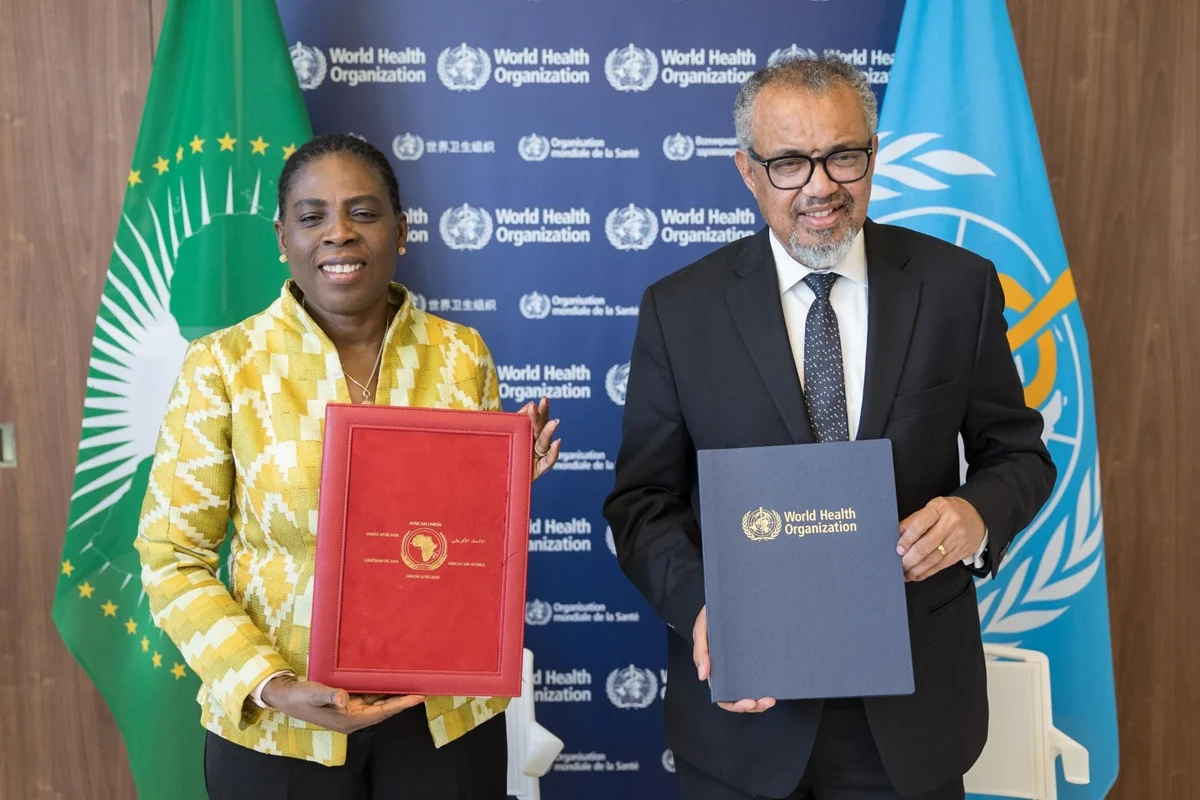
Geneva bore witness to a significant diplomatic milestone for global health recently, as the World Health Organization (WHO) and the African Union (AU) Commission formally re-established and enhanced their enduring strategic alliance. This pivotal moment occurred on the fringes of the 78th World Health Assembly, the annual gathering where health ministers and delegates from across the globe convene to shape international health policy. The signing of an updated Memorandum of Understanding (MoU) underscores a reinforced collective commitment to navigating the complex health challenges confronting the African continent, particularly amid a period characterized by pronounced fiscal constraints impacting global health initiatives.
The agreement, a culmination of sustained dialogue and shared vision, is poised to invigorate efforts directed at bolstering health security, broadening the reach of universal health coverage (UHC), and advancing sustainable development across Africa. Its renewal comes at a crucial juncture, reflecting both the evolving landscape of global health governance and Africa’s burgeoning influence on the world stage. This collaborative framework is designed to empower the AU Commission’s Department of Health, Humanitarian Affairs, and Social Development, positioning it centrally in the continent’s strategic endeavors to implement robust health policies and foster regional resilience.
The formalization of this rejuvenated partnership was ceremoniously marked by the signatures of two prominent figures: Her Excellency Ambassador Amma Adomaa Twum-Amoah, the Commissioner for Health, Humanitarian Affairs, and Social Development, representing His Excellency Mahmoud Ali Youssouf, Chairperson of the African Union Commission; and Dr. Tedros Adhanom Ghebreyesus, the Director-General of the World Health Organization. This act of signing transcends mere formality, signifying a definitive commitment to accelerating progress in foundational healthcare services and achieving comprehensive health coverage for all African citizens.
Ambassador Twum-Amoah articulated the profound strategic resonance of this renewed accord, emphasizing the AU’s proactive role in shaping the health trajectory of its member states. She characterized the agreement as ushering in a "new chapter" in the relationship between the AU and WHO, signaling a deeper, more integrated approach to addressing population health needs. Her statement underscored the imperative of ensuring that no individual or community is marginalized from essential health services. Acknowledging WHO’s unparalleled and central leadership in the realm of global health, she expressed enthusiasm for the deepening of this strategic alliance in pursuit of mutually held objectives. Critically, Ambassador Twum-Amoah articulated a visionary shift, advocating for a transition "from budgeting for survival to planning for health sovereignty." This potent phrase encapsulates Africa’s aspiration to move beyond reactive crisis management and donor dependency towards a proactive, self-determined, and sustainable health agenda, driven by indigenous capabilities and priorities.
Building upon the foundations laid by the preceding 2019 Memorandum of Understanding, this updated agreement meticulously streamlines and intensifies collaborative efforts across the diverse entities within the African Union. It meticulously aligns joint initiatives with the paramount health priorities identified by the continent itself, thereby establishing a robust platform for more cohesive and impactful cooperation between the WHO and the AU. Furthermore, the renewed document unequivocally reaffirms the WHO’s intrinsic role as the foremost technical and normative authority in global and regional health matters. It simultaneously reiterates WHO’s unwavering dedication to providing comprehensive support to the AU and its constituent institutions as they strive towards the attainment of health-related Sustainable Development Goals (SDGs), particularly SDG 3, which champions good health and well-being for all.
Dr. Tedros Adhanom Ghebreyesus highlighted the critical timing of this renewed commitment. He drew attention to the alarming trend of reductions in bilateral aid, a phenomenon that he cautioned "imperil[s] the health of millions in Africa." This backdrop of diminishing external financial support renders the partnership’s focus on self-reliance even more urgent and pertinent. Dr. Tedros underscored the determination inherent in this agreement to translate the partnership’s principles into tangible, measurable results that directly benefit the people of Africa. He articulated a clear vision for assisting African nations in transcending the historical reliance on external aid, facilitating a profound transition towards enduring self-sufficiency in health provision and management. Expressing profound solidarity, he affirmed WHO’s pride in standing alongside the African Union in championing and advancing the continent’s paramount health priorities.
While the specific five key areas of collaboration were not exhaustively detailed in the immediate public announcement, the overarching objectives articulated by both organizations provide a clear indication of their scope. These areas are expected to encompass a broad spectrum of public health interventions, mirroring the shared commitment to universal health coverage, health security, and sustainable development. This likely includes strengthening primary healthcare systems at the community level, enhancing disease surveillance and early warning mechanisms for epidemic preparedness, fostering robust health workforce development, facilitating access to essential medicines and health technologies, and promoting innovative digital health solutions. The emphasis on "health sovereignty" suggests a concerted effort towards strengthening local manufacturing capabilities for pharmaceuticals and vaccines, investing in research and development tailored to African contexts, and reinforcing regulatory frameworks to ensure quality and accessibility of health products.
The strategic timing of this renewed agreement carries profound significance. It powerfully reflects the African Union’s increasingly influential voice within the intricate architecture of global health governance. This heightened prominence has been notably bolstered by the AU’s recent accession to the G20, a forum of the world’s major economies. This G20 membership not only elevates Africa’s diplomatic stature but also provides a vital platform for advocating for continent-specific health priorities on a global scale, ensuring that African perspectives are integrated into high-level international decision-making processes. Concurrently, the agreement underscores WHO’s unwavering and indispensable role as a trusted technical advisor and operational partner, providing evidence-based guidance and practical support to member states and regional bodies.
This renewed Memorandum of Understanding represents a fresh impetus for intensified regional and multilateral cooperation, crucial for confronting Africa’s most formidable health challenges. The continent continues to grapple with a complex interplay of communicable diseases like HIV/AIDS, tuberculosis, and malaria, alongside a rising burden of non-communicable diseases, and the ever-present threat of emerging infectious diseases, exacerbated by factors such as climate change and rapid urbanization. By fostering a more integrated and coordinated approach, the partnership aims to deliver meaningful, transformative, and lasting results across the continent. It champions a paradigm shift towards greater African ownership, capacity building, and self-determination in health, moving beyond a purely reactive response to a proactive, preventative, and ultimately more equitable health future for all its people. The implications of this fortified alliance are far-reaching, promising to lay the groundwork for a healthier, more resilient, and self-sufficient Africa for generations to come.
About the Author