The World Health Organization (WHO) has officially bestowed Timor-Leste with the prestigious certification of being malaria-free, marking a monumental public health triumph for the young Southeast Asian nation. This declaration, signifying the complete interruption of indigenous malaria transmission within its borders for a sustained period, culminates a dedicated two-decade struggle that began shortly after the country regained its independence in 2002. The achievement positions Timor-Leste as a compelling case study for other nations grappling with endemic diseases, demonstrating the profound impact of resolute political will, strategic public health interventions, and robust community engagement.
Dr. Tedros Adhanom Ghebreyesus, the WHO Director-General, commended the relentless efforts of the Timorese people and government, underscoring the universal applicability of their success. He remarked, "Timor-Leste’s success proves that malaria can be stopped in its tracks when strong political will, smart interventions, sustained domestic and external investment and dedicated health workers unite." This sentiment resonates deeply, particularly for a nation that faced significant post-conflict reconstruction challenges while simultaneously confronting a pervasive health crisis.
To achieve malaria-free certification from the WHO, a country must rigorously demonstrate, beyond any reasonable doubt, that the chain of local transmission has been entirely broken across its territory for at least three consecutive years. This stringent criterion ensures the sustainability of the victory and confirms that new cases are not originating from within the country. Timor-Leste now joins an exclusive global cohort of 47 countries and one territory that have eradicated this ancient scourge. Within the WHO South-East Asia region, it stands as the third nation to receive this esteemed status, following the Maldives in 2015 and Sri Lanka in 2016, further solidifying the region’s progress in disease elimination.
The journey for Timor-Leste was particularly arduous, characterized by a nascent healthcare infrastructure post-independence and a population deeply affected by a disease that was once widespread. In the early years of its statehood, the country recorded an alarming peak of over 223,000 clinically diagnosed malaria cases in 2006. This stark reality galvanized the government into action, transforming a high-burden nation into one now celebrating zero indigenous cases since 2021. This rapid reversal of fortune stands as a testament to the comprehensive and unwavering commitment of its leadership and health workers.
Central to this rapid transformation was the Ministry of Health’s foresight and decisive action in 2003, merely a year after the nation regained full sovereignty. This led to the establishment of the National Malaria Programme, an entity initially lean but strategically vital, tasked with the comprehensive planning, execution, and oversight of nationwide malaria control endeavors. Despite starting with a minimal staff of just two full-time officers, the program’s strong technical leadership and meticulous attention to detail laid an indispensable foundation for future progress. This early investment in a dedicated institutional framework proved pivotal, allowing for a systematic and data-driven approach to tackling the disease.
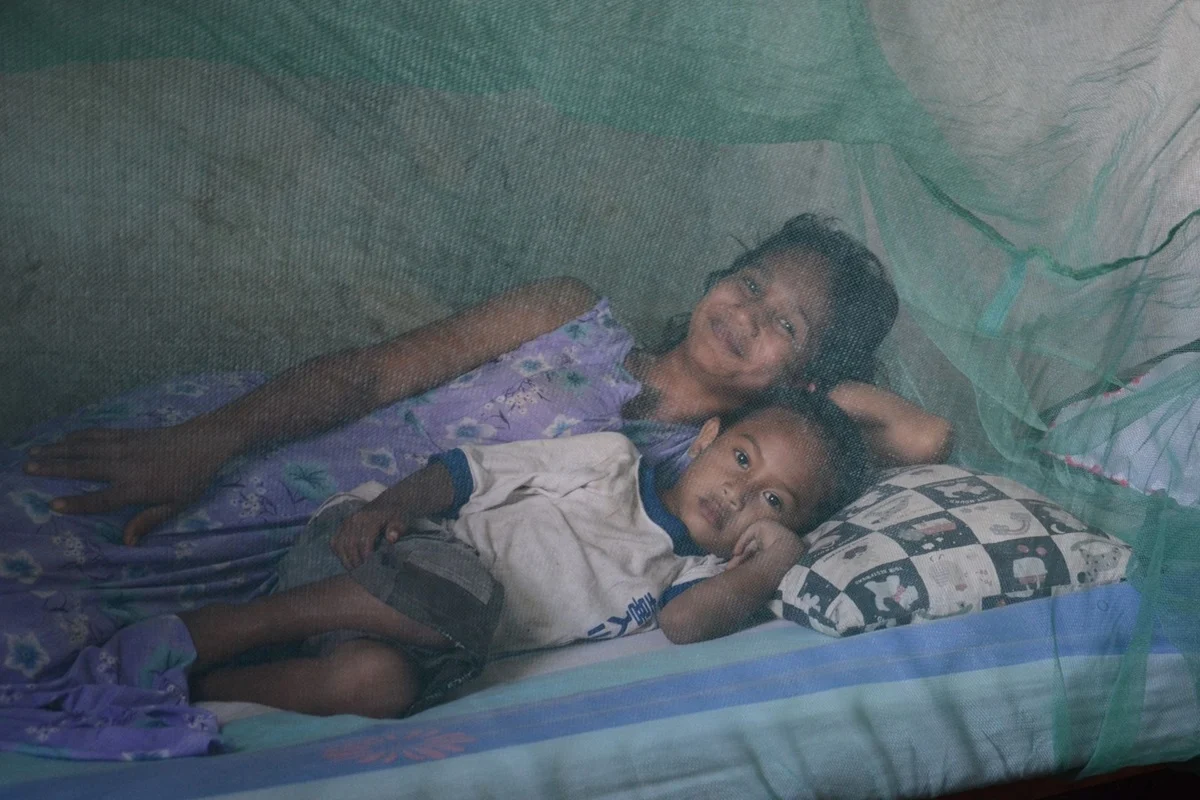
Within a few years of its inception, the National Malaria Programme began implementing a multi-pronged strategy. This included the introduction of rapid diagnostic tests (RDTs) for swift and accurate identification of malaria parasites, and artemisinin-based combination therapy (ACT) as the standard treatment protocol, both integrated into the National Malaria Treatment Guidelines. Concurrently, the government initiated the widespread distribution of free long-lasting insecticide-treated nets (LLINs) to communities deemed most vulnerable, a crucial measure in preventing mosquito bites and breaking the transmission cycle.
The scaling up of these interventions received a significant boost in 2009 with crucial support from the Global Fund to Fight AIDS, Tuberculosis and Malaria. This partnership enabled a nationwide expansion of vector control efforts, including further distribution of LLINs and the implementation of indoor residual spraying (IRS), which coats interior surfaces of homes with insecticide to kill mosquitoes. Alongside these preventative measures, diagnostic capabilities were dramatically enhanced, with microscopy and RDTs becoming available at the point of care across all local health posts, ensuring that diagnosis was accessible even in remote areas.
Addressing the inherent challenges of a limited workforce, including severe shortages of health workers and medical doctors, Timor-Leste made strategic investments in developing its three-tier health system. This robust structure comprises national hospitals, reference hospitals, community health centers (CHCs), and local health posts, meticulously designed to ensure that the vast majority of residents could access essential care within an hour’s walk. Furthermore, the government’s unwavering commitment to universal health coverage meant that citizens received free health services at the point of care, eliminating financial barriers to treatment. To bridge geographical gaps and serve its dispersed rural population, the nation also deployed monthly mobile clinics and comprehensive community outreach programs, taking healthcare directly to the people.
Reflecting on the dramatic reduction from over 223,000 clinically diagnosed cases in 2006 to a sustained period of zero indigenous transmissions, Minister of Health Dr. Élia António de Araújo dos Reis Amaral underscored the profound human impact of this victory. "Malaria has been one of our most relentless enemies — silent, persistent, and deadly," she articulated, acknowledging the lives lost and emphasizing the imperative to safeguard this hard-won freedom. "This elimination honours every life lost and every life now saved. We must safeguard this victory with continued vigilance and community action to prevent malaria’s re-entry." Her words encapsulate the deep personal and national significance of overcoming a disease that had long plagued the population.
The success story of Timor-Leste is a powerful testament to the critical role of strong national leadership coupled with broad-based collaboration. The intricate network of partnerships involved the Ministry of Health, the WHO, local communities, non-governmental organizations, various donor agencies, and multiple government sectors. This integrated approach facilitated the establishment of a real-time, integrated case-based surveillance system, enabling rapid data collection and immediate response to any suspected cases. Concurrently, a cadre of well-trained health workers ensured the timely detection and screening of malaria cases, including rigorous monitoring at border crossings to prevent re-introduction of the parasite from neighboring regions. These multifaceted and integrated efforts collectively paved the way for the country’s official malaria-free certification.
Dr. Arvind Mathur, WHO Representative to Timor-Leste, highlighted the unique resilience and determination displayed by the young nation. "Timor-Leste’s malaria-free certification is a defining national triumph – driven by bold leadership, tireless efforts of health workers, and the resolve of its people," he stated. "As a young nation, Timor-Leste stayed focused – testing, treating, and investigating swiftly. Ending transmission and maintaining zero deaths takes more than science; it takes grit. This victory protects generations, present and future, and shows what a determined country can achieve." His comments underscore not only the scientific and logistical achievements but also the profound human spirit that underpinned this public health victory.
While celebrating this monumental achievement, it is crucial to recognize that maintaining malaria-free status demands continuous vigilance. The risk of re-introduction, particularly in a region where malaria remains endemic in some areas, necessitates ongoing surveillance, robust diagnostic capabilities, and rapid response mechanisms. Timor-Leste’s experience provides invaluable lessons for global health, illustrating how a nation, even with limited resources and complex post-conflict challenges, can achieve ambitious health targets through strategic planning, community empowerment, and sustained international partnership. It serves as an inspiring blueprint for sustainable development, aligning closely with the United Nations Sustainable Development Goal 3, which aims to ensure healthy lives and promote well-being for all at all ages, including ending the epidemics of AIDS, tuberculosis, malaria, and other communicable diseases. The nation’s journey from a high-burden zone to a malaria-free territory stands as an enduring symbol of what focused determination can accomplish in the realm of global public health.
About the Author