Maximizing Muscular Health Post-60: A Brief Morning Regimen for Enhanced Strength and Mobility
As individuals advance into their later decades, maintaining robust physical health becomes increasingly critical, yet paradoxically, many face significant challenges in adhering to recommended exercise protocols. One of the most prevalent and impactful issues is sarcopenia, the age-related decline in skeletal muscle mass, strength, and function. This insidious process typically begins around age 30 and accelerates significantly after 60, contributing to reduced mobility, increased risk of falls, impaired metabolic health, and diminished overall quality of life. Despite the unequivocal benefits of resistance training in counteracting sarcopenia, statistics reveal a concerning trend: fewer than 15% of older adults consistently engage in strength-building activities at least twice weekly, as advised by public health guidelines. This significant gap highlights a critical need for accessible, time-efficient, and effective exercise solutions tailored for the senior demographic.
Recognizing this widespread challenge, experts are continually exploring innovative approaches to promote muscular vitality without demanding extensive time commitments or specialized equipment. One such approach, championed by Domenic Angelino, MS, MPH, CSCS, CPT, Chief Exercise Scientist at FitCraft, outlines a concise six-minute morning routine specifically designed to foster muscle restoration and development in individuals over the age of 60. This protocol emphasizes dynamic movements and foundational strength exercises, offering a compelling strategy for enhancing physical resilience and functional independence in a remarkably brief timeframe. While traditional weight training undoubtedly offers profound benefits, the efficacy of this streamlined routine lies in its consistency and targeted application, proving to be a potent tool for muscle maintenance and growth, especially when compared to the sporadic or non-existent engagement in resistance exercise common among many seniors.
The core philosophy behind this accelerated regimen centers on preparing the body efficiently for movement, followed by engaging major muscle groups through compound and isolation exercises. A crucial initial component involves a dynamic warm-up, which differs significantly from static stretching. Dynamic movements involve taking joints and muscles through a full range of motion in a controlled manner, increasing blood flow, elevating core body temperature, and enhancing neuromuscular coordination. This preparatory phase is vital for improving flexibility, reducing the risk of injury during subsequent movements, and optimizing performance.
Angelino specifically advocates for three dynamic warm-up exercises to kickstart the routine:
Standing Toe Touches: This exercise serves as an excellent primer for the posterior chain, particularly targeting hamstring flexibility. As people age, hamstrings often become tighter, a condition that can contribute to poor posture, lower back discomfort, and restricted movement patterns. By performing controlled standing toe touches—reaching towards the toes without locking the knees, focusing on a fluid, rhythmic motion rather than a prolonged hold—individuals can progressively improve the extensibility of these crucial muscles. Enhanced hamstring flexibility not only mitigates injury risk but also supports better functional movements like bending, lifting, and walking with greater ease and stability.
Overhead Arm Swings: The shoulder joint, a highly mobile ball-and-socket joint, is prone to stiffness and reduced range of motion with age if not regularly exercised. Overhead arm swings are a dynamic movement that helps to mobilize the shoulder girdle and improve overhead mobility. This is particularly beneficial as many daily activities, such as reaching for items on a high shelf, dressing, or performing tasks above eye level, require adequate overhead range. By incorporating these swings, individuals can prepare their shoulders for more demanding movements, including the overhead press later in the routine, while simultaneously enhancing overall shoulder health and preventing potential impingement issues.
Cross-Body Arm Swings: Often, modern lifestyles involving prolonged sitting or forward-leaning postures contribute to a condition known as rounded shoulders or kyphosis, which is particularly common in older adults. Cross-body arm swings are an effective dynamic stretch to counteract this postural imbalance. By swinging the arms across the body, individuals can actively open up the chest and stretch the muscles of the upper back and shoulders, promoting better thoracic spine mobility. This movement helps to improve overall posture, alleviate tension in the upper body, and restore a more upright and open physical alignment.
Following the dynamic warm-up, the routine transitions into the strength-building phase, focusing on fundamental movements that yield maximum benefit in minimal time. These exercises are strategically chosen to engage multiple muscle groups, promoting comprehensive muscular development and functional strength.
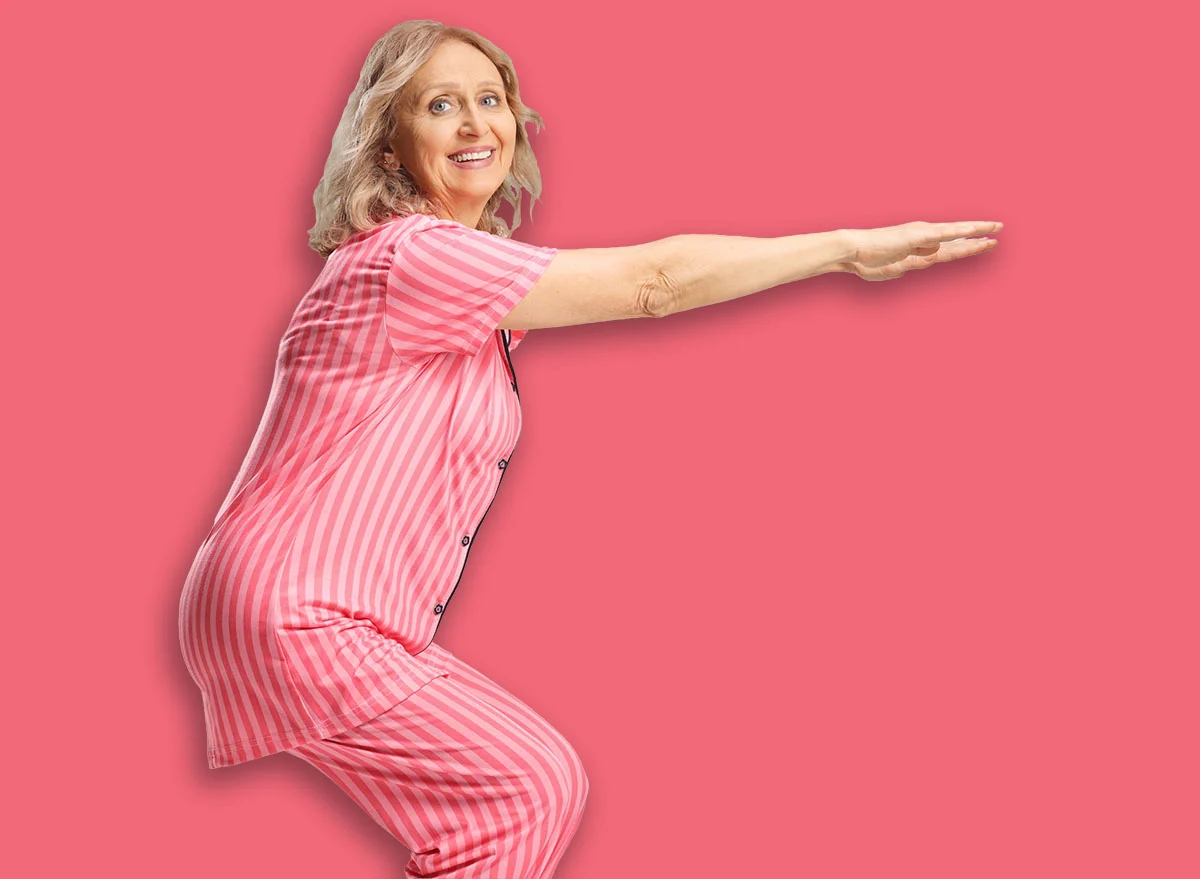
Bodyweight Squats: Squats are universally recognized as a cornerstone exercise, deeply rooted in fundamental human movement patterns. This exercise effectively targets the major muscle groups of the lower body, including the quadriceps, hamstrings, and glutes, while also engaging the core for stability. For seniors, the ability to perform a bodyweight squat proficiently directly translates to functional independence—the capacity to sit down and stand up from a chair, climb stairs, and maintain balance during daily activities. Angelino emphasizes that integrating squats into a routine provides a robust foundation, offering adaptability for future exercise needs as strength and mobility evolve. Proper form, focusing on controlled descent and ascent, with the chest up and heels planted, is paramount to maximize benefits and prevent strain.
Overhead Presses: This exercise specifically targets the muscles responsible for lifting the arms overhead, primarily the deltoids (shoulder muscles) and triceps. In many daily scenarios, these muscles are not sufficiently challenged to maintain their strength organically. Overhead pressing directly addresses this deficit, building strength and stability crucial for a multitude of overhead tasks, from reaching for objects to carrying groceries. This movement supports overall upper body functional strength, helping to prevent shoulder dysfunction and ensure continued ease in daily living activities that require arm elevation. For those new to the movement or with limited shoulder mobility, starting with a partial range of motion or using very light resistance (even just hands in fists) is a safe and effective way to progress.
Dumbbell Curls: To conclude the strength segment, the routine incorporates an isolation exercise: dumbbell curls. After engaging in compound movements that work multiple joints and muscle groups simultaneously, finishing with an exercise that focuses on a single muscle group and joint can be highly beneficial. Dumbbell curls specifically target the biceps, muscles in the front of the upper arm responsible for flexing the elbow and supinating the forearm. Angelino notes that the biceps are often not fully engaged by the preceding compound movements, making this exercise an important "filler" to ensure balanced muscular development. Strong biceps contribute significantly to grip strength, carrying heavy objects, and various pulling tasks, enhancing overall upper body functionality. This exercise allows for a focused effort on a muscle group vital for daily life without over-fatiguing the system after compound lifts.
The comprehensive benefits of consistently engaging in such a routine extend far beyond merely increasing muscle mass. Regular resistance training, even in short bursts, plays a crucial role in improving bone mineral density, thereby reducing the risk of osteoporosis and fractures. It significantly enhances balance and coordination, which are critical factors in fall prevention, a major concern for older adults. Furthermore, strength training positively impacts metabolic health, aiding in blood sugar regulation, weight management, and overall cardiovascular well-being. Mentally, physical activity has been linked to improved cognitive function, reduced symptoms of depression and anxiety, and an overall boost in mood and energy levels. Ultimately, embracing a consistent, brief exercise regimen like this six-minute protocol empowers seniors to maintain their functional independence, enhance their vitality, and significantly improve their quality of life as they age. Before embarking on any new exercise program, it is always advisable to consult with a healthcare professional to ensure it aligns with individual health conditions and capabilities.
Related posts:

Related News