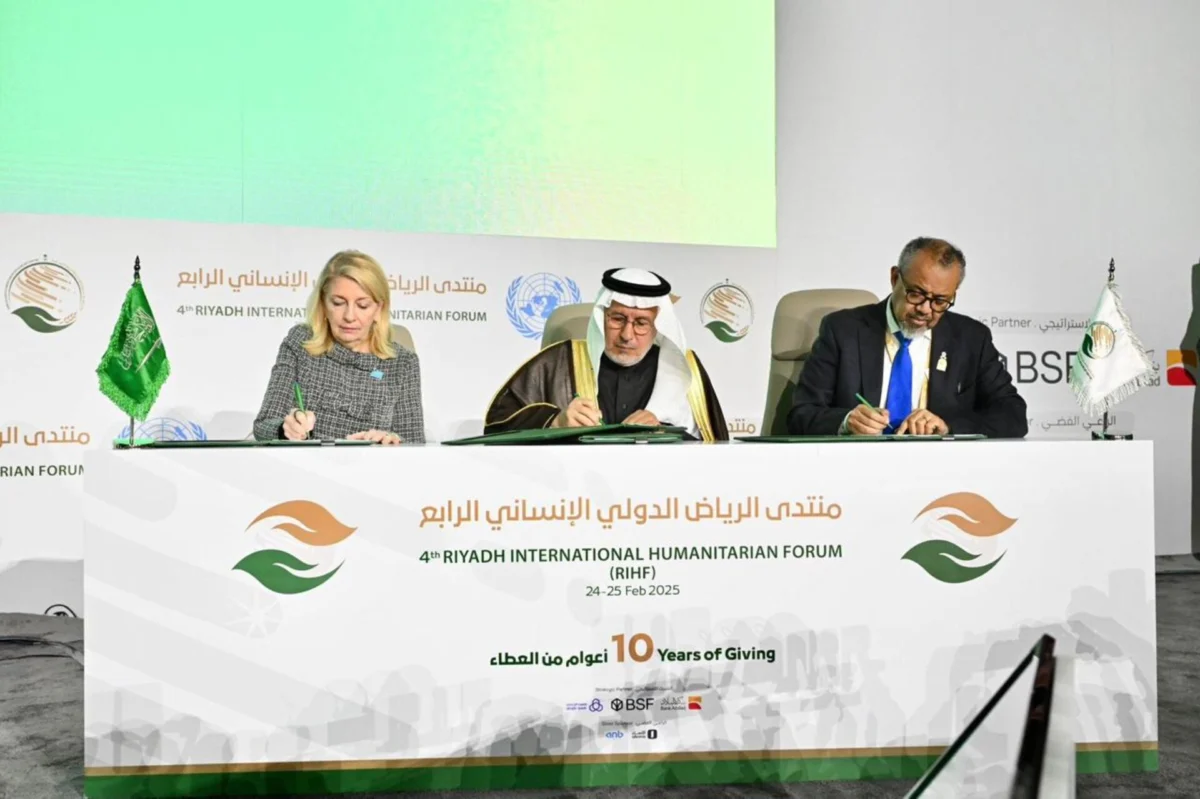
The Kingdom of Saudi Arabia, through its King Salman Humanitarian Aid and Relief Centre (KSRelief), has significantly amplified its commitment to global public health and humanitarian interventions, formalizing substantial new agreements with the World Health Organization (WHO) and UNICEF. These pivotal collaborations, unveiled during the Riyadh International Humanitarian Forum (RIHF) held from February 24-25, 2025, underscore an intensified focus on combating endemic diseases and supporting vulnerable populations impacted by conflict and displacement across the globe. The forum itself served as a crucial platform for international dialogue, bringing together a broad spectrum of humanitarian actors to strategize responses to the world’s most acute crises.
A cornerstone of Saudi Arabia’s renewed pledges is an extraordinary US$500 million commitment towards the Global Polio Eradication Initiative (GPEI). This substantial sum, initially announced in April 2024, was formally segmented and allocated during the RIHF, with US$300 million directed to the WHO and an additional US$200 million designated for UNICEF. This monumental financial infusion is designed to bolster the GPEI’s ambitious objective of immunizing 370 million children annually, propelling the world closer to the complete eradication of poliomyelitis. The commitment arrives at a critical juncture, as the persistent threat of polio resurfaces in several fragile and conflict-affected regions, including Pakistan, Afghanistan, and the Gaza Strip, highlighting the enduring challenges in achieving a polio-free world.
The Global Polio Eradication Initiative, launched in 1988, represents one of the most ambitious public health undertakings in history. Its mission is to wipe out polio worldwide through widespread vaccination, rigorous surveillance, and rapid response to outbreaks. While significant progress has been made, reducing polio cases by over 99% since its inception, the final stages of eradication have proven exceptionally difficult. The wild poliovirus now primarily persists in only two countries, Afghanistan and Pakistan, where insecurity, vaccine hesitancy, and complex logistics hinder vaccination efforts. The recent detection of poliovirus in other areas, including Gaza, underscores the reality that as long as polio exists anywhere, it poses a risk everywhere. Saudi Arabia’s substantial contribution is therefore not merely financial; it represents a strategic investment in global health security, aiming to close critical funding gaps and fortify the GPEI’s ability to reach every child, particularly those in hard-to-access areas where the virus finds refuge. The funds will be instrumental in supporting vaccination campaigns, strengthening surveillance systems to detect new cases, and enhancing community engagement to build trust and overcome resistance to immunization.

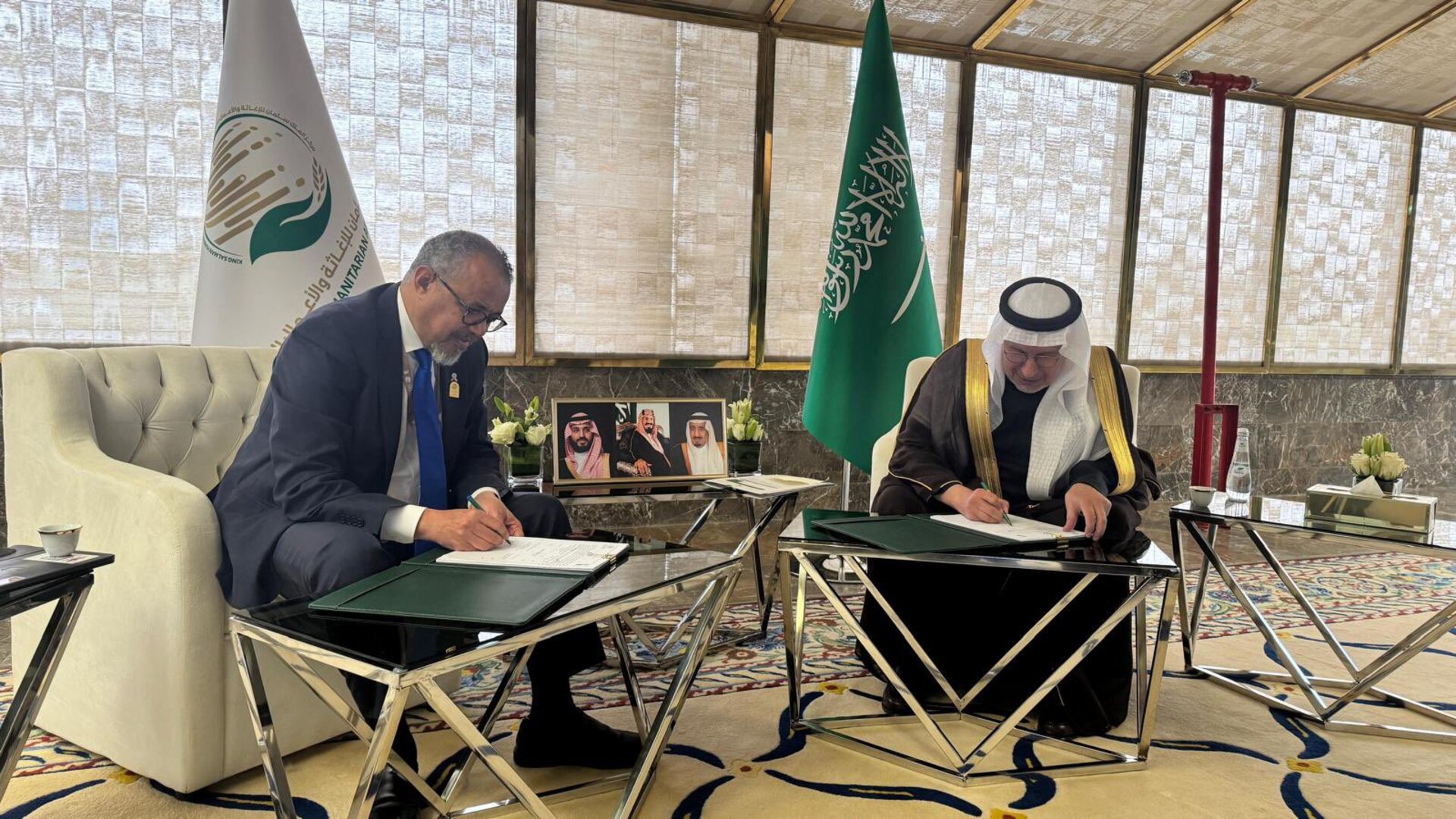
Beyond the global polio effort, the RIHF also saw the signing of targeted agreements between WHO and KSRelief to address immediate health crises in Yemen and for Sudanese refugees in Egypt. Yemen, ravaged by years of conflict, continues to grapple with one of the world’s most severe humanitarian emergencies, characterized by widespread food insecurity, collapsed infrastructure, and a devastating healthcare crisis. In this context, two crucial agreements were forged to combat communicable diseases that thrive in such dire conditions. A significant allocation of US$12 million will be channeled towards comprehensive malaria control programs, while an additional US$2.1 million is earmarked for expanding cholera treatment initiatives.
Malaria and cholera represent acute public health threats in Yemen. The breakdown of public health systems, displacement of populations, and lack of access to clean water and sanitation create fertile ground for these diseases to spread rapidly. Malaria, a mosquito-borne illness, causes fever, chills, and other flu-like symptoms, and can be fatal if untreated. Cholera, a severe diarrheal disease, can lead to rapid dehydration and death within hours if not promptly managed. The US$12 million for malaria control will facilitate vector control measures, distribute insecticide-treated nets, improve diagnostic capabilities, and ensure access to antimalarial drugs. The US$2.1 million for cholera treatment will focus on establishing and equipping treatment centers, providing oral rehydration salts and intravenous fluids, and implementing public health campaigns to promote hygiene and safe water practices. These interventions are critical for saving lives and preventing further outbreaks in a country where healthcare facilities are often overwhelmed or non-functional.
Furthermore, the humanitarian implications of the ongoing conflict in Sudan have led to a mass exodus of its citizens, with many seeking refuge in neighboring countries like Egypt. Recognizing the specific and often complex health needs of these displaced populations, KSRelief and the WHO Egypt Country Office finalized an agreement valued at US$3.6 million. This funding is specifically designated to provide essential dialysis treatment for Sudanese refugees residing in Egypt. Chronic kidney disease is a debilitating condition requiring regular dialysis, a life-sustaining treatment that is often inaccessible or prohibitively expensive for refugees who have fled with little to no resources. The provision of these specialized medical services underscores a targeted approach to humanitarian aid, acknowledging that generalized support must be complemented by solutions for specific, high-cost medical requirements. The conflict in Sudan has not only caused widespread displacement but also severely disrupted healthcare services within the country, leaving many with chronic conditions without the care they need. This initiative in Egypt will alleviate immense suffering and prevent avoidable fatalities among a particularly vulnerable segment of the refugee population.
The Riyadh International Humanitarian Forum itself, celebrating the 10th anniversary of KSRelief, served as a powerful testament to the growing global influence of Saudi Arabia in humanitarian affairs. KSRelief, established in May 2015, has rapidly emerged as a leading international aid organization, delivering assistance to numerous countries affected by crises. Its mandate extends beyond mere relief, encompassing development and rehabilitation efforts, with a strong emphasis on impartiality and neutrality. The forum provided an opportunity to reflect on KSRelief’s decade of operations and to solidify its partnerships with key international bodies like WHO and UNICEF. Discussions at the RIHF also extended to broader, overarching themes critical to effective humanitarian response, including the imperative of safeguarding the security of aid workers in increasingly perilous environments and the strategic role of health diplomacy in navigating complex geopolitical landscapes to deliver aid.
Health diplomacy, a concept that integrates foreign policy and public health objectives, plays a pivotal role in these partnerships. It involves leveraging health interventions as a means of fostering international cooperation, building trust, and promoting peace. The collaboration between Saudi Arabia, WHO, and UNICEF exemplifies this, demonstrating how shared health goals can transcend political divides and contribute to global stability. Similarly, the security of aid workers remains a paramount concern in contemporary humanitarian operations. With conflicts becoming more protracted and complex, aid workers frequently face direct threats, kidnappings, and attacks. The forum’s focus on this issue underscores a collective recognition that effective humanitarian response is contingent upon ensuring the safety and unimpeded access of those delivering life-saving assistance.
In conclusion, the agreements forged at the Riyadh International Humanitarian Forum represent a significant stride in global health cooperation. Saudi Arabia’s substantial financial commitments, particularly to polio eradication and targeted interventions in Yemen and Egypt, highlight its evolving and increasingly prominent role as a major contributor to international humanitarian efforts. The strategic partnerships between KSRelief, WHO, and UNICEF are not merely transactional; they embody a shared vision for a healthier, more resilient world, demonstrating how collaborative action can effectively address the multifaceted challenges posed by disease, conflict, and displacement. These initiatives serve as a powerful reminder of the collective responsibility to protect the most vulnerable and to invest in global health security for the benefit of all humanity.
About the Author