
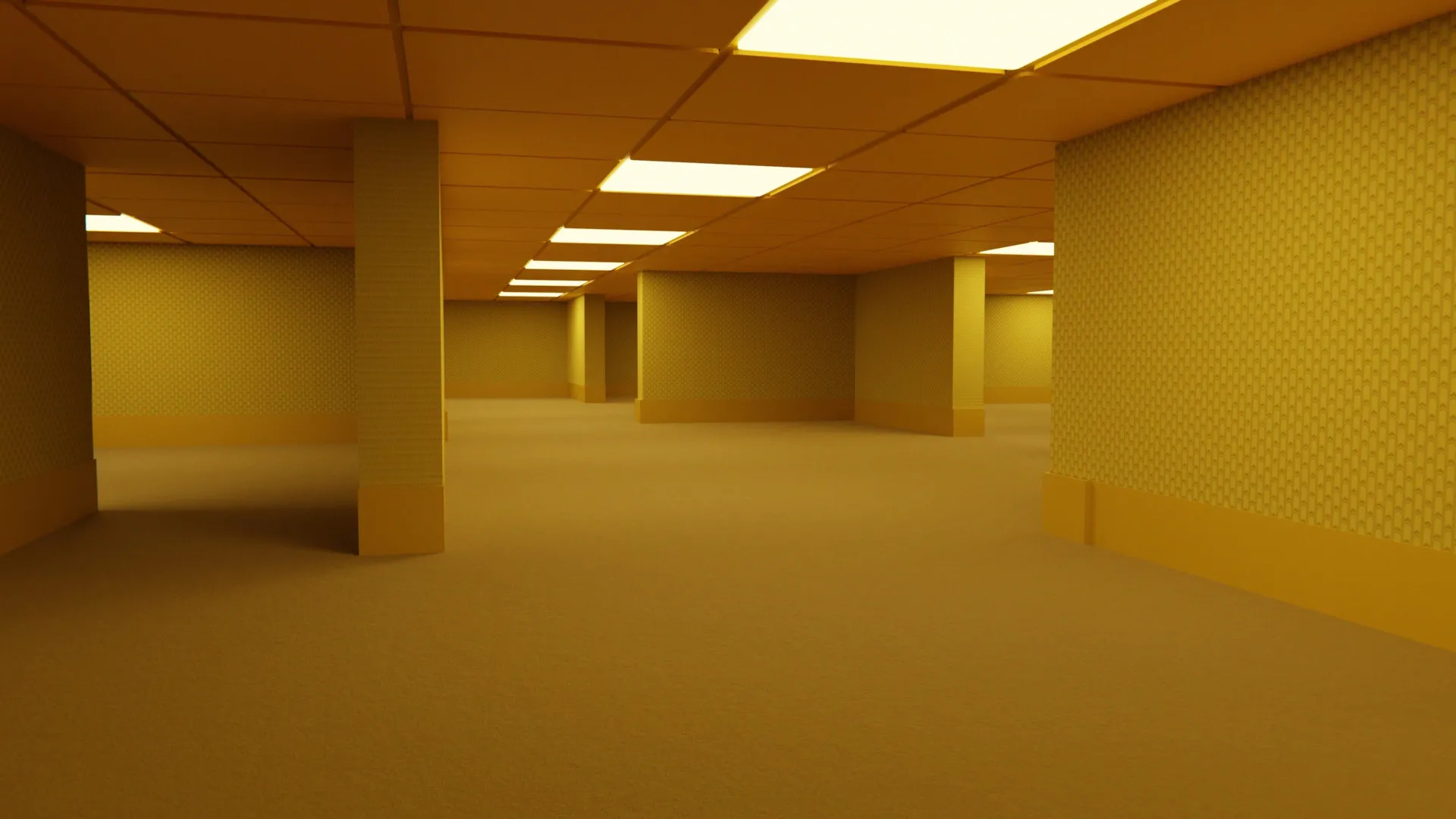
What if one could embark on a journey to a locale entirely absent from any cartographical representation, a place alluded to in hushed online tones as if it existed just beyond the periphery of our recognized existence? This is the domain known simply as the Backrooms, an emergent fictional construct that has captured the collective imagination of the internet. Conceived as an infinite, Escher-esque network of identical, fluorescent-lit chambers, the core premise of the Backrooms revolves around the unnerving possibility of inadvertently slipping from the fabric of ordinary reality and becoming perpetually ensnared within this monotonous, labyrinthine expanse, devoid of any discernible egress.
The genesis of the Backrooms phenomenon can be traced back to a single, anonymously disseminated image posted on the online forum 4chan in 2019. This initial visual, a claustrophobic tableau of garishly yellow, windowless rooms adorned with aged carpeting and stark overhead lighting, evoked a potent blend of menace and a strange, disquieting nostalgia. Intrigued by this ambiguous yet compelling aesthetic, denizens of the internet began to weave narratives and theories, speculating that the Backrooms represented a hidden dimension into which individuals might inadvertently fall.
From its humble online origins, the Backrooms concept has proliferated across a diverse range of digital platforms, including Reddit, TikTok, and YouTube, as well as various gaming communities. Within these virtual spaces, users collaboratively engage in the meticulous mapping, detailed narration, and ongoing expansion of its sprawling mythology. The collective output of this user-generated content frequently features unsettling imagery and haunting anecdotes, depicting endless corridors lined with peculiar yellow wallpaper and desolate, office-like environments that exist in a state of ontological separation from conventional reality.
A significant catalyst in elevating the Backrooms from a niche online curiosity to a more widely recognized cultural phenomenon has been the viral success of filmmaker Kane Parsons’ series of "found footage" videos on YouTube. Parsons’ cinematic approach transformed the static, low-resolution imagery of the Backrooms into immersive, visceral explorations, effectively solidifying its status as one of social media’s most recognizable and unsettling horror environments. The ongoing development of a feature-length horror thriller based on the Backrooms, helmed by Parsons and produced by A24, signals a profound transition for this peculiar fictional world, propelling it into the mainstream discourse.
While superficially the Backrooms might appear to be merely another iteration of an accelerated urban legend, akin to well-known "creepypasta" narratives such as Slenderman or the Russian Sleep Experiment, a deeper analysis suggests a more significant cultural shift is at play. Research indicates a burgeoning interest in spaces associated with horror and trauma, particularly concerning their mediation and novel modes of experiential engagement. This fascination with the unsettling and the uncanny is not entirely new, as studies into "dark tourism" reveal a persistent human draw towards locations steeped in death, disaster, tragedy, and the inexplicable. Such sites, including former correctional facilities, derelict industrial landscapes, or places marked by somber historical events, often present an encounter with atmospheres charged with profound emotional, symbolic, or existential weight.
The Backrooms, however, innovatively extend this inherent human curiosity into uncharted, participatory territory. Unlike virtual "dark tourism" that facilitates passive "armchair travel" to tangible heritage sites marked by historical tragedy, the Backrooms lack a physical anchor or a specific historical event to commemorate. Instead, it offers a collectively constructed and entirely digital realm characterized by pervasive unease, profound abandonment, and a pervasive sense of liminality – that unsettling feeling of being in a transitional space, neither here nor there.
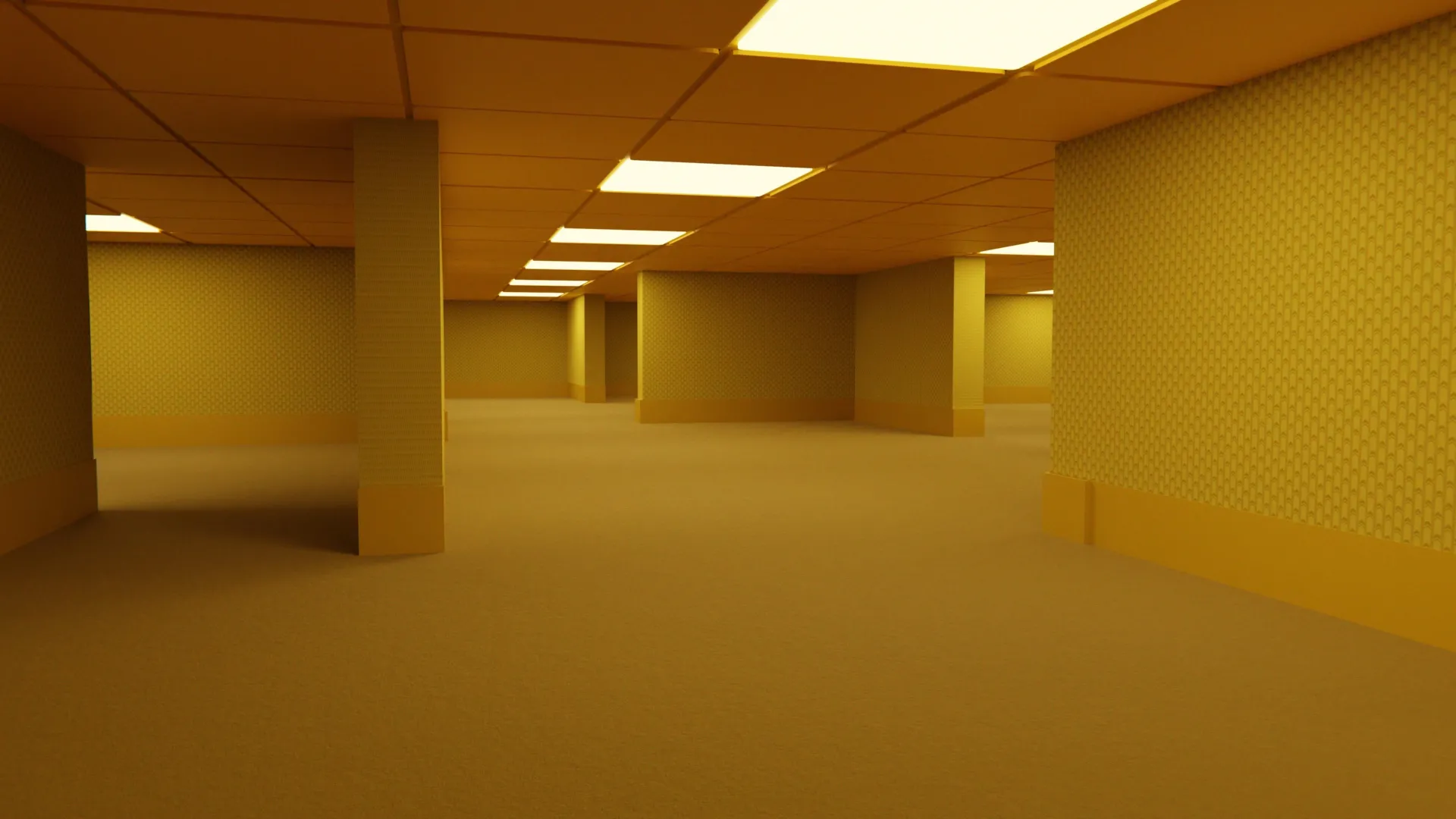
The enduring appeal of the Backrooms stems precisely from its deliberate absence of a fixed mythology, geographical grounding, or established historical narrative. This fluidity empowers users to imbue the environment with meaning, even as it evokes an uncanny sense of familiarity. The dated decor, the endless hotel-like corridors, the ubiquitous ceiling tiles, and the echoes of abandoned office spaces within the Backrooms resonate with the often-overlooked "non-places" of modern existence – environments that many people recognize but seldom consciously register.
This phenomenon underscores how digital culture is actively reshaping experiences traditionally understood within the context of tourism, paradoxically transforming the mundane into the menacing. The Backrooms function less as a narrative passively received and more as a world actively inhabited. Through a multitude of YouTube videos, video games, virtual reality experiences, and TikTok edits, audiences are positioned directly within the environment, effectively blurring the demarcations between storytelling, role-playing, tourism, and active online participation.
This dissolution of boundaries may well explain the profound resonance of the Backrooms phenomenon within our current cultural moment. The internet is no longer solely a network for information dissemination or communication; it is progressively evolving into a complex landscape that individuals emotionally navigate and fully inhabit. The Backrooms, in this regard, offer a glimpse into a future where collectively imagined digital realms can attain the status of meaningful cultural environments in their own right – places to which people can virtually "travel," which they can explore, in which they can invest emotionally, and to which they can repeatedly return, despite their complete lack of physical existence.
The sustained engagement with the Backrooms is further amplified by the participatory nature of its creation and consumption. With hundreds of thousands of members populating the r/backrooms subreddit and an immense volume of content tagged #backrooms on TikTok surpassing half a million posts, the phenomenon demonstrates significant reach. Instagram fan pages, such as @xbackroom, boasting hundreds of thousands of followers, actively contribute to the expanding mythology through curated images, intricate edits, and speculative storytelling. Users go beyond mere observation, actively constructing maps, penning fictional diary entries, devising survival guides, and producing found-footage videos and first-person explorations that collectively enrich and expand this digital world.
This active role in world-building distinguishes the Backrooms from more conventional horror films or spectral tales. Instead of passively absorbing a predetermined narrative, participants are actively involved in the construction and navigation of the environment itself. Folklore scholar Michael Kinsella has aptly described this form of online engagement as "online legend-tripping," a process where audiences transition from mere spectators to contributors, collaborators, and integral world-builders.
In contrast to the overexposed and overexplained nature of much of contemporary global experience, where every destination is meticulously photographed and every event documented for social media consumption, the mystery inherent in the Backrooms offers a distinct appeal. The current digital landscape often feels saturated, with virtually every locale and experience meticulously cataloged, reviewed, and channeled into readily digestible content. The allure of the Backrooms lies in its embrace of the unknown, its resistance to complete explication, and its capacity to evoke a sense of genuine discovery within its meticulously crafted digital architecture. This inherent ambiguity allows for continuous interpretation and expansion, ensuring its ongoing relevance and its capacity to draw in new audiences seeking an escape from the mundane into the profoundly unsettling.
About the Author












