
The natural physiological process of aging often leads to a gradual yet significant reduction in muscle mass and strength, a condition scientifically termed sarcopenia. For men transitioning into their mid-fifties and beyond, this decline is not merely an aesthetic concern; it carries profound implications for overall health, functional independence, and quality of life. The consequences extend beyond reduced physical capacity, impacting metabolic health, increasing the risk of falls and fractures, diminishing bone density, and potentially even influencing cognitive function. However, contemporary research unequivocally demonstrates that this trajectory is not inevitable. Through consistent and targeted strength training, men over 55 possess a remarkable capacity to not only mitigate muscle loss but also to build and sustain considerable strength, enhancing their physical resilience and promoting long-term well-being.
The cornerstone of effectively countering age-related muscle atrophy lies in providing the body with a regular, challenging stimulus. This doesn’t necessitate grueling, marathon gym sessions. Instead, the focus should be on a select set of highly effective, compound movements performed with proper form and progressive overload. Such a regimen is designed to be both practical and sustainable, integrating seamlessly into daily life without demanding excessive time or specialized equipment. By consistently signaling to the muscles that strength and activity are required, the body is compelled to adapt, preserving existing tissue and even fostering new growth. A well-rounded routine should encompass exercises that address major muscle groups, including pushing movements for the upper body, foundational strength for the lower body, essential pulling actions, hip power, and robust core control. The following five exercises are carefully selected for their high return on investment, ease of learning, adaptability across various fitness levels, and their capacity to drive continuous progress, making them ideal for men over 55 committed to maintaining their physical prowess.
1. Dynamic Upper Body Press: The Push-up
The push-up stands as a quintessential bodyweight exercise, unparalleled in its ability to simultaneously engage multiple muscle groups across the upper body and core. For men over 55, incorporating push-ups into a regular routine is vital for maintaining pressing strength, which is functionally critical for numerous daily activities. Imagine the force required to push open a heavy door, brace oneself during an unexpected stumble, or simply rise from the floor; these actions rely heavily on the muscular synergy developed by push-ups. This exercise targets the pectoralis major (chest), deltoids (shoulders), triceps (back of the arms), and significantly activates the abdominal muscles and glutes to maintain a stable plank position.
Its versatility is a key advantage. For individuals rebuilding strength or new to exercise, incline push-ups—performed with hands elevated on a bench, table, or wall—effectively reduce the load, making the movement more accessible. As strength improves, lowering the incline or progressing to knee push-ups provides intermediate challenges. Advanced practitioners can increase intensity through slower tempos, paused repetitions, or even by adding external resistance with a weighted vest. The continuous practice of push-ups also serves as an excellent benchmark for tracking upper-body strength progression over time, offering a tangible measure of physical improvement. Consistency in form is paramount: aim for a controlled descent with elbows tracking at roughly a 45-degree angle to the body, and push back up to full arm extension, engaging the core throughout the movement to prevent sagging hips. Perform 2 to 3 sets of 6 to 12 repetitions, adjusting variations as needed to maintain good form.
2. Unilateral Leg Strength and Balance: The Dumbbell Walking Lunge
Leg strength and balance are indispensable for maintaining mobility and preventing falls, a concern that grows more significant with age. The dumbbell walking lunge specifically addresses these crucial areas by training each leg independently, thereby exposing and correcting any strength imbalances that may have developed. This unilateral approach is particularly beneficial as strength often diminishes unevenly in the lower limbs. The walking lunge dynamically engages the quadriceps, gluteal muscles, hamstrings, and calves, while simultaneously challenging core stability and coordination. These are the very attributes that translate directly into improved gait, easier navigation of stairs, and enhanced agility in everyday movements.
Beginning with bodyweight walking lunges is recommended to first master the movement pattern and ensure smooth, controlled execution. Once comfortable, incorporating light dumbbells held at the sides can progressively increase the resistance. The exercise involves taking a deliberate step forward, lowering the hips until both knees are bent at approximately a 90-degree angle, with the rear knee hovering just above the ground. The front knee should remain aligned over the ankle, and the torso should stay upright. Crucially, avoid rushing the movement; focus on stability and control with each step. Other beneficial variations include stationary lunges, reverse lunges (stepping backward), and shorter-stride lunges, which can emphasize different muscle groups or reduce the range of motion if needed. Aim for 2 to 3 sets of 8 to 10 repetitions per leg, ensuring balanced work on both sides.
3. Posterior Chain and Postural Integrity: Bent-Over Rows
In an era dominated by sedentary lifestyles and forward-slumped postures, the importance of robust upper back strength cannot be overstated, especially for men over 55. Bent-over rows are a foundational pulling exercise that directly counters the common tendency for shoulders to round forward, promoting better posture and shoulder health. This movement effectively targets the latissimus dorsi (lats), rhomboids, trapezius (upper and middle back), posterior deltoids, and biceps, while also engaging the core and grip muscles to maintain a stable, hinged position. Developing strong back muscles is essential for tasks requiring pulling, such as opening stiff doors, gardening, or lifting objects towards the body.
To execute a bent-over row, begin by hinging at the hips, keeping the back straight and chest proud, allowing the dumbbells to hang towards the floor. From this position, pull the weights towards the lower rib cage, squeezing the shoulder blades together at the peak of the contraction. It’s vital to avoid shrugging the shoulders towards the ears; instead, focus on initiating the pull with the back muscles. Variations like single-arm dumbbell rows (supported by a bench) can help address unilateral strength deficits and further challenge core stability. Resistance band rows offer a convenient, low-impact alternative, while chest-supported rows remove the demand on the lower back, allowing for greater focus on the upper back muscles. Perform 2 to 3 sets of 8 to 12 repetitions, emphasizing controlled movement and a strong squeeze at the top.
4. Fundamental Power and Hip Hinge: The Kettlebell Deadlift
The deadlift is often hailed as the "king of all exercises" due to its unparalleled ability to develop full-body strength, particularly in the posterior chain (glutes, hamstrings, and lower back). For men over 55, the kettlebell deadlift is an exceptionally valuable strength builder because it trains the hips, legs, and back through the critical "hinge" pattern – a movement fundamental to safely lifting objects from the ground. This exercise directly translates into greater confidence and efficiency when performing everyday tasks such as lifting groceries, picking up children, or engaging in yard work, while also significantly bolstering lower back health.
The kettlebell’s unique design, with its handle positioned above its center of mass, makes it particularly approachable for learning the deadlift movement. It naturally encourages a more upright torso position compared to a barbell, reducing the strain on the lower back while still providing a potent strength stimulus. To perform, stand with feet hip-width apart, with the kettlebell positioned between the feet. Hinge at the hips, keeping the back straight and chest up, to grasp the kettlebell. Drive through the heels, engaging the glutes and hamstrings, to stand upright, maintaining a neutral spine throughout. The movement should be driven by the hips, not the lower back. Progressive overload can be achieved by gradually increasing the kettlebell weight, or by performing the lift with the kettlebell elevated on blocks to increase the range of motion. Suitcase deadlifts, holding a kettlebell in one hand, further challenge core stability. Execute 2 to 3 sets of 8 to 10 repetitions, ensuring the kettlebell remains close to the body during both the ascent and descent.
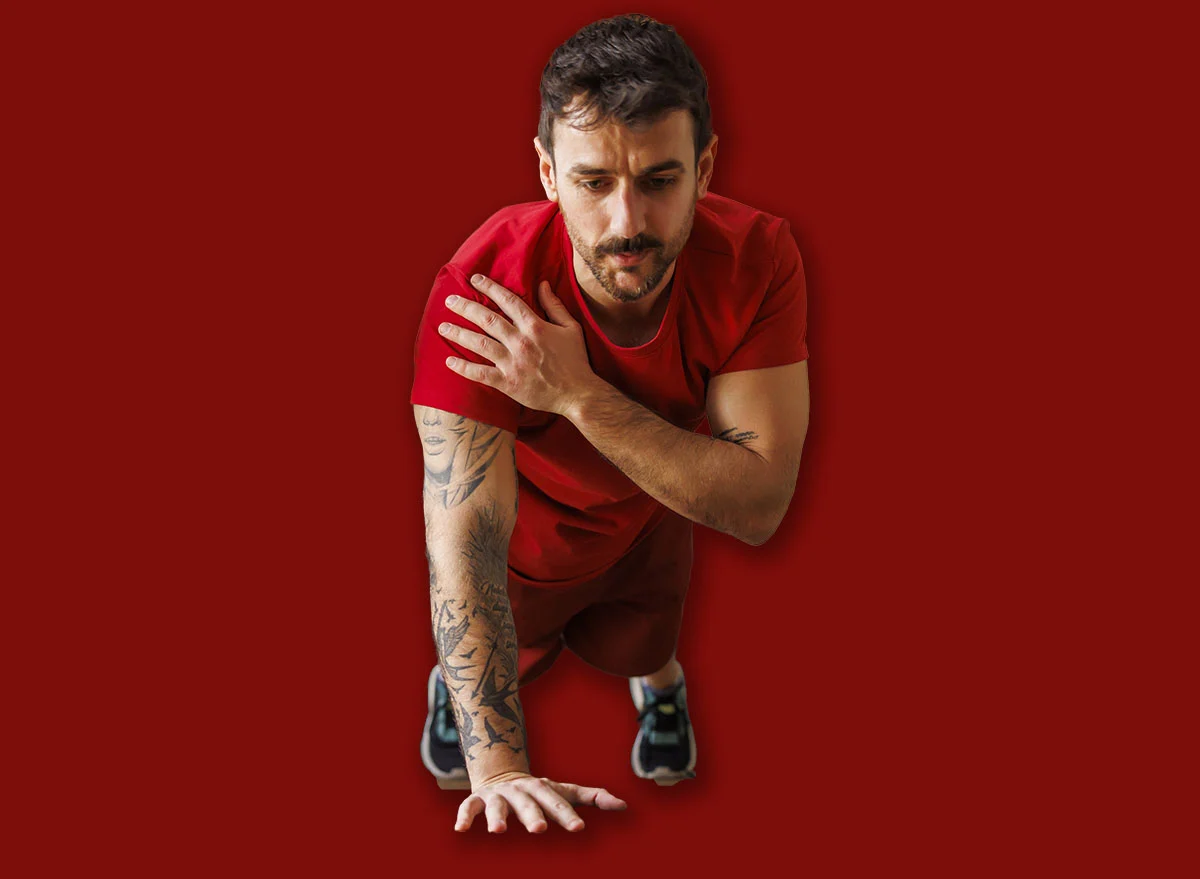
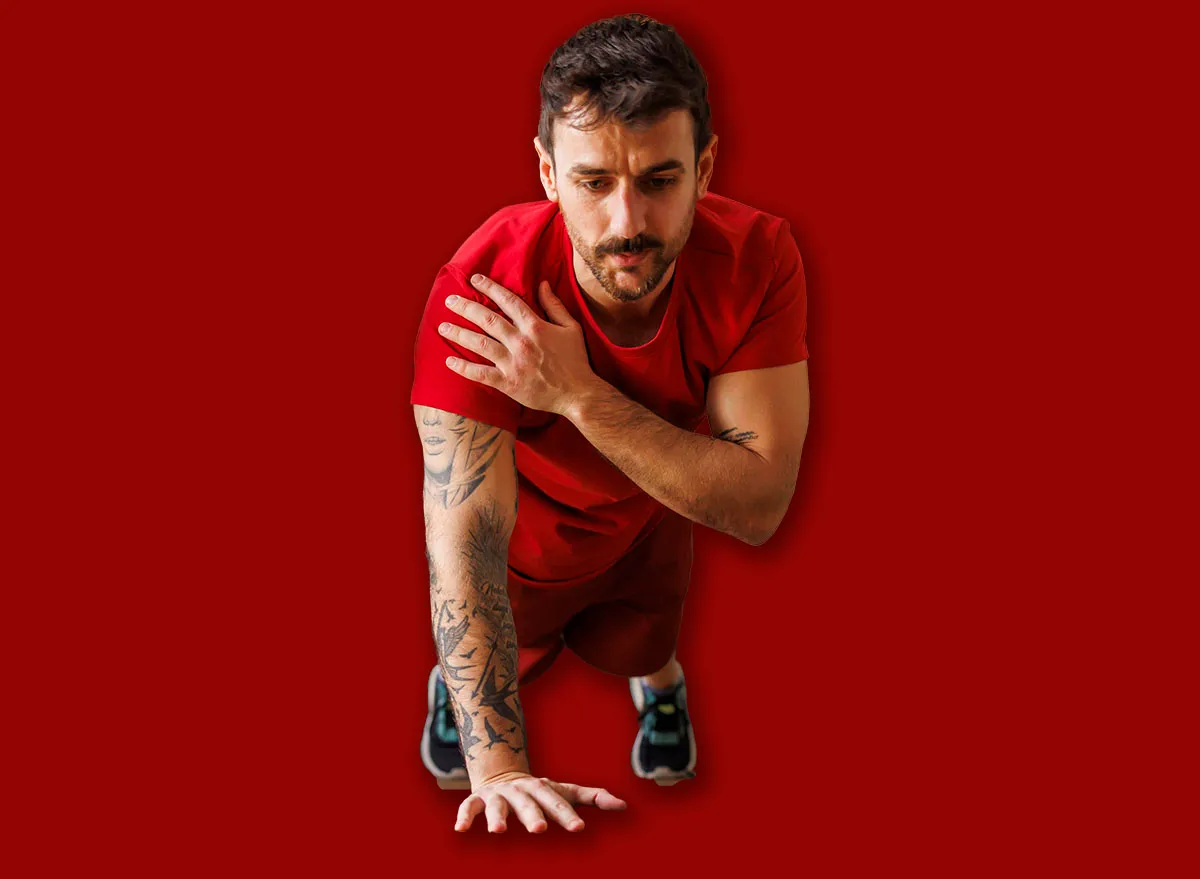
5. Dynamic Core Stability and Shoulder Control: Plank with Shoulder Taps
While a static plank is an excellent core exercise, integrating shoulder taps introduces a dynamic element that significantly elevates its benefits. The plank with shoulder taps demands active core engagement to resist rotational forces as the body’s weight shifts from side to side. This anti-rotational strength is crucial for stabilizing the spine during various movements, from walking and running to lifting and twisting. For men over 55, this exercise is an efficient way to enhance core strength, improve shoulder stability, and heighten body awareness without requiring any additional equipment. It directly contributes to a stronger foundation for all other exercises in this routine, including push-ups, rows, lunges, and deadlifts, by ensuring the midsection can effectively transfer force and maintain rigidity.
Starting in a strong plank position, with hands directly under the shoulders and the body forming a straight line from head to heels, slowly lift one hand to tap the opposite shoulder. The primary goal is to minimize any rocking or swaying of the hips. The core muscles, including the transverse abdominis, obliques, and rectus abdominis, must work intensely to keep the pelvis stable. To modify the exercise, widen the stance of the feet for increased stability. For an added challenge, slow down the tempo of each tap, increasing the time under tension for the core and shoulder stabilizers. Incline variations (hands on an elevated surface) or knee planks with shoulder taps can make the movement more accessible for beginners. Perform 2 to 3 sets of 6 to 10 taps per side, prioritizing stability and controlled movement over speed.
Cultivating Long-Term Muscular Resilience
Sustaining muscle mass and strength beyond the age of 55 is an achievable and profoundly beneficial goal. The efficacy of any strength training program hinges on several key principles: consistency, progressive overload, adequate nutrition, and sufficient recovery. Integrating these five foundational exercises into a routine three to five days per week provides a robust framework. It is imperative to listen to one’s body, adapting intensity and volume as needed. Some days may call for a more controlled, manageable session, while others, when the body feels recovered and energized, present opportunities to push effort levels slightly higher.
Beyond the exercises, a balanced diet rich in protein is crucial for muscle repair and growth, especially as protein synthesis efficiency can decrease with age. Adequate sleep and stress management also play vital roles in recovery and hormonal balance, which directly impact muscular health. Strength training should be viewed not as an episodic pursuit but as an integral, lifelong commitment to physical autonomy and well-being. By embracing this approach, men over 55 can not only defy the typical narrative of age-related decline but also cultivate a stronger, more capable, and vibrant future. For those new to strength training or managing pre-existing conditions, consulting with a healthcare provider or a certified fitness professional is always recommended to ensure the routine is safe and optimally tailored to individual needs.
About the Author










