
The intricate journey of human cognitive advancement, marked by a significant expansion of the brain, may have been subtly influenced by hormonal environments experienced in the womb, according to novel research. A potential vestige of this early developmental signaling, researchers propose, can be discerned in the differential lengths of a person’s fingers. This line of inquiry delves into how the balance of sex hormones during critical prenatal stages might have set the stage for later physiological and neurological developments, potentially even impacting the evolutionary trajectory of our species.
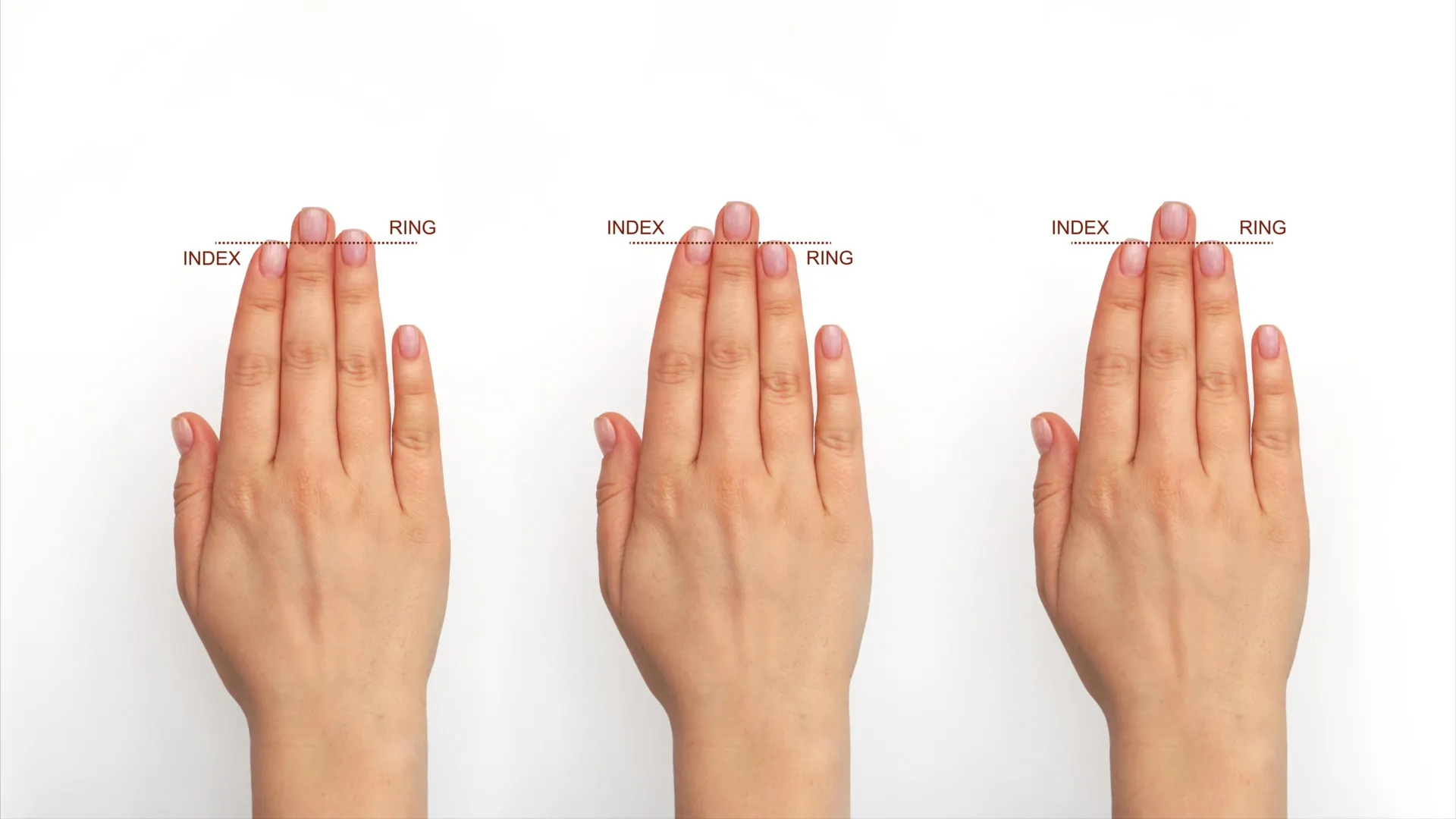
At the forefront of this investigation is Professor John Manning, a key figure within Swansea University’s Applied Sports, Technology, Exercise and Medicine (A-STEM) research unit, whose scholarly pursuits have long centered on the measurement and interpretation of digit ratios. This specific metric, known as the 2D:4D ratio, involves a direct comparison between the length of the index finger (referred to as the second digit, or 2D) and the ring finger (the fourth digit, or 4D). The established premise behind employing this ratio is its utility as an indirect proxy for the relative levels of fetal exposure to key sex hormones, namely estrogen and testosterone, during the initial trimester of gestation.
The prevailing hypothesis posits that individuals exhibiting a proportionally longer index finger relative to their ring finger—resulting in a higher 2D:4D ratio—likely experienced a milieu of higher prenatal estrogen exposure compared to testosterone. Conversely, a lower 2D:4D ratio is often associated with a comparative advantage in testosterone exposure during the same developmental window. This differential hormonal environment, researchers believe, can leave subtle but measurable imprints on a developing fetus, influencing a spectrum of physical and potentially cognitive characteristics.
The most recent exploration into this phenomenon was a collaborative effort between Professor Manning and his colleagues at Istanbul University’s Department of Anthropology, with their findings being formally documented and disseminated in the esteemed journal Early Human Development. This particular study sought to establish a tangible link between the digit ratio of newborns and a fundamental indicator of early brain development: head circumference.
The research team meticulously examined a cohort of 225 infants, comprising 100 males and 125 females. For each participant, a precise measurement of their 2D:4D digit ratio was obtained. This measurement was then systematically correlated with the infant’s head circumference, a widely recognized proxy for cranial volume and, by extension, a general indicator of brain size in neonates. It is important to acknowledge that while head circumference serves as a valuable initial marker, the complexities of intelligence and cognitive function are influenced by a vast array of interacting genetic, environmental, and developmental factors throughout an individual’s life.
The analysis revealed a noteworthy correlation: male newborns who displayed a higher 2D:4D ratio, suggestive of greater prenatal estrogen exposure, also tended to exhibit larger head circumferences. This observed relationship, however, was not replicated in the female infants within the study cohort, suggesting a potential sex-specific influence of prenatal hormones on early cranial development.
These findings lend significant support to a theoretical framework known as the "estrogenized ape hypothesis." This evolutionary perspective suggests that the remarkable increase in brain size characteristic of human lineage occurred concurrently with a suite of skeletal changes that rendered the human frame less robust and more gracile, or "feminized," when contrasted with the skeletal structures of our more ancient primate ancestors. The hypothesis proposes that hormonal shifts, potentially favoring estrogenic influences, played a role in this evolutionary transition.
Professor Manning elaborated on the significance of these results in the context of human evolutionary biology, stating that the observed association between increased brain size and a trend towards skeletal feminization aligns directly with the tenets of the estrogenized ape hypothesis. He further noted that previous research has indicated that high 2D:4D ratios in males can be linked to certain health predispositions, including an elevated risk of cardiovascular issues, reduced sperm counts, and a greater susceptibility to schizophrenia. However, the hypothesis also suggests that the evolutionary advantages conferred by larger brains might have served to counterbalance or offset these potential biological drawbacks. Consequently, the powerful evolutionary impetus driving the expansion of the human brain may have been intrinsically intertwined with compromises in male biological viability, manifesting as increased risks for cardiovascular ailments, infertility, and schizophrenia.
The researchers infer that the substantial evolutionary benefits derived from larger brains might have outweighed the associated biological costs that accompanied the hormonal conditions facilitating their development. This perspective highlights the complex interplay of trade-offs that can shape evolutionary pathways.
In summation, the research team posits that their findings contribute to a growing body of evidence suggesting a potentially positive role for prenatal estrogen exposure in the evolutionary development of the human brain. It is crucial to emphasize that the study does not assert a direct causal link where finger length dictates brain size. Instead, the 2D:4D digit ratio is conceptualized as a potential bio-marker, offering insights into the hormonal milieu experienced during critical fetal development. The identified association, therefore, serves as a potential clue, illuminating how prenatal hormonal influences may have been instrumental in shaping the evolutionary trajectory of the human species. Professor Manning’s prior scholarly work has explored the broader utility of digit ratio analysis, extending to investigations into its potential correlations with factors such as prenatal alcohol exposure, post-COVID-19 health outcomes, and indicators of oxygen consumption in elite athletes.
About the Author












