Sustaining physical autonomy and vitality is a paramount concern for individuals navigating the later stages of life. As the global population ages, the imperative to maintain robust physical capabilities becomes increasingly significant, directly impacting quality of life and independence. The natural physiological changes accompanying aging, such as sarcopenia—the progressive loss of muscle mass and strength—and diminished balance and proprioception, elevate the risk of falls and hinder the performance of daily activities. Regular, targeted physical activity emerges as a cornerstone strategy to counteract these age-related declines, fostering resilience and preserving functional capacity.
While various forms of exercise contribute to overall well-being, standing exercises offer a distinct advantage, particularly for older adults seeking to enhance their functional strength and balance. Unlike movements performed in a seated position or with the assistance of machines that isolate muscle groups, standing exercises inherently demand greater engagement from the body’s core musculature, alongside smaller stabilizing muscles. This holistic activation is crucial for developing the integrated strength and coordination necessary for everyday tasks. Joe LaCerra, a seasoned personal trainer and owner of W.O.L.F Gyms, highlights that these types of movements cultivate superior body mechanics and proprioception—the body’s awareness of its position in space. This enhanced spatial awareness and muscular control are directly linked to a reduced likelihood of stumbles and falls, a critical consideration for aging individuals.
The unique efficacy of standing exercises stems from their ability to mimic and reinforce the fundamental movement patterns intrinsic to daily living. Actions such as bending, lifting, stepping, pushing, pulling, and carrying are multi-joint, coordinated efforts that recruit numerous muscle groups simultaneously while challenging balance and postural control. Dr. Hazel Anderson, a Doctor of Physical Therapy and Associate Professor at the University of St. Augustine for Health Sciences, emphasizes that thoughtfully selected standing exercises provide exceptional value because they train the body to work cohesively in these familiar patterns. This integrated strength translates directly into a greater ease in performing common household chores, navigating stairs, managing groceries, and recovering from minor imbalances, thereby bolstering overall confidence and independence. The accessibility of bodyweight standing exercises further enhances their appeal; they require minimal to no specialized equipment, making them an ideal and convenient option for home-based fitness routines.
Prior to embarking on any new exercise regimen, especially for those over 65 or with pre-existing health conditions, consulting a healthcare provider or a certified fitness professional is always recommended. This ensures that the chosen exercises are appropriate for individual fitness levels and health statuses. Once cleared, a gradual and consistent approach, prioritizing proper form over intensity, is key. The following five standing exercises are highly effective for cultivating full-body strength, improving balance, and fostering functional independence, often yielding benefits comparable to, or even exceeding, those derived solely from gym memberships.
Goblet Squats
The goblet squat stands as a foundational lower-body exercise, celebrated for its effectiveness in developing comprehensive strength in the quadriceps and gluteal muscles. By holding a light weight (such as a dumbbell or kettlebell) vertically against the chest, this movement also inherently activates the core and encourages the maintenance of a neutral spinal alignment. This engagement of the trunk muscles is vital for supporting the spine during everyday lifting and bending activities. For older adults, mastering the squat pattern is profoundly beneficial, as it directly translates to the ease of sitting down and standing up from chairs, navigating car entry and exit, and maintaining stability during other lower-body dominant tasks. The controlled descent and ascent in a goblet squat enhance hip and knee mobility, contributing to a broader range of motion and reducing stiffness.
Romanian Deadlifts (RDLs)
Often misunderstood, the Romanian deadlift is a powerful exercise for strengthening the posterior chain—specifically the glutes, hamstrings, and the erector spinae muscles along the spine. Contrary to common apprehension about spinal injury during bending, a correctly executed RDL significantly bolsters spinal resilience over time. This movement teaches the crucial hip-hinge pattern, which is fundamental for safely picking up objects from the floor without straining the lower back. By developing robust hamstrings and glutes, RDLs contribute significantly to walking efficiency, stair climbing power, and overall lower body stability. The controlled eccentric (lowering) phase of the RDL also improves muscle elasticity and joint integrity, both essential for preventing injuries and maintaining agile movement.
Standing Dumbbell Shoulder Press
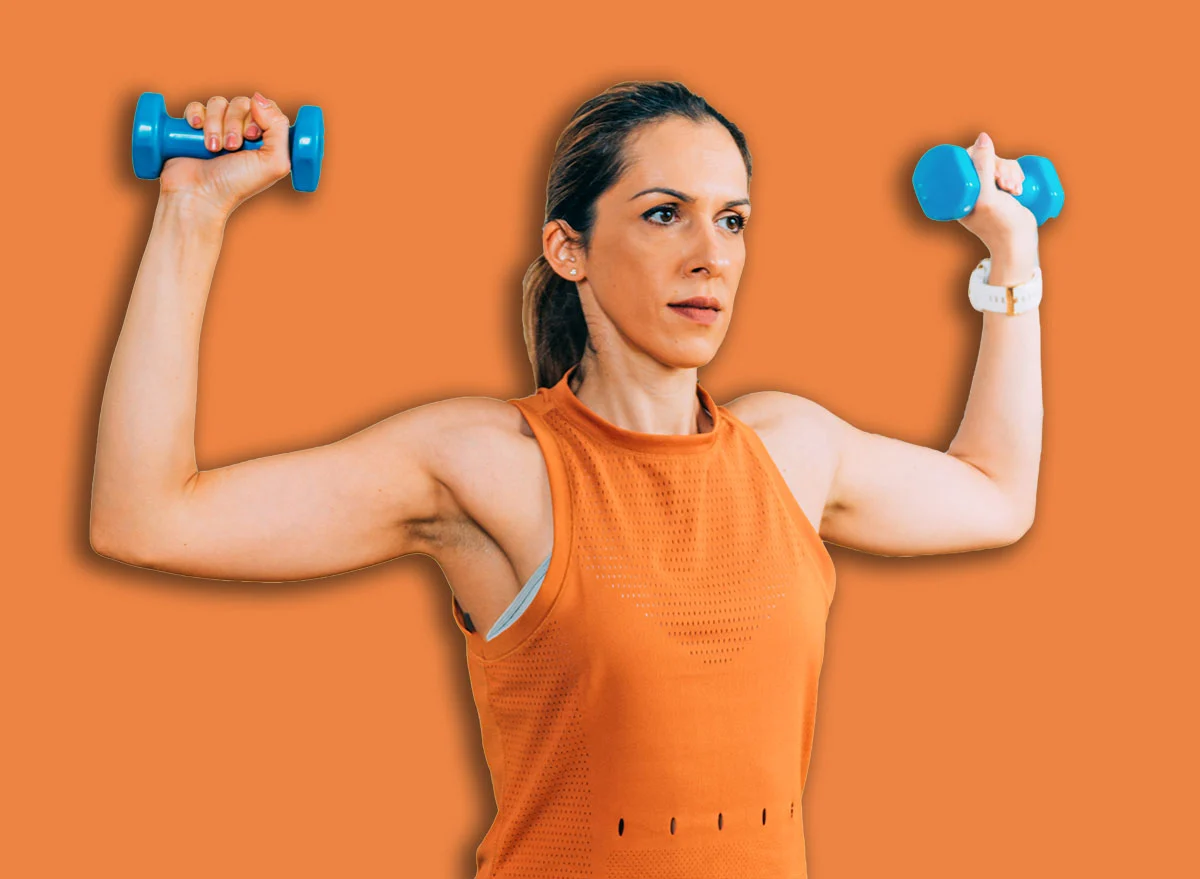
The standing dumbbell shoulder press brings significant upper body engagement into play, primarily targeting the deltoids (shoulders) and triceps. Performing this movement while standing elevates its functional utility, as it necessitates active core stabilization throughout the exercise. This simultaneous engagement of the upper body and core strengthens the muscles responsible for overhead movements, such as reaching for items on a high shelf, lifting objects into overhead storage, or even pushing open heavy doors. The challenge to maintain an upright posture while pressing weights overhead helps to improve balance and coordination, translating into enhanced control during various daily activities that require upper body strength and stability.
Squat to Chair
The squat to chair exercise is an exceptionally practical and accessible movement, particularly valuable for older adults. Its genius lies in its direct replication of the common action of transitioning from a standing to a seated position, and vice versa. Dr. Anderson highlights this exercise as a personal favorite due to its immediate relevance to daily life, including standing up from a chair, exiting a vehicle, or using the toilet independently. It systematically strengthens the quadriceps, glutes, and hamstrings while improving balance and control during a fundamental functional movement. As individuals gain strength, they can progress by reducing reliance on their hands or by using a lower chair, gradually increasing the challenge and further enhancing their functional capacity.
Incline Pushups
Incline pushups are a highly adaptable and effective exercise for building upper body pushing strength in the chest, shoulders, and triceps, while simultaneously engaging the core. This movement directly supports activities such as pushing open doors, moving furniture, or assisting oneself in getting up from a seated position or the floor using armrests. The beauty of incline pushups lies in their scalability: beginning with hands placed on a wall offers minimal resistance, making it suitable for all fitness levels. As strength improves, the angle can be adjusted by moving the hands to a lower, stable surface like a countertop or a sturdy table, progressively increasing the amount of body weight the upper body must support. This progressive overload ensures continuous improvement in strength and endurance, vital for maintaining independence in everyday pushing and pressing tasks.
In conclusion, integrating a routine of functional standing exercises into an active lifestyle offers a profound pathway to preserving and enhancing physical capabilities throughout the aging process. These bodyweight movements, requiring no specialized gym equipment, strategically address the key pillars of senior fitness: strength, balance, and proprioception. By consistently engaging in exercises like goblet squats, Romanian deadlifts, standing dumbbell shoulder presses, squat to chair, and incline pushups, individuals can significantly bolster their ability to perform daily tasks with greater ease, confidence, and safety. This proactive approach to physical well-being fosters not only physical resilience but also contributes significantly to maintaining a vibrant, autonomous, and fulfilling life well into advanced age, demonstrating that true strength lies in the ability to move through life unhindered.
About the Author