For many individuals navigating the journey past 60, maintaining physical vitality and a healthy body composition remains a significant wellness objective. A common aspiration involves addressing changes in abdominal contour, often colloquially referred to as a "muffin top." However, a pervasive misconception persists within fitness communities: that focused, high-repetition exercises targeting a specific body part, such as crunches or side bends, can selectively diminish fat from that area. Scientific investigation consistently indicates that the concept of "spot reduction," or targeting fat loss from a specific anatomical region through localized exercise, lacks physiological basis. The human body mobilizes fat stores from across the entire system for energy, not exclusively from the muscles being worked. Understanding this fundamental principle is crucial for developing an effective and sustainable fitness regimen, particularly for older adults seeking meaningful results.
Instead of isolated abdominal work, a more efficacious strategy centers on a holistic approach that integrates cardiovascular conditioning with full-body strength training and judicious core exercises. This synergistic method aims to elevate overall metabolic expenditure, build lean muscle mass, and concurrently reduce total body fat percentage. The outcome is not merely a cosmetic change but a profound improvement in body composition, leading to a more defined midsection and enhanced functional strength. Crucially, achieving these benefits does not necessitate a costly gym membership or specialized equipment, making it an accessible and empowering path for seniors to pursue from the comfort of their homes.
James Bickerstaff, a certified personal trainer at OriGym, advocates for this integrated methodology. He highlights that a routine blending cardiovascular elements with strength and targeted core engagement is substantially more effective for achieving a leaner midsection than repetitive, isolated abdominal movements. This comprehensive approach simultaneously elevates heart rate, fostering cardiovascular health, and stimulates muscle growth, which is instrumental in altering body composition over time. The physiological mechanisms at play involve increasing resting metabolic rate through muscle accretion and burning more calories during exercise through multi-joint movements.
The Centers for Disease Control and Prevention (CDC) provides comprehensive physical activity guidelines for older adults, which strongly endorse the combination of aerobic activity and muscle-strengthening exercises. These guidelines emphasize that combining both types of movement yields superior overall health outcomes compared to engaging in either activity in isolation. This principle forms the bedrock of the exercise circuit recommended by Bickerstaff, specifically designed to offer these dual benefits within a convenient morning timeframe. Such a regimen not only supports aesthetic goals but also profoundly contributes to maintaining functional independence, improving balance, enhancing bone density, and supporting cognitive function—all critical components of healthy aging.
A well-structured morning circuit offers several advantages. It leverages the early hours to establish a consistent routine, boosts metabolism for the day ahead, and provides a sense of accomplishment. The following four exercises, curated by Bickerstaff, are designed to be performed as a quick, yet potent, home-based circuit, strategically targeting fat loss and core strengthening for individuals over 60.
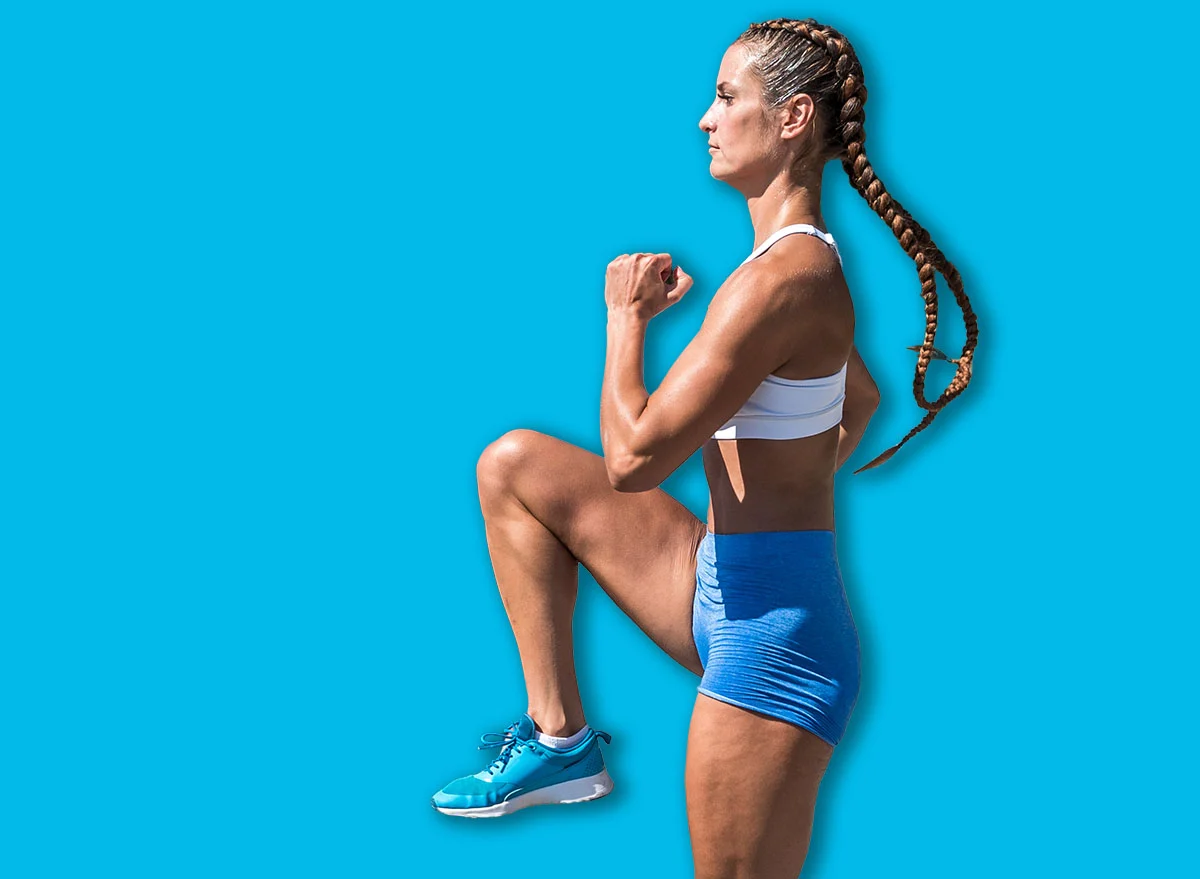
1. Marching High Knees
This dynamic movement serves as an excellent warm-up and a foundational exercise, seamlessly blending light cardiovascular activity with significant core engagement. Marching high knees are deceptively effective due to their dual action. As you lift your knees towards your chest, your abdominal muscles are intensely recruited to stabilize your trunk and maintain balance, providing an isometric core workout. Simultaneously, the repetitive motion elevates your heart rate, contributing to overall calorie expenditure, a critical factor in systemic fat reduction. This exercise not only prepares the body for subsequent movements but also initiates the metabolic boost crucial for a productive workout.
- Execution: Begin standing tall with your feet hip-width apart and arms bent at your sides, ready to pump. Gently lift one knee towards your chest, aiming for hip height or as high as comfortable, while simultaneously swinging the opposite arm forward. Lower the leg with control and immediately repeat on the other side, maintaining a steady, rhythmic pace. Focus on engaging your core throughout to prevent excessive rocking of the torso. For added stability, you may lightly touch a wall or sturdy chair. Perform for 30-60 seconds, ensuring smooth, controlled movements rather than speed.
2. Sit-to-Stand Squats
Often hailed as a cornerstone of functional fitness, the sit-to-stand squat is a compound movement that recruits some of the body’s largest muscle groups: the glutes, quadriceps, and hamstrings. Because these substantial muscles demand considerable energy to operate, squats significantly contribute to overall calorie burn, surpassing the metabolic impact of isolated abdominal exercises. Beyond their role in fat loss, these squats are paramount for strengthening the muscles essential for daily activities such as rising from a chair, climbing stairs, and maintaining mobility, thereby enhancing practical independence for older adults.
- Execution: Position yourself in front of a sturdy chair, bench, or even a couch, with your feet about shoulder-width apart and toes pointing slightly outward. Begin by hinging at your hips and bending your knees, as if you are about to sit down. Lower yourself until your glutes lightly touch the seat, or as deep as your mobility allows without pain. Maintain a proud chest and keep your gaze forward. Immediately press through your heels and stand back up to the starting position, squeezing your glutes at the top. Ensure your knees track in line with your toes and do not collapse inward. Aim for 10-15 repetitions, focusing on controlled movement. If needed, use your hands on your thighs for assistance during the upward phase.
3. Standing Cross-Body Knee Drives
This dynamic exercise introduces a vital element of rotational core work, engaging the entire midsection with a particular emphasis on the oblique muscles that run along the sides of the waist. While standing cross-body knee drives do not directly "burn fat" from the obliques, they are instrumental in strengthening and toning these muscles. As overall body fat percentage diminishes through a comprehensive fitness strategy, the enhanced strength and definition of the obliques contribute to a firmer, more sculpted midsection. This movement also challenges balance and coordination, which are crucial for fall prevention in older adults.
- Execution: Stand tall with your feet hip-width apart and hands lightly clasped behind your head or raised to shoulder height with elbows bent. Engage your core. Lift one knee towards your chest while simultaneously rotating your torso and bringing the opposite elbow towards that knee. The movement should be controlled, focusing on the contraction of your abdominal muscles and obliques. Return to the starting position with control and repeat on the other side. Imagine drawing your ribs towards your hips. Avoid simply bending forward at the waist; emphasize the rotational aspect. Perform 8-12 repetitions per side, ensuring a steady and deliberate pace.
4. Step-ups
Step-ups are an exceptionally effective multi-faceted exercise that combines elements of strength training, cardiovascular conditioning, and balance improvement into a single movement. By engaging several large muscle groups simultaneously—including the quadriceps, hamstrings, glutes, and calves—step-ups significantly boost daily energy expenditure. This high caloric burn is key to reducing overall body fat. Furthermore, this exercise helps to preserve and build muscle mass, which is critical for maintaining a healthy metabolism and preventing age-related muscle loss (sarcopenia). The unilateral (one-sided) nature of the movement also greatly enhances balance and proprioception, reducing the risk of falls.
- Execution: Find a sturdy, low step, bench, or the bottom stair of a staircase. Ensure the height is challenging but manageable, allowing you to maintain good form and control. Begin by placing one foot entirely on the step. Press through the heel of the elevated foot to lift your body onto the step, bringing your trailing leg up to meet the lead foot. Aim for controlled movement, avoiding pushing off forcefully with the bottom foot. Gently step back down with the lead foot first, followed by the trailing foot, returning to the starting position. Alternate lead legs with each repetition or complete a set on one side before switching. Focus on engaging the glutes and quads of the working leg. Perform 10-15 repetitions per leg, prioritizing smooth, deliberate movements over speed.
Integrating this type of balanced, full-body circuit into a daily morning routine, coupled with consistent attention to nutrition and adequate rest, provides a powerful framework for older adults to achieve their fitness goals. Beyond the visible changes in body composition, the profound benefits of enhanced strength, improved mobility, and increased energy contribute to a significantly higher quality of life and sustained wellness for years to come. Consistency, listening to your body, and gradual progression are the pillars of success in this transformative journey.
About the Author