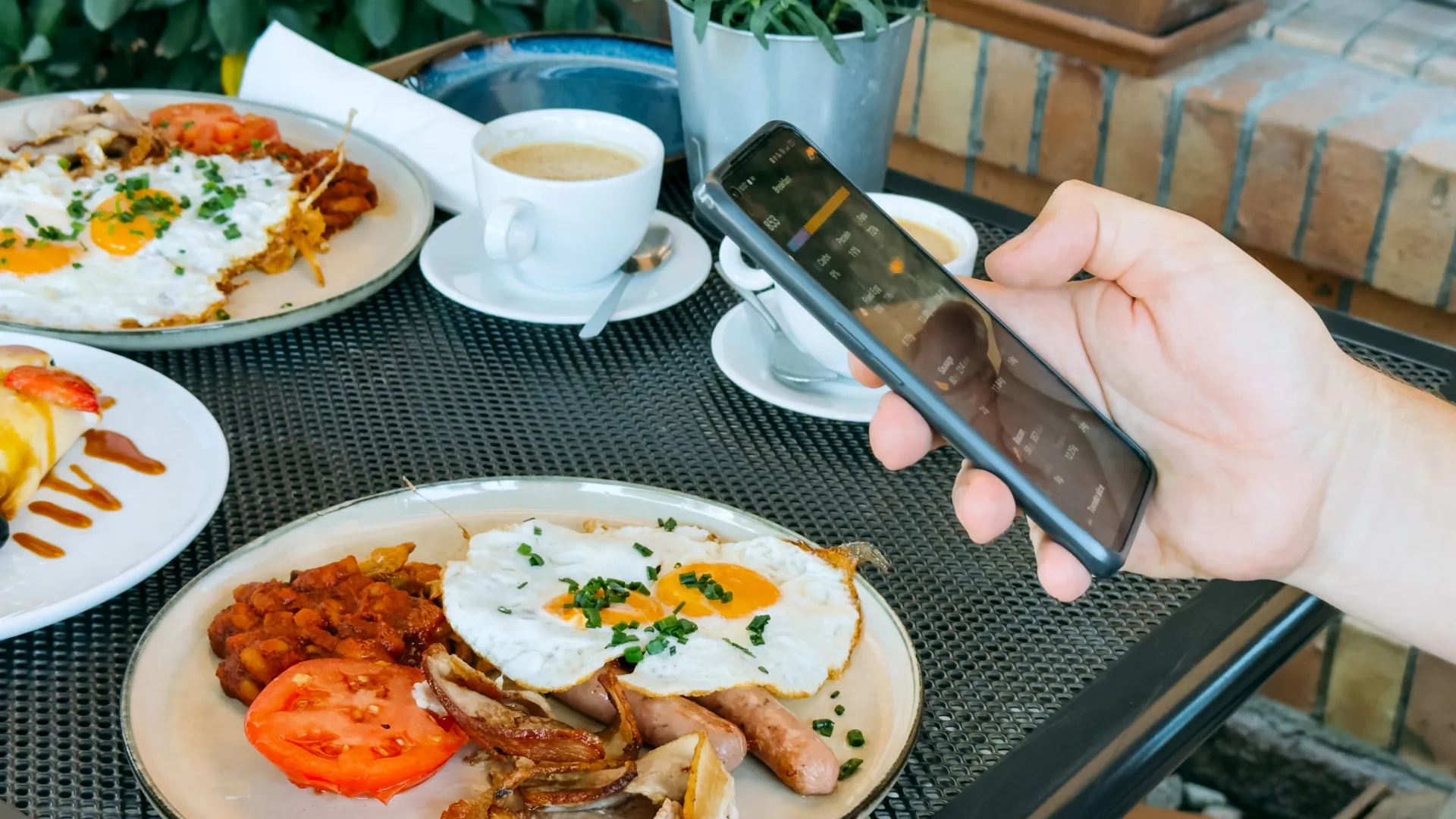
The proliferation of artificial intelligence in everyday technology has revolutionized countless aspects of modern life, extending even to personal health management. Among these innovations, AI-driven applications designed to track dietary intake by analyzing food photographs have gained immense popularity, promising unparalleled convenience for individuals seeking to monitor their nutritional consumption, manage weight, or adhere to specific dietary regimens. These tools offer a seemingly effortless alternative to the laborious process of manually logging every item and portion, allowing users to simply snap a picture of their meal and receive an estimated breakdown of its caloric and macronutrient content. However, a recent and rigorous investigation into the accuracy of these sophisticated platforms reveals a substantial and consistent discrepancy, suggesting that the nutritional data provided may considerably undershoot the actual content on a user’s plate.
This critical examination, conducted by researchers affiliated with the National Institutes of Health (NIH), specifically the Intramural Program of the National Institute of Diabetes and Digestive and Kidney Diseases (NIDDK), found that calorie and fat estimations generated by several leading photo-based applications were, on average, approximately one-third lower than the true nutritional values of the meals analyzed. This disparity, amounting to hundreds of calories per meal, raises significant questions about the reliability of these digital tools for precise dietary management and their potential impact on public health objectives.
The underlying mechanism of these AI-powered applications is rooted in advanced image recognition technology. When a user uploads a photograph of their meal, the app’s artificial intelligence algorithms are tasked with identifying the various food items present in the image. Subsequently, the system attempts to estimate the size and quantity of each identified portion. These visual assessments are then cross-referenced with extensive nutritional databases to compute the total caloric load, as well as the breakdown of macronutrients such as carbohydrates, fats, and proteins. The allure of such a system lies in its purported simplicity and speed, offering an attractive solution for individuals who find traditional food logging methods tedious or time-consuming.
Aaron Hengist, a postdoctoral visiting fellow with the NIDDK Intramural Program, underscored the widespread adoption of these photo-based tracking applications, particularly among those focused on health improvement or weight loss initiatives. He emphasized the critical need for robust evaluation of their accuracy, a gap his team’s study aimed to address. "While photo-based calorie tracking apps are highly prevalent, especially for individuals pursuing health or weight management goals, a comprehensive assessment of their accuracy has largely been lacking," Hengist noted, highlighting the study’s contribution to understanding the reliability of calorie estimation in these digital tools.
The findings of this pivotal research were formally presented by Olivia Charles, a postbaccalaureate intramural research training fellow at NIDDK, during NUTRITION 2026. This prominent annual meeting, a flagship event hosted by the American Society for Nutrition, took place from July 25-28 in National Harbor, Maryland, situated just outside Washington, D.C. The presentation brought the critical insights into the spotlight of the broader scientific and nutritional community.
A cornerstone of the study’s exceptional rigor was its unique access to precisely prepared meals. The project formed an integral component of a larger, ongoing nutrition investigation at the NIH Clinical Center, which delves into the intricate ways the human body metabolizes nutrients when individuals follow either a low-carbohydrate (ketogenic) diet or a standard dietary regimen. This broader clinical trial necessitated an extraordinary level of control over meal preparation, creating an ideal environment for testing the accuracy of AI-driven apps.
Meals designated for the clinical trial are meticulously prepared within a specialized metabolic kitchen. Here, culinary and scientific precision converge, with every single ingredient weighed and measured to an astonishing accuracy of 0.1 gram. This meticulous approach provided the research team with an unparalleled and highly accurate reference point against which to benchmark the estimations made by the calorie-tracking applications. The ability to compare app-generated data with such precise, known nutritional values offered an unprecedented opportunity for high-quality evaluation.
For their investigation, researchers systematically captured standardized photographs of 102 distinct meals that had been prepared for the diet study. These images were then submitted to four widely recognized photo-based calorie tracking applications: MyFitnessPal, LoseIt!, CalAI, and Appediet. The primary objective was to determine how closely each application’s estimations of calories and macronutrients aligned with the meticulously documented nutritional content of the meals.
"Leveraging meals meticulously prepared in a tightly controlled metabolic kitchen afforded us the unique capability to directly compare the apps’ estimates against an exact, known reference," Hengist elaborated, underscoring the innovative aspect of their methodology. "This caliber of direct, high-fidelity comparison has not been readily available in previous research efforts."
The aggregate analysis across all four tested applications revealed a consistent pattern of underestimation. On average, the estimated calorie totals were found to be approximately 250 to 345 calories less per meal than the true values. To put this into perspective, a daily underestimation of this magnitude, particularly if meals are tracked multiple times a day, could easily negate the caloric deficit required for weight loss or significantly impact the management of conditions like diabetes. Beyond calories, the apps also significantly underestimated fat content, by roughly 30 grams per meal. This particular finding holds substantial implications, especially given the high caloric density of fats.
Further granular analysis within the study yielded additional insights. For instance, MyFitnessPal and LoseIt! demonstrated relatively greater accuracy when assessing meals with higher caloric content compared to those with lower calories. Moreover, all four applications exhibited more consistent estimation performance for carbohydrates than for other macronutrients, including fats and proteins. This variability in accuracy across macronutrients suggests potential biases or limitations in the algorithms’ ability to interpret different food components.
These findings carry a crucial message for the vast user base of these digital dietary tools. "Individuals relying on a photo-based tracking application without actively verifying or manually adjusting portion sizes should approach the generated results with a degree of skepticism," Hengist cautioned. He emphasized that these applications tend to systematically underestimate caloric intake, particularly from fats, implying that users are likely consuming more calories than their app indicates. This inherent bias could inadvertently undermine dietary goals and lead to frustration for users diligently trying to adhere to specific intake targets.
Following the initial comprehensive analysis, the research team extended their investigation to include over 200 additional meals. This expanded dataset allowed them to probe further into specific factors that might influence the accuracy of the applications. Preliminary insights from this subsequent phase of the study indicated that the apps might encounter greater difficulty in accurately evaluating meals designed for a low-carbohydrate ketogenic diet. These specialized diets inherently feature a higher proportion of fats, a macronutrient that the applications consistently struggled to estimate correctly. This particular challenge highlights a potential vulnerability in the AI models when confronted with non-standard dietary compositions or dishes where visual cues for fat content might be ambiguous.
The researchers propose that to enhance the practical accuracy of calorie tracking in everyday scenarios, users could benefit from integrating photo-based tools with more traditional and established methods of evaluating food intake and diet quality. This hybrid approach might involve occasional manual input for portion sizes, cross-referencing with food labels, or consulting with registered dietitians for personalized guidance. The convergence of technological convenience with proven dietary assessment techniques could offer a more robust and reliable path toward achieving nutritional goals.
It is important to acknowledge that the research presented by Charles on Saturday, July 25, during the President’s Oral Session at the Gaylord National Resort & Convention Center, constitutes preliminary findings. Abstracts presented at NUTRITION 2026, while rigorously reviewed and selected by expert committees, typically have not yet undergone the full peer-review process required for publication in a scientific journal. Consequently, these results should be interpreted as initial observations, with further validation expected once they appear in a peer-reviewed publication.
Despite their preliminary nature, these findings serve as a vital wake-up call for both consumers and developers in the rapidly evolving digital health landscape. While AI-powered calorie tracking apps offer undeniable benefits in terms of convenience and engagement, their current limitations necessitate a cautious and informed approach from users. The discrepancies uncovered by this study underscore the ongoing need for continuous refinement of AI algorithms, particularly in areas like precise portion estimation and accurate macronutrient identification across diverse dietary patterns. As digital health tools continue to advance, ensuring their scientific accuracy will be paramount to their utility and credibility in empowering individuals to make truly informed decisions about their nutrition and well-being. The integration of robust scientific validation with technological innovation will ultimately pave the way for more reliable and effective digital dietary management solutions.
About the Author