
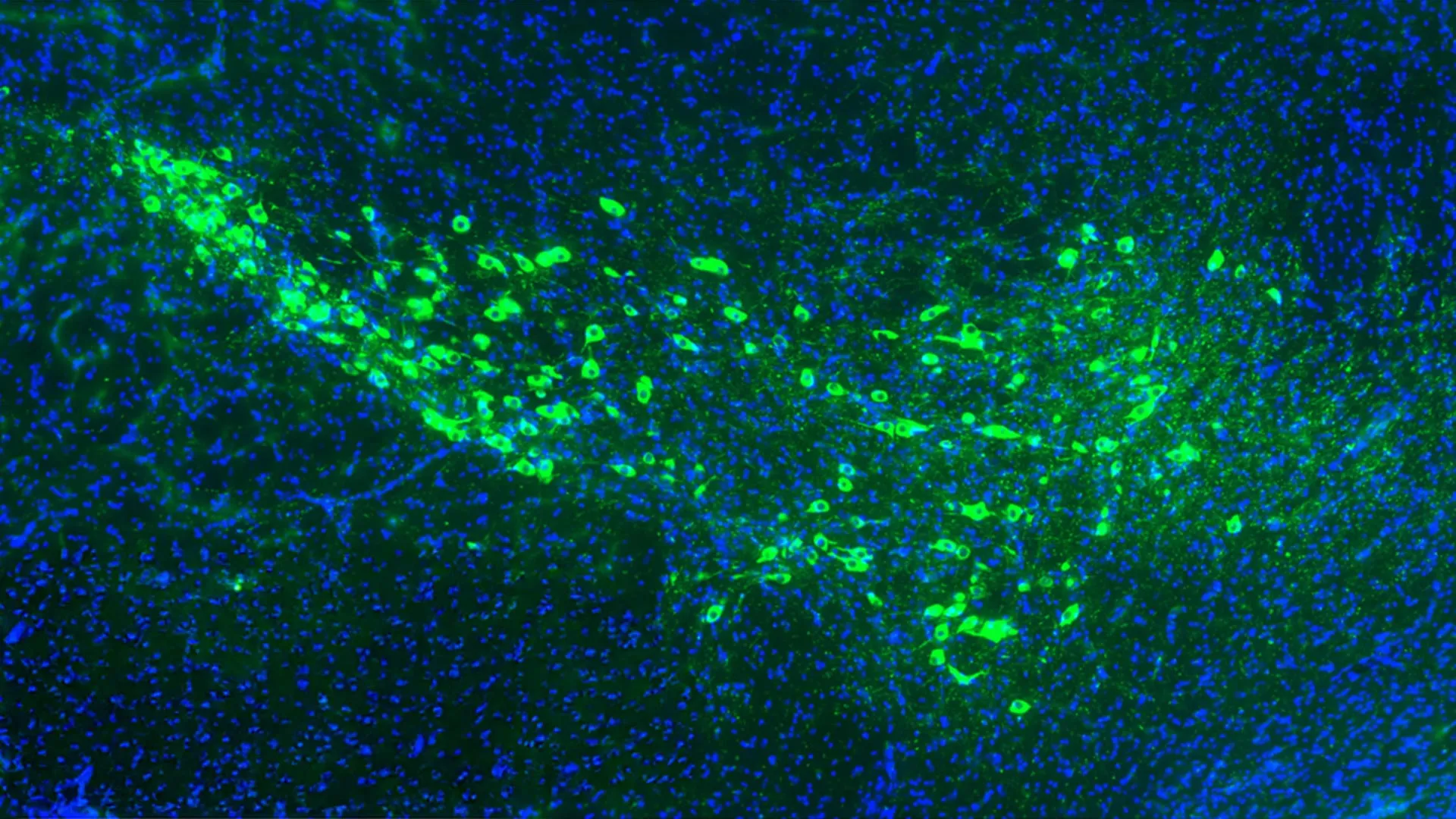
A significant breakthrough in understanding the insidious progression of Parkinson’s disease has emerged from the laboratories at Yale School of Medicine, suggesting a novel mechanism by which the debilitating neurological condition may spread throughout the brain. This groundbreaking discovery, detailed in a recent publication in Nature Communications, centers on the identification of two specific proteins located on the surface of motor neurons, which appear to act as crucial conduits for the disease’s advancement. The implications of this research are profound, potentially paving the way for therapeutic interventions aimed not merely at alleviating symptoms but at directly confronting and impeding the underlying pathological spread.
Parkinson’s disease is characterized by the progressive degeneration and eventual demise of brain cells, a process that leads to a cascade of debilitating motor and non-motor impairments. A central pathological hallmark of this disorder is the abnormal accumulation of a misfolded protein known as alpha-synuclein. This aberrant protein is not confined to the cells in which it initially forms; instead, it exhibits a tendency to migrate, moving from one neuron to another, thereby exacerbating the damage and intensifying the clinical manifestations of the disease over time. For years, the precise molecular machinery facilitating this intercellular transfer of alpha-synuclein remained largely enigmatic, posing a significant hurdle to the development of disease-modifying treatments.
The Yale-led research team, spearheaded by senior author Dr. Stephen Strittmatter, the Vincent Coates Professor of Neurology and Chair of the Department of Neuroscience, has identified two key players in this cellular transmission: metabotropic glutamate receptor 4 (mGluR4) and neuronal differentiation factor 1 (NPDC1). These proteins, found on the exterior of motor neurons, have been demonstrated to act as critical receptors, binding to and facilitating the entry of misfolded alpha-synuclein into healthy neurons. This finding offers a tangible molecular target for therapeutic strategies designed to interrupt the disease’s relentless march.
The scientific community has long recognized alpha-synuclein’s pivotal role in Parkinson’s pathology, often referring to it as the "pathologic hallmark" of the disease. Dr. Strittmatter articulated the critical importance of understanding its dissemination, stating that a comprehensive grasp of how it infiltrates neurons is paramount to devising methods that could potentially block or decelerate the disease’s progression. He emphasized that without understanding the molecular underpinnings of this spread, developing effective interventions remains an elusive goal.
To unravel the intricacies of alpha-synuclein’s cellular entry, the researchers embarked on an extensive experimental screening process. They engineered approximately 4,400 distinct cell cultures, each engineered to express a unique surface protein. These cell cultures were then exposed to misfolded alpha-synuclein to observe any binding interactions. The overwhelming majority of these engineered cells showed no affinity for the pathological protein. However, a select group of 16 surface proteins exhibited significant binding. Among these identified binders were mGluR4 and NPDC1, proteins notably present on dopamine-producing neurons within the substantia nigra, a brain region disproportionately affected by Parkinson’s disease. Further investigation confirmed that these specific proteins actively transported misfolded alpha-synuclein into the cells, validating their role as cellular entry points.
The implications for therapeutic development are substantial. Current treatments for Parkinson’s disease primarily focus on managing the motor and non-motor symptoms that arise from neuronal loss, offering symptomatic relief but failing to halt or reverse the underlying degenerative process. The identification of mGluR4 and NPDC1 as crucial transporters of toxic alpha-synuclein presents a compelling opportunity to develop therapies that target this specific pathway. By inhibiting the interaction between alpha-synuclein and these receptor proteins, or by blocking their function, it may be possible to prevent the protein from entering healthy neurons, thereby interrupting the chain reaction of cellular damage and potentially slowing or even halting disease progression.
The urgency for developing such disease-modifying therapies is underscored by demographic trends. Neurodegenerative disorders, including Parkinson’s disease, are increasingly recognized as significant public health challenges, particularly in aging populations. The Parkinson’s Foundation estimates that over a million individuals in the United States currently live with Parkinson’s disease, with nearly 90,000 new diagnoses occurring annually. As the population ages, the prevalence of these conditions is projected to rise, placing a greater burden on healthcare systems and necessitating more effective interventions. Dr. Strittmatter highlighted this demographic imperative, noting that the aging global population presents an enormous challenge in terms of preventing neuronal death, making research into slowing neurodegeneration more critical than ever.
To corroborate their findings and assess the therapeutic potential of targeting mGluR4 and NPDC1, the researchers conducted experiments in animal models. They genetically modified mice to lack functional mGluR4 or NPDC1 and subsequently exposed them to misfolded alpha-synuclein. In control mice that possessed functional versions of these proteins, exposure to the misfolded protein resulted in the accumulation of alpha-synuclein within the brain and the development of Parkinson’s-like symptoms. In stark contrast, the mice engineered to be deficient in mGluR4 or NPDC1 did not exhibit these pathological hallmarks or symptoms. Furthermore, in a separate mouse model specifically designed to mimic Parkinson’s disease, the genetic deletion of either mGluR4 or NPDC1 led to a significant reduction in symptom progression and a decreased risk of mortality. These results strongly suggest that mGluR4 and NPDC1 collaborate to facilitate the uptake of misfolded alpha-synuclein into neurons, at least within the context of these mouse models.
The collective evidence from these studies points to a potential paradigm shift in how Parkinson’s disease is understood and treated. The identification of mGluR4 and NPDC1 as key mediators of alpha-synuclein spread offers a tangible and promising target for the development of novel therapeutic agents. By intervening in this newly illuminated cellular pathway, scientists hope to move beyond symptom management and achieve the long-sought goal of slowing or halting the devastating progression of Parkinson’s disease, offering renewed hope to millions affected by this chronic and often life-altering condition. The ongoing research at Yale and similar institutions worldwide signifies a critical juncture in the fight against neurodegenerative diseases, emphasizing the power of fundamental scientific inquiry to unlock solutions for complex human health challenges.
About the Author












