The conventional wisdom often posits that declining physical strength and agility are an unavoidable consequence of advancing age. However, a growing body of evidence, coupled with practical observations from experts in geriatric fitness, strongly suggests that an individual’s daily movement patterns play a far more significant role in determining their physical prowess in later years than chronological age alone. Many individuals in their sixties and seventies exhibit a level of functional strength and mobility that surpasses that of people decades younger, not through intensive or complicated regimens, but through consistent engagement with foundational exercises that fortify the body for everyday demands. This paradigm shift emphasizes proactive physical maintenance, demonstrating that preserving and even enhancing physical capabilities is largely within one’s control, irrespective of birth year.
The human body is remarkably adaptable, responding to the stresses and demands placed upon it. When muscles are regularly challenged, they retain their mass, density, and neural pathways, translating to sustained strength. Conversely, a sedentary lifestyle or one devoid of varied physical challenges often leads to sarcopenia, the age-related loss of muscle mass and strength, which can begin as early as the third decade of life and accelerate significantly after 60. Sarcopenia is not merely a matter of aesthetic concern; it contributes to reduced metabolic rate, diminished balance, increased risk of falls and fractures, and a profound loss of independence in performing routine activities. Mitigating this decline is achievable through deliberate, consistent physical activity that targets key movement patterns crucial for daily living.
Functional fitness, as opposed to isolated muscle training, forms the bedrock of this approach. These exercises simulate real-world movements, engaging multiple muscle groups simultaneously and improving coordination, balance, and proprioception—the body’s sense of its position in space. Unlike machines that often isolate muscles, functional exercises train the body as an integrated unit, making the strength gained directly transferable to tasks such as lifting groceries, climbing stairs, maintaining balance on uneven surfaces, or rising from a low chair. Prioritizing these holistic movements over specialized gym equipment fosters a body that not only feels younger but also performs with greater efficiency and less risk of injury. The following five exercises are prime examples of such foundational movements, each contributing significantly to overall strength, stability, and the capacity for a vibrant, independent life well into older adulthood.
1. The Sit-to-Stand Maneuver
Often considered a rudimentary action, the ability to transition smoothly from a seated to a standing position is a critical benchmark of lower-body strength and functional independence. This seemingly simple exercise, frequently referred to as a chair squat, engages a comprehensive array of muscles in the lower body, including the quadriceps, glutes, hamstrings, and the core musculature. Its functional value is immense, directly correlating with the ease of performing daily activities such as getting out of a car, rising from a sofa, using a toilet, or ascending and descending staircases.
The power of the sit-to-stand lies not just in the upward phase but equally in the controlled descent. Emphasizing the eccentric (lowering) component of the movement builds significant strength and stability, crucial for preventing falls and maintaining control during everyday transitions. Individuals who consistently practice this exercise often report a noticeable improvement in their overall lower-body endurance and power, translating into greater confidence and reduced effort in their daily routines. It serves as a potent diagnostic tool for assessing lower-body capacity and, more importantly, a highly effective method for cultivating it without the need for specialized equipment, making it accessible in virtually any environment.
2. Resistance Band Rows
Maintaining robust posture is a hallmark of physical vitality and often distinguishes active older adults from those experiencing mobility challenges. Years spent in seated positions, whether at a desk or simply relaxing, can lead to a forward-rounded posture, characterized by protracted shoulders and a hunched upper back. This not only affects appearance but also contributes to neck and shoulder pain, restricts breathing, and compromises overall spinal health. Resistance band rows offer an excellent solution, targeting the muscles of the upper back, rear deltoids, and biceps to counteract these postural imbalances.
This pulling movement is fundamental for balanced upper-body strength. While pushing exercises (like push-ups) are common, adequate pulling strength is essential for shoulder joint health, scapular stability, and maintaining an upright, open chest posture. By engaging the muscles responsible for retracting the shoulder blades and extending the thoracic spine, resistance band rows help to realign the upper body, reducing strain on the neck and shoulders. Incorporating this exercise into a regular routine can lead to a tangible sense of standing taller, reduced discomfort in the upper back and neck, and enhanced capacity for tasks involving pulling or carrying, thereby supporting healthier movement patterns and improved quality of life.
3. The Standing Hip Hinge
The ability to bend correctly, primarily from the hips rather than the spine, is a fundamental movement pattern that safeguards the lower back and optimizes the lifting capacity of the posterior chain. The standing hip hinge is an exercise designed to strengthen the gluteal muscles, hamstrings, and lower back while retraining the body to initiate bending movements at the hip joint. This mechanic is paramount for safely performing myriad everyday tasks, from picking up an object from the floor to gardening, tying shoelaces, or even lifting a grandchild.
Many individuals instinctively bend from their lumbar spine, placing undue stress on the vertebral discs and surrounding tissues, which can lead to chronic lower back pain and injury. The hip hinge teaches the body to leverage the powerful muscles of the posterior chain—the glutes and hamstrings—as the primary movers, thereby protecting the more vulnerable structures of the spine. As proficiency and strength in this movement increase, everyday lifting tasks feel considerably easier, and the incidence of lower back strain significantly diminishes. Mastering the standing hip hinge is not merely about muscle strength; it is about cultivating intelligent movement mechanics that preserve spinal health and enhance functional longevity.
4. Standing Knee Drives
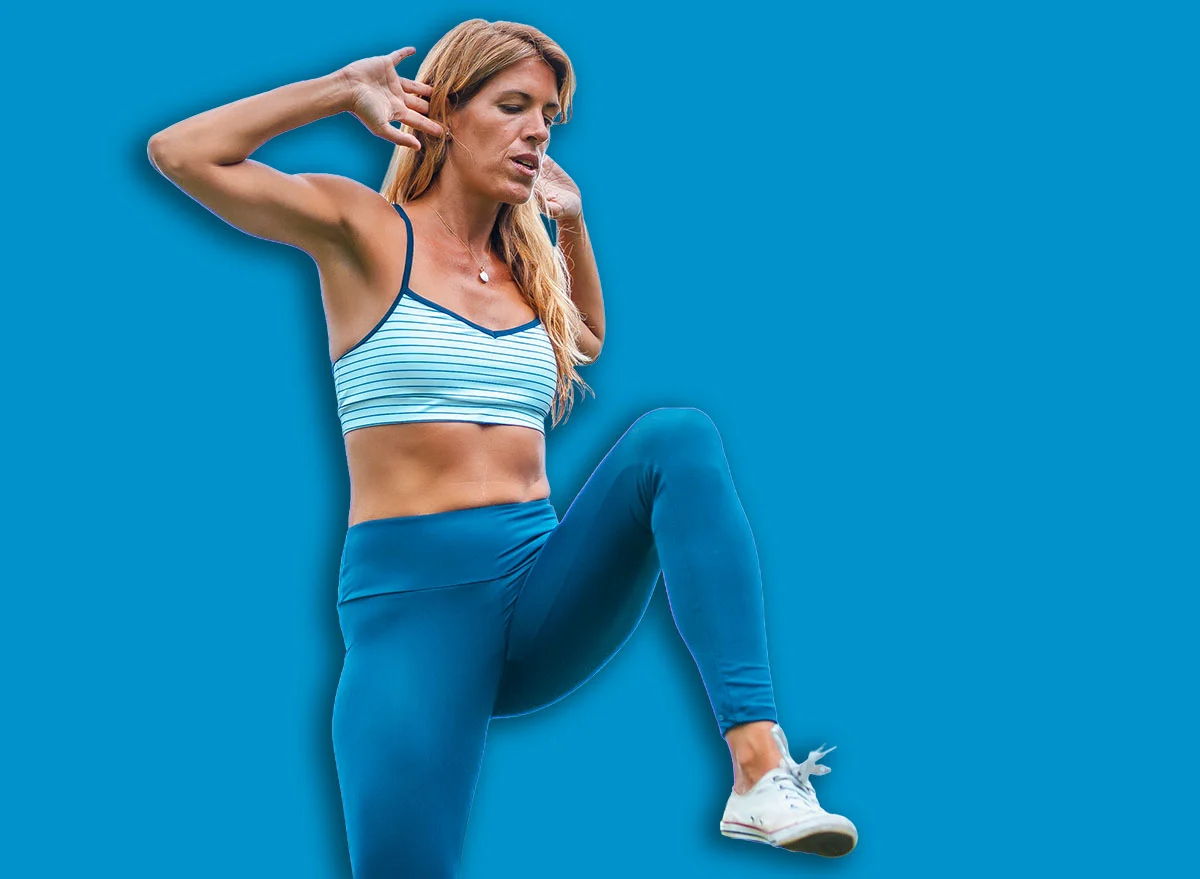
Confident and stable ambulation is a complex interplay of strength, balance, and coordination, extending far beyond the strength of the legs alone. Standing knee drives, sometimes referred to as marching in place, are a dynamic exercise that simultaneously fortifies the hip flexors, engages the core musculature, activates the glutes of the supporting leg, and significantly enhances balance and coordination. This movement closely mimics the cyclical mechanics of walking and running, making it an incredibly effective tool for improving gait efficiency and stability.
The exercise requires the practitioner to lift one knee towards the chest while maintaining balance on the opposing leg, thereby challenging single-leg stability—a crucial component of walking and fall prevention. By strengthening the hip flexors, which are often overlooked, and stabilizing the core, standing knee drives contribute to a more powerful and controlled stride. Regular practice can lead to a heightened sense of stability, improved equilibrium, and increased energy levels during prolonged walking or standing. These benefits collectively support enhanced mobility and reduce the risk of trips and falls, which are major concerns for older adults, ultimately fostering greater confidence and independence in navigating various environments.
5. The Farmer’s Carry
For an exercise that integrates full-body strength, stability, and endurance, the farmer’s carry stands out as an exceptionally effective choice. This movement involves holding a significant weight in one or both hands and walking a predetermined distance, challenging virtually every muscle group from head to toe. It robustly strengthens the grip and forearms, stabilizes the shoulders, activates the core deeply, and engages the hips and legs in maintaining upright posture and propulsion.
The practical applicability of the farmer’s carry is immediately evident. Carrying groceries, luggage through an airport, tools around the house, or performing yard work all demand the type of integrated strength and postural endurance that this exercise cultivates. By forcing the body to maintain an erect posture under load, it reinforces proper spinal alignment and core bracing, which are vital for preventing injury during everyday lifting and carrying tasks. Individuals who incorporate farmer’s carries into their routines frequently report that mundane chores become considerably easier and less taxing. As a comprehensive exercise that builds resilient, practical strength across the entire kinetic chain, it is an indispensable component for anyone aiming to maintain robust physical capability and independence throughout their later years.
In conclusion, the journey to sustained physical vitality beyond the age of sixty is not predicated on defying time, but rather on intelligently engaging with the body’s enduring capacity for adaptation and strength. The five foundational movements—the sit-to-stand, resistance band rows, standing hip hinge, standing knee drives, and farmer’s carry—represent a powerful yet accessible toolkit for cultivating functional longevity. These exercises require minimal equipment, can be performed in various settings, and collectively address the core pillars of strength, balance, posture, and coordination essential for independent living. By consistently prioritizing these functional movements, individuals can proactively shape their physical destiny, fostering a robust and resilient body capable of navigating the demands and joys of a vibrant later life, often surpassing the physical capabilities typically associated with younger demographics. Consulting with a qualified fitness professional or healthcare provider before embarking on any new exercise regimen is always advisable to ensure safety and efficacy.
About the Author