As individuals progress through their later years, maintaining physical health and functional independence becomes an increasingly critical aspect of overall well-being. The human body undergoes a series of natural physiological transformations with age, including a phenomenon known as sarcopenia, which is the progressive loss of muscle mass and strength. This intrinsic process, coupled with potential hormonal fluctuations and a tendency towards reduced physical activity, often contributes to changes in body composition, notably an increase in abdominal circumference. While these shifts are common, proactive engagement in appropriate exercise regimens can significantly mitigate their impact, preserving muscle integrity and supporting a robust physique. For many older adults, the traditional approach to fitness, particularly floor-based abdominal workouts, may present challenges related to balance, joint stress, or overall accessibility. In this context, chair-supported exercises emerge as a highly effective and safe alternative, offering a pathway to strengthen the core, improve posture, and enhance daily functional movements without the need for complex maneuvers or extensive equipment.
Portia Page, a distinguished Balanced Body Educator and a certified professional in personal training, Pilates, and group fitness, emphasizes the profound utility of incorporating a sturdy chair into a fitness routine tailored for older demographics. Her insights underscore that while no single exercise, regardless of its execution method—seated, standing, or on the floor—can selectively reduce fat from a specific body area, chair exercises offer a powerful foundation. The pervasive myth of "spot reduction," the belief that one can target fat loss in a particular region through specific exercises, has long been debunked by scientific consensus. Instead, sustainable changes in body composition, including a leaner midsection, are primarily driven by a holistic approach encompassing consistent physical activity, a balanced nutritional intake, and overall metabolic health. Page clarifies that the true value of chair-based movements lies in their capacity to build foundational strength, cultivate improved postural alignment, foster increased daily physical engagement, and, crucially, provide an approachable entry point that builds confidence and adherence to a broader fitness journey. These intrinsic benefits significantly enhance the likelihood that individuals will commit to the comprehensive lifestyle habits necessary to influence overall body composition effectively. Therefore, the focus shifts from a singular "magic" exercise to a repertoire of movements designed to fortify the entire core structure—encompassing the abdominal muscles, back musculature, hip stabilizers, and pelvic floor—while simultaneously boosting posture and facilitating greater ease in everyday activities.
One of the cornerstone movements in a chair-based regimen is the Seated March. This seemingly simple exercise offers multifaceted benefits, actively engaging the deep core musculature while simultaneously enhancing balance and strengthening the hip flexors. As one leg lifts, the body is challenged to stabilize the pelvis, a fundamental motor skill essential for ambulation and maintaining equilibrium during daily activities such as walking, climbing stairs, or simply shifting weight. Page highlights that this exercise effectively trains the body to manage dynamic stability, wherein one limb moves while the rest of the body maintains a controlled posture. An additional advantage is the opportunity to engage the non-moving foot by "pushing" or "driving" it into the floor, thereby building isometric strength and endurance in the stable leg. This isometric contraction further reinforces the neural pathways responsible for maintaining stability, translating directly into improved confidence and reduced fall risk in real-world scenarios. Regular practice of seated marches can significantly contribute to smoother, more controlled walking patterns and a stronger sense of groundedness.
The Seated Knee Extension is another highly beneficial exercise, particularly for strengthening the quadriceps muscles and promoting core stability. Executed by straightening one leg at a time while maintaining an upright seated posture, this movement inherently encourages the engagement of the deep abdominal muscles to prevent slouching or excessive spinal movement. The quadriceps, located at the front of the thigh, are paramount for functional movements such as rising from a seated position, navigating stairs, and walking with power. Weak quadriceps can significantly impair independence and increase the effort required for these routine tasks. Page points out that beyond strengthening, the seated knee extension also provides a valuable stretch along the "backline" of the body. This includes the lower back, glutes, and hamstrings, which often become tight with prolonged sitting or reduced mobility. Improving the flexibility of these posterior chain muscles can alleviate lower back discomfort, enhance overall posture, and contribute to a greater range of motion, fostering comfort and ease in daily movements.
Seated Spinal Rotation addresses a crucial aspect of mobility that often diminishes with age: rotational flexibility. Many older adults experience a reduction in their ability to comfortably twist and turn, which can significantly impact a wide array of daily functions. Simple tasks like reaching for an item in the back seat of a car, turning to speak to someone, reaching into an overhead cupboard, or even twisting to retrieve something from a bedside table can become challenging or painful. Gentle rotational movements, performed while seated and supported, are excellent for improving spinal mobility and specifically engaging the oblique muscles—the side abdominal muscles responsible for twisting and bending the torso. Page underscores the importance of this exercise for maintaining functional independence, noting that restored rotational capacity can dramatically enhance an individual’s ability to interact with their environment safely and effectively. This exercise not only lubricates the spinal joints but also strengthens the muscles that support these movements, thereby reducing stiffness and improving overall body fluidity.
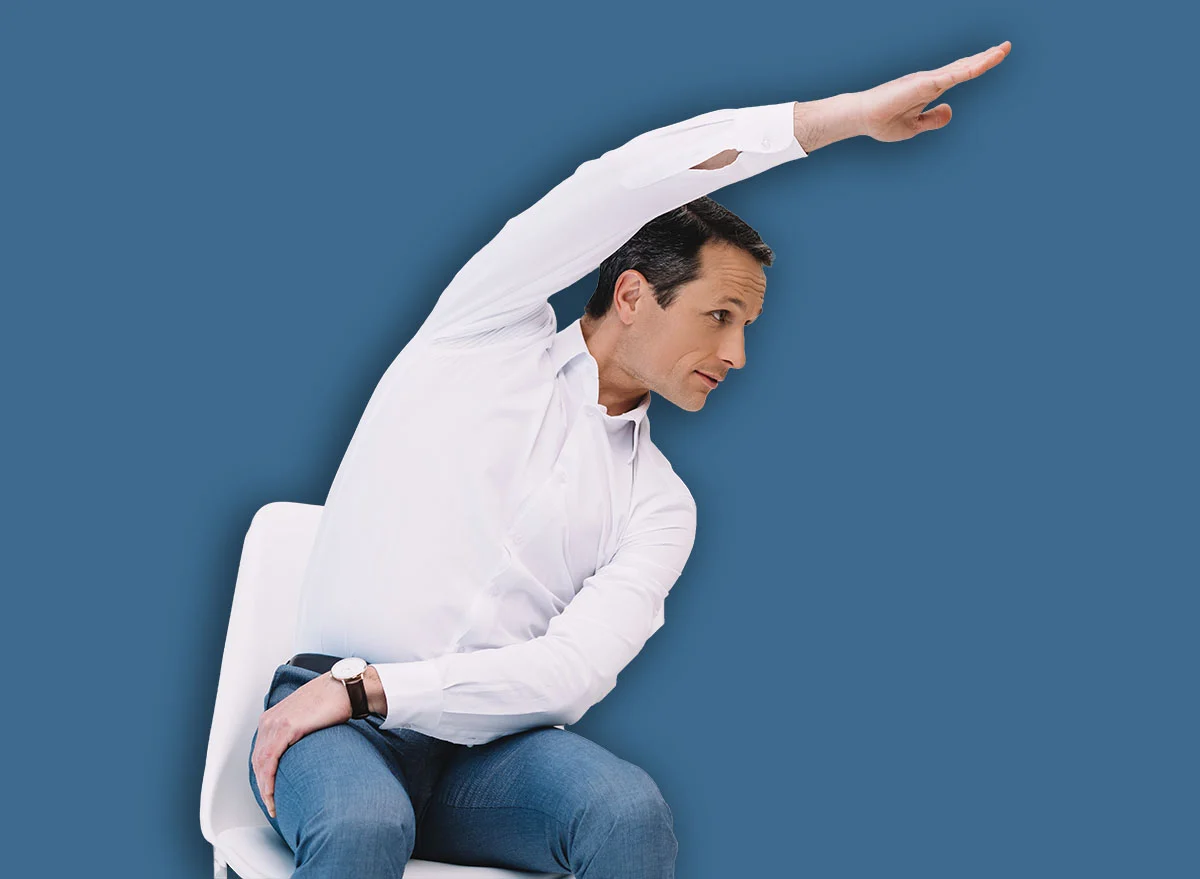
The Seated Side Bends target the lateral core and torso muscles, a group often overlooked in traditional core training regimens. These muscles, including the obliques and quadratus lumborum, play a vital role in maintaining trunk stability, controlling lateral movements, and supporting overall balance. Strengthening these muscles is not merely about enhancing the aesthetic appearance of the waistline; it is fundamentally about improving functional capacity. Page emphasizes that robust lateral core strength directly contributes to better posture, preventing slouching or leaning to one side. Furthermore, these muscles are crucial for maintaining balance when walking on uneven surfaces, catching oneself from a stumble, or performing any activity that requires side-to-side stability. By actively engaging and strengthening these often-neglected muscle groups, individuals can achieve a more stable, upright posture and greater confidence in their movements, reducing the risk of falls and improving their overall physical resilience.
Finally, the Sit-to-Stand exercise stands out as perhaps the most profoundly functional movement in this chair-based repertoire. Page considers it a top contender for any prescriptive exercise program aimed at healthy aging, citing its direct correlation with maintaining independence. This exercise involves repeatedly transitioning from a seated to a standing position and back again, mimicking an essential everyday action that defines an individual’s autonomy. Executing the sit-to-stand movement effectively engages a broad spectrum of muscle groups, including the powerful muscles of the legs (quadriceps, hamstrings), the glutes, and the entire core, which must stabilize the torso throughout the transition. Beyond muscle strengthening, the repetitive nature of this exercise also elevates the heart rate, providing a mild cardiovascular benefit. Page notes that while starting with chair-supported sit-to-stands is excellent, the ultimate goal for longevity and vitality should involve progressing towards the ability to get up and down from the floor unassisted. The capability to transition from the floor is a significant indicator of lower body strength, core stability, and overall mobility, directly correlating with a higher quality of life and reduced risk of institutionalization in later years.
In conclusion, the integration of chair-based exercises into a regular fitness routine offers a uniquely accessible, safe, and highly effective strategy for older adults seeking to enhance their core strength, improve mobility, and maintain functional independence. These exercises move beyond the superficial pursuit of a "trim waistline" to address the deeper, more impactful aspects of physical health in later life. By focusing on holistic core engagement, improved posture, and the strengthening of muscles crucial for daily activities, individuals can significantly mitigate the challenges associated with aging. The expert guidance provided by professionals like Portia Page reinforces that consistency and an emphasis on functional movements, rather than isolated aesthetic goals, are the true determinants of sustained well-being. Embracing these adaptable fitness practices can foster greater confidence, reduce the risk of injury, and ultimately empower older adults to lead more active, fulfilling, and independent lives.
About the Author