
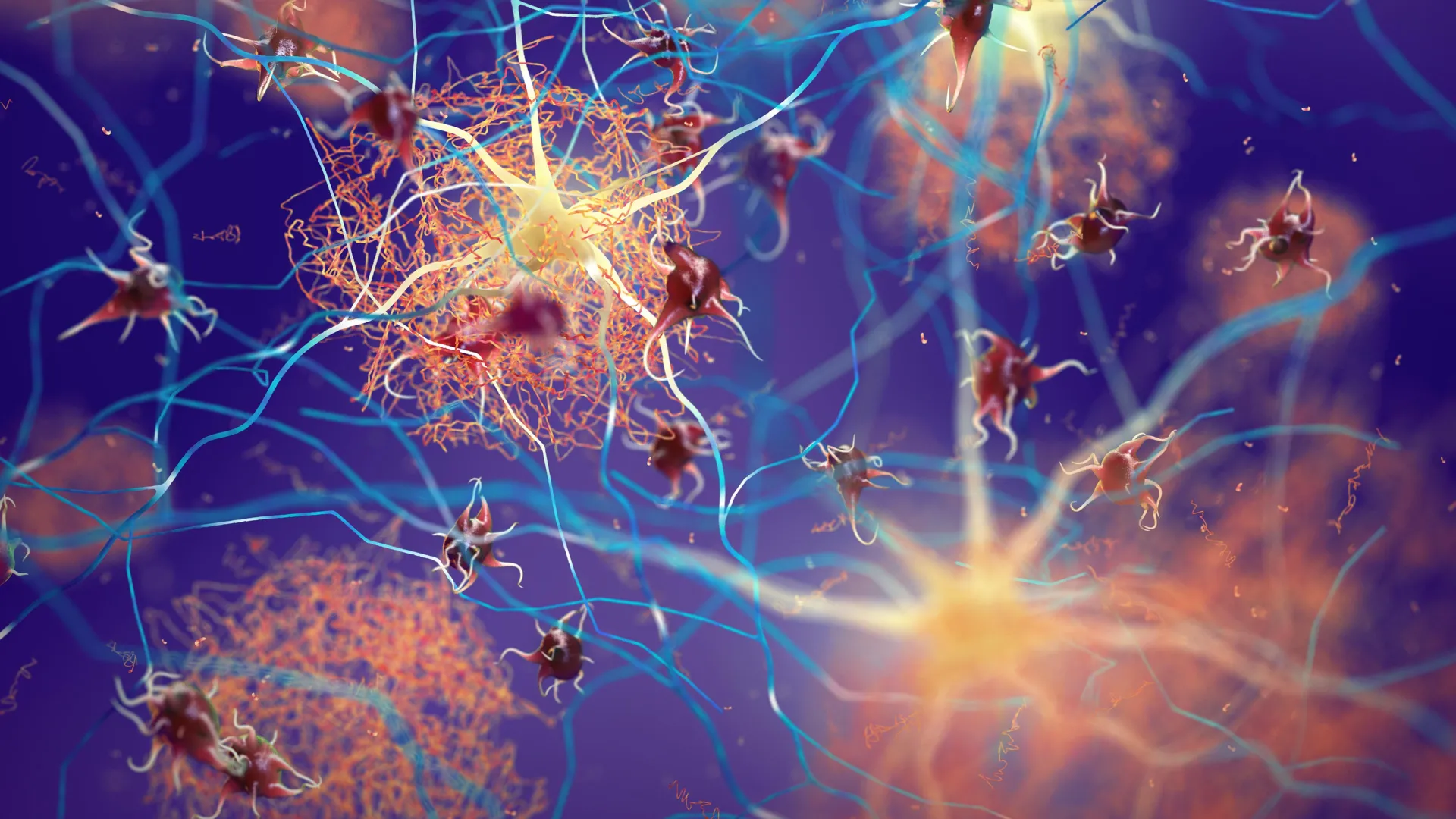
A groundbreaking discovery by scientists at Baylor College of Medicine has illuminated a novel therapeutic avenue for combating devastating neurological disorders like Alzheimer’s and Parkinson’s diseases. These conditions, characterized by debilitating cognitive and motor impairments, are intrinsically linked to the aberrant accumulation of specific proteins, namely Tau and alpha-synuclein, within the intricate circuitry of the brain. The research, meticulously detailed in the esteemed journal Nature Communications, unveils the crucial role of tubulin, a fundamental protein essential for the construction of cellular scaffolding known as microtubules, in preventing the formation of these toxic protein conglomerates.
Microtubules, often conceptualized as the intracellular transportation network or "railway tracks" within neurons, are vital for maintaining cellular architecture, facilitating the movement of organelles and molecules, and ensuring efficient neuronal communication. The study’s findings suggest that tubulin possesses a remarkable capacity to modulate the behavior of Tau and alpha-synuclein, steering them away from pathological aggregation and towards their physiological functions within healthy nerve cells. This redirection mechanism offers a promising alternative to strategies that aim to simply eliminate the cellular compartments where these proteins interact, a process that could inadvertently disrupt normal brain activity.
The pathological hallmarks of Alzheimer’s and Parkinson’s diseases are profoundly associated with the misfolding and subsequent clumping of Tau and alpha-synuclein proteins. These misfolded proteins coalesce into dense, insoluble aggregates that are highly toxic to neurons, leading to synaptic dysfunction, neuronal death, and the progressive onset of symptoms such as memory loss, impaired coordination, and behavioral changes. However, it is crucial to acknowledge that these proteins are not inherently detrimental in their native, functional state. In healthy neurons, Tau and alpha-synuclein play integral roles in supporting neuronal structure and facilitating synaptic plasticity, a process critical for learning and memory, often by interacting with tubulin and contributing to the dynamic assembly and stabilization of microtubules.
Scientists have long been intrigued by the role of specialized cellular compartments called "condensates" in the context of neurodegenerative diseases. These liquid-like droplets form within cells and serve as hubs for various biochemical reactions. Both Tau and alpha-synuclein are known to partition into these condensates, where their propensity to misfold and aggregate is amplified. Consequently, inhibiting the formation of these condensates has been considered a potential therapeutic strategy. Yet, this approach carries a significant risk: condensates also participate in essential cellular processes within healthy neurons, and their complete eradication could have detrimental consequences for neuronal function.
This inherent dilemma spurred the research team to explore a more nuanced approach. Instead of focusing on preventing the formation of these protein-rich droplets, the researchers hypothesized that it might be possible to manipulate the conditions within these condensates to preferentially promote the beneficial functions of Tau and alpha-synuclein, thereby discouraging their pathological aggregation. This conceptual shift, as articulated by Dr. Allan Ferreon, an associate professor of biochemistry and molecular pharmacology and co-corresponding author of the study, aimed to "drive Tau and alpha-synuclein inside the droplets toward their healthy path, discouraging them from taking the disease path."
To illustrate this complex biological interplay, Dr. Lathan Lucas, a postdoctoral associate in Dr. Ferreon’s lab and the study’s first author, offered an insightful analogy. He likened Tau and alpha-synuclein to "troublemaker kids in school." The traditional approach of preventing condensate formation would be akin to keeping these children confined to a classroom with little to occupy them, thereby increasing the likelihood of disruptive behavior. In contrast, the novel strategy focuses on engaging these "troublemakers" with constructive activities, such as academic pursuits, sports, or theater, thereby channeling their energy into productive endeavors and preventing them from causing trouble. "We found that tubulin can drive Tau and alpha-synuclein troublemakers down a healthy path," Dr. Lucas explained.
The research team employed a sophisticated arsenal of scientific methodologies to rigorously investigate this hypothesis. They combined advanced biochemical and biophysical techniques with cutting-edge high-resolution microscopy and assays performed in living neurons. This multidisciplinary approach allowed them to meticulously observe and quantify the influence of tubulin on the behavior of Tau and alpha-synuclein and to assess its efficacy in preventing the formation of toxic aggregates within cellular condensates.
Their investigations revealed a critical correlation between tubulin levels and the propensity for protein aggregation. Notably, studies have indicated that reduced levels of tubulin are observed in individuals with Alzheimer’s disease. This deficiency in tubulin leads to a decrease in the abundance of functional microtubules, creating an environment where Tau and alpha-synuclein are more prone to misfold and form detrimental aggregates. Conversely, when sufficient tubulin is present, these proteins are effectively redirected. Instead of forming harmful clumps, they actively participate in the assembly and stabilization of healthy microtubules, thus contributing to cellular integrity and function. "Tubulin redirects the activity of these proteins by giving them something productive to do," Dr. Lucas emphasized.
These findings significantly elevate the perceived role of tubulin in brain health, suggesting it is not merely a passive component but an active guardian against neurodegenerative processes. Dr. Ferreon highlighted this paradigm shift, stating, "Our findings significantly shift tubulin’s role in neurodegeneration, from a passive casualty of disease to an active protector against toxic protein aggregation." This perspective opens up exciting possibilities for therapeutic interventions. Rather than attempting to block the formation of disease-associated protein condensates, which could disrupt essential cellular functions, the research suggests that strategies aimed at increasing the cellular pool of tubulin could offer a more selective and potentially safer therapeutic approach. By augmenting tubulin levels, the brain might be empowered to curb the formation of toxic protein aggregates while simultaneously preserving the vital, constructive roles of Tau and alpha-synuclein, thereby presenting a promising new avenue for targeted treatment of neurodegenerative conditions.
The collaborative effort behind this significant research involved several key contributors from Baylor College of Medicine, including co-first author Phoebe S. Tsoi, My Diem Quan, and Kyoung-Jae Choi, alongside co-corresponding author Josephine C. Ferreon. The groundbreaking work was generously supported by funding from the National Institute of Neurological Disorders and Stroke (NINDS) of the National Institutes of Health (NIH) under grant R01 NS105874, the Welch Foundation under grant Q-2097-20220331, and the National Institute of General Medical Sciences (NIGMS) of the NIH under grant R01 GM122763.
About the Author












