Neuro-Inflammatory Pathway Identified as Key Driver of Alzheimer’s-Related Sleep Dysfunction, Offering Novel Therapeutic Avenue.

A groundbreaking investigation has pinpointed the brain’s own immune cells, known as microglia, as the primary instigators of sleep disturbances commonly observed in Alzheimer’s disease, a finding that radically reorients understanding of this neurodegenerative condition and opens promising new avenues for intervention. Researchers at the University of Kentucky have not only delineated this critical mechanism but have also demonstrated a method for mitigating its detrimental effects, restoring significant amounts of sleep in an animal model of the disease. This discovery challenges long-held assumptions that attributed sleep loss solely to neuronal damage or the physical presence of amyloid plaques, suggesting instead that an overzealous inflammatory response orchestrated by microglia is the more immediate culprit.
The study, published in the esteemed journal Alzheimer’s & Dementia, was spearheaded by Dr. Shannon L. Macauley, an associate professor of physiology at the UK College of Medicine, and her former doctoral student, Dr. Nicholas J. Constantino. Their work elucidates how microglia, intended to act as the brain’s diligent caretakers, can become overactivated in the presence of amyloid plaques, initiating a cascade of inflammatory signals that disrupt normal sleep patterns. Dr. Macauley aptly described this phenomenon as microglia "partying all night," effectively keeping the brain in a state of hyperarousal and preventing restorative sleep. This is analogous to a small kitchen fire triggering a building-wide sprinkler system, causing more damage than the initial localized issue.
To precisely isolate the impact of Alzheimer’s pathology on sleep, the research team meticulously studied two distinct groups of mice. One cohort possessed a genetic predisposition for developing amyloid plaques, mirroring the progression of Alzheimer’s disease, while a control group consisted of genetically unaltered mice that aged normally. The researchers monitored these animals at two critical junctures: at six months of age, when the initial signs of plaque formation begin to emerge, and again at 18 months, a stage representative of advanced disease progression. This comparative approach was crucial for distinguishing Alzheimer’s-specific alterations from those attributable to the natural aging process.
Employing sophisticated neurophysiological monitoring techniques, the scientists equipped the mice with miniature head-mounted devices to record electroencephalography (EEG) and electromyography (EMG) signals. EEG data provides a detailed snapshot of electrical activity across various brain networks, essentially capturing the brain’s functional signature, while EMG measures muscle tone. The simultaneous acquisition of these two data streams enabled researchers to accurately differentiate between periods of wakefulness, deep, non-dreaming sleep (NREM), and the dreaming, memory-consolidation phase of REM sleep.
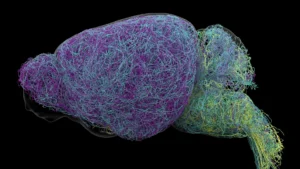
Furthermore, to visualize the cellular players involved in this disruptive process, the team utilized advanced light sheet microscopy. This technique renders brain tissue transparent, allowing for high-resolution, three-dimensional imaging of both amyloid deposits and the resident immune cells, the microglia, throughout the entire brain structure. This comprehensive visualization was instrumental in understanding the spatial relationship between plaque accumulation and microglial activity.
The pivotal phase of the investigation involved selectively and temporarily reducing the population of microglia to ascertain their causal role in sleep disruption. For this purpose, the researchers administered Pexidartinib (PLX3397), a pharmaceutical agent initially developed for cancer research that inhibits a critical signaling pathway essential for microglial survival. Following a 14-day treatment regimen, approximately 87% of the microglia in the treated mice were depleted. The subsequent assessment focused on whether this reduction in immune cells correlated with an improvement in sleep quality and duration.
Beyond simply tracking sleep stages, the researchers also employed a sophisticated mathematical analysis known as Fitting Oscillations and One Over Frequency (FOOOF) to dissect the complexity of brain electrical activity. This method allowed them to categorize the EEG signals into two components: periodic activity, which represents the characteristic rhythmic brain waves associated with different states of consciousness, and aperiodic activity, which is often described as the underlying background electrical noise. By examining these components, they could assess whether the brain’s overall activity remained abnormally elevated even during periods designated for rest, akin to an engine revving unnecessarily high while a vehicle is stationary.
The experimental outcomes proved to be profoundly illuminating and, for the researchers, unexpectedly revealing. Contrary to their initial hypotheses, the study demonstrated that the exacerbation of plaque burden did not directly correlate with a proportional worsening of sleep disruption over time. Dr. Macauley characterized this phenomenon as a "ceiling effect," where sleep disturbances reached a plateau early in the disease process, even as the quantity of amyloid plaques continued to significantly increase. Dr. Constantino elaborated that the sleep disruptions observed at six months, coinciding with the initial appearance of plaques, did not become more severe by 18 months, despite the plaque load more than doubling. This suggests that the initial inflammatory response triggered by the nascent plaques may be sufficient to establish a persistent sleep deficit, with subsequent plaque growth having a less pronounced impact on sleep architecture.
A critical distinction emerged when comparing the effects of normal aging with those attributable to Alzheimer’s pathology. While typical aging primarily led to a reduction in REM sleep, the stage vital for dreaming and memory consolidation, the presence of amyloid pathology selectively impaired NREM sleep. This stage of deep, restorative sleep is crucial for physical repair, cognitive function, and the clearance of metabolic waste products from the brain. Dr. Macauley emphasized the critical importance of this restorative sleep, stating that its loss in Alzheimer’s patients effectively cripples the brain’s primary detoxification system, potentially initiating a detrimental self-perpetuating cycle of damage.
The most striking and therapeutically significant finding emerged after the depletion of microglia. Mice exhibiting Alzheimer’s-related pathology experienced a restoration of over two hours of sleep per night following the reduction of their brain’s immune cells. Moreover, their periods of restorative NREM sleep became more extended, facilitating a greater opportunity to enter healthy dreaming sleep, which is essential for forming new memories. Crucially, this substantial sleep improvement occurred independently of any change in the amount of amyloid plaque present in the brain. This observation strongly indicates that the inflammatory reaction to plaques, rather than the plaques themselves, is a reversible cause of sleep loss and presents a distinct target for therapeutic intervention. This opens a compelling question for future research: could the restoration of this vital sleep function in humans help to interrupt the vicious cycle of decline associated with Alzheimer’s disease?
The fertile ground for this significant discovery was cultivated within the collaborative and intellectually stimulating environment of Dr. Macauley’s laboratory in the Department of Physiology at the Sanders-Brown Center on Aging. Dr. Macauley attributed the project’s success to a "beautiful partnership" among her students and trainees, emphasizing her appreciation for individuals who exhibit initiative, passion, and an unyielding curiosity. She fosters a culture of "calculated risk-taking," inspired by the philosophy of Wayne Gretzky: "You miss 100% of the shots you don’t take." Dr. Constantino echoed this sentiment, stating that this supportive atmosphere empowered him to tackle complex, interdisciplinary questions. He further noted that Dr. Macauley instilled in him the value of embracing uncertainty and failure as integral components of the scientific process, often leading to the most insightful discoveries when initial hypotheses prove incorrect. When experiments encounter obstacles, Dr. Macauley encourages her team to persevere, follow the data, refine their questions, and diligently investigate the underlying phenomena. This persistent, data-driven approach guided them to explore microglia as a potential therapeutic target, moving beyond the conventional focus on neuronal integrity.
Looking towards broader clinical applications, the overarching objective of this research is to develop accessible and non-invasive diagnostic and therapeutic tools for individuals affected by Alzheimer’s disease. The current findings have laid the groundwork for several promising future research directions. The identification of specific EEG patterns that differentiate Alzheimer’s-related sleep alterations from those of normal aging suggests that portable EEG technology could evolve into a "readily accessible, affordable, and longitudinal biomarker of Alzheimer’s disease." Dr. Macauley envisions that such devices would enable widespread monitoring of individuals in their home environments, facilitating early detection of disease-associated changes without the immediate need for costly or invasive procedures. This could empower local healthcare providers to screen at-risk populations, potentially reducing the necessity for long-distance travel to specialized medical centers for advanced diagnostic testing.
Currently, Dr. Macauley’s laboratory is actively investigating strategies to modulate microglial activity, aiming to temper their overexuberance without complete elimination of these essential immune cells. Their research is exploring the potential of existing medications, such as Metformin, a common diabetes drug, and Stiripentol, an antiseizure medication, to alter microglial metabolic processes and reduce their propensity for hyperactivation. By preventing these immune cells from maintaining the brain in a perpetually heightened state, the team hopes to restore healthy sleep patterns and enhance quality of life, potentially even before the onset of overt memory impairment. Dr. Macauley believes that targeting this neuro-inflammatory pathway could yield significant benefits for attention, cognition, and overall confusion, improving the daily lives of individuals at risk or in the early stages of Alzheimer’s. The ongoing work underscores the critical importance of not only identifying the root cause of a problem but also developing the precise tools to address it, a dual objective that Dr. Macauley’s team is steadily advancing.
Related posts:

Related News