As men journey into their sixties and beyond, maintaining robust physical health becomes increasingly vital for preserving independence and quality of life. A cornerstone of this well-being is lower body strength, which underpins nearly every aspect of daily function, from navigating stairs to rising from a chair. The natural aging process often brings a decline in muscle mass, a condition known as sarcopenia, which can significantly impact mobility, balance, and overall vitality. Recognizing this challenge, readily accessible and effective exercise routines, particularly those that can be performed in the comfort of one’s home, offer a powerful solution. This comprehensive guide, informed by expert insights, delves into a series of foundational leg exercises designed to reinvigorate foundational strength and support active aging for senior men.
The demands of modern life frequently mean that dedicated gym time can be difficult to consistently schedule. Professional obligations, family commitments, and personal errands often push fitness goals to the periphery. This reality underscores the immense value of having a repertoire of productive at-home exercises. Such routines eliminate the logistical hurdles associated with gym visits, fostering greater consistency and making physical activity an integrated part of daily life. For those seeking to fortify their lower body musculature from home, Ben Walker, founder and personal trainer at Anywhere Fitness, offers invaluable guidance. Specializing in in-home client training and working with both athletes and medical professionals, Walker emphasizes the profound impact of lower body conditioning on holistic health.
"The lower body is exceptionally important to train because it houses the body’s largest muscle groups," Walker explains. He highlights the quadriceps, comprising four major muscles on each leg; the hamstrings, with their three distinct components; and the gluteus maximus, which stands as the single largest muscle in the human body. The sheer size of these muscle groups means that their activation through exercise translates into substantial caloric expenditure, making lower body training a potent tool for weight management and metabolic health. Furthermore, consistent engagement of these large muscles is directly linked to sustaining higher levels of overall fitness and physical capacity throughout the later stages of life. Beyond calorie burning, robust lower body strength is critical for preventing falls, maintaining upright posture, and enabling the seamless execution of everyday movements that define an independent lifestyle.
Let’s explore a selection of targeted exercises that senior men can integrate into their home fitness regimen to cultivate enduring leg strength and enhance overall functional capacity.
1. Wall Sits: Building Isometric Endurance and Joint Stability
Wall sits represent an excellent entry point into lower body strengthening, particularly beneficial for older adults due to their isometric nature and joint-friendly execution. This exercise involves pressing your back against a wall and sliding down until your knees are bent at approximately a 90-degree angle, holding the position as if seated in an invisible chair. This static contraction primarily targets the quadriceps, glutes, and hamstrings, building muscular endurance without dynamic movement that can sometimes strain joints.
Walker points out the practical advantages of wall sits for longevity tasks. "This helps with longevity tasks such as climbing stairs or walking hills," he states. By enhancing the ability of muscles to sustain contraction over time, wall sits directly translate to improved stamina for prolonged standing, walking, and ascending inclines. The isometric hold minimizes impact on the knees and other joints, making it a safe and effective option for individuals who may experience discomfort with traditional squats or lunges. This exercise also subtly engages the core, promoting stability and contributing to better overall body control.
2. Single Straight-Leg Raises: Enhancing Hip Mobility and Core Control
Single straight-leg raises, performed while lying on your back, are deceptively simple yet profoundly effective for improving hip flexor strength, enhancing range of motion, and engaging the deep core stabilizers. The exercise involves keeping one leg straight on the floor while slowly lifting the other straight leg towards the ceiling, maintaining control throughout the movement.
According to Walker, the primary objective is to "raise the straight leg as high as comfortably possible, encouraging greater range of motion through the hip while maintaining control throughout the movement." This focus on controlled articulation through the hip joint is crucial for maintaining fluid gait patterns and preventing stiffness that can impede walking. By isolating one leg, the exercise also challenges the core to stabilize the pelvis, which is essential for balance and preventing compensatory movements in the lower back. Improved hip mobility and core strength reduce the risk of strains and contribute to more efficient and confident movement during daily activities.
3. Single-Leg Glute Bridge On Bed: Cultivating Posterior Chain Strength and Pelvic Alignment
The single-leg glute bridge, particularly when performed with one foot on a stable surface like a bed, is a powerful exercise for strengthening the gluteus maximus, hamstrings, erector spinae (lower back muscles), and the entire core musculature. This unilateral variation intensifies the activation of each side of the posterior chain, promoting symmetrical strength and stability.
Walker emphasizes the critical role of this exercise in preventing pain and weakness in the lumbar spine. "Because the bridge strengthens your body’s neutral position, the deep core muscles, and the opposing back muscles, it is extremely important for aging adults to prevent pain or weakness in the lumbar spine," he notes. The movement recruits muscles across the entire circumference of the body, working synergistically to support the spine. Performing it with one leg elevates the challenge, forcing the engaged side to work harder while the planted heel on the bed provides a stable and safe base, minimizing stress on the tailbone. This modified approach is particularly beneficial for older adults, allowing for potent muscle activation with reduced risk of injury. It directly improves posture and reinforces optimal pelvic alignment, which is fundamental for healthy movement patterns.
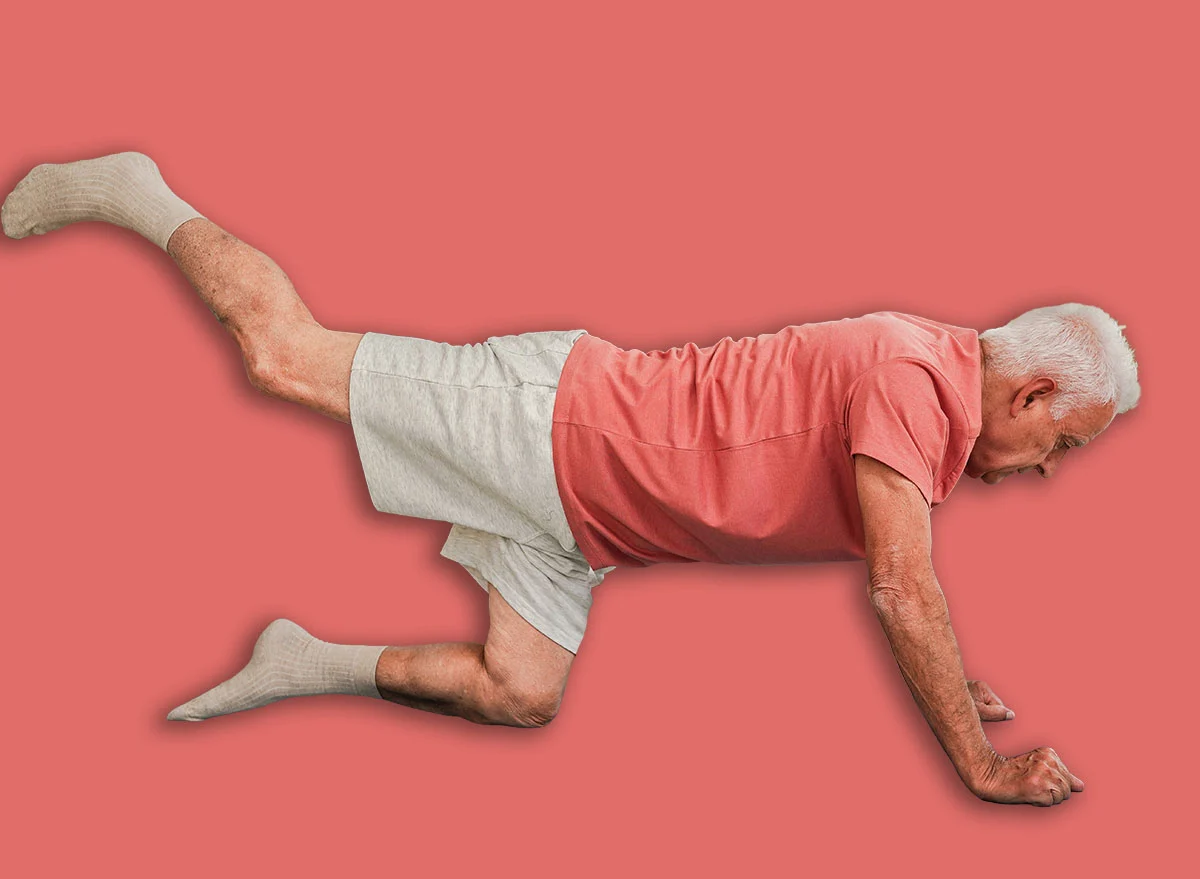
4. Glute Kickbacks: Reinforcing Posture and Spinal Health
Glute kickbacks are an effective exercise for directly targeting and strengthening the entire posterior chain, encompassing the lower back, glutes, and hamstrings. This focused activation plays a pivotal role in promoting better posture and counteracting common postural imbalances often observed with aging.
Walker highlights a common issue that glute kickbacks help address: "When your glutes are weak, your pelvis tilts forward, causing your stomach to protrude." He elaborates that, similar to fire hydrants, this exercise places significant emphasis on fortifying the glutes and hamstrings, which in turn helps realign the spine and gently pull the pelvis back into a neutral position. This corrective action not only contributes to a flatter midsection but, more importantly, assists seniors in maintaining a straight and neutral spine, reducing the likelihood of lower back pain and improving overall body mechanics. Strong glutes are not merely aesthetic; they are fundamental for standing, walking, and lifting with proper form and reduced risk of injury.
5. Fire Hydrants With Band: Stabilizing Hips and Correcting Pelvic Misalignment
Adding a resistance band to fire hydrants amplifies their effectiveness, primarily targeting the gluteus medius and other crucial hip stabilizers. The gluteus medius, located on the outer side of the hip, is instrumental in pelvic control, balance, and the abduction (outward movement) of the leg. Weakness in this muscle can lead to instability and compensatory movements that affect the spine.
"The fire hydrant movement strengthens the hip stabilizers and glutes in a way that corrects this misalignment, naturally pulling the pelvis into a neutral position and flattening the midsection," Walker explains. He adds that this contributes significantly to "keeping a healthy spine in our later years." By strengthening these lateral hip muscles, fire hydrants help stabilize the pelvis, preventing it from tilting or rocking during movement. This improved stability directly enhances balance, reduces strain on the lower back, and supports a more aligned and resilient spine, crucial for maintaining mobility and preventing falls in older age.
6. Step-Up With Leg Lift: Comprehensive Lower Body Activation and Cognitive Benefits
The step-up with a leg lift is a dynamic, multi-joint exercise that offers a wealth of benefits for men over 60, activating a broad spectrum of muscles from the core downwards. This includes the lower back, core, hamstrings, quadriceps, and calves. The added leg lift at the top of the movement further enhances balance and engages the hip flexors.
Walker asserts that step-ups bolster "every aspect of fitness needed for men 60+." He highlights that "step-ups also reduce the impact on the knees and lower back that occurs with jumping or running, making them highly beneficial for injury prevention in older adults." This low-impact nature is a significant advantage, allowing for effective strength building without undue stress on sensitive joints. Beyond physical strength, step-ups offer profound cognitive benefits. "As we age past 30, our coordination and balance quickly deteriorate unless we practice our motor functions," Walker cautions. He explains that step-ups are a unilateral exercise, meaning they demand independent judgment of coordination on one side while simultaneously requiring strength from the other. This dual challenge actively promotes both psychological acuity and mental health, making it an invaluable exercise for holistic well-being.
7. Romanian Deadlifts (RDLs): Foundational Strength for Posture, Balance, and Daily Function
The Romanian deadlift (RDL) is perhaps one of the most functionally valuable strength exercises for older adults, provided it is performed with impeccable technique and appropriate resistance. It fundamentally strengthens the entire posterior chain, including the glutes, hamstrings, and lower back, muscles that are critically involved in supporting posture, balance, walking mechanics, and the safe execution of everyday lifting tasks.
Walker underscores the comprehensive benefits: "The Romanian deadlift (RDL) is one of the most valuable strength exercises for adults over 60 because it strengthens the muscles that support posture, balance, walking, and everyday lifting." He adds that "when performed with proper technique and an appropriate weight, it can help support bone and muscle health, as well as stabilize hips and pelvis." For senior men, beginning with bodyweight RDLs or very light dumbbells is advisable to master the hip hinge movement pattern, which is distinct from a squat and crucial for safe lifting from the floor. This exercise directly translates to improved ability to pick up objects, maintain an upright stance, and move with greater stability and confidence, thereby significantly reducing the risk of musculoskeletal injuries.
Conclusion: A Commitment to Lifelong Vitality
Embarking on a consistent lower body strengthening regimen at home represents a proactive commitment to lifelong vitality and independence for men over 60. These exercises, thoughtfully selected and explained by experts like Ben Walker, address the specific physiological changes associated with aging, aiming to mitigate muscle loss, enhance balance, improve posture, and reduce the risk of falls. By prioritizing these foundational movements, individuals can not only rebuild and maintain critical leg strength but also foster a deeper sense of self-efficacy and confidence in their physical capabilities.
Consistency, proper form, and gradual progression are paramount. It is always advisable to consult with a healthcare professional or a certified fitness trainer before commencing any new exercise program, especially when navigating existing health conditions. Integrating these home-based exercises into a regular routine is not merely about physical conditioning; it is about investing in a future where mobility remains uncompromised, allowing for continued engagement in life’s myriad activities with strength, stability, and enduring independence.
About the Author