Cerebellar Function Re-evaluation: Study Challenges Assumptions in Movement Disorder Research.
New findings emerging from the Fralin Biomedical Research Institute at Virginia Tech are prompting a significant reevaluation of established methodologies employed in the scientific investigation of chronic neurological conditions characterized by impaired motor control, including dystonia, ataxia, and tremor. These conditions, which profoundly impact an individual’s ability to execute voluntary movements, are rooted in dysfunctions within the cerebellum, a critical brain structure responsible for the intricate orchestration and fine-tuning of physical actions. When the delicate circuitry of the cerebellum is compromised, individuals may experience a spectrum of debilitating symptoms, ranging from involuntary and often painful muscle spasms and malformations in posture to persistent and uncontrollable oscillations.
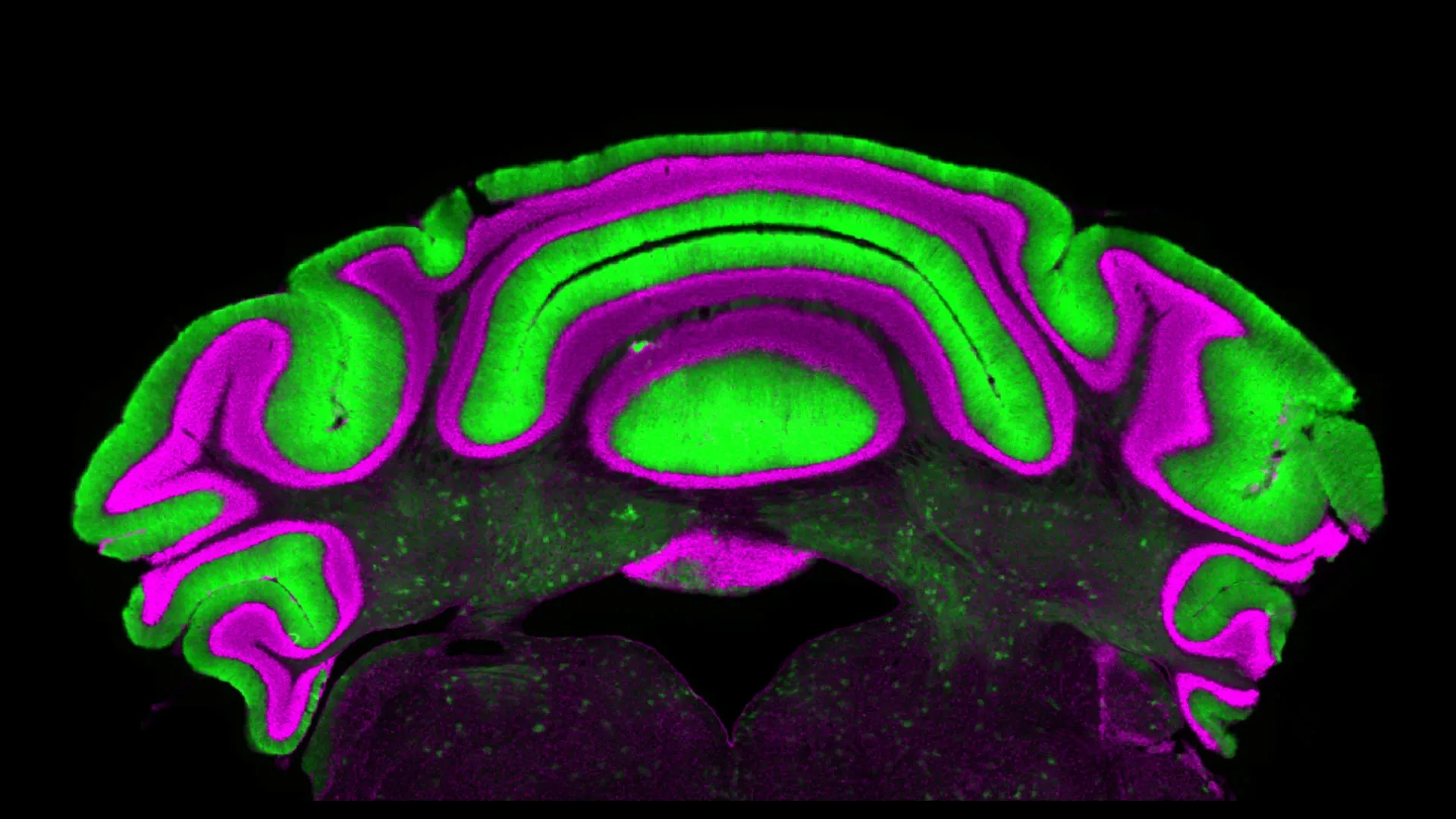
For a considerable period, the prevailing paradigm in neuroscientific inquiry concerning these disorders has centered on the intricate relationship between two distinct types of neurons residing within the cerebellar architecture. One class of neurons, known as Purkinje cells, plays a crucial inhibitory role, exerting a suppressive influence on the electrical signaling of another group, the deep cerebellar nuclei cells. This well-documented inhibitory connection has led researchers to widely adopt the assumption that by observing and analyzing the activity patterns of Purkinje cells, they could reliably infer the functional state of the deep nuclei cells. This established assumption, deeply embedded in the field, has guided countless research endeavors and therapeutic development strategies.
However, a groundbreaking study spearheaded by Meike van der Heijden, an assistant professor at the Fralin Biomedical Research Institute, presents compelling evidence that this long-held assumption may be fundamentally flawed. The research, meticulously detailed and published in the esteemed Journal of Physiology, reveals a startling disconnect: the activity of one neuronal population does not, in fact, reliably predict the activity of the other, despite their direct anatomical linkage and known inhibitory interaction. This finding directly challenges the conventional wisdom that has informed the study of cerebellar function for decades.
"We observed that there isn’t a clear, linear correlation between the electrical signaling observed in Purkinje cells and that in the deep nuclei cells," stated Van der Heijden, highlighting the study’s pivotal conclusion. "Consequently, there is very limited predictive power in monitoring one to understand what is truly occurring in the other." This declaration underscores a paradigm shift, suggesting that the accessible Purkinje cells may not serve as the accurate surrogate for the deeper, more elusive neural populations that are integral to motor execution.
The implications of these findings are far-reaching and possess the potential to significantly reshape both the trajectory of scientific research and the development of novel therapeutic interventions for a host of cerebellar movement disorders. The very foundation upon which many studies have been built, namely the indirect assessment of deep nuclei cell function through Purkinje cell observation, is now brought into question.
Alyssa Lyon, a doctoral candidate within Virginia Tech’s Translational Biology, Medicine, and Health Graduate Program and the lead author of the published paper, elaborated on the significance of this discovery. "Purkinje and deep cerebellar nuclei cell activity is disrupted in a disease state, and a better understanding of the relationship between these neuron types will ultimately help optimize treatments for diseases such as dystonia, ataxia, and tremor," Lyon explained. This statement emphasizes that a more accurate understanding of neural dynamics within the cerebellum is paramount for developing effective strategies to alleviate the debilitating symptoms associated with these conditions.
A significant contributing factor to the historical focus on Purkinje cells stems from their relative ease of access for scientific investigation. Situated within the outermost cortical layer of the cerebellum, Purkinje cells are more readily obtainable for electrophysiological recordings and other experimental manipulations. In contrast, the deep nuclei cells are embedded deeper within the brain’s structure, rendering their direct measurement and study considerably more challenging. This anatomical accessibility disparity has, over time, led many researchers to adopt Purkinje cell activity as a convenient and seemingly reliable biomarker, a proxy for the functional status of the deeper cerebellar circuitry.
The study’s methodology involved a thorough analysis of a comprehensive database of electrophysiology recordings meticulously gathered from preclinical models exhibiting characteristics of cerebellar disease. These recordings provided a wealth of data on neuronal firing patterns within specific cerebellar regions.
The results of this rigorous analysis yielded a surprising outcome: a notable absence of a significant statistical correlation between the observed activity levels of the Purkinje cell population and the deep nuclei cell population. This empirical finding directly contradicts the long-standing assumption that these two neuronal groups would exhibit a predictable, inversely related pattern of activity.
"We suggest that if you want to understand how the cerebellum is functioning in a disease state, it is imperative to examine the deep nuclei neurons directly, rather than solely focusing on the Purkinje cells," Van der Heijden advised. This recommendation points towards a necessary recalibration of research priorities, advocating for direct investigation of the deep nuclei cells to gain a more accurate representation of cerebellar pathology. Furthermore, she cautioned that therapeutic strategies designed to modulate Purkinje cell activity, with the expectation of a corresponding and beneficial effect on deep nuclei cells, may need to be re-evaluated.
"This serves as a cautionary message not only for comprehending cerebellar activity in the context of disease but also for the treatment of these particularly challenging conditions," Van der Heijden concluded. "It underscores the critical need for researchers to exercise significant prudence in making assumptions and to rigorously conduct experimental studies to validate their hypotheses." The study, therefore, advocates for a more empirical and less assumption-driven approach to understanding and treating movement disorders, emphasizing the importance of direct observation and rigorous validation of scientific hypotheses. This paradigm shift promises to unlock new avenues for therapeutic development and a deeper understanding of the complex neural mechanisms underlying movement control.
Related posts:

Related News