
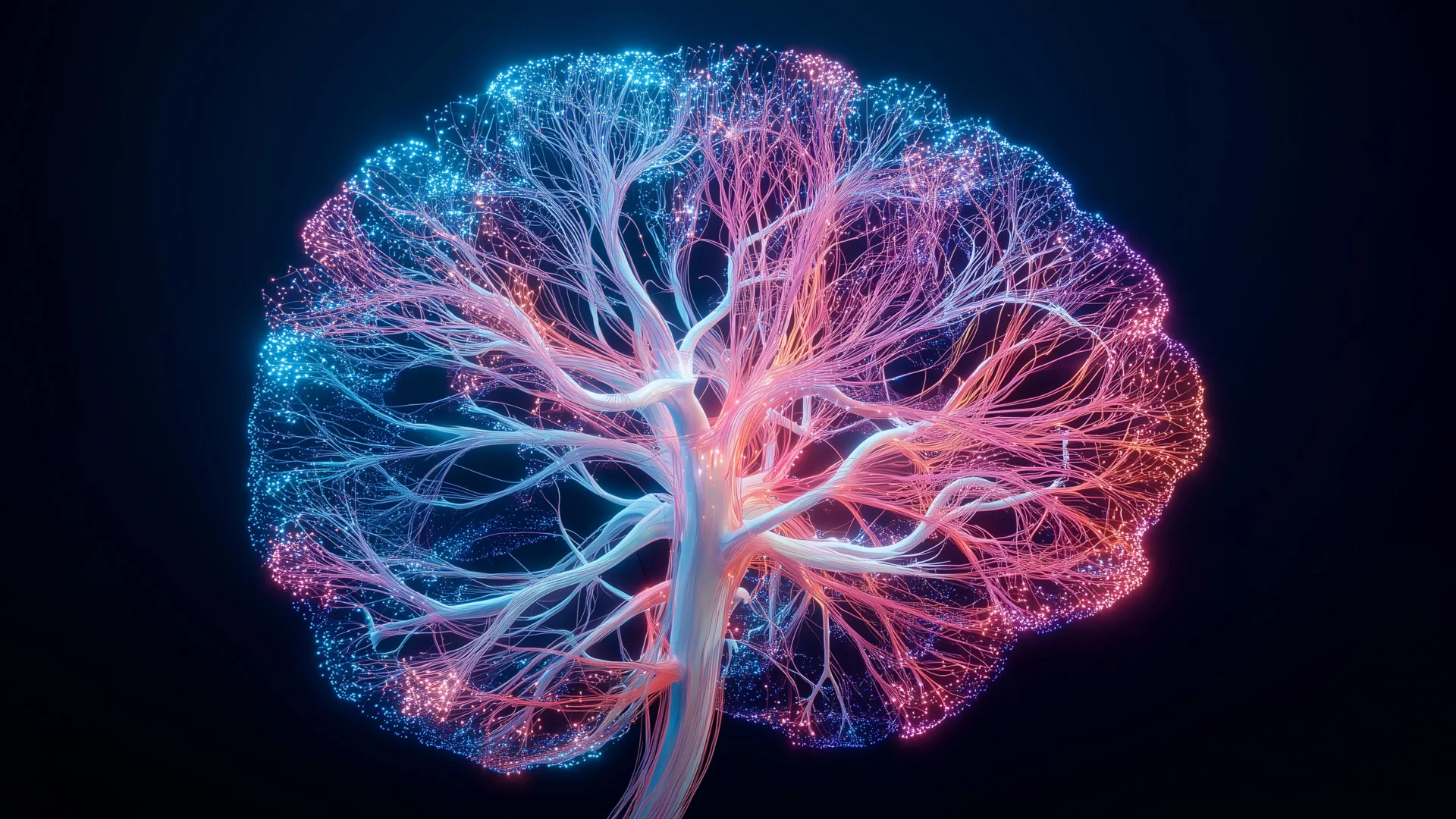
A groundbreaking investigation spearheaded by researchers at the University of Illinois Urbana Champaign is poised to fundamentally alter our comprehension of neural computation and the very foundations of artificial intelligence. The study’s revelations strongly indicate that the genesis of decision-making within the brain occurs at a significantly earlier stage than prevailing scientific paradigms have historically suggested. This paradigm shift not only offers a profound re-evaluation of biological intelligence but also paves the way for the conceptualization of next-generation artificial intelligence systems characterized by enhanced capabilities and vastly improved energy efficiency.
The human brain, a marvel of biological engineering, remains one of the universe’s most intricate and enigmatic structures. Despite centuries of dedicated scientific inquiry, a complete understanding of its operational mechanisms continues to elude us, underscoring the monumental challenge of reverse-engineering this biological powerhouse. This complexity was recognized by the National Academy of Engineering in 2008, which identified the decoding of the brain as one of the fourteen paramount grand challenges for the 21st century. For a considerable period, the prevailing model underpinning the design of many artificial intelligence systems, including influential architectures like convolutional neural networks, has been an analogy to a unidirectional flow of information within the brain. This established theoretical framework posited that sensory input embarks on a sequential journey, ascending through progressively more sophisticated neural layers until it reaches the prefrontal cortex, the designated locus for executive functions and ultimate decision formulation.
However, a growing cohort of neuroscientists, including Professor Yurii Vlasov of Electrical and Computer Engineering at The Grainger College of Engineering, has begun to voice increasing skepticism regarding the completeness of this long-held view. Their research, meticulously detailed and published in the esteemed journal Proceedings of the National Academy of Science (PNAS), pivots towards an alternative conceptualization rooted in the principles of natural intelligence, a system honed and refined by the relentless pressures of evolution over hundreds of millions of years. This alternative framework proposes that cognitive processes, particularly decision-making, are not solely reliant on a linear, step-by-step progression of information. Instead, it emphasizes the critical role of intricate, interconnected feedback loops, which facilitate bidirectional communication and dynamic information exchange between disparate brain regions.
The compelling rationale for studying biological intelligence lies in its remarkable efficiency. Natural intelligence achieves astonishing feats of complexity and adaptability while consuming a fraction of the energy expended by contemporary artificial intelligence systems. By deciphering the architectural underpinnings of this biological efficiency, scientists hope to glean invaluable insights that can guide the development of more sophisticated and resource-conscious AI. "Our objective is to learn from a billion years of evolutionary refinement," Professor Vlasov articulated. "We aim to understand the architectural organization of biological intelligence. Can we emulate this architectural wisdom to create AI that is not only more effective and less power-intensive but also demonstrably more intelligent than current iterations? In the realm of decision-making, it is precisely here that today’s AI systems exhibit significant limitations."
To rigorously investigate these complex neural dynamics, the research team meticulously focused their attention on the brain’s initial stages of sensory processing and perception. Employing advanced neural recording techniques, the scientists monitored the brain activity of mice as they navigated a sophisticated virtual reality environment and were tasked with making a series of perceptual judgments. The experimental results yielded compelling evidence of decision-related neural activity within the primary somatosensory cortex (S1), a region traditionally understood as one of the brain’s earliest points of sensory input processing.
Crucially, the findings suggested that S1 was not merely a passive relay station for information. Instead, the data indicated that S1 was actively influenced by signals originating from higher-order brain regions, a phenomenon indicative of top-down regulatory mechanisms operating through feedback loops. This observation challenges the simplistic notion of information flowing in a single direction, proposing instead a model where decision-making is a dynamic, continuous dialogue involving the synchronized activity of multiple interconnected brain areas. "The precise neural code of the brain remains largely an undiscovered language," Professor Vlasov commented. "However, this systems-level perspective holds significant potential for informing the design of more efficient artificial neural networks – essentially, how we conceptualize and construct the next generation of AI. By drawing analogies from the operational principles of real brains, we may unlock new avenues for AI enhancement."
While the study does not present a ready-made blueprint for the construction of superior artificial intelligence, it undeniably offers novel perspectives on the intricate organizational principles governing decision-making in biological brains. These insights hold the potential to inspire future AI architectures that more closely mirror the elegance and efficiency of their natural counterparts. The research team’s immediate future plans involve a more granular examination of the temporal dynamics of these neural signals. Furthermore, they intend to develop and deploy novel technologies specifically designed for measuring neural activity with unprecedented precision, aiming to elucidate the mechanisms by which feedback loops emerge, are coordinated, and contribute to the hierarchical processing of information within the brain. "By delving into the rapid temporal fluctuations of neural activity, we may gain a deeper understanding of how these feedback loops are engaged in the act of decision-making," Professor Vlasov elaborated. "This approach could potentially unveil currently unknown mechanisms – how these feedback loops are dynamically organized, how they form and sculpt different levels of neural processing. Such discoveries could then be translated into innovative AI architectures." The implications of this research extend beyond theoretical neuroscience, offering a tantalizing glimpse into a future where artificial intelligence systems are not only more intelligent but also operate with a biological elegance and energy efficiency that has long been the domain of natural evolution.
About the Author












