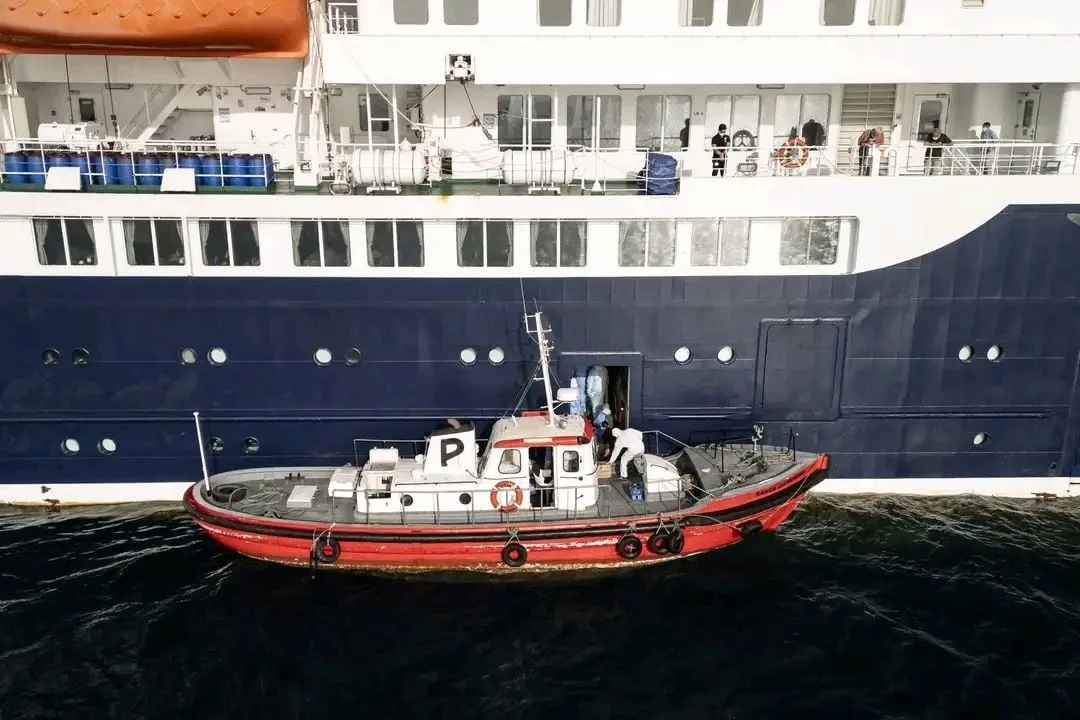
The tranquil shores of Tenerife, a prominent island in Spain’s Canary archipelago, recently became the focal point of an urgent global health operation, underscoring the critical role of international solidarity in managing emergent public health challenges. At the heart of this complex situation was the MV Hondius, an expedition cruise vessel carrying nearly 150 individuals from 23 nations, some of whom had been exposed to the Andes strain of hantavirus, a pathogen responsible for three fatalities aboard. Dr. Tedros Adhanom Ghebreyesus, Director-General of the World Health Organization (WHO), personally extended his profound gratitude and reassurance to the residents of Tenerife, commending Spain’s principled decision to provide safe harbor and facilitate the humanitarian disembarkation of those on board.
The unfolding events necessitated a direct and empathetic communication from the highest echelons of global public health, a rare occurrence for a single community. Dr. Tedros acknowledged the palpable anxiety that the term "outbreak" could evoke, particularly in the lingering shadow of the 2020 global pandemic. He recognized the collective memory of fear and disruption, emphasizing that such apprehensions are valid and not to be dismissed. However, with unequivocal clarity, the WHO Director-General stressed a crucial distinction: "This is not another COVID." He firmly reiterated the expert assessment that the public health risk posed by the hantavirus situation to the general population of Tenerife remained exceedingly low, an evaluation arrived at after rigorous scientific analysis by WHO specialists.
Understanding the specific nature of the threat is key to mitigating public alarm. Hantaviruses constitute a family of viruses predominantly transmitted to humans through contact with rodents or their droppings, urine, and saliva. While most hantaviruses are not transmitted person-to-person, the Andes strain, identified on the MV Hondius, is a notable exception. This particular variant is known to cause Hantavirus Pulmonary Syndrome (HPS), a severe and potentially fatal respiratory illness. Symptoms typically manifest as fever, muscle aches, and fatigue, progressing to respiratory distress. The person-to-person transmission capability of the Andes strain, while significant, is generally understood to be limited to close contact, particularly within enclosed environments, and does not exhibit the high transmissibility rates associated with airborne respiratory pathogens like SARS-CoV-2, the virus responsible for COVID-19. This fundamental difference underpins the WHO’s assessment of low community risk in Tenerife.
The MV Hondius, an Antarctic expedition ship, had been at sea for several weeks when the hantavirus cases were confirmed, leading to a challenging maritime health emergency. The tragic loss of three lives on board cast a somber pall over the vessel, highlighting the severity of the illness for those directly affected. Despite these fatalities, a critical aspect of the current situation was the absence of symptomatic passengers upon the ship’s approach to Tenerife. A dedicated WHO expert had been deployed to the vessel, collaborating closely with the ship’s medical team and crew to monitor the health status of all individuals and ensure adherence to stringent health protocols. Essential medical supplies were also in place, ready to support any necessary interventions.
Spain’s decision to receive the MV Hondius was not made lightly, nor was it an arbitrary act. It represented a profound commitment to international health regulations and humanitarian principles. Dr. Tedros personally conveyed his appreciation to Prime Minister Pedro Sánchez for this exemplary display of solidarity and moral duty. This action was undertaken in full compliance with the International Health Regulations (IHR), a legally binding instrument adopted by 196 countries, including all WHO Member States. The IHR framework delineates the rights and obligations of nations and the WHO when confronted with public health emergencies of international concern. A core tenet of these regulations mandates the identification of the nearest port possessing adequate medical capacity to ensure the safety, dignity, and appropriate care for those aboard a vessel facing a public health threat. Tenerife, with its advanced healthcare infrastructure, well-equipped port facilities, and established emergency response capabilities, unequivocally met these stringent criteria.
The disembarkation plan, meticulously prepared by Spanish authorities, reflected a multi-layered approach designed to protect both the passengers and the local community. The operation was slated to take place at the industrial port of Granadilla, a location strategically chosen for its distance from residential areas, thereby minimizing any potential interaction with the public. Passengers were to be ferried ashore in sealed, guarded vehicles, traversing a completely cordoned-off corridor to ensure absolute isolation from the general populace. Upon arrival, they would be directly repatriated to their respective home countries, effectively bypassing any contact with the island’s residents or visitors. This detailed, step-by-step protocol was designed to be watertight, providing robust assurance that the people of Tenerife and their families would not encounter the disembarking individuals.
Beyond the intricate scientific and logistical considerations, the WHO Director-General underscored the profound humanitarian dimension of the situation. Nearly 150 individuals, some grappling with grief, all undoubtedly experiencing fear and an overwhelming longing for home, had been adrift for weeks. Tenerife’s willingness to extend its medical capacity, infrastructure, and inherent humanity to these travelers was a testament to the island’s compassionate spirit. It represented a tangible expression of global solidarity, demonstrating that in times of crisis, human compassion can transcend national borders and political considerations. Dr. Tedros emphasized this deeply held belief, stating his intention to personally travel to Tenerife. His visit would serve not only to observe the intricate operation firsthand but also to stand in solidarity with the dedicated health workers, port staff, and public officials who were orchestrating this complex response. It was an opportunity, he explained, to personally acknowledge and honor an island that had responded to a difficult situation with remarkable grace, unwavering solidarity, and profound compassion, actions that deserved to be witnessed rather than merely acknowledged from afar.
The episode served as a powerful reminder of a fundamental truth in global health: viruses are indifferent to political boundaries or national affiliations. In this interconnected world, the most potent defense against health threats is collective action and mutual support. Tenerife’s response exemplified this principle, showcasing the profound impact of solidarity in safeguarding global health security. The exemplary collaboration extended beyond government agencies, encompassing the ship’s captain, Jan Dobrogowski, the entire crew, and the operating company of the MV Hondius, all of whom played a crucial role in facilitating a coordinated and safe resolution.
In his concluding remarks, Dr. Tedros reiterated his heartfelt appreciation to the people of Tenerife and all involved parties on behalf of the World Health Organization, and more importantly, on behalf of the passengers and their families worldwide. He urged the community to trust in the extensive preparations that had been meticulously put in place and to continue to look out for one another. His message resonated with a clear assurance: the WHO stood in unwavering support of the people of Tenerife, just as it stood with every individual on board the MV Hondius, accompanying them through every stage of this challenging journey. The successful management of this unique public health event in Tenerife not only brought resolution to a pressing crisis but also illuminated the enduring power of global cooperation and compassionate leadership in an increasingly interdependent world.
About the Author