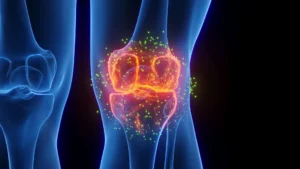
Knee osteoarthritis (KOA), a pervasive and often debilitating degenerative joint condition, represents a significant global health challenge, affecting millions of older adults and substantially diminishing their quality of life. Characterized by chronic pain, stiffness, and reduced mobility in the knee joint, KOA not only impacts daily activities but also imposes considerable healthcare and socioeconomic burdens. For decades, the conventional management paradigm has frequently involved pharmacotherapy, primarily non-steroidal anti-inflammatory drugs (NSAIDs), to mitigate symptoms. However, the long-term use of these medications is increasingly scrutinised due to well-documented risks, including serious gastrointestinal complications such as ulcers and bleeding, as well as adverse cardiovascular events and potential renal dysfunction. This critical dilemma has underscored an urgent need for safer, yet equally effective, therapeutic alternatives.
In a pivotal development poised to reshape clinical practice guidelines, a comprehensive and robust meta-analysis published in the esteemed open-access journal PLOS One has meticulously evaluated a wide array of non-pharmacological interventions for KOA. This large-scale investigation has identified specific conservative strategies that demonstrably outperform other non-drug options in alleviating pain and enhancing joint function, crucially without the systemic risks associated with traditional drug regimens. The findings offer a compelling evidence base for prioritizing physical and mechanical therapies as the foundational elements of KOA management.
The meticulous investigation employed a sophisticated network meta-analysis, a powerful statistical technique that enables researchers to synthesize data from multiple studies and compare the effectiveness of different treatments, even those not directly compared in head-to-head trials. This methodology enhances the precision and generalizability of the findings by integrating a vast body of evidence. The researchers systematically scoured medical literature, ultimately consolidating data from an impressive 139 distinct clinical trials. These trials collectively involved nearly 10,000 participants suffering from knee osteoarthritis, making this one of the most extensive comparative effectiveness reviews in the field. The broad scope of the analysis allowed for a nuanced comparison across 12 different non-drug therapies, encompassing a spectrum from mechanical supports and physical modalities to various forms of exercise and advanced energy-based treatments.
Among the diverse interventions scrutinized, three modalities emerged as the unequivocal front-runners in terms of efficacy: knee bracing, hydrotherapy (or aquatic therapy), and structured exercise programs. These interventions consistently demonstrated superior outcomes across key metrics of pain reduction, improvement in joint function, and alleviation of stiffness.
Knee braces, particularly those designed to offload pressure from affected compartments of the knee (e.g., unloader braces), ranked highest overall. These mechanical aids function by providing external support and stability to the joint, which can help to realign the knee, reduce abnormal stresses on damaged cartilage, and enhance proprioception (the body’s sense of its position in space). By stabilizing the knee and redistributing forces across the joint, braces can significantly lessen the mechanical pain experienced during weight-bearing activities and ambulation, thereby facilitating greater mobility and participation in daily life. Their utility extends beyond pain relief, contributing to improved confidence and reduced fear of movement among patients.
Hydrotherapy, performed in warm water environments, proved exceptionally beneficial for pain relief. The unique properties of water offer a therapeutic medium ideal for individuals with arthritic conditions. Buoyancy effectively reduces the gravitational load on the knee joint, minimizing impact and allowing for pain-free movement that might be impossible on land. The warmth of the water promotes muscle relaxation and improves blood circulation, further contributing to pain reduction and increased tissue extensibility. Furthermore, the natural resistance of water provides a gentle yet effective means to strengthen the muscles surrounding the knee without excessive strain, making it an excellent option for improving strength, flexibility, and endurance.
Regular, structured exercise regimens also delivered consistent and substantial benefits. Physical activity, tailored to the individual’s capabilities, plays a multifaceted role in KOA management. Strengthening the quadriceps and hamstring muscles, which support the knee, can significantly improve joint stability and reduce the load on the joint. Exercises focusing on flexibility and range of motion help to combat stiffness and maintain mobility. Moreover, exercise contributes to weight management, a crucial factor given that excess body weight places additional stress on the knee joints, accelerating cartilage degeneration. Beyond the mechanical advantages, physical activity has systemic anti-inflammatory effects and can boost mood through the release of endorphins, offering a holistic approach to pain and well-being.
While these three modalities demonstrated the most robust and consistent benefits, the analysis also shed light on the effectiveness of other interventions. Some advanced treatments, such as high-intensity laser therapy and shock wave therapy, yielded moderate improvements in symptoms. These therapies utilize different energy forms to stimulate cellular repair, reduce inflammation, and alleviate pain. In contrast, therapeutic ultrasound consistently ranked as the least effective option among the evaluated non-drug therapies. This finding suggests that for KOA, the benefits often attributed to ultrasound may be minimal or non-existent, potentially challenging its continued widespread application in clinical settings where more effective alternatives are available.
The implications of this extensive research are profound for both patients and healthcare providers. The authors of the study strongly advocate for a paradigm shift in the initial approach to KOA management, urging clinicians to prioritize these evidence-based, non-pharmacological options. By integrating knee braces, aquatic therapy, and tailored exercise programs into first-line treatment protocols, healthcare systems can potentially reduce reliance on pharmaceutical interventions, thereby mitigating the associated risks of adverse drug reactions. This shift empowers patients with safer, more sustainable strategies for managing their chronic pain and improving their physical function, fostering a greater sense of self-efficacy in their health journey.
Furthermore, the accessibility and generally lower cost of these simpler physical and mechanical therapies, compared to long-term pharmaceutical prescriptions or more invasive procedures, present significant economic advantages. Focusing on these interventions could lead to more cost-effective healthcare delivery for KOA patients, reducing both direct medical expenses and the indirect costs associated with drug-related side effects and their management. This emphasis aligns with a broader trend in medicine towards personalized, patient-centered care that leverages conservative, low-risk interventions whenever possible.
Despite the comprehensive nature of this meta-analysis, the researchers acknowledge certain limitations inherent in synthesizing data from diverse studies. Variations in study design, differences in the duration and intensity of treatments across trials, and occasional smaller sample sizes in specific intervention arms could introduce a degree of heterogeneity and affect the precise ranking of some treatments. These factors underscore the importance of ongoing research to refine our understanding of optimal treatment protocols. Future investigations should explore the synergistic effects of combining different non-drug therapies, the long-term adherence rates and sustained benefits of these interventions in real-world clinical settings, and the development of personalized treatment pathways based on individual patient characteristics and KOA severity.
In conclusion, the landmark PLOS One meta-analysis provides unequivocal evidence that readily available, low-risk, and often lower-cost non-pharmacological interventions — specifically knee bracing, hydrotherapy, and structured exercise — are the most effective strategies for managing the pain and functional limitations associated with knee osteoarthritis. This robust body of evidence serves as a critical call to action for clinicians to recalibrate their treatment approaches, placing these highly effective and safe options at the forefront of KOA care. By embracing these findings, the medical community can usher in a new era of osteoarthritis management that prioritizes patient safety, optimizes clinical outcomes, and ultimately enhances the quality of life for millions affected by this challenging condition.
About the Author