The intricate process of discovering and refining medicinal compounds, a cornerstone of modern healthcare, often grapples with significant challenges related to efficiency, environmental impact, and the sheer complexity of molecular engineering. A groundbreaking development from the University of Cambridge now promises to fundamentally alter this landscape, introducing a novel method for modifying drug molecules that harnesses the power of light rather than relying on traditionally harsh chemical reagents. This innovation, detailed in the scientific journal Nature Synthesis on March 12, represents a substantial leap forward, offering a more sustainable, precise, and accelerated pathway for pharmaceutical design and optimization.
At the heart of this advancement lies a revolutionary chemical reaction, colloquially termed an "anti-Friedel-Crafts" process by its creators. Traditional Friedel-Crafts chemistry, a widely utilized tool in organic synthesis for forming carbon-carbon bonds, typically demands potent acids, high temperatures, or stoichiometric metal catalysts. These stringent conditions necessitate that such reactions are performed early in the synthesis sequence of a drug, often requiring numerous subsequent steps to construct the desired complex molecular architecture. The Cambridge team’s ingenious approach subverts this conventional order, enabling chemists to introduce crucial structural alterations to pharmaceutical candidates much later in their developmental journey, thereby streamlining an otherwise laborious and time-consuming procedure.
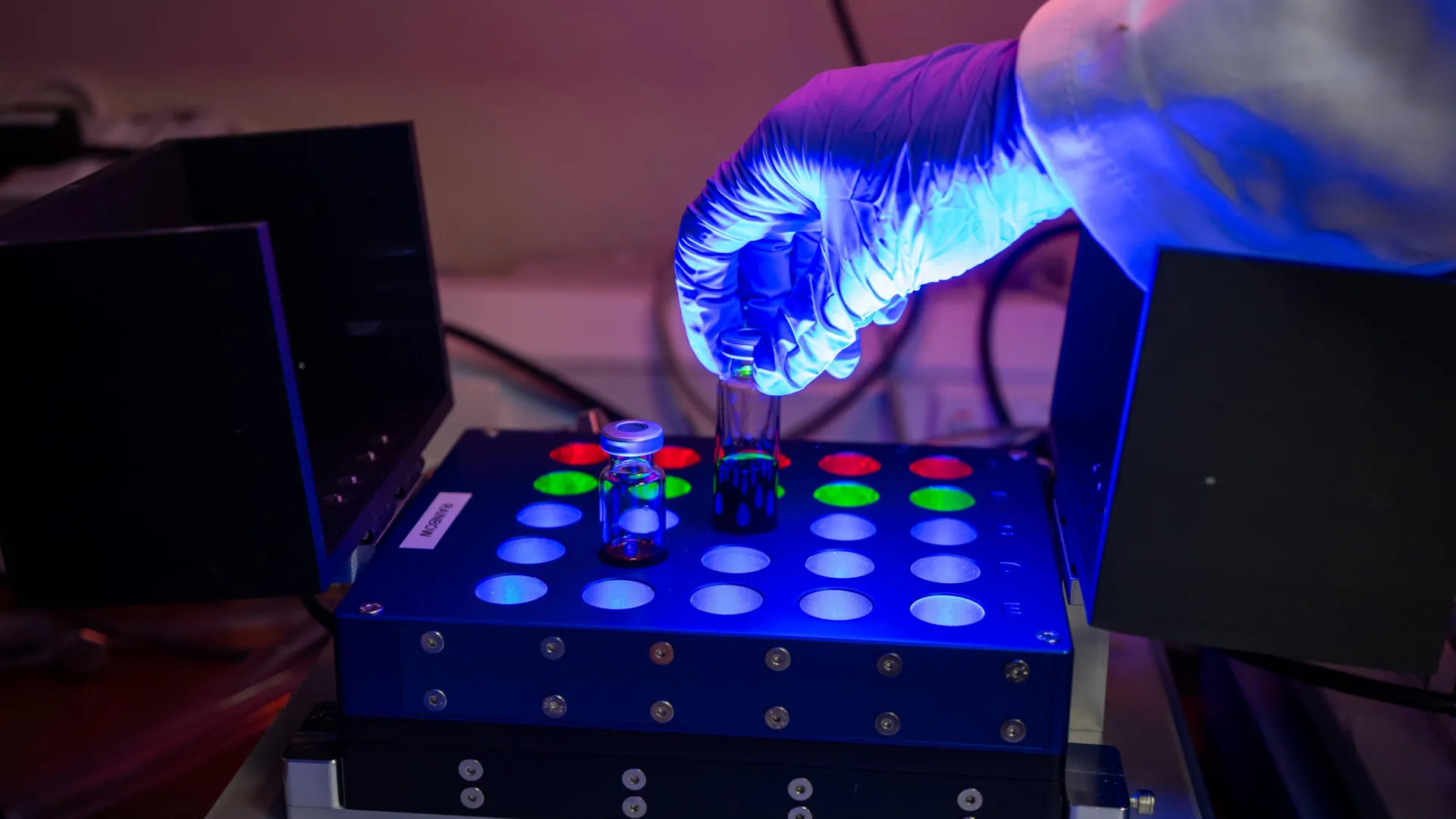
The new technique distinguishes itself by activating the necessary chemical transformations through an LED lamp operating at ambient temperatures, completely bypassing the need for heavy metal catalysts or aggressive chemical environments. This light-driven initiation sets in motion a self-sustaining chain reaction, facilitating the formation of robust carbon-carbon bonds under exceptionally mild conditions. Crucially, this process operates without the reliance on toxic or prohibitively expensive reagents that often characterize conventional synthetic pathways. This shift from high-energy, hazardous protocols to a gentle, photochemical method marks a significant paradigm change in the field of medicinal chemistry.
For pharmaceutical chemists, the practical implications are profound. Historically, fine-tuning a complex drug molecule—even for minor adjustments—often meant dismantling large portions of its structure and painstakingly rebuilding them, a process that could consume several months for a single compound. The novel Cambridge method eliminates this bottleneck, providing the unprecedented ability to make precise, targeted modifications near the final stages of drug development. This capability allows researchers to begin with a promising "hit" compound and iteratively refine its properties, rather than engaging in extensive de novo synthesis for every slight variation. As David Vahey, the first author of the study and a PhD researcher at St John’s College, Cambridge, underscored, this empowers scientists to explore vast "chemical spaces" that were previously considered intractable due to the limitations of existing synthetic methodologies.
Beyond mere efficiency gains, the method boasts exceptional selectivity, a critical attribute in drug design. Molecules, especially those destined for therapeutic use, possess intricate three-dimensional structures with various functional groups, each playing a specific role. The ability to modify one particular region of a molecule without perturbing other sensitive areas is paramount, as even subtle structural changes can profoundly influence a medicine’s biological activity, its pharmacokinetics (how it moves through the body), or its potential for undesirable side effects. This high functional-group tolerance means the reaction can target a specific site, leaving other vital parts of the molecule untouched, making it ideally suited for the late-stage optimization that refines drug candidates.
The environmental benefits of this innovation are equally compelling. By dramatically reducing the number of synthesis steps, the technique inherently lowers the consumption of chemical reagents and solvents, curtails energy expenditure, and shrinks the overall carbon footprint associated with drug development. The avoidance of heavy metals, harsh reaction conditions, and protracted synthesis pathways translates directly into a reduction of toxic waste generated during pharmaceutical manufacturing. As the global chemical industry increasingly commits to reducing its environmental impact, these "green chemistry" principles are becoming indispensable. Professor Erwin Reisner, the study’s lead author and Professor of Energy and Sustainability in the Yusuf Hamied Department of Chemistry, emphasized that expanding the scope of what chemists can achieve under practical, environmentally conscious conditions is a core objective of his team’s research, which often draws inspiration from natural processes like photosynthesis.
Professor Reisner’s research group is renowned for its work on chemical systems that mimic photosynthesis, striving to convert waste materials, water, and atmospheric carbon dioxide into valuable chemicals and fuels using sunlight. This broader commitment to sustainable chemistry provides the intellectual bedrock for the current discovery, which aligns perfectly with the imperative to transition towards greener industrial practices. The formation of fundamental carbon-carbon bonds, the very scaffold of organic chemistry, in such an environmentally benign manner, represents a significant stride towards this vision.
The genesis of this groundbreaking technique itself offers a compelling narrative, echoing numerous famous scientific discoveries that arose from serendipity. David Vahey’s breakthrough emerged from an unexpected laboratory result – what initially appeared to be a failed control experiment. While testing a photocatalyst, Vahey intentionally removed it during a control run, only to discover that the intended reaction proceeded just as effectively, if not more so, without its presumed catalyst. The resulting product was unusual, defying expectations. Instead of dismissing it as an error or contamination, Vahey and the team decided to investigate further, a pivotal decision that Professor Reisner identifies as a hallmark of successful scientific inquiry. This commitment to scrutinizing anomalies, rather than overlooking them, has historically paved the way for profound advancements, from Alexander Fleming’s accidental discovery of penicillin to the unforeseen therapeutic effects that led to the development of medications like Viagra.
In a further testament to modern scientific methodology, the Cambridge researchers integrated advanced computational tools into their workflow. After elucidating the underlying chemistry of the unexpected reaction, the team collaborated with Trinity College Dublin to develop sophisticated machine learning models. These artificial intelligence algorithms are capable of learning patterns from known chemical reactions and subsequently predicting where the novel reaction would occur on entirely new molecules, even those never before synthesized or tested in a laboratory setting. This AI-driven predictive capability significantly accelerates the drug discovery process, enabling researchers to identify promising molecular candidates more quickly and with substantially reduced experimental trial-and-error. While AI offers immense power in data analysis and prediction, both Vahey and Reisner stress that human intuition remains irreplaceable for recognizing the significance of the unexpected – the moment a "wrong" result transforms into a "new" discovery.
The team has already demonstrated the versatility of their new reaction across a wide spectrum of drug-like molecules. Moreover, they have shown its adaptability for continuous flow systems, which are standard in industrial chemical production, indicating its potential for large-scale pharmaceutical manufacturing. A key collaboration with AstraZeneca further validated the technique’s practical utility and its capacity to meet the stringent environmental and operational requirements of industrial pharmaceutical processes.
Looking ahead, the implications of this Cambridge innovation extend far beyond immediate drug development. As Professor Reisner articulated, the transition of the chemical industry to a truly sustainable model stands as one of the most formidable challenges within the broader global energy transition. This novel photochemical method, by offering a cleaner, more efficient, and fundamentally new way to construct and modify essential molecular structures, provides a powerful tool in achieving that monumental goal. The journey of scientific discovery, often punctuated by countless challenging days, yields its most profound rewards when a seemingly failed experiment unveils a new frontier, transforming the landscape of what is chemically possible and opening new avenues for future therapeutic breakthroughs.
About the Author