As individuals progress beyond their mid-fifties, maintaining robust physical independence and a high quality of life often hinges on the functional capabilities of key joints, none more critical than the hips. These complex ball-and-socket joints serve as the central nexus for lower body movement, influencing everything from the fluidity of a stride to the ease of bending, lifting, and balancing. A decline in hip mobility, a common consequence of aging compounded by sedentary lifestyles, can subtly yet significantly erode one’s ability to engage in daily activities, participate in recreational pursuits, and ultimately, live autonomously. Conversely, proactively nurturing hip health through targeted practices can unlock greater freedom of movement, reduce the risk of injury, and support sustained vitality for decades to come.
The human body is an intricate system designed for motion, and the hips are at the heart of this design. Over time, however, several factors contribute to a gradual stiffening and reduction in the range of motion of the hip joint. Physiological changes include a decrease in the elasticity of connective tissues like ligaments and tendons, thinning of articular cartilage, and a general reduction in synovial fluid production, all of which can lead to increased friction and stiffness within the joint capsule. Furthermore, modern lifestyles often involve prolonged periods of sitting, which can shorten hip flexor muscles and weaken gluteal muscles, throwing the pelvis out of alignment and contributing to compensatory patterns in the lower back and knees. The cumulative effect of these changes manifests as reduced flexibility, diminished strength, impaired balance, and an elevated risk of falls, making a conscious effort to preserve hip mobility not just beneficial, but imperative for healthy aging.
Understanding one’s current hip mobility status is the first step toward improvement. While a comprehensive assessment by a physical therapist or movement specialist is always recommended for personalized guidance, certain foundational positions can offer insightful benchmarks into the functional health of your hips. These specific movements are designed to challenge various planes of hip motion – flexion, extension, and rotation – while also engaging supporting musculature and demanding a degree of core stability. Successfully holding these positions with proper form and control indicates a well-maintained range of motion and muscular coordination, suggesting that your hips are adequately equipped to support an active and independent lifestyle even after the age of 55. For those who find these positions challenging, they serve as excellent starting points for a focused mobility improvement program.
1. Half-Kneeling Hip Flexor Stretch Hold
This fundamental position is a powerful diagnostic and corrective tool, primarily targeting the hip flexor complex at the front of the hip. The hip flexors, particularly the iliopsoas group, frequently become shortened and tight due to extensive sitting, which keeps the hips in a flexed position for prolonged periods. This tightness can pull the pelvis into an anterior tilt, leading to an exaggerated arch in the lower back (lumbar lordosis) and contributing to chronic lower back discomfort. By extending the trailing hip, this hold actively lengthens these muscles, helping to restore optimal pelvic alignment, improve walking mechanics, and alleviate undue stress on the lumbar spine. It also inherently demands engagement of the glutes and deep core stabilizers to maintain a stable, upright posture, thereby reinforcing crucial muscle synergies.
Muscles Engaged: Primarily targets the hip flexors (iliopsoas, rectus femoris), while also activating the gluteal muscles for hip extension and the deep core stabilizers (transversus abdominis, pelvic floor) for pelvic control. The quadriceps of the trailing leg also experience a stretch.
Execution Guide:
- Begin by kneeling on the floor with one knee down (the trailing leg) and the other foot flat on the floor directly in front of you, creating a 90-degree angle at both knees. For comfort, place a pad or cushion under the kneeling knee.
- Ensure your torso is upright and stacked directly over your hips. Avoid leaning forward or arching your lower back.
- Gently tuck your pelvis by drawing your belly button slightly towards your spine and squeezing the glute of the kneeling leg. This subtle posterior pelvic tilt helps to isolate the stretch to the hip flexors and prevents compensation from the lower back.
- Slowly shift your weight forward, allowing your front knee to move slightly over your ankle, until you feel a comfortable stretch through the front of the hip and thigh of the kneeling leg. Maintain the glute contraction throughout.
- Hold this position for the recommended duration, focusing on deep, steady breathing.
- Return to the starting position with control and repeat on the opposite side.
Recommended Practice: Perform 2 to 3 sets, holding each side for 20 to 40 seconds. Allow 30 to 45 seconds of rest between sets.
Form Refinement: The most crucial aspect is to maintain a slight pelvic tuck and avoid overarching the lower back. Imagine a straight line from your ear through your shoulder, hip, and down to the kneeling knee.
Variations for Adaptation: For increased support, hold onto a sturdy object. To deepen the stretch, incorporate an overhead arm reach on the side of the kneeling leg, or explore a couch stretch by elevating the trailing foot onto a chair or wall.
2. Deep Squat Hold
The deep squat is arguably one of the most primal and functional human movements, challenging the full extent of hip flexion, knee flexion, and ankle dorsiflexion simultaneously. Its ability to reveal restrictions quickly makes it an excellent assessment tool. A comfortable, stable deep squat indicates not only robust hip mobility but also adequate ankle flexibility and core control. In everyday life, this position translates directly to activities like picking up objects from the floor, sitting into a low chair, or even interacting with children or pets at ground level. Beyond assessment, holding a deep squat actively builds strength and endurance in the muscles that stabilize the joint at its end range of motion, reinforcing the neural pathways for deep, controlled movement.
Muscles Engaged: Primarily activates the gluteal muscles (gluteus maximus, medius), quadriceps (rectus femoris, vastus muscles), and hip adductors. Crucially, it also heavily involves the core stabilizers to maintain torso uprightness.
Execution Guide:
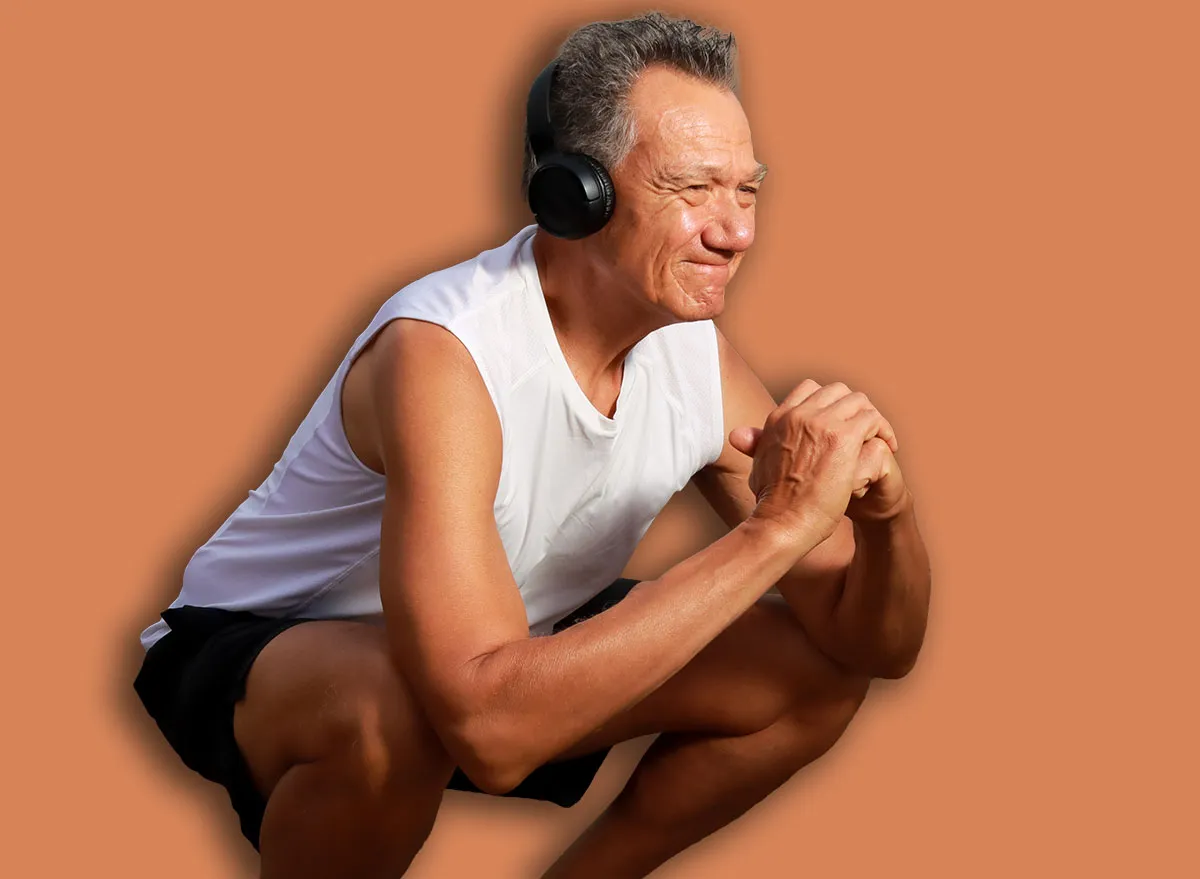
- Stand with your feet approximately shoulder-width apart, toes pointing slightly outward (around 10-30 degrees, adjust for comfort and mobility).
- Initiate the movement by sending your hips back and bending your knees, as if sitting into an invisible chair. Keep your chest lifted and your gaze forward.
- Descend slowly and with control, allowing your hips to drop as low as possible while keeping your heels firmly planted on the ground. Aim to get your hips below your knees, ideally with your thighs parallel to or lower than the floor.
- Maintain an upright torso, preventing excessive rounding of the lower back. Your knees should track in line with your toes, avoiding inward collapse.
- Find a comfortable depth where you can hold without pain, balancing the weight evenly through your feet. Imagine "spreading the floor apart" with your feet to engage your outer hips and improve stability.
- Hold this deepest comfortable position for the prescribed duration, breathing steadily.
- To exit, gently press through your heels to return to a standing position.
Recommended Practice: Perform 2 to 3 sets, holding for 20 to 45 seconds. Rest for 45 to 60 seconds between sets.
Form Refinement: Key indicators of good form include keeping heels down, chest up, and knees tracking over toes. If heels lift, slightly elevate them with small plates or a rolled towel.
Variations for Adaptation: Utilize a sturdy support (e.g., a doorframe, squat rack) to assist balance, or hold a light weight (goblet squat style) at your chest to counterbalance and encourage a more upright torso.
3. Figure Four Stretch Hold
This position specifically targets the external rotators of the hip, including the piriformis and other deep gluteal muscles, which can become tight due to prolonged sitting, repetitive movements, or even asymmetrical body mechanics. Stiffness in these muscles often contributes to restricted hip rotation and can manifest as tension or discomfort in the outer hip and lower back, sometimes mimicking sciatica-like symptoms. The figure four stretch provides excellent feedback on side-to-side differences in flexibility, allowing individuals to identify and address imbalances. Consistent practice can significantly improve the range of motion for external hip rotation, enhancing overall hip comfort and reducing compensatory strain on the lumbar spine.
Muscles Engaged: Primarily stretches the gluteus maximus, gluteus medius, and deep hip rotators (e.g., piriformis, gemelli, obturators). It also contributes to stabilizing the lower back.
Execution Guide:
- Lie on your back with your knees bent and feet flat on the floor, hip-width apart. Maintain a neutral spine, gently pressing your lower back into the floor.
- Lift one leg and cross its ankle over the opposite knee, forming a "figure four" shape with your legs. The knee of the crossed leg should point outward.
- Gently use your hand to press down on the crossed knee, increasing the stretch in the outer hip and glute of that leg. Ensure your ankle is slightly flexed (toes pulled towards your shin) to protect the knee joint.
- To deepen the stretch, reach through the gap created by your legs and grasp the thigh of the bottom leg, gently pulling it towards your chest. Alternatively, you can rest your foot on a chair or elevated surface.
- Continue to pull the bottom leg closer until you feel a deep but comfortable stretch in the outer hip and glute of the crossed leg. Avoid any sharp pain in the knee.
- Hold this position, breathing deeply and allowing the muscles to relax.
- Release slowly and repeat on the other side.
Recommended Practice: Perform 2 to 3 sets, holding each side for 20 to 40 seconds. Rest for 30 to 45 seconds between sets.
Form Refinement: Always keep the crossed ankle slightly flexed to safeguard the knee. Focus on keeping your lower back pressed into the floor to isolate the stretch to the hip.
Variations for Adaptation: Can be performed seated in a chair or standing with one foot on an elevated surface for individuals who find lying on the back challenging. A resistance band can also be used to assist in pulling the bottom leg closer.
4. Split Squat Hold
The split squat hold is a dynamic assessment that evaluates both hip flexion and extension simultaneously in a single-leg stance, making it exceptionally functional for real-world movements like walking, running, and climbing stairs. It demands a high degree of single-leg strength, balance, and coordination, exposing any asymmetries between the left and right hips. The front leg experiences significant hip flexion, while the trailing leg is in a state of hip extension, actively stretching the hip flexors on that side. This dual action, combined with the balance requirement, makes it an excellent exercise for improving lower body stability, building confidence in unilateral movements, and fostering smoother, more efficient gait patterns.
Muscles Engaged: Heavily recruits the quadriceps and glutes of both the front and back legs. It also stretches the hip flexors of the trailing leg and engages core stabilizers for balance and torso control.
Execution Guide:
- Start in a staggered stance, with one foot forward and the other foot back, approximately 2-3 feet apart. Ensure your feet are hip-width apart laterally, as if on railway tracks, rather than a tightrope, for better balance.
- Keep your torso upright and your shoulders stacked over your hips. Maintain a neutral spine.
- Slowly lower your body straight down towards the floor by bending both knees. The goal is to bring your back knee close to the ground (but not necessarily touching it) while keeping your front shin relatively vertical.
- As you descend, feel the stretch in the hip flexor of your back leg and the engagement in the glutes and quadriceps of your front leg. Avoid leaning excessively forward or allowing your front knee to drift far past your toes.
- Hold this bottom position, where both knees are bent at approximately 90 degrees, ensuring your weight is evenly distributed between both feet. Focus on maintaining balance and control.
- Breathe deeply and hold for the recommended duration.
- Push through both feet to return to the starting staggered stance. Repeat on the opposite side.
Recommended Practice: Perform 2 to 3 sets, holding each side for 20 to 30 seconds. Rest for 45 to 60 seconds between sets.
Form Refinement: The primary focus should be on lowering vertically, rather than shifting weight horizontally. Keep your core engaged and avoid excessive forward lean.
Variations for Adaptation: For added support, perform next to a wall or sturdy object you can hold onto. Elevating the front foot can increase the range of motion for the front hip, while elevating the rear foot (e.g., on a low bench for a Bulgarian split squat hold) intensifies the stretch on the trailing hip flexor and challenges stability further.
Strategies for Enhancing Hip Mobility After 55
Achieving and maintaining optimal hip mobility is a journey, not a destination, especially as one ages. The most effective approach emphasizes consistency over intensity. Short, focused sessions performed regularly are far more beneficial than infrequent, prolonged stretching routines. Incorporating these mobility holds into a daily routine, perhaps as part of a warm-up or cool-down, can yield significant improvements. Listening carefully to your body, differentiating between a healthy stretch and discomfort, is paramount. Adequate hydration and a nutrient-rich diet also play a supporting role in tissue health and elasticity. If you encounter persistent pain or significant limitations, consulting with a physical therapist or certified strength and conditioning specialist can provide tailored guidance and ensure safe progression.
By diligently practicing these four foundational hip mobility assessments and incorporating them into a consistent movement regimen, individuals over 55 can proactively safeguard their freedom of movement. This commitment to hip health extends beyond mere physical capability; it underpins the capacity for an active, engaged, and independent life, allowing you to confidently navigate the world and embrace all its opportunities for years to come.
About the Author