As global demographics shift towards an increasingly aging population, the maintenance of physical function and independent living for older adults has become a paramount public health objective. A significant challenge in this regard is sarcopenia, the age-related loss of muscle mass, strength, and function. This pervasive condition naturally progresses with advancing years, leading to a measurable decline in lower-body power and endurance. Scientific research, including studies published in journals such as The Journal of Cachexia, Sarcopenia and Muscle, consistently links diminished leg strength to severe consequences for older individuals, including impaired mobility, a heightened risk of falls, and a considerable reduction in overall independence and quality of life. The impact extends beyond physical limitations, often influencing social engagement and mental well-being.
However, the prevailing narrative around aging and muscle loss need not be one of inevitability. Contemporary physiological understanding affirms that muscle tissue, regardless of chronological age, retains a remarkable capacity for adaptation and growth in response to appropriate stimuli. This means that consistent engagement in even gentle, low-impact strength training can yield substantial benefits, improving muscle strength, enhancing balance, and increasing walking speed, thereby counteracting the effects of sarcopenia. Crucially, achieving these positive outcomes does not necessitate strenuous, high-impact workouts or specialized gym equipment. Effective muscle rebuilding strategies can be integrated seamlessly into daily routines, even within the comfort and safety of one’s own home.
Among the various accessible exercise modalities, bed-based exercises present a uniquely advantageous approach for older adults, particularly those who may be contending with stiffness, chronic joint discomfort, or reduced confidence in their balance. The inherent support offered by a bed minimizes gravitational stress on joints, which can be a significant deterrent for individuals with conditions like arthritis or osteoporosis. Furthermore, performing exercises in a supine or side-lying position effectively mitigates concerns about balance, providing a secure environment for strengthening muscles without the anxiety of falling. This enhanced sense of safety and comfort significantly boosts consistency, a critical factor for long-term adherence and successful outcomes in any exercise regimen. These types of exercises offer a gentle yet effective entry point for re-establishing physical activity, empowering individuals to reclaim their strength and mobility at their own pace.
James Bickerstaff, a Certified Personal Trainer (CPT) at OriGym, emphasizes the precision required when designing exercise programs for this demographic. "Restoring leg muscle after 65," he explains, "requires the safe and targeted activation of key lower body muscle groups, including the glutes, quadriceps, hamstrings, calves, and hip stabilizers, all without imposing excessive strain on joints or the cardiovascular system." He advocates for a holistic approach that not only builds strength but also supports improved circulation and overall joint health. The following five bed-based exercises, specifically curated by Bickerstaff, are designed to address these requirements, offering a comprehensive program for rebuilding essential leg strength and enhancing functional independence.
1. Glute Bridges: Foundations of Hip Strength and Spinal Stability
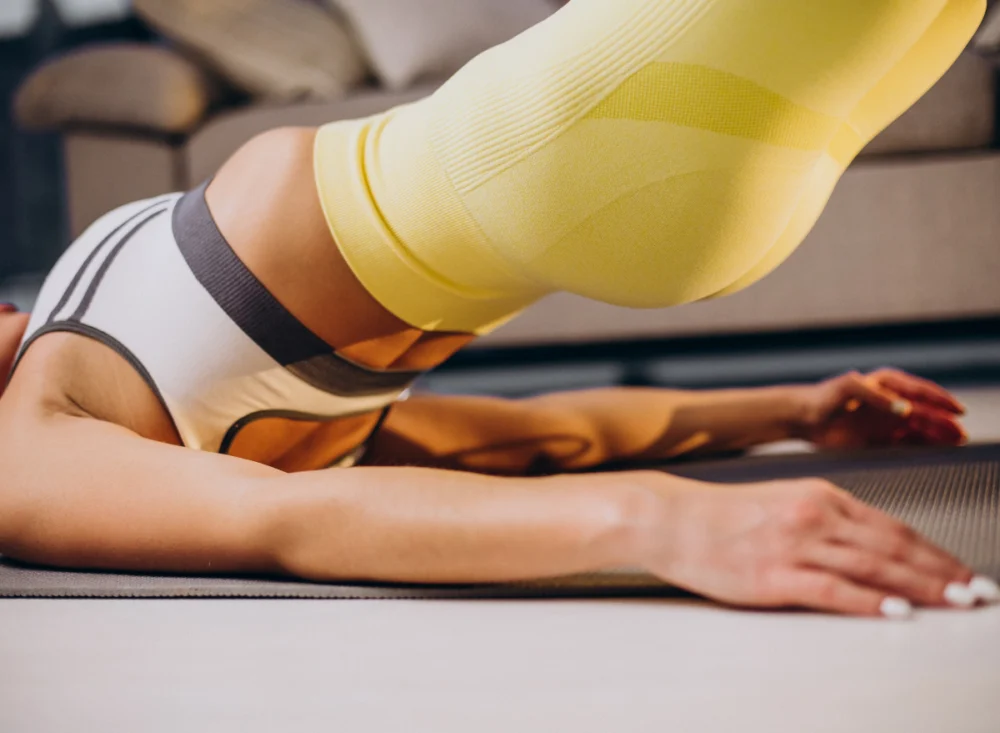
Glute bridges stand out as one of the most fundamental yet profoundly effective exercises for reactivating the posterior chain muscles—specifically the glutes and hamstrings—in older adults. Their design intrinsically supports the lower back, promotes healthy hip extension, and is instrumental in restoring the propulsive power required for efficient walking, all while being remarkably gentle on the knee joints. The supine position eliminates fall risk, creating a secure environment to focus on muscle engagement and movement control. This exercise contributes significantly to improving posture, alleviating lower back discomfort, and strengthening the core musculature, which collectively enhances overall stability.
- Execution: Begin by lying flat on your back on a firm bed surface. Bend your knees, positioning your feet flat on the bed, hip-width apart, with your heels a comfortable distance from your buttocks. Keep your arms relaxed at your sides, palms facing down. Engage your abdominal muscles slightly to brace your core, then press through your heels to lift your hips off the bed. Aim to create a straight line from your shoulders through your hips to your knees. Hold this peak contraction for a moment, consciously squeezing your glutes. Slowly and with control, lower your hips back down to the starting position.
- Form Focus: Avoid arching your lower back excessively at the top of the movement; the lift should come from the glutes, not the spine. Keep your neck relaxed. Focus on a smooth, controlled ascent and descent.
- Recommendations: Perform 2-3 sets of 10-15 repetitions. As strength improves, you can increase the hold time at the top or try a single-leg variation for an advanced challenge.
2. Straight Leg Raises: Quadriceps Activation for Functional Mobility
Straight leg raises are an excellent exercise for directly targeting and rebuilding strength in the quadriceps, the large muscle group at the front of your thigh. Robust quadriceps are indispensable for numerous everyday activities, such as ascending stairs, transitioning from a seated to a standing position, and maintaining stability during walking. This movement isolates the quadriceps while simultaneously protecting the knee joint, making it particularly beneficial for individuals who experience mild knee discomfort or are recovering from knee-related issues. It also helps to improve hip flexion, contributing to a more efficient gait.
- Execution: Lie flat on your back on the bed with one leg extended straight and the other knee bent, foot flat on the bed for support. Keep your extended leg straight but not locked at the knee. Engage the quadriceps of the straight leg, tightening the muscle on the front of your thigh. Slowly lift the straight leg off the bed, keeping it as straight as possible, until it reaches the height of your bent knee or a comfortable range of motion. Avoid arching your lower back as you lift. Hold briefly at the top, then slowly and deliberately lower the leg back down to the bed.
- Form Focus: The movement should be controlled, not jerky. Ensure your lower back remains pressed into the bed throughout the exercise. If you feel any strain in your lower back, reduce the height of the leg lift.
- Recommendations: Aim for 2-3 sets of 10-15 repetitions on each leg. To increase difficulty, you can briefly hover the heel just above the bed before the next repetition.
3. Heel Slides: Enhancing Knee Mobility and Hamstring Engagement
Heel slides are a remarkably gentle yet effective exercise for promoting knee mobility and actively engaging the hamstring muscles, located at the back of the thigh. Beyond their muscle-strengthening benefits, heel slides play a crucial role in boosting local circulation around the knee joint and contributing to joint lubrication, both of which are vital for reducing stiffness and supporting long-term lower body health. This exercise is often recommended in rehabilitation settings due to its low-impact nature and ability to improve range of motion.
- Execution: Lie on your back on the bed with both legs extended straight. Keeping one heel in contact with the bed, slowly slide that heel towards your buttocks, bending your knee as you do so. Allow your foot to remain flat on the bed throughout the movement. Continue sliding until your knee is comfortably bent, or as far as your flexibility allows without pain. Hold the position for a moment, feeling the stretch in your hamstrings and the engagement around your knee. Then, slowly extend your leg back to the starting position, maintaining contact between your heel and the bed.
- Form Focus: The movement should be smooth and controlled, avoiding any abrupt jerking. Focus on the articulation of the knee joint and the controlled engagement of the hamstrings. Breathe deeply and rhythmically.
- Recommendations: Perform 2-3 sets of 10-15 repetitions on each leg. For a smoother slide, a towel placed under the heel can be helpful, especially on certain bed surfaces.
4. Side-Lying Leg Lifts: Crucial for Hip Stabilizers and Fall Prevention
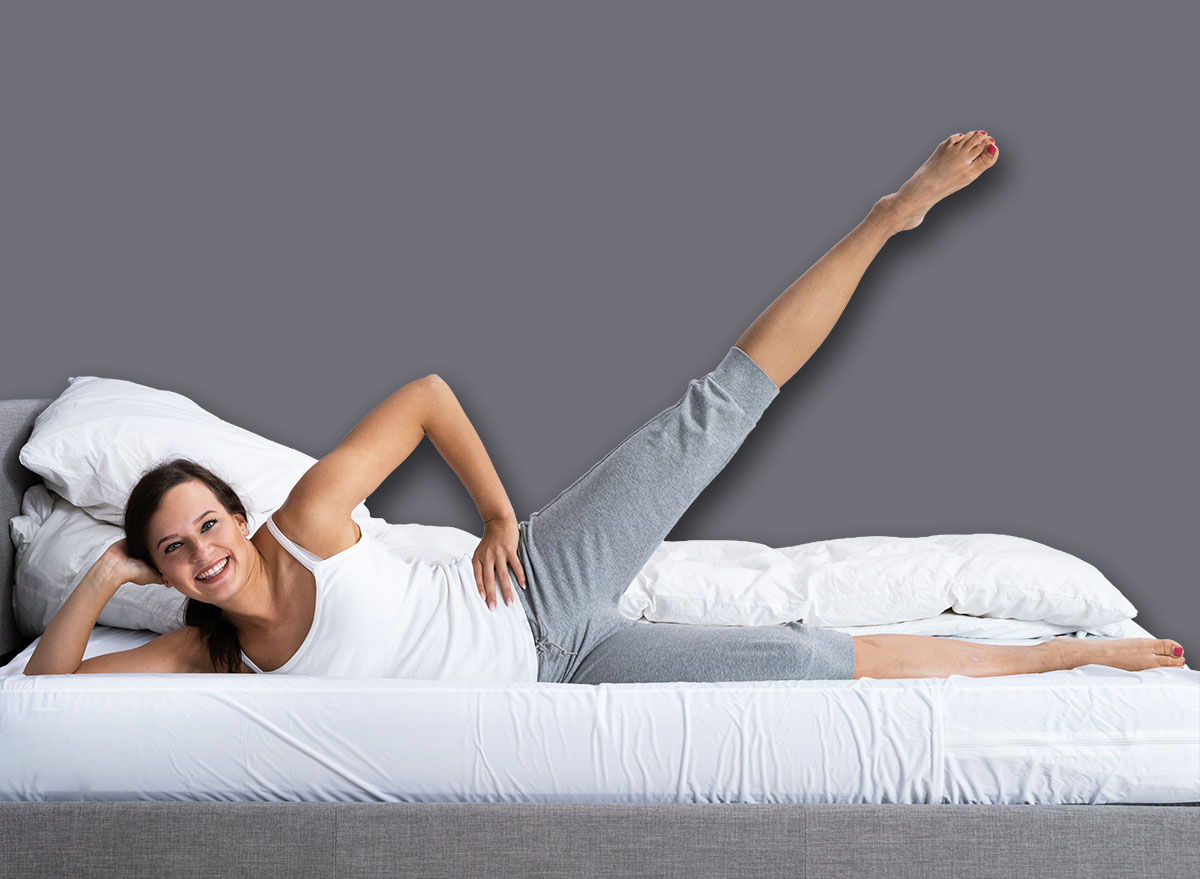
Side-lying leg lifts are an outstanding exercise for directly strengthening the hip abductor muscles, primarily the gluteus medius and minimus, which are situated on the outer aspect of the hips. These muscles are absolutely critical for maintaining lateral stability, ensuring proper balance, and preventing falls, particularly during walking. Research indicates a strong correlation between weakened hip abductors and compromised gait efficiency, leading to an elevated risk of falls in older adults. By strengthening these muscles, individuals can significantly enhance their walking stability and overall proprioception.
- Execution: Lie on your side on the bed, with your body in a straight line, and stack your hips and shoulders directly on top of each other. You can support your head with your lower arm or a pillow. Keep your bottom leg slightly bent for stability. Ensure your top leg is extended straight, and your top hip is directly above your bottom hip – avoid letting your top hip roll forward or backward. Slowly lift your top leg directly upwards towards the ceiling, leading with the heel, maintaining the straight alignment of your body. Only lift as high as comfortable, without allowing your torso to lean or rock. Hold briefly at the top, then slowly lower your leg back down with control.
- Form Focus: The key is to keep your hips stacked and avoid any rotational movement of the torso. The movement should be initiated by the hip muscles, not by swinging the leg.
- Recommendations: Aim for 2-3 sets of 10-15 repetitions on each side. If the full straight leg lift is too challenging, a modification is to perform the exercise with the top knee bent at a 90-degree angle, lifting the knee towards the ceiling while keeping the feet together (clamshell exercise).
5. Ankle Pumps: Boosting Circulation and Lower Leg Fortitude
Ankle pumps, though seemingly simple, are an often-underestimated exercise with significant benefits for lower leg health. They are highly effective in improving blood circulation in the lower extremities and alleviating stiffness in the ankles and feet. This rhythmic movement actively engages the calf muscles (gastrocnemius and soleus) and the anterior tibialis, all of which are fundamental for generating walking power, maintaining dynamic balance, and ensuring proper foot mechanics. Regular ankle pumps can help reduce swelling in the feet and ankles, a common concern among older adults.

- Execution: Lie on your back on the bed with your legs extended straight. Alternatively, you can perform this exercise while seated with your legs extended. Point your toes away from your body as far as comfortably possible, feeling a stretch in the front of your shins and engaging your calf muscles. Hold this position for a moment. Then, flex your feet, pulling your toes back towards your sh body as far as comfortably possible, feeling a stretch in your calf muscles and engaging the muscles on the front of your shins. Hold this position briefly. Continue to alternate between pointing and flexing your feet in a controlled, pumping motion.
- Form Focus: Focus on achieving a full range of motion in both directions – full plantarflexion (pointing toes) and full dorsiflexion (flexing feet). The movement should be fluid and consistent.
- Recommendations: Perform 2-3 sets of 15-20 repetitions on each foot, or simultaneously with both feet. This exercise can be done multiple times throughout the day, especially if you experience prolonged periods of sitting or standing.
Integrating these bed-based exercises into a regular routine offers a powerful, accessible pathway for older adults to combat muscle decline, enhance physical capabilities, and significantly improve their overall quality of life. The emphasis on safety, comfort, and gradual progression makes these movements ideal for re-engaging with physical activity. By consistently performing these targeted exercises, individuals can cultivate greater leg strength, achieve superior balance, and foster a renewed sense of independence, ultimately leading to more active, fulfilling, and fall-resilient golden years. As with any new exercise program, it is always advisable to consult with a healthcare professional or a certified personal trainer to ensure these movements are appropriate for individual health conditions and fitness levels.
About the Author