
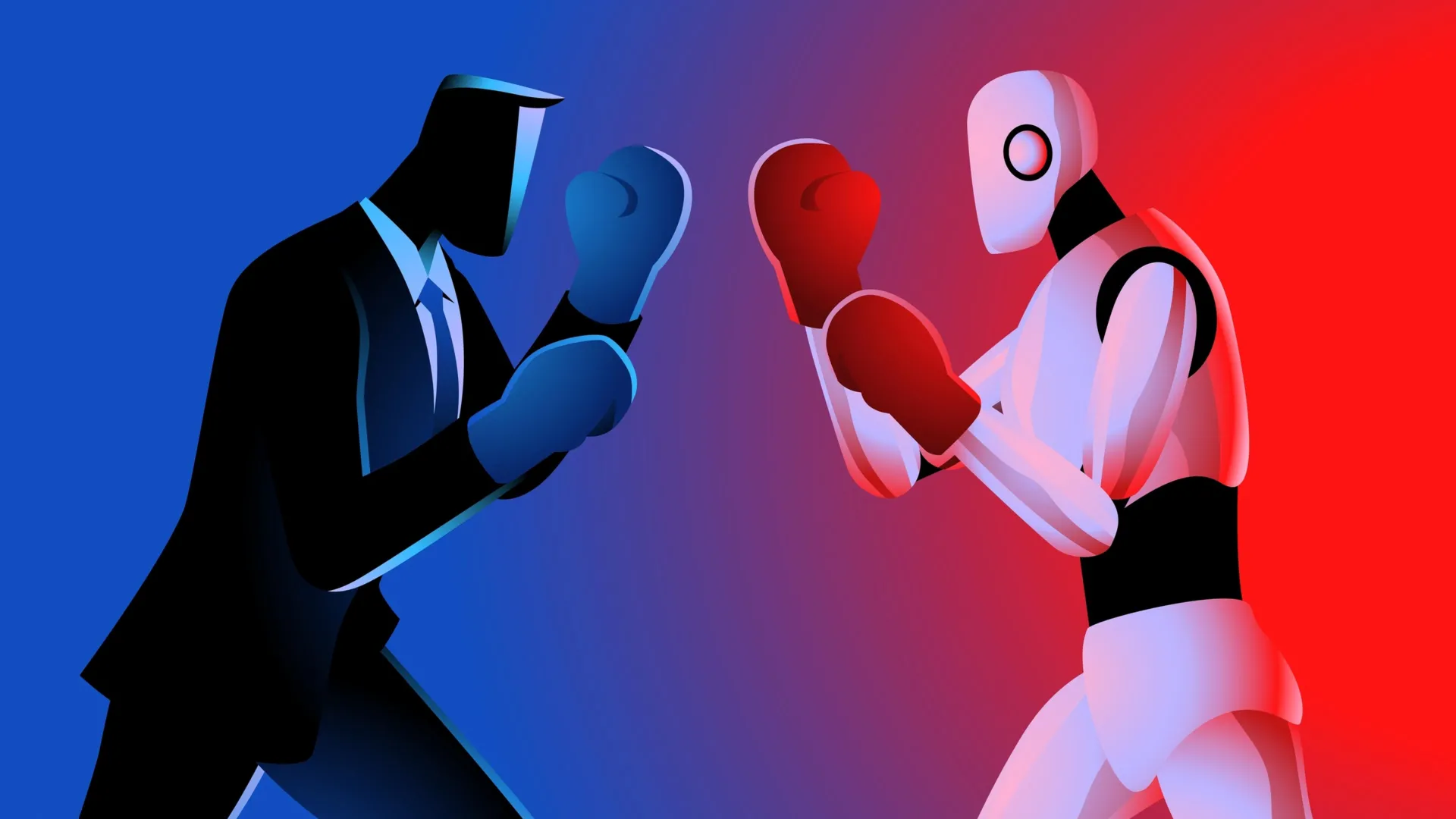
A groundbreaking investigation, spearheaded by Professor Karim Jerbi of the Université de Montréal’s Department of Psychology and featuring insights from eminent AI pioneer Yoshua Bengio, has undertaken an unprecedented comparison between the creative capabilities of artificial intelligence and human cognition, representing the most extensive direct assessment of its kind to date. This extensive research, published in the esteemed journal Scientific Reports (Nature Portfolio), signals a pivotal moment in our understanding of generative AI, suggesting that these sophisticated systems have now attained a level where they can, in specific creative domains, surpass the output of the average human. Concurrently, however, the study unequivocally demonstrates that individuals exhibiting exceptional creative talent continue to maintain a distinct and enduring advantage over even the most advanced AI models currently available.
The investigation meticulously evaluated a spectrum of leading large language models, including prominent entities such as ChatGPT, Claude, and Gemini, contrasting their performance metrics with the results derived from a colossal cohort exceeding 100,000 human participants. The findings illuminate a significant inflection point: certain AI systems, notably GPT-4, have demonstrated the capacity to outperform average human scores on tasks specifically engineered to quantify divergent linguistic creativity, which is the ability to generate a wide array of novel and unique ideas from a singular stimulus. Professor Karim Jerbi elaborated on this pivotal outcome, stating, "Our study reveals that some AI systems underpinned by large language models are now capable of exceeding average human creativity in the context of well-defined tasks. While this revelation may evoke surprise, perhaps even unease, our research also underscores an equally vital observation: even the most accomplished AI systems still fall short of the creative benchmarks established by highly imaginative individuals."
Further in-depth analysis, conducted by the study’s co-lead authors, postdoctoral researcher Antoine Bellemare-Pépin from the Université de Montréal and PhD candidate François Lespinasse from Concordia University, uncovered a compelling and consistent pattern. Although certain AI models now demonstrate superiority over the general populace in creative tasks, the zenith of human creative expression remains demonstrably beyond their reach. In fact, when the researchers focused their examination on the most creatively adept half of the human participant group, their average performance scores surpassed those recorded by every single AI model subjected to testing. This disparity widened considerably when considering the top 10 percent of individuals identified as possessing the highest levels of creativity. Professor Jerbi further contextualized their methodological approach, emphasizing, "We devised a stringent analytical framework that empowers us to compare human and AI creativity utilizing identical evaluative instruments. This was made possible through the aggregation of data from over 100,000 participants, a collaborative effort that also involved Jay Olson from the University of Toronto." Professor Jerbi, who also holds an associate professorship at Mila, underscored the collaborative nature of this ambitious project.
To ensure a robust and equitable comparison of creative output between human participants and artificial intelligence, the research consortium employed a multi-faceted methodological strategy. The cornerstone of their assessment was the Divergent Association Task (DAT), a widely recognized psychological instrument designed to measure divergent creativity – the inherent capacity to conceptualize a diverse and original set of ideas stemming from a singular prompt. The DAT, conceived by study co-author Jay Olson, presents participants, irrespective of whether they are human or AI, with the challenge of enumerating ten words that are as semantically dissimilar as possible. As an illustration of a particularly inventive response, the researchers cited the sequence: "galaxy, fork, freedom, algae, harmonica, quantum, nostalgia, velvet, hurricane, photosynthesis." The performance on this particular task has been empirically shown to correlate strongly with outcomes derived from other established creativity assessments, including those focused on creative writing, idea generation, and innovative problem-solving. Although the DAT is fundamentally a language-based exercise, its scope extends far beyond mere lexical knowledge; it actively engages broader cognitive faculties integral to creative thought processes across a multitude of disciplines. A significant practical advantage of the DAT lies in its brevity, requiring only two to four minutes to complete, and its accessibility to the general public via online platforms.
Following the validation of AI’s capabilities within this foundational word-association paradigm, the research team extended their inquiry to ascertain whether this demonstrated AI proficiency could translate to more intricate and real-world creative endeavors. To this end, they subjected both AI systems and human participants to a series of creative writing assignments. These tasks included the composition of haiku, a concise three-line poetic structure; the crafting of concise movie plot synopses; and the generation of short narrative stories. The observed outcomes mirrored the pattern established in the earlier phase of the study. While AI systems occasionally demonstrated superior performance compared to the average human participant, the most adept human creators consistently produced work that was not only more polished but also demonstrably more original and conceptually sophisticated.
This finding naturally prompted a crucial follow-up question: is the creative output of AI a fixed attribute, or can it be modulated and enhanced? The study’s findings indicate that AI creativity is indeed subject to adjustment through the manipulation of specific technical parameters, most notably the ‘temperature’ setting of the model. This parameter functions as a control mechanism, dictating the degree of predictability versus adventurousness in the system’s generated responses. At lower temperature settings, AI tends to produce outputs that are more conservative and aligned with conventional expectations. Conversely, increasing the temperature leads to outputs that are more varied, less predictable, and more exploratory, enabling the system to transcend established patterns and explore novel conceptual territories. Furthermore, the researchers observed that the formulation of instructions significantly influences AI creativity. For instance, prompts that guide the AI to consider word origins and structural relationships through etymological exploration tend to elicit more unexpected associations and consequently yield higher creativity scores. These observations collectively underscore the profound dependence of AI creativity on human guidance, positioning interaction and prompt engineering as indispensable components of the creative workflow.
The implications of these findings offer a nuanced perspective on widespread anxieties regarding the potential for artificial intelligence to supplant human creative professionals. While current AI systems can indeed match or even exceed average human creative performance in specific contexts, they are demonstrably subject to inherent limitations and remain critically reliant on human direction. Professor Karim Jerbi articulated this balanced viewpoint, stating, "Even though AI has now reached human-level creativity on certain tests, we must move beyond this misleading sense of competition. Generative AI has, above all, emerged as an exceptionally potent instrument in service of human creativity. It will not replace creators but will profoundly transform the methodologies through which they conceive, explore, and produce – for those who elect to embrace its capabilities." Rather than heralding the obsolescence of creative professions, the research suggests a future where AI serves as a powerful creative adjunct. By facilitating the expansion of ideas and illuminating novel avenues for exploration, AI possesses the potential to amplify human imagination rather than supersede it. Professor Jerbi concluded, "By directly confronting the capabilities of both humans and machines, studies such as ours compel us to re-examine and redefine our very understanding of what constitutes creativity." The foundational research paper, titled "Divergent creativity in humans and large language models," was officially published in Scientific Reports on January 21, 2026, and involved a distinguished interdisciplinary team from the Université de Montréal, Concordia University, the University of Toronto Mississauga, Mila (Quebec AI Institute), and Google DeepMind. Professor Karim Jerbi led this extensive project, with Antoine Bellemare-Pépin and François Lespinasse serving as co-first authors. The research team also included Yoshua Bengio, the visionary founder of Mila and LoiZéro, and a universally recognized pioneer in the field of deep learning, the foundational technology powering contemporary AI systems like ChatGPT.
About the Author












