As individuals navigate the landscape of aging, preserving functional independence and a vibrant quality of life becomes paramount. While many aspects of physical health receive attention, the foundational role of core strength often remains underestimated, particularly after the age of 65. Experts in the fitness industry, drawing on decades of experience, consistently observe a prevailing oversight in older adults regarding the deliberate cultivation of core stability. This neglect is frequently rooted in the misconception that core exercises primarily serve aesthetic purposes, such as achieving visible abdominal muscles. However, this perspective overlooks the profound physiological significance of a robust core, which acts as the central pillar for safe, confident, and unrestricted movement at any stage of life. Fortunately, a series of straightforward, low-impact assessments, performable from a lying position, can offer immediate insights into one’s current core functional capacity.
The term "core" often conjures images of the rectus abdominis, the superficial muscle responsible for the "six-pack" aesthetic. However, a truly comprehensive understanding of the core encompasses a far broader and deeper network of muscles, extending vertically from the diaphragm, which aids in breathing, down to the pelvic floor, and horizontally to include the deep stabilizing musculature that runs along the spine. This intricate system functions as an integrated canister, providing a vital support structure that braces the torso, stabilizes the spine, and facilitates the efficient transfer of force between the upper and lower body. It is this internal scaffolding, rather than superficial muscle definition, that dictates an individual’s capacity for balance, posture, and protection against injury.
The aging process introduces several physiological shifts that directly impact core integrity, making its maintenance increasingly crucial for seniors. Beginning around the mid-forties, a phenomenon known as sarcopenia initiates, characterized by a gradual decline in muscle mass, typically at a rate of approximately one percent per year. By the time an individual reaches 65, this process has often unfolded for two decades, significantly diminishing overall muscular strength and endurance. The deep stabilizing muscles of the core, such as the transverse abdominis, which acts like a natural corset, the multifidus, small muscles supporting individual vertebrae, and the pelvic floor muscles, which provide crucial support for pelvic organs, are particularly susceptible to this atrophy. These muscles are not typically engaged in daily activities in a manner that challenges them sufficiently to counteract age-related decline, unlike larger, more superficial muscle groups. Consequently, their weakening can go unnoticed until functional deficits emerge.
Concurrently, the nervous system’s efficiency in recruiting muscle fibers tends to slow with advancing age. This deceleration means that when an unexpected event occurs, such as a stumble, the body’s intrinsic reflexes to rapidly activate stabilizing muscles are compromised. What might have been a minor misstep in younger years can, after 65, escalate into a serious fall event before the crucial deep core muscles have an adequate opportunity to respond and re-establish equilibrium. Furthermore, age-related postural changes, almost universally observed, place altered and often excessive mechanical loads on the spinal column. When the core is weak, muscles not designed for sustained load-bearing are forced to compensate, leading to chronic fatigue, stiffness, and localized pain. A strong and responsive core, by contrast, helps maintain optimal spinal alignment, ensuring that weight and forces are distributed correctly throughout the musculoskeletal system.
Recognizing the subtle indicators of diminishing core strength is the first step towards intervention. While dramatic weakness may not be immediately apparent, a gradual erosion of automatic stability can manifest in various ways. Daily movements that were once effortless may become challenging or uncertain. For instance, rising from a low-seated position might require extra effort or reliance on armrests. Maintaining balance while reaching for an object overhead or bending to tie shoelaces could lead to a feeling of instability. Experiencing recurrent lower back discomfort, particularly after prolonged standing or light activity, is another common symptom, as is a noticeable sway or lack of confidence during walking. These seemingly minor difficulties are the body’s signals, indicating that the foundational support system is becoming less reliable. The encouraging news is that the core musculature responds remarkably well to targeted training at any age. While the rate of improvement might differ from that of a younger individual, the gains in stability are tangible and significantly contribute to reducing back pain, enhancing balance, making everyday movements more secure, and directly influencing an individual’s ability to live independently well into their later years.
To empower individuals over 65 to assess their core stability from the comfort of their homes, three specific tests, derived from extensive fitness expertise, are presented. These evaluations are designed to gauge the effectiveness of the deep core muscles in maintaining spinal neutrality and pelvic stability against destabilizing forces.
1. The Dead Bug Hold: Assessing Spinal Stability Under Load
This exercise directly evaluates the core’s capacity to keep the spine neutral while the limbs move, creating a challenge to stability. This mirrors real-life scenarios like reaching forward, carrying groceries, or lifting a leg to climb stairs. If the deep core muscles are not adequately engaged, the lower back will often arch away from the floor as a compensatory mechanism.

- Muscles Engaged: Primarily the transverse abdominis, deep spinal stabilizers (like the multifidus), and the diaphragm.
- How to Perform: Begin by lying flat on your back with knees bent and feet flat on the floor, hip-width apart. Ensure your lower back maintains a natural, slight curve, neither pressed flat nor excessively arched. Gently draw your naval towards your spine without flattening your back. Raise both arms straight towards the ceiling, aligning them over your shoulders. Lift both knees so your hips and knees form 90-degree angles, with shins parallel to the floor. This is your starting position. From here, slowly extend one arm back overhead towards the floor while simultaneously straightening the opposite leg towards the floor. Crucially, as your limbs extend, focus intently on preventing any movement or arching in your lower back. Hold this extended position for a few seconds, maintaining absolute spinal stillness. Return the arm and leg to the starting position with control. Repeat on the other side. The goal is to hold the extended position cleanly without spinal movement for an increasing duration.
- Common Mistakes to Avoid: Allowing the lower back to arch excessively, losing the neutral spine position, or rushing the movement, which compromises control.
2. The Bent Knee Fall-Out Hold: Evaluating Pelvic Floor and Hip Stabilizer Engagement
This test specifically targets the strength and coordination of the pelvic floor and deep hip stabilizers in conjunction with the broader core system. The pelvic floor, a frequently overlooked component of the core in both men and women, plays a critical role in stability. Any rotation or tilt of the pelvis during this test indicates a failure of the core to maintain its position, suggesting potential difficulties with rotational movements in daily life, such as exiting a vehicle or stepping off a curb.
- Muscles Engaged: The pelvic floor muscles, deep hip stabilizers (like the gluteus medius), transverse abdominis, and the oblique muscles.
- How to Perform: Lie on your back with knees bent, feet flat on the floor, and hip-width apart, maintaining a neutral spine as in the Dead Bug Hold. Gently engage your deep core by drawing your belly button slightly inward. Slowly allow one knee to fall outwards towards the floor, keeping the opposite knee stable and pointed towards the ceiling. The key is to control the movement from your core and hip, ensuring your pelvis remains perfectly level and does not tilt or rotate. Only allow the knee to descend as far as you can maintain complete pelvic stillness. Hold this outward position for several seconds before slowly and controlledly returning the knee to the starting position using your inner thigh and core muscles. Repeat on the other side.
- Common Mistakes to Avoid: Allowing the pelvis to rock or tilt to the side as the knee falls out, or failing to maintain a stable, neutral lower back.
3. The Supine Marching Hold: Mimicking Functional Gait Stability
Considered the most functionally relevant of the three tests, this exercise closely replicates the demands of walking, ascending stairs, or stepping over obstacles. In such movements, one leg is airborne, requiring the core to actively prevent the pelvis from dropping on the unsupported side. Weakness in this area is a frequent, yet often hidden, reason why individuals may exhibit a hesitant, shuffling gait rather than lifting their feet confidently.
- Muscles Engaged: The quadratus lumborum (a deep back muscle), gluteus medius (a hip abductor and stabilizer), transverse abdominis, and other deep spinal stabilizers.
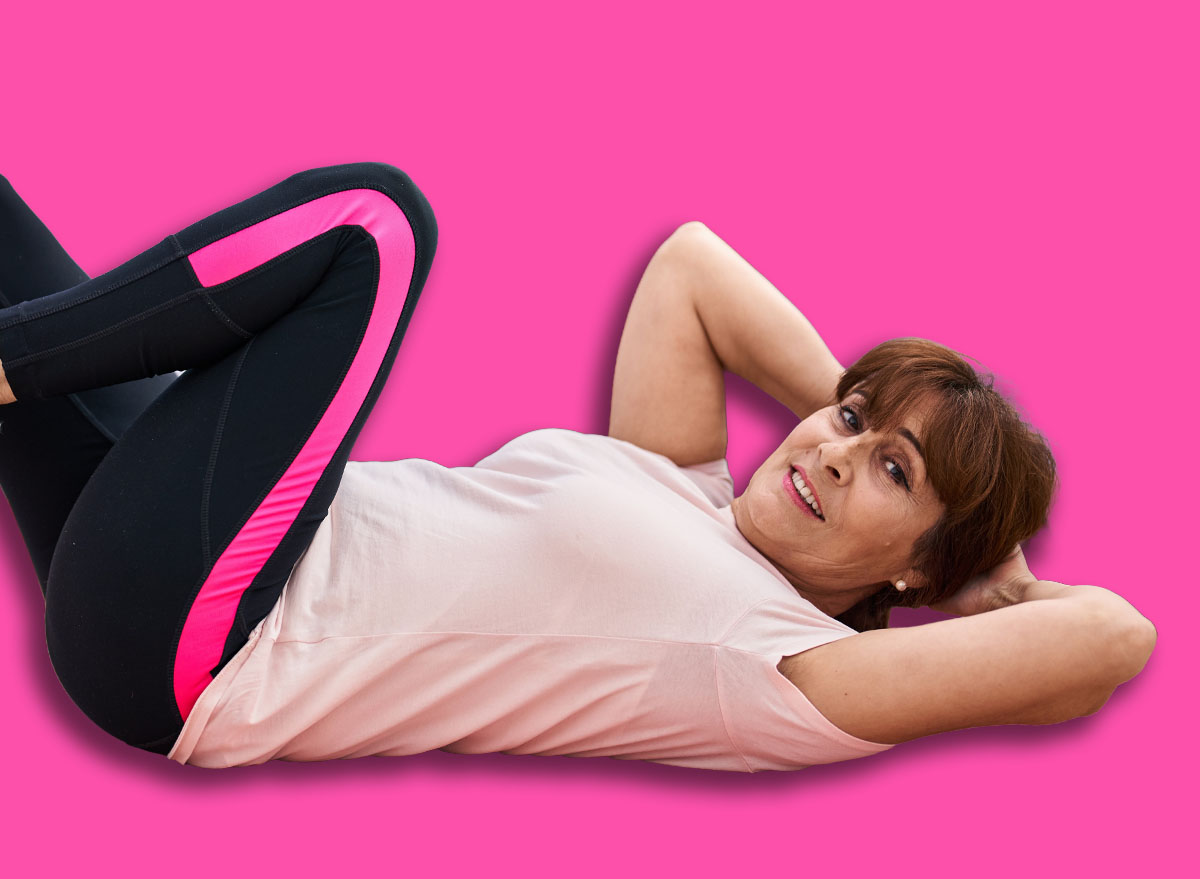
- How to Perform: Assume the same starting position as the Dead Bug Hold: lying on your back with knees bent, feet flat, and a neutral spine. Gently engage your deep core. Slowly lift one foot off the floor, bringing the knee towards your chest until the hip and knee form a 90-degree angle, as if you are marching. The critical aspect is to maintain complete stability in your pelvis; it should not tilt or drop on the side of the lifted leg. Hold this lifted position for a designated period, focusing on core engagement to prevent any movement in your lower back or hips. With control, lower the foot back to the starting position. Repeat on the opposite side.
- Common Mistakes to Avoid: Allowing the pelvis to drop or tilt towards the side of the lifted leg, using momentum instead of controlled muscle engagement, or arching the lower back.
Interpreting Your Results: A Roadmap for Progress
Once you have attempted these three tests, assessing your performance provides valuable insights into your core’s functional status.
-
Strong Performance: If you can execute all three positions cleanly, maintaining a neutral spine and stable pelvis without compensation, and comfortably hold each for the recommended duration (e.g., 20-30 seconds), your core exhibits an exceptional level of foundational strength for your age group. This robust stability provides a solid platform for safe, confident movement and allows for progression to more advanced core challenges.

-
Moderate Performance: If you manage to hold the positions, but notice slight deviations in form, such as a subtle arching of the lower back, minor pelvic tilting, or an inability to sustain the hold for the full target duration, your core stability is in a moderate state. While not a cause for immediate alarm, this indicates a clear need for consistent, focused attention on core strengthening. This category represents a common scenario for many individuals over 65, and the gap between current and desired stability is highly addressable with dedicated effort.
-
Foundational Needs: If you find it challenging to hold the positions at all, or experience significant strain or discomfort in your lower back, neck, or hips during any of the tests, your body is signaling that foundational core work is overdue. This outcome does not imply a fundamental flaw but rather suggests that your deep stabilizing muscles have not been adequately challenged or activated in some time, requiring a systematic rebuilding approach.
An important detail to observe is asymmetry. If one side of your body performs noticeably weaker or less stably than the other during the marching or fall-out tests, this imbalance warrants specific attention. Unaddressed asymmetries in core stability often manifest as chronic hip or lower back issues over time, as the weaker side becomes chronically overloaded during routine movements.
Building a Stronger Foundation: Initial Steps for Improvement
For individuals whose assessment reveals foundational needs, a structured, progressive approach is recommended. The initial priority involves cultivating awareness of a neutral spine. Begin by lying on your back with knees bent and feet flat. Focus on identifying the position where your lower back maintains its natural, slight inward curve, neither pressed flat against the floor nor excessively arched. This awareness is the bedrock upon which all effective core work is built.

From this neutral spine position, diaphragmatic breathing serves as an excellent starting point, often overlooked for its profound core benefits. The diaphragm forms the upper boundary of the core canister, and when engaged correctly during breathing, it naturally increases intra-abdominal pressure, which in turn helps activate the deep stabilizing muscles. Practice inhaling deeply through your nose, allowing your belly to gently rise, rather than your chest. Exhale slowly, feeling your abdominal muscles gently draw inwards. Incorporating five to ten minutes of this practice daily, initially lying down, can yield significant improvements in core activation within a few weeks.
Once neutral spine awareness and diaphragmatic breathing are established, gentle, active exercises can be introduced. Heel slides are an ideal first step. From the bent-knee, neutral spine position, slowly slide one heel along the floor until the leg is fully extended. Crucially, the spine should remain completely motionless throughout this movement. This exercise gently teaches the core to stabilize the trunk while a limb is in motion, directly preparing the body for more complex movements like the marching test.
Pelvic tilts further enhance the connection between core muscles and subtle movement. From the same bent-knee position, gently rock your pelvis so your lower back presses slightly into the floor, then slowly return to the neutral position. This small, controlled movement helps to engage the abdominal muscles and fosters spinal awareness.
Finally, introduce the bent knee fall-out without the hold initially. Slowly allow one knee to drop outwards, consciously observing whether your pelvis begins to rotate or tilt. The focus is on controlling the movement and returning the knee to the starting position, rather than holding a static pose. As control improves, gradually incorporate a brief hold at the bottom of the movement.

A Note on Safety and Professional Guidance
While these tests and foundational exercises are generally low-risk for most individuals, specific health conditions necessitate professional consultation. Individuals diagnosed with osteoporosis, those who have undergone recent abdominal surgery, or anyone experiencing an active disc injury should seek advice from their general practitioner or a qualified physiotherapist before attempting these assessments or exercises. These populations often require tailored modifications and specialized guidance that accounts for their unique physiological circumstances, ensuring safety and efficacy beyond the scope of general recommendations. The journey to a stronger core is an investment in long-term health and independence, but it must always be undertaken with an awareness of individual limitations and medical considerations.
About the Author