As individuals navigate the physiological shifts that accompany aging beyond the half-century mark, maintaining core strength and managing abdominal fat often become prominent wellness goals. The quest for a more defined midsection and improved metabolic health frequently leads many to explore various fitness regimens. However, misconceptions surrounding targeted fat reduction and the efficacy of certain exercise modalities persist. This comprehensive guide will illuminate a holistic approach, emphasizing the critical role of dynamic, standing exercises, underpinned by scientific principles, to support overall fitness and contribute to abdominal fat management in mature adults.
The journey toward a leaner physique and robust health after age 50 is complex, influenced by factors such as a naturally decelerating metabolism, shifts in hormonal balance, and a tendency towards sarcopenia – the age-related loss of muscle mass. While prolonged cardiovascular activity, such as endless treadmill sessions, holds its place in a balanced fitness routine, it rarely serves as the sole solution for reducing stubborn adipose tissue. A common misunderstanding, often referred to as "spot reduction," posits that exercising a specific body part can selectively diminish fat from that area. Scientific consensus, however, consistently refutes this notion. Fat loss is a systemic process, occurring throughout the body in response to an overall energy deficit, rather than being dictated by isolated muscle activation. Therefore, a strategic combination of exercise and nutritional discipline is paramount.
Effective fat loss fundamentally relies on creating a caloric deficit, meaning the body expends more energy than it consumes. While exercise significantly contributes to energy expenditure and enhances the body’s capacity for work, dietary choices play an equally, if not more, crucial role in initiating and sustaining this deficit. Consistent, nutrient-dense eating patterns not only fuel workouts and recovery but also stabilize energy levels, mitigating the dips in motivation that can derail progress.
For adults over 50, incorporating exercises that engage multiple muscle groups simultaneously, particularly those performed in a standing position, offers distinct advantages. Standing movements inherently demand greater core stabilization and proprioception, challenging the body in ways that seated or supine exercises often do not. By recruiting larger muscle groups—including those in the hips, legs, and core—these exercises dramatically increase calorie expenditure during the workout itself. Furthermore, this elevated metabolic demand can lead to an "afterburn effect," where the body continues to burn calories at an increased rate even after the exercise session concludes. This amplified energy demand becomes increasingly significant as the body’s basal metabolic rate naturally declines with age.
Beyond caloric expenditure, dynamic standing movements foster improved functional strength, which translates directly to enhanced ease and safety in daily activities. They promote better balance, coordination, and overall movement efficiency, qualities that are vital for maintaining independence and quality of life as one ages. The inherent intensity and engaging nature of these exercises also contribute to greater adherence and enjoyment, making consistent participation more sustainable in the long term.
Here are five coach-approved standing exercises that effectively integrate these principles, offering significant benefits for core strength, metabolic conditioning, and supporting overall fat reduction efforts:
1. Dumbbell Thrusters: A Full-Body Powerhouse
The dumbbell thruster stands as a quintessential compound movement, seamlessly integrating a lower body squat with an upper body overhead press into a single, fluid action. This dynamic combination necessitates significant muscular recruitment across multiple joints, driving a robust cardiovascular response and fostering systemic metabolic activation. For mature individuals, thrusters not only enhance work capacity and overall calorie expenditure but also critically teach the core to brace effectively under load, a fundamental skill for maintaining posture and executing daily tasks safely.
- Muscles Engaged: Quadriceps, glutes, shoulders, triceps, and a profound activation of the core musculature.
- Benefits: Builds explosive power, improves cardiovascular endurance, enhances core stability under dynamic conditions, and contributes to significant calorie burn.
- Form Considerations: Initiate the movement with feet shoulder-width apart, holding dumbbells at shoulder height. Descend into a squat, ensuring the core remains braced by pulling the rib cage down towards the pelvis. As you powerfully drive up from the squat, extend through the hips and knees, simultaneously pressing the dumbbells overhead. Maintain a neutral spine throughout.
- Recommended Sets and Reps: Aim for 3 to 4 sets of 8 to 12 repetitions, resting for approximately 60 seconds between sets.
- Variations: Goblet thruster (using a single dumbbell or kettlebell held at the chest), single-arm dumbbell thruster, or tempo thrusters (controlling the speed of each phase).
2. Kettlebell Swings: Propelling Hip Power and Conditioning
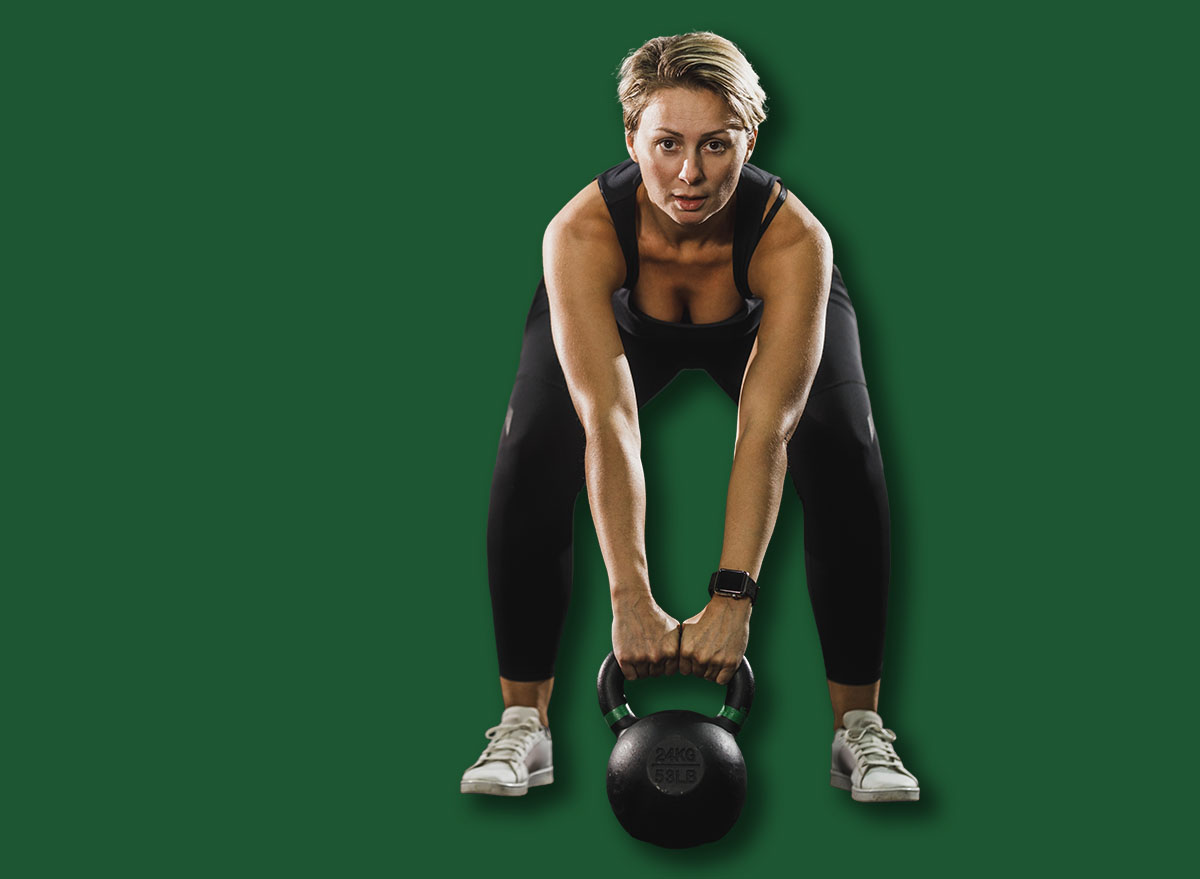
Kettlebell swings are a powerful ballistic exercise that primarily trains explosive hip extension, a foundational movement pattern crucial for generating power and efficiency in daily life, such as lifting objects or climbing stairs. This movement rapidly elevates the heart rate, providing potent cardiovascular conditioning while simultaneously reinforcing robust glute and hamstring engagement. The rhythmic nature of swings, when performed correctly, offers a low-impact yet high-intensity option for fat loss without excessive stress on the joints. They also cultivate improved rhythm and breathing control, enhancing overall workout fluidity.
- Muscles Engaged: Glutes, hamstrings, posterior chain, core, and lats.
- Benefits: Develops explosive power, strengthens the posterior chain, boosts metabolic rate, and improves grip strength and endurance.
- Form Considerations: Begin with the kettlebell slightly in front of you. Hinge at the hips, keeping a flat back, and "hike" the kettlebell back between your legs. Explosively snap your hips forward, allowing the momentum to swing the kettlebell to chest height; avoid lifting with your arms. The arms should act as hooks, guiding the bell. Brace your core strongly at the top of the swing.
- Recommended Sets and Reps: Perform 4 sets of 15 to 20 repetitions, with a rest period of 45 to 60 seconds between sets.
- Variations: Single-arm swings, dead-stop swings (resetting the kettlebell on the ground after each rep), or banded swings for added resistance.
3. Medicine Ball Front Slams: Dynamic Core Engagement and Stress Release
Medicine ball front slams are an exceptional exercise for channeling energy into productive power, offering a unique blend of strength, conditioning, and dynamic core activation. This explosive movement requires generating force from the ground up, bracing the core intensely, and forcefully slamming a medicine ball downward. The sheer effort involved rapidly spikes the heart rate and engages the abdominal muscles in a highly dynamic manner. Furthermore, slams enhance full-body coordination, a physical attribute that often benefits from specific training as we age. They are efficient, surprisingly satisfying, and offer a powerful outlet for physical exertion.
- Muscles Engaged: Core (especially rectus abdominis and obliques), shoulders, lats, and glutes.
- Benefits: Improves explosive power, enhances dynamic core stability, provides cardiovascular conditioning, and can be a great way to release stress.
- Form Considerations: Stand with feet shoulder-width apart, holding a medicine ball. Raise the ball overhead, extending fully. Then, powerfully slam the ball into the ground between your feet, hinging at the hips and engaging your core. Exhale forcefully as the ball makes impact to maximize core engagement. Catch the rebound and repeat.
- Recommended Sets and Reps: Complete 3 to 5 sets of 10 to 15 repetitions, resting for 45 seconds between sets.
- Variations: Overhead slams (similar but with a higher overhead reach), rotational slams (incorporating a twist), or alternating stance slams.
4. Sled Pushes: Unrivaled Strength and Conditioning with Low Joint Impact
Sled pushes represent one of the most effective tools for simultaneously building strength and conditioning, particularly valuable for individuals over 50 due to their exceptionally low impact on the joints. This movement involves driving forward against constant resistance, keeping the entire body, especially the core, under continuous tension. It challenges the legs and lungs profoundly without the repetitive pounding associated with running or jumping. Sled pushes are excellent for developing powerful leg drive, muscular endurance, and robust core stability, making them ideal for fat loss objectives. The effort is demanding yet highly controlled, providing a comprehensive total-body workout.
- Muscles Engaged: Quadriceps, glutes, calves, and a constant engagement of the core.
- Benefits: Builds significant lower body strength and endurance, enhances cardiovascular fitness, minimizes joint stress, and improves core stability under load.
- Form Considerations: Lean into the sled, grasping the handles firmly. Keep your body in a strong, athletic position with a neutral spine. Drive through your legs, taking short, powerful steps, and focus on pushing the ground away with each stride. Maintain constant tension throughout the push.
- Recommended Sets and Reps: Perform 6 to 8 pushes over a distance of 20 to 30 yards, resting for 60 seconds between each effort.
- Variations: Low handle pushes (more glute and hamstring emphasis), backward sled drags (emphasizing quads and grip), or heavy sled marches (focusing on raw strength).
5. Jumping Jacks: Accessible Full-Body Cardio and Coordination
Often underestimated, jumping jacks are a highly accessible and effective full-body conditioning exercise that delivers substantial cardiovascular benefits when performed with intent. They rapidly elevate heart rate and encourage synchronized movement of the limbs, challenging both coordination and rhythm. This exercise is incredibly versatile, requires no equipment, and can be easily scaled to suit various fitness levels, making it an excellent choice for maintaining calorie burn and enhancing overall agility. When integrated strategically into a workout routine, jumping jacks significantly contribute to energy expenditure and dynamic conditioning.
- Muscles Engaged: Calves, shoulders, hips, and core.
- Benefits: Boosts cardiovascular health, improves coordination, enhances full-body mobility, and is highly scalable and equipment-free.
- Form Considerations: Begin standing with feet together and arms at your sides. Simultaneously jump your feet out to the sides while raising your arms overhead. Jump back to the starting position with feet together and arms down. Focus on landing softly and quietly to protect your joints and maintain controlled tension throughout the movement.
- Recommended Sets and Reps: Perform 4 to 6 sets lasting 30 to 45 seconds each, with a 30-second rest period between sets.
- Variations: Seal jacks (arms move horizontally), cross jacks (legs and arms cross), or squat jacks (incorporating a squat at the bottom of each jump).
Holistic Lifestyle Pillars for Sustainable Results After 50
While these standing exercises form a robust foundation, their effectiveness is amplified when integrated into a broader lifestyle strategy. True and lasting abdominal fat reduction, particularly after 50, requires consistent attention to several key areas:
- Nutritional Precision: Prioritize a diet rich in whole, unprocessed foods. Emphasize adequate protein intake (e.g., lean meats, fish, legumes, dairy) to support muscle maintenance and satiety, which is critical during a caloric deficit. Incorporate healthy fats (e.g., avocados, nuts, olive oil) for hormone regulation and sustained energy, and ensure a high intake of fiber-rich vegetables and fruits for digestive health and fullness. Managing portion sizes and making informed food choices are more impactful than short-term restrictive diets.
- Quality Sleep: Sufficient, restorative sleep is non-negotiable for metabolic health. Poor sleep disrupts hormones that regulate appetite (ghrelin and leptin) and stress (cortisol), making fat loss more challenging and increasing the likelihood of storing fat around the midsection. Aim for 7-9 hours of quality sleep per night.
- Consistent Hydration: Drinking enough water is vital for metabolic processes, nutrient transport, and can help manage hunger signals. Often, thirst is mistaken for hunger, leading to unnecessary caloric intake.
- Stress Management: Chronic stress elevates cortisol levels, a hormone that can promote the accumulation of visceral fat, particularly in the abdominal area. Implementing stress-reducing practices such as meditation, yoga, spending time in nature, or engaging in hobbies is crucial for overall well-being and body composition.
- Patience and Consistency: Significant body composition changes do not happen overnight. Sustainable progress requires consistent effort over time, both in exercise and lifestyle habits. Celebrate small victories and focus on long-term adherence rather than quick fixes.
By embracing a comprehensive strategy that combines dynamic, multi-joint standing exercises with meticulous nutritional habits, adequate rest, and effective stress management, individuals over 50 can significantly enhance their core strength, boost their metabolic health, and achieve meaningful reductions in abdominal fat. Age is not a barrier to achieving vitality and a strong, functional physique; rather, it necessitates a more informed and integrated approach to wellness.
About the Author