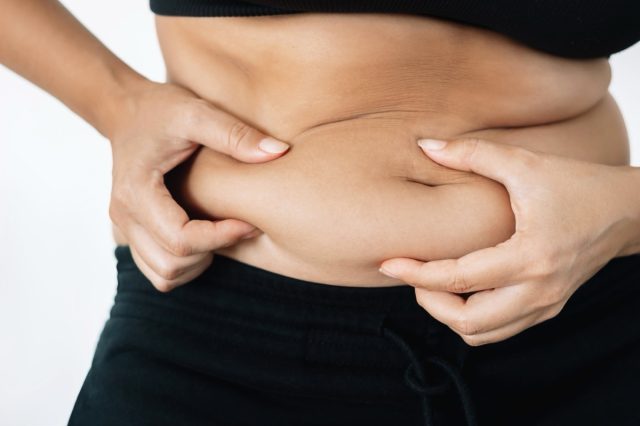
For many individuals navigating the complexities of aging, concerns about accumulating adipose tissue around the midsection, often referred to as "belly overhang," become increasingly prominent. This phenomenon is not merely an aesthetic issue but signals deeper physiological shifts that can impact overall health and well-being. While frustrating, particularly for those who feel traditional exercise methods are no longer effective, expert fitness educators confirm that this challenge is far from insurmountable. A targeted, consistent approach, emphasizing functional bodyweight movements, offers a potent pathway to not only mitigate but actively reverse this trend, fostering a stronger, more metabolically robust body without the need for cumbersome gym equipment.
The journey to a leaner midsection after the age of 55 is often complicated by a confluence of biological changes unique to this life stage. Understanding these underlying mechanisms is crucial for adopting an effective strategy. Firstly, hormonal fluctuations play a significant role. In women, the onset of menopause typically brings a decline in estrogen levels, which often triggers a redistribution of fat from the hips and thighs towards the abdomen. Similarly, men experience a gradual reduction in testosterone, contributing to decreased muscle mass and an increase in abdominal adiposity. These hormonal shifts fundamentally alter how the body stores and utilizes fat, making the midsection a preferential storage site.
Secondly, the body’s metabolic engine naturally decelerates with advancing age. On average, individuals over 55 may burn 150 to 300 fewer calories daily compared to their younger selves, even with identical activity levels. While this might seem like a modest reduction, over the course of a year, this cumulative caloric imbalance can result in a substantial weight gain, potentially adding 15 pounds or more if dietary and exercise habits are not proactively adjusted. This metabolic slowdown isn’t solely due to age but is exacerbated by a third critical factor: sarcopenia, the age-related loss of muscle mass. From the fifth decade onwards, adults can lose approximately 1-2% of their muscle tissue annually if they do not actively engage in resistance training. Since muscle tissue is metabolically active, burning more calories at rest than fat tissue, its decline leads to a further reduction in basal metabolic rate, creating a vicious cycle where fat accumulation becomes easier and fat loss more challenging.
Adding to these challenges is the increased prevalence of visceral fat. This is not the superficial fat visible just beneath the skin but a deeper, more insidious type of fat that encases vital internal organs within the abdominal cavity. Visceral fat is metabolically active and significantly associated with elevated risks of serious health conditions, including cardiovascular disease, type 2 diabetes, and certain cancers. While diet alone struggles to target this stubborn fat, specific forms of physical activity that engage the core and build overall muscle mass have been shown to be particularly effective in reducing visceral adiposity, offering profound health benefits beyond outward appearance.
Given these unique physiological considerations, the approach to exercise for individuals over 55 must be strategic. Interestingly, the most effective methods often diverge from traditional machine-based weight training. While isolation exercises on machines certainly have their place, they typically focus on single muscle groups and, consequently, do not generate a high caloric expenditure during the workout itself. A standard 30-minute machine-based session might burn a relatively modest 150-200 calories. The real power for combating age-related abdominal fat lies in compound, functional movements.
These exercises, which involve multiple joints and muscle groups working in concert, are significantly more metabolically demanding. They burn a greater number of calories during the workout and, crucially, stimulate a broader systemic response that leads to higher overall muscle development. An increased proportion of muscle mass translates directly into an elevated resting metabolic rate, meaning the body continues to burn more calories throughout the day, even during periods of rest. This transforms the body into a more efficient, continuous calorie-combusting engine.
Furthermore, these dynamic movements induce what is known as Excess Post-exercise Oxygen Consumption (EPOC), often referred to as the "afterburn effect." After a strenuous workout involving multiple muscle groups, the body requires additional oxygen to recover, repair muscle tissue, and restore physiological balance. This process elevates calorie expenditure for several hours post-exercise, extending the fat-burning benefits far beyond the actual workout duration.
Beyond caloric efficiency, functional exercises offer unparalleled advantages in building a truly robust and resilient core. Unlike isolated abdominal exercises, functional movements, which often mimic everyday actions like standing, bending, and reaching, necessitate continuous engagement of the entire core musculature. This comprehensive engagement strengthens not just the superficial abdominal muscles but also the deeper stabilizing muscles that support the spine and maintain postural integrity. The result is improved posture, a naturally flatter midsection, and enhanced functional strength that directly translates to greater ease and safety in daily activities.
For the over-55 demographic, safety is paramount. Functional, bodyweight exercises are inherently safer than many machine-based alternatives. They encourage natural movement patterns, reducing undue stress on joints that can occur when the body is locked into fixed positions on machines. This approach fosters improved stability, balance, and coordination, which are critical for preventing falls and injuries, thereby promoting greater independence and quality of life in later years.
Five Pillars of Core-Centric Bodyweight Training
A comprehensive 15-minute daily circuit incorporating these five bodyweight exercises can effectively target abdominal fat, build core strength, and boost metabolism.
-
Chair Squats:
- Rationale: This fundamental movement engages the largest muscle groups in the lower body, including the quadriceps, glutes, and hamstrings, while simultaneously requiring significant core stabilization. Working these large muscles maximizes calorie expenditure and builds metabolically active tissue, crucial for fat loss.
- Muscles Trained: Glutes, quadriceps, hamstrings, and the entire core musculature for stability.
- How to Do It: Stand facing a sturdy chair, feet hip-width apart. Begin by hinging at your hips and bending your knees as if to sit down, keeping your chest lifted and back straight. Lower yourself until your glutes lightly tap the chair, then push through your heels to return to the standing position, squeezing your glutes at the top.
- Avoid These Mistakes: Do not allow your knees to collapse inward or extend significantly past your toes. Avoid rounding your back. Do not simply "flop" onto the chair; maintain control throughout the descent.
- Form Tip: Visualize "sitting back" into the chair rather than "sitting straight down." This ensures proper engagement of the glutes and reduces strain on the knees. Keep your weight in your heels.
- Recommended Sets and Reps: Aim for 10-15 controlled repetitions per set.
-
Wall Push-Ups:
- Rationale: An excellent full-upper body and core exercise, the wall push-up provides scalable resistance, making it accessible while still challenging enough to build strength and burn calories. It strengthens the chest, shoulders, and triceps, which are vital for daily functional movements.
- Muscles Trained: Pectorals (chest), deltoids (shoulders), triceps, and core stabilizers.
- How to Do It: Stand facing a wall, about arm’s length away. Place your hands on the wall slightly wider than shoulder-width apart, at chest height. Lean forward, bending your elbows, until your chest nearly touches the wall. Keep your body in a straight line from head to heels. Push back to the starting position.
- Avoid These Mistakes: Do not allow your hips to sag or pike up. Avoid shrugging your shoulders towards your ears. Do not arch your lower back.
- Form Tip: The greater the distance your feet are from the wall, the more challenging the exercise becomes. Start with a distance that allows you to maintain perfect form for 8-10 repetitions, then gradually increase the distance as strength improves.
-
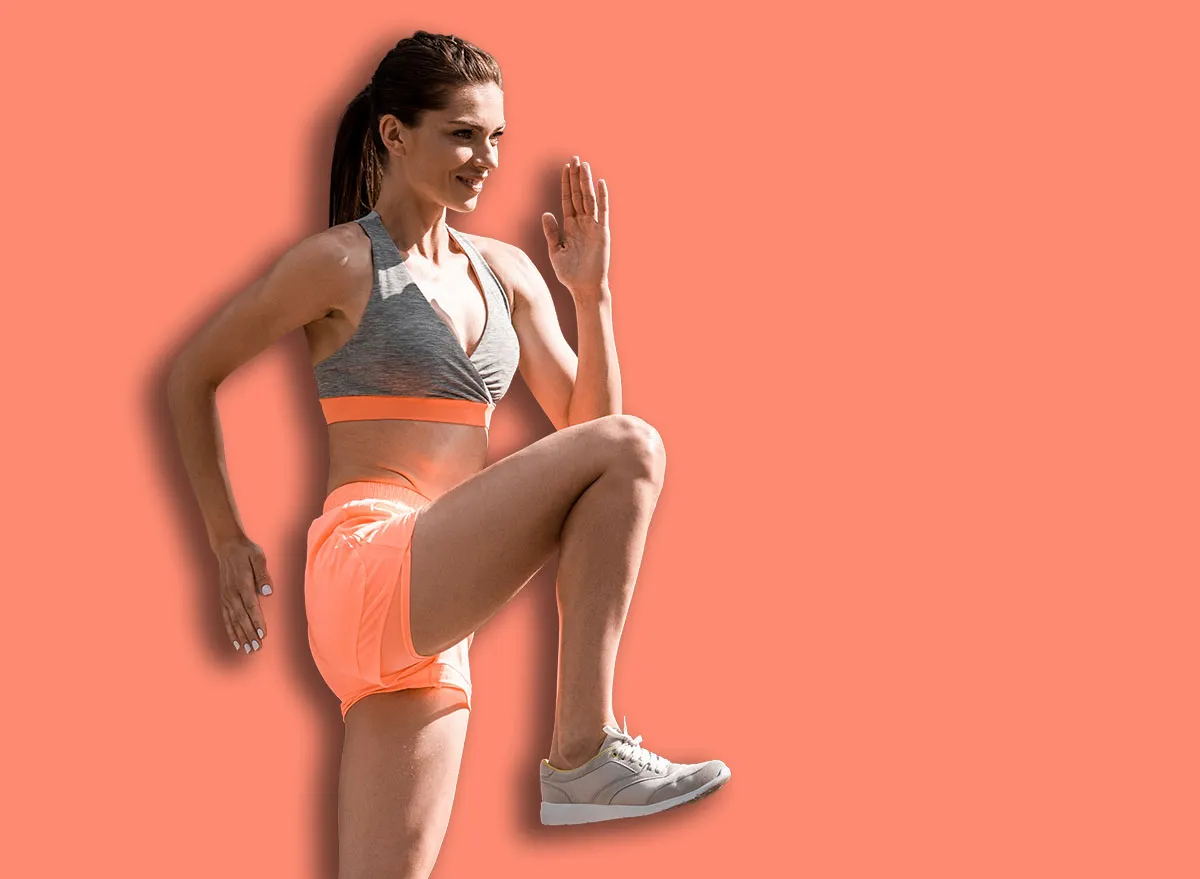
Standing Knee Raises:
- Rationale: This exercise directly targets the lower abdominal muscles and hip flexors while significantly challenging balance and core stabilization. Performing it standing activates a broader range of core muscles compared to lying crunches, leading to greater caloric expenditure and functional strength.
- Muscles Trained: Lower abdominals, hip flexors, and core stabilizers.
- How to Do It: Stand tall with your feet hip-width apart, engaging your core. Slowly lift one knee towards your chest, maintaining balance. Aim to bring your knee as high as comfortable without rounding your back. Lower the leg with control and repeat on the other side.
- Avoid These Mistakes: Do not use momentum to swing your leg up. Avoid leaning excessively to one side. Keep your standing leg slightly soft, not locked out.
- Form Tip: To ensure your abdominal muscles are doing the work, pause briefly at the peak of each raise, consciously squeezing your lower abs. If you feel yourself swinging, slow down and focus on control.
- Recommended Sets and Reps: Perform 10-15 repetitions per leg.
-
Standing Side Bends:
- Rationale: This movement specifically targets the oblique muscles along the sides of the waist, which are crucial for cinching in the midsection and improving rotational flexibility. Strong obliques contribute to a more tapered waist appearance and enhance everyday twisting and turning motions.
- Muscles Trained: Obliques (internal and external) and core stabilizers.
- How to Do It: Stand with feet shoulder-width apart, hands lightly behind your head or on your hips. Keeping your chest open and shoulders back, slowly bend directly to one side, as if trying to touch your elbow to your hip. Avoid bending forward or backward. Return to the starting position and repeat on the other side.
- Avoid These Mistakes: Do not twist your torso. Ensure the movement is a pure side bend, not a forward flexion. Avoid shrugging your shoulders.
- Form Tip: Imagine standing between two narrow panes of glass; your movement should stay strictly within this confined plane, preventing any forward or backward lean.
- Recommended Sets and Reps: Complete 10-15 repetitions per side.
-
Modified Plank Against Wall:
- Rationale: The plank is a foundational exercise for developing comprehensive core strength, engaging not just the abdominal muscles but also the deep stabilizing muscles of the back and shoulders. The wall modification offers all the benefits of a traditional plank at an adjustable angle, making it suitable for all fitness levels and individuals with wrist or shoulder sensitivities.
- Muscles Trained: Deep core muscles (transverse abdominis), rectus abdominis, obliques, lower back stabilizers, and shoulders.
- How to Do It: Stand facing a wall, placing your forearms on the wall at shoulder height, shoulder-width apart. Step your feet back until your body forms a straight line from your head to your heels, similar to a traditional plank. Engage your core, squeezing your glutes and bracing your abdominal muscles, ensuring your back does not sag or arch. Hold this position.
- Avoid These Mistakes: Do not let your hips sag towards the floor or pike upwards. Avoid letting your head drop. Do not hold your breath.
- Form Tip: Periodically check your body alignment in a side mirror if possible. Your head, hips, and heels should ideally form a single, straight line, indicating proper core engagement.
- Recommended Hold Time: Begin with holds of 20-30 seconds, progressively working towards 45-60 seconds as your strength improves.
Structuring Your Daily Regimen
To maximize the efficacy of these exercises, implement them in a circuit format. This involves completing one set of each of the five exercises sequentially, with minimal rest in between, before repeating the entire circuit. Depending on your current fitness level, aim for 2-3 complete circuits. Beginners should start with 2 circuits and gradually build up to 3 over the first couple of weeks.
Intersperse short recovery periods: rest for 30-60 seconds between individual exercises within a circuit. This strategic resting maintains an elevated heart rate, contributing to greater caloric expenditure, while still allowing sufficient recovery to maintain proper form. Between complete circuits, allow for a slightly longer rest period of 60-90 seconds. Once familiar with the movements, the entire workout can be completed efficiently within 15-20 minutes.
Consistency is key for results. Integrate this routine into your schedule 4-5 days per week. It is crucial to allow your body at least two rest days per week for muscle repair and growth; these do not need to be consecutive. For example, you might train Monday through Thursday, rest Friday, train Saturday, and rest Sunday. Or, opt for an alternating schedule like Monday, Wednesday, Friday, and Saturday. On designated rest days, staying generally active through gentle movements like walking or stretching is encouraged, providing active recovery without taxing the muscles with resistance training.
Anticipated Progress and Long-Term Wellness
Committing to this bodyweight regimen consistently will yield noticeable changes, often sooner than anticipated. Within the first 7-10 days, initial improvements may not be visible externally but will manifest as enhanced energy levels, greater ease in daily movements (such as rising from a chair or climbing stairs), and improved cardiovascular endurance. These are early indicators that your body’s nervous system is adapting and activating muscles more efficiently.
By the second week, you will likely perceive a tangible increase in core strength and stability. Posture may naturally improve, and clothes might begin to feel looser around the waist, even if the scale shows minimal movement. This often signifies a reduction in bloating and an increase in muscle tone, as muscle occupies less volume than fat.

The 3-week mark typically brings more visible transformations. The abdominal area will appear flatter, particularly in the mornings. Depending on individual starting points and dietary adherence, a reduction of 1-2 inches around the waist circumference is achievable. While the "belly overhang" will begin to recede, it’s important to set realistic expectations; complete elimination within four weeks is unlikely, but significant progress will be evident.
By the end of the fourth week, most individuals who have combined this exercise routine with mindful eating habits can expect a fat loss of 3-6 pounds. The midsection will feel noticeably firmer and tighter, and others may start commenting on your improved physique. The exercises that felt challenging at the outset will now be manageable, preparing you for potential progressions to more advanced variations.
It is critical to underscore that these results are contingent upon consistent exercise (4-5 times per week) and reasonable nutritional choices. Exercise is a powerful catalyst for change, but it cannot fully compensate for a consistently poor diet. For optimal fat loss, a slight caloric deficit is necessary. This doesn’t demand a restrictive diet but rather conscious choices, such as reducing highly processed foods, sugary beverages, or simply cutting out one unnecessary snack daily. Combining this effective bodyweight routine with a thoughtful approach to nutrition will synergistically accelerate results, fostering not only a healthier midsection but also an enhanced quality of life, greater functional independence, and overall vitality in your later years.
About the Author