Functional Fitness for Seniors: Cultivating Robust Knee Health and Mobility Through Targeted Exercises

As individuals navigate the later stages of life, maintaining robust physical independence often hinges on the strength and resilience of major joints, particularly the knees. The human knee, a complex marvel of engineering, is integral to nearly every movement that defines autonomy—from rising from a chair to ascending a staircase or simply walking across a room. However, with advancing age, this crucial joint frequently encounters a unique set of challenges. Physiological shifts such as sarcopenia, the progressive loss of muscle mass and strength, diminished bone density, and alterations in cartilage quality can collectively contribute to reduced stability, increased discomfort, and a heightened susceptibility to injury. While professional medical intervention, including physical therapy, remains paramount for addressing existing pain or injury, a proactive approach centered on targeted exercise can significantly fortify knee structures, mitigate future issues, and enhance overall quality of life.
Understanding the intricate mechanics of the knee joint reveals its dependence on the surrounding musculature for optimal function and protection. The quadriceps, hamstrings, glutes, and calf muscles collectively act as dynamic shock absorbers and stabilizers, guiding the joint through its range of motion and absorbing forces that would otherwise directly impact the cartilage and ligaments. When these supporting muscle groups become weakened, whether through inactivity or age-related decline, the knee joint bears an undue burden, often leading to increased wear, misalignment, and discomfort. Consequently, a comprehensive strategy for knee longevity in older adults must prioritize strengthening these critical muscle groups, fostering improved balance, and enhancing proprioception—the body’s awareness of its position in space.
The efficacy of incorporating standing exercises into a senior fitness regimen cannot be overstated. Unlike seated or supine movements, standing exercises inherently mirror the demands of everyday activities. They compel the body to engage multiple muscle groups simultaneously, challenge balance mechanisms, and develop strength within the same gravitational context encountered during daily tasks. This functional training approach translates directly into tangible improvements in mobility, confidence, and the ability to perform routine activities without assistance. By regularly engaging in movements that mimic real-life scenarios, individuals can cultivate a resilient lower body, thereby reducing strain on the knees and safeguarding their capacity for independent movement. The following four standing exercises, when performed consistently and with proper form, serve as foundational components for nurturing strong, stable, and pain-free knees well into the golden years.
1. The Sit-to-Stand Maneuver
The seemingly simple act of transitioning from a seated to a standing position is a cornerstone of independent living and a fundamental test of lower body strength and balance. The sit-to-stand exercise directly trains the power and coordination required for this vital daily task, making it an indispensable component of any knee-strengthening program for seniors. It systematically reinforces correct joint mechanics while building muscular endurance and strength through a controlled range of motion. Consistent practice not only enhances physical capability but also significantly boosts confidence in performing everyday movements, reducing reliance on upper body support.
- Muscles Primarily Engaged: Quadriceps, gluteal muscles (glutes), hamstrings, and calf muscles, with significant core involvement for spinal stability.
- Execution Guide:
- Select a sturdy chair without arms, or use a chair with arms initially for support. Position yourself seated on the chair, ensuring your feet are flat on the floor, roughly hip-width apart, with your knees aligned over your ankles.
- Lean your torso slightly forward, shifting your weight over your feet. Extend your arms forward for counterbalance if needed, or place them gently on your thighs.
- Engage your core and push firmly through your heels and mid-foot to initiate the standing motion. Drive your hips upward and forward until you are fully upright, extending your knees and hips completely.
- Control the descent by slowly reversing the motion, bending at the hips and knees as if to sit back down, gently tapping the chair surface before smoothly transitioning back into the standing phase. Avoid collapsing onto the chair.
- Recommended Structure: Aim for 3 sets, completing 8 to 12 repetitions per set. Allow approximately 60 seconds of rest between each set.
- Form Refinement: Throughout the movement, strive to keep your knees tracking in line with your toes, preventing them from caving inward or bowing outward. Maintain a tall posture and avoid rounding your back.
- Progression Options: As strength improves, consider performing the exercise without using your hands for assistance, utilizing a lower chair, or holding a light weight (e.g., a dumbbell or kettlebell held against the chest in a goblet position).
2. Goblet Box Squats
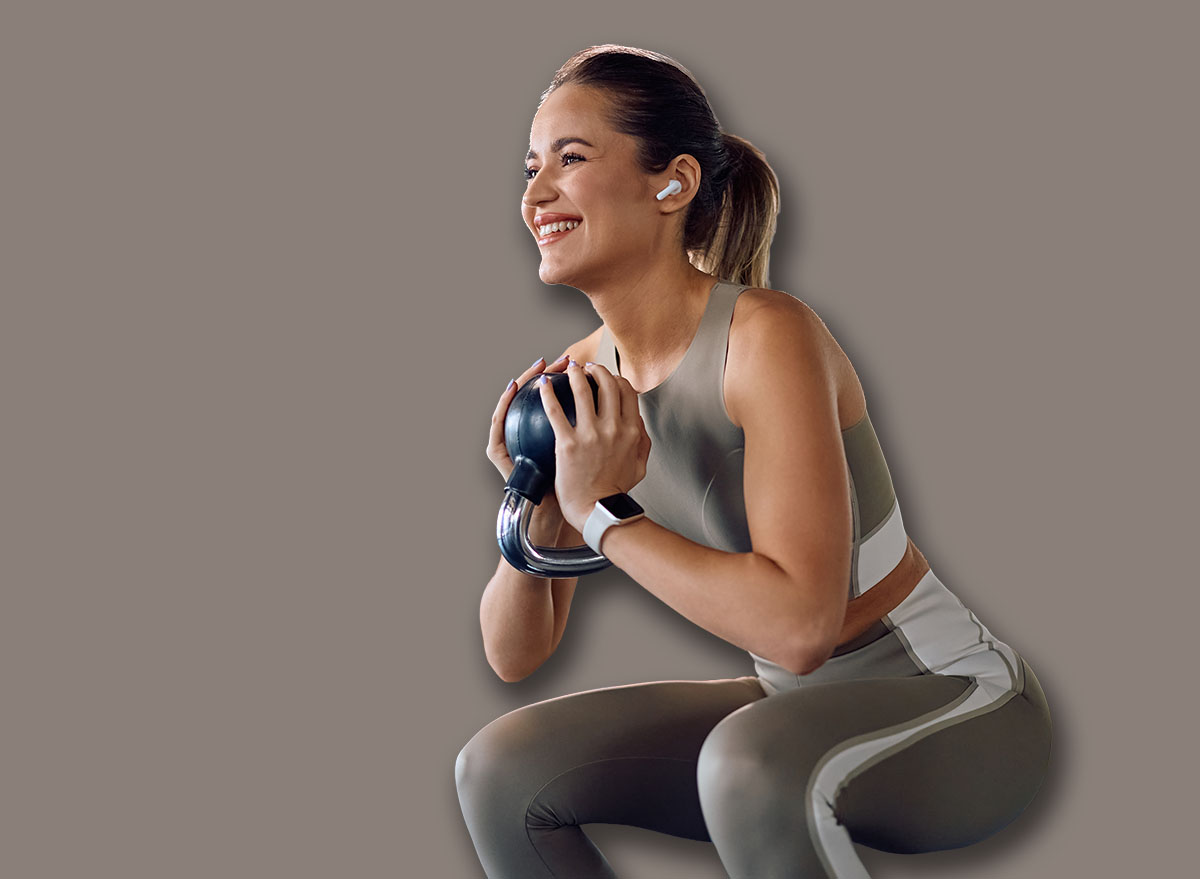
Goblet box squats offer a structured and highly effective method for developing lower body strength within a controlled environment, making them particularly beneficial for individuals concerned about knee stress. By holding a weight in front of the chest (the "goblet" position), the exercise encourages an upright torso posture, which can significantly reduce anterior knee stress by promoting greater hip engagement. The inclusion of a box or chair behind you provides a consistent depth target, ensuring each repetition is performed with proper form and within a safe range of motion, thereby building both strength and confidence in fundamental squatting mechanics.
- Muscles Primarily Engaged: Quadriceps, glutes, hamstrings, and the core musculature for stability.
- Execution Guide:
- Stand with your feet shoulder-width apart, toes pointed slightly outward. Position a sturdy box or chair behind you, ensuring it’s at a height that allows for a comfortable yet challenging squat.
- Grasp a dumbbell or kettlebell with both hands, holding it vertically against your chest, close to your sternum (the goblet position).
- Initiate the movement by pushing your hips backward as if you are preparing to sit down, simultaneously bending your knees. Maintain a proud chest and a neutral spine.
- Descend slowly and with control until your glutes gently make contact with the box or chair. Avoid resting your weight entirely on the box; instead, maintain tension in your muscles.
- Drive through your heels and mid-foot to stand back up, fully extending your hips and knees to return to the starting position.
- Recommended Structure: Complete 3 sets, aiming for 6 to 10 repetitions per set. Incorporate a rest period of 75 seconds between each set.
- Form Refinement: As you stand, consciously "spread" the floor with your feet, engaging your glutes and promoting outward knee tracking. Keep your chest elevated throughout the movement.
- Progression Options: Begin with bodyweight box squats, then gradually introduce a light goblet weight. Increase the weight as strength permits, or incorporate a brief pause (1-2 seconds) at the bottom of the squat for enhanced muscle activation.
3. Standing Leg Abduction
The muscles situated along the outer aspect of the hips play a pivotal role in maintaining proper knee alignment and ensuring lateral stability, especially during dynamic movements like walking or standing. Weakness in these hip abductor muscles, particularly the gluteus medius and minimus, can often manifest as the knees collapsing inward (known as knee valgus), leading to increased stress on the knee joint. Standing leg abduction directly targets and strengthens these crucial hip stabilizers, fostering improved knee tracking and promoting overall joint health through enhanced stability. It is a deceptively simple exercise with profound benefits for preventing common knee issues.
- Muscles Primarily Engaged: Gluteus medius, gluteus minimus, and other synergistic hip stabilizing muscles.
- Execution Guide:
- Stand tall, facing forward, with your feet hip-width apart. Position yourself next to a wall, sturdy chair, or railing, and place one hand on it for balance and support as needed.
- Shift your weight slightly onto your standing leg, keeping a soft bend in the knee of your supporting leg.
- Slowly and deliberately lift your opposite leg directly out to the side, maintaining a straight leg and pointing your toes forward or slightly down. Focus on engaging the muscles on the side of your hip, avoiding any leaning or swinging of the torso.
- Lift the leg only as high as you can without tilting your pelvis or compromising your balance.
- Control the movement as you slowly lower the leg back to the starting position, resisting gravity. Avoid letting the leg simply drop.
- Recommended Structure: Perform 3 sets, completing 10 to 15 repetitions on each side. Allow a 45-second rest interval between sets.
- Form Refinement: Emphasize a slow, controlled movement throughout the entire range of motion. Avoid using momentum or swinging the leg; the movement should originate from the hip.
- Progression Options: To increase the challenge, incorporate a resistance band looped around your ankles or just above your knees, or perform the exercise with longer isometric holds (holding the leg at the top of the movement for a few seconds).
4. Standing Marching
Standing marching is a foundational exercise that cultivates single-leg strength, dynamic balance, and coordination—all indispensable components for protecting the knees during ambulation and reducing the risk of falls. Each repetition challenges the body’s ability to stabilize on one leg while the other moves, thereby improving joint control and proprioception. This exercise also effectively strengthens the hip flexor muscles, which are crucial for efficient gait and help prevent compensatory movements that can place undue stress on the knees. Its functional nature, accessibility, and ease of scaling make it an excellent addition to any senior fitness routine.
- Muscles Primarily Engaged: Hip flexors (iliopsoas, rectus femoris), quadriceps, glutes, calf muscles, and deep core stabilizers.
- Execution Guide:
- Begin by standing tall with good posture, feet hip-width apart, and arms relaxed at your sides. You may use a wall or sturdy support for balance initially if needed.
- Engage your core muscles. Slowly lift one knee towards your chest, aiming for a 90-degree angle at the hip and knee, similar to a high-knee march. Maintain your balance on the standing leg.
- Control the movement as you gently lower the raised foot back to the floor.
- Immediately alternate by lifting the opposite knee towards your chest, maintaining a smooth, rhythmic motion.
- Continue alternating legs in a controlled marching pattern.
- Recommended Structure: Perform 3 sets, aiming for a total of 20 to 30 marches (10-15 per leg). Rest for 45 seconds between sets.
- Form Refinement: Throughout the exercise, maintain an upright posture, avoiding any tendency to lean backward or to the side as you lift your knee. Focus on a controlled, deliberate motion rather than speed.
- Progression Options: As balance and strength improve, try marching without relying on external support. Increase the height of the knee lift, slow down the tempo of each march for greater time under tension, or add light ankle weights or a resistance band for increased challenge.
Cultivating a Holistic Approach to Sustained Knee Health Beyond 65
While these four exercises form an excellent foundation, lasting knee health and functional independence are the culmination of a broader, consistent commitment to physical well-being. A truly effective strategy extends beyond specific movements to encompass mindful habits and a holistic understanding of the body’s needs.
- Consistency is Paramount: Sporadic exercise yields minimal results. Integrate these movements into a regular schedule, aiming for at least two to three sessions per week. Regularity allows muscles to adapt and strengthen progressively.
- Prioritize Impeccable Form: The effectiveness and safety of any exercise are intrinsically linked to proper technique. Always prioritize correct form over the number of repetitions or the amount of weight used. If uncertain, consulting a qualified fitness professional or physical therapist can provide invaluable guidance.
- Embrace Progressive Overload Thoughtfully: To continue building strength, muscles must be continually challenged. This doesn’t necessarily mean lifting heavier weights; it can involve increasing repetitions, adding more sets, slowing down the tempo of movements, or reducing rest times. Gradually introduce these challenges to avoid overexertion.
- Listen Attentively to Your Body: Differentiate between normal muscle fatigue or soreness and sharp, persistent joint pain. Pain is the body’s signal that something may be amiss. If discomfort arises, scale back the intensity, rest, or seek professional medical advice.
- Fuel Your Body with Nutrient-Rich Foods: Adequate protein intake is critical for muscle repair and growth, especially as sarcopenia becomes a concern with age. Incorporate lean proteins, healthy fats, and a variety of fruits and vegetables to support overall joint health and reduce inflammation.
- Maintain Optimal Hydration: Water is essential for maintaining the elasticity and lubrication of joint cartilage. Ensure consistent fluid intake throughout the day.
- Incorporate Varied Movement: Beyond these specific exercises, engage in other forms of low-impact physical activity such as walking, swimming, cycling, or tai chi. A diverse movement repertoire contributes to overall fitness, cardiovascular health, and mental well-being.
- Seek Professional Expertise When Necessary: For individuals with pre-existing knee conditions, significant pain, or uncertainty about exercise suitability, consulting a physician or physical therapist before embarking on a new routine is highly recommended. They can provide personalized recommendations and ensure exercises are appropriate and safe.
In conclusion, the journey toward maintaining robust knee health and functional mobility in the later decades of life is a proactive endeavor. By integrating targeted standing exercises, coupled with a comprehensive approach to physical activity and self-care, individuals can significantly enhance their joint resilience, preserve their independence, and continue to engage fully with the activities they cherish. These efforts are not merely about preventing decline but about actively cultivating a vibrant and mobile future.
Related posts:

Related News