
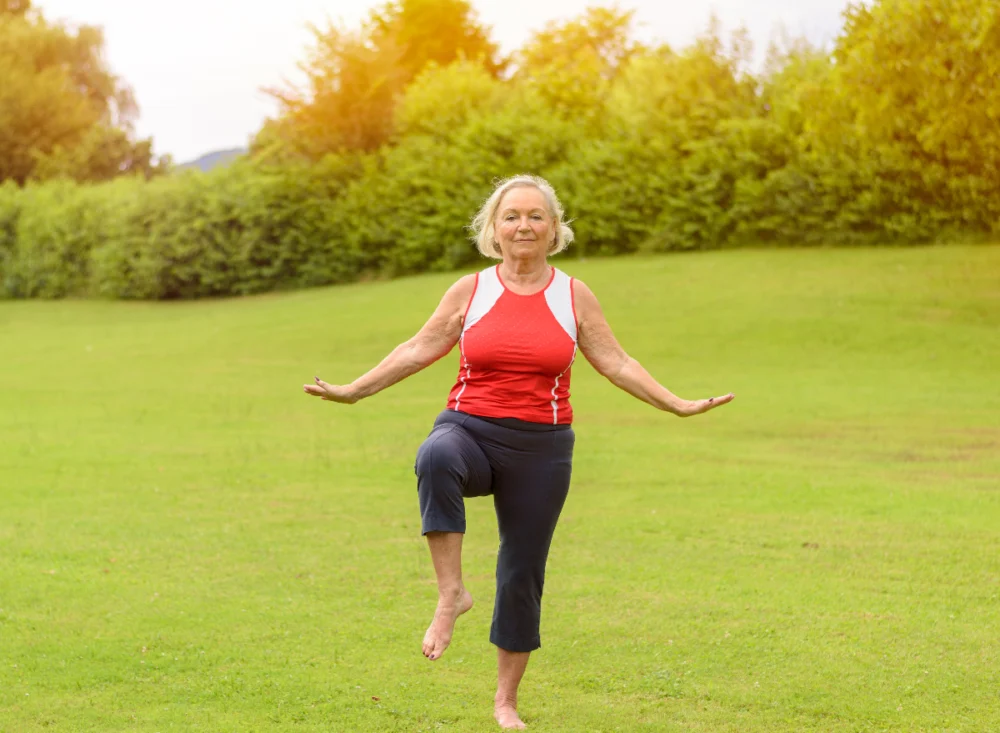
The ability to stand firmly on one leg for a mere thirty seconds may seem like a trivial task, yet it serves as a remarkably potent barometer for an individual’s core stability, overall balance, and even long-term health prospects, particularly for those in their mid-sixties and beyond. Far from being an exercise purely for gymnasts or yogis, this simple assessment offers profound insights into an individual’s physical resilience and their capacity to navigate the world safely and independently. In an era where extended lifespans are increasingly common, ensuring these years are lived with vitality and autonomy hinges significantly on fundamental physical attributes like balance and a robust core.
Core stability, often misunderstood as merely possessing sculpted abdominal muscles, extends far deeper than aesthetic appeal. It encompasses the intricate network of muscles surrounding the spine and pelvis—including the deep transversus abdominis, multifidus, pelvic floor, and diaphragm—working in concert with more superficial muscles like the rectus abdominis and obliques. This muscular corset acts as the body’s central pillar, providing essential stability for the spine, enabling efficient transfer of power between the upper and lower body, and serving as the bedrock for virtually every movement we undertake. From the seemingly effortless act of rising from a chair or bending to tie a shoelace, to more complex actions like carrying groceries or navigating uneven terrain, a well-functioning core is perpetually engaged, providing the necessary support and control.
As individuals progress into their later years, the significance of maintaining core strength and balance escalates dramatically. Age-related physiological changes, if not actively countered, can lead to a gradual decline in muscle mass (sarcopenia), reduced bone density, diminished sensory input from the vestibular system (inner ear) and proprioceptors (receptors sensing body position), and slower reaction times. These factors collectively contribute to an increased susceptibility to falls, which represent a major public health concern for older adults. Statistics reveal the gravity of this issue: millions of older adults experience falls annually, often resulting in serious injuries such as hip fractures, head trauma, and debilitating sprains. Beyond the immediate physical harm, falls frequently instigate a pervasive fear of falling, leading to reduced physical activity, social isolation, and a significant deterioration in overall quality of life and independence. A strong, responsive core acts as the body’s primary defense mechanism against such incidents, allowing for rapid adjustments to maintain upright posture when confronted with unexpected shifts or stumbles.
Furthermore, a compromised core directly impacts posture and can be a significant contributor to chronic pain. When the core muscles lack the strength to adequately support the spine, the body often compensates, leading to a hunched posture, increased strain on the back and neck, and persistent discomfort. This misalignment can cascade into various systemic issues, affecting respiratory function by restricting diaphragm movement, impeding digestion, and even diminishing overall energy levels as the body expends more effort simply to maintain an unstable position. Individuals who prioritize core strength and balance tend to exhibit greater confidence in their movements, experience fewer episodes of back pain, and retain their independence for extended periods, as evidenced by observations from fitness professionals working with older populations over decades.
The single-leg balance test has emerged as a particularly insightful and accessible method for assessing these crucial aspects of physical health. It requires no specialized equipment and offers immediate, actionable feedback on an individual’s static and dynamic balance capabilities. The scientific community has reinforced the clinical utility of this test, with research indicating a compelling correlation between the inability to balance on one leg for at least 10 seconds in individuals over 65 and a significantly heightened risk of falls and even early mortality. While this finding may sound stark, it underscores the test’s predictive power as an integrated measure of neuromuscular function, joint stability, and sensory integration.
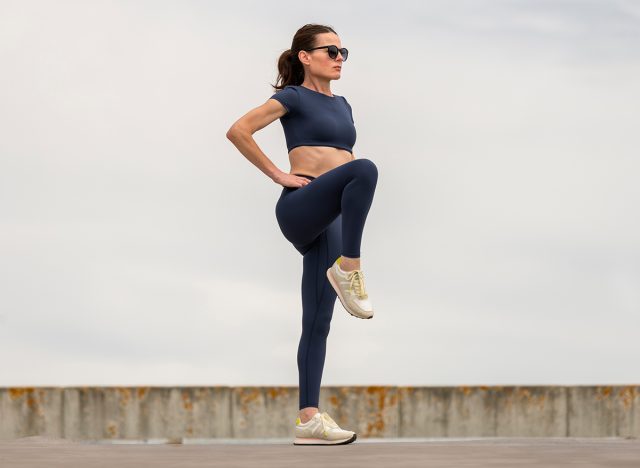
The efficacy of the single-leg balance test stems from its holistic challenge to the body’s stability systems. When an individual lifts one foot off the ground, the core muscles (abdominals, obliques, and deep spinal stabilizers) are immediately recruited to stabilize the trunk and pelvis, preventing rotational forces and maintaining a central axis. Concurrently, the standing leg’s hip, knee, and ankle joints engage in subtle, continuous adjustments to manage shifts in the center of gravity. Beyond muscular engagement, the test actively assesses the seamless interplay between the visual system (eyes processing environmental cues), the vestibular system (inner ear providing information about head position and motion), and proprioception (sensory feedback from muscles and joints about body position). The coordinated function of these three pillars is paramount for maintaining equilibrium. Unlike exercises performed in a supine position, the single-leg stance evaluates the core’s ability to perform its stabilizing role in an upright, functional posture, mirroring the demands of real-world movements such as walking, stepping over obstacles, or navigating uneven ground.
To perform this diagnostic test, choose a firm, level surface, avoiding thick carpets or rugs, and ensure you are wearing flat shoes or are barefoot. Position yourself within arm’s reach of a sturdy support, such as a wall or a countertop, for safety. Begin by standing upright with feet hip-width apart and eyes focused on a fixed point directly ahead. Gently lift one foot off the ground, bending the knee to raise the heel towards the buttocks or simply hovering the foot slightly. Start a timer the precise moment your foot leaves the floor. The timer should stop when your raised foot touches the ground, your standing foot shifts position, or you need to reach for the support. Repeat the test on the opposite leg. It is crucial to avoid common errors such as leaning excessively, allowing the standing leg to wobble uncontrollably, or failing to time the attempt accurately. The objective is not to be a hero, but to obtain an accurate assessment of your current balance capabilities without risking injury. If you have a history of falls or significant balance impairments, conducting this test with a spotter is highly recommended.
Interpreting the results offers a clear snapshot of your current balance and core stability. If you are unable to sustain the single-leg stance for 30 seconds, it indicates that your core stability and overall balance require attention. A duration of less than 10 seconds, particularly for individuals over 65, strongly suggests a heightened risk of falls and necessitates immediate priority in balance improvement. Holding the position for 10-20 seconds implies that your core stability is likely below the optimal range for your age group, while 20-30 seconds suggests a near-optimal level that could still benefit from targeted exercises. It is also insightful to note any significant discrepancies between the balance times on your left and right legs. Such asymmetry can indicate muscular imbalances that, if left unaddressed, may lead to compensatory movement patterns, potentially resulting in pain or injury over time. It is vital not to be discouraged by initial scores; balance is a highly trainable skill, and consistent, focused practice can lead to remarkable improvements within a few months. The nervous system exhibits a rapid adaptive capacity to balance training stimuli.
For those whose results indicate a need for improvement, a structured approach incorporating specific exercises can yield significant gains. These exercises are designed to progressively challenge and strengthen the core and balance systems:
- Supported Single-Leg Balance: Begin by standing next to a wall, lightly touching it with one finger for support while balancing on one leg. Hold for 30 seconds. As comfort and stability improve, gradually decrease reliance on the support—transitioning from a full fingertip touch to a lighter touch, then hovering the hand near the wall without contact, and eventually moving further away.
- Dead Bug: This foundational exercise builds deep core control while lying supine, offering a safer starting point for beginners. Lie on your back with knees bent at 90 degrees, feet off the floor, and arms extended towards the ceiling. Engage your core to press your lower back into the floor. Slowly extend one arm overhead while simultaneously straightening the opposite leg towards the floor, keeping the lower back pressed down. Return to the starting position and alternate sides. Aim for 3 sets of 10 repetitions per side, focusing on maintaining lumbar spine contact with the floor throughout the movement.
- Bird Dog: This exercise strengthens core stabilizers, glutes, and back extensors while challenging balance and coordination in a quadruped position. Start on all fours, hands directly under shoulders, knees under hips. Engage your core. Slowly extend one arm forward and the opposite leg backward, maintaining a neutral spine and keeping your hips level—avoiding any rotation or dropping to one side. Hold briefly, then return to the starting position and alternate. Perform 3 sets of 10 repetitions per side.
- Tandem Walking: This dynamic balance exercise simulates walking on a tightrope. Walk heel-to-toe in a straight line, placing the heel of the front foot directly in front of the toes of the back foot. Aim for 20 steps, then turn and walk back. If initially challenging, perform this exercise next to a wall for support.
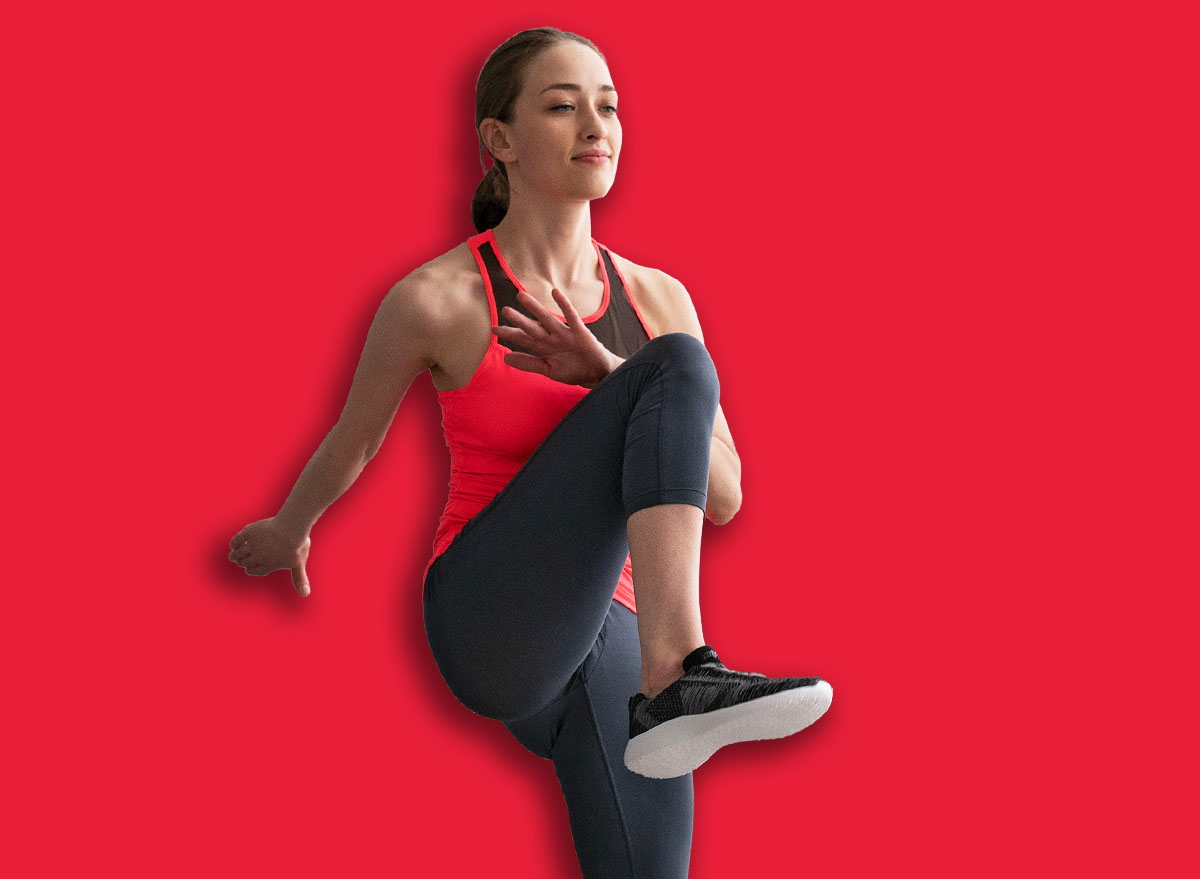
- Standing Marches: These work the core in an upright, functional position. Stand tall with feet hip-width apart. Engage your core and slowly lift one knee towards your chest, maintaining balance on the standing leg. Hold briefly, then lower with control and alternate legs. Perform 3 sets of 10 repetitions per leg. To increase difficulty, close your eyes or perform the exercise on a slightly unstable surface like a firm cushion.
- Pallof Press: This excellent anti-rotation exercise directly trains the core stability crucial for single-leg balance. Anchor a resistance band or cable at chest height. Stand perpendicular to the anchor point, holding the handle with both hands pressed against your chest. Step away from the anchor to create tension. Brace your core and press the handle straight out in front of you, resisting the rotational pull of the band. Hold for a count, then slowly return to the chest. Complete 3 sets of 10-12 repetitions on one side before switching to the other.
Consistent re-evaluation is key to tracking progress and maintaining motivation. Retesting your single-leg balance every two weeks provides sufficient time for physiological adaptations to occur, allowing for noticeable improvements without the discouragement of minimal day-to-day fluctuations. Keeping a simple log—documenting the date, the leg tested, and the duration held—can visually reinforce progress. Once you consistently achieve the 30-second benchmark on both legs, a monthly retest is advisable to ensure ongoing maintenance, as balance, like other physical skills, is subject to the "use-it-or-lose-it" principle. It is also important to acknowledge that daily performance can be influenced by transient factors such as fatigue, stress, hydration, or even the time of day; therefore, focusing on the overall trend of improvement rather than obsessing over minor variations in individual test scores is a more constructive approach.
In conclusion, the simple act of balancing on one leg transcends a mere physical feat; it is a profound indicator of integrated physiological function, spinal health, and a critical determinant of an individual’s capacity for sustained independence. By understanding its significance, regularly assessing one’s abilities, and proactively engaging in targeted balance and core strengthening exercises, individuals can significantly enhance their physical resilience, mitigate the risks associated with aging, and ultimately foster a more vibrant, mobile, and independent life.
About the Author










