
For many adults navigating the journey beyond their fiftieth year, the pursuit of robust physical strength often conjures images of specialized gym machinery and rigorous weightlifting protocols. However, a growing body of evidence, supported by insights from certified fitness professionals, suggests that the seemingly simple act of walking, when performed with intentionality and specific modifications, can be a remarkably potent tool for cultivating functional lower body strength, frequently surpassing the efficacy of isolated exercises on gym apparatus. This perspective challenges conventional gym culture, which often relegates walking to mere cardiovascular activity, overlooking its profound potential for muscular development, particularly as individuals age.
The human body, a marvel of interconnected systems, is designed for integrated movement. Unlike many gym machines that guide the body through a fixed range of motion, often providing external stabilization and minimizing the engagement of crucial supporting muscle groups like the hips and glutes, walking is fundamentally a closed-chain, full-body exercise. In a closed-chain movement, the distal segment (in this case, the foot) is fixed to a surface, forcing the entire kinetic chain—ankles, knees, hips, and core—to work synergistically. This inherent characteristic means that with every stride, the legs are compelled to bear and propel the entire body weight, recruiting a comprehensive array of muscles in a manner that closely mimics real-world demands. Research into gait mechanics and the physiological changes associated with aging consistently demonstrates that deliberate walking, especially when incorporating varied speeds and gradients, significantly enhances lower-body muscular engagement, improves joint health, refines coordination, bolsters balance, and elevates overall endurance.
The natural aging process often brings with it a phenomenon known as sarcopenia, the progressive loss of muscle mass, strength, and function. This decline can profoundly impact daily activities, leading to reduced mobility, increased risk of falls, and a diminished quality of life. While resistance training is undeniably crucial for mitigating sarcopenia, the functional strength derived from dynamic, weight-bearing activities like walking proves invaluable. The nuanced muscle activation involved in navigating uneven terrain or managing gravitational forces, such as during uphill or downhill movement, is particularly critical for maintaining muscle mass and resilience over time. For instance, uphill walking demands increased hip extension and greater force generation from the glutes and quadriceps, while controlled downhill walking introduces eccentric loading, where muscles lengthen under tension, a vital mechanism for building muscle resilience and protecting joints.

James Brady, a certified personal trainer affiliated with OriGym, underscores the transformative power of mindful locomotion for this demographic. "For individuals beyond the age of fifty," Brady explains, "the quality of each step holds more significance than the mere quantity of distance covered. Integrating subtle, yet impactful, adjustments into one’s daily walking routine can yield substantial gains in leg strength without requiring access to a gymnasium. Effective walking is an active, propulsive endeavor, not a passive shuffle; consciously pushing away from the ground with each footfall engages the gluteal and thigh muscles far more effectively."
Here, we delve into six expertly recommended daily walking practices that elevate an ordinary stroll into a powerful regimen for cultivating lower limb strength, specifically tailored for the needs of older adults.
1. Intentional Propulsion Pacing
Many individuals traverse their daily paths with a relaxed, almost unconscious gait, allowing momentum to dictate movement rather than actively engaging their musculature. Intentional Propulsion Pacing transforms this passive motion into an active, strength-building exercise. The core principle is to make each step a deliberate push against the ground, rather than merely swinging the leg forward. This active push fundamentally shifts the workload, emphasizing the posterior chain (glutes and hamstrings) and calf muscles, which are often underutilized in a casual stride.
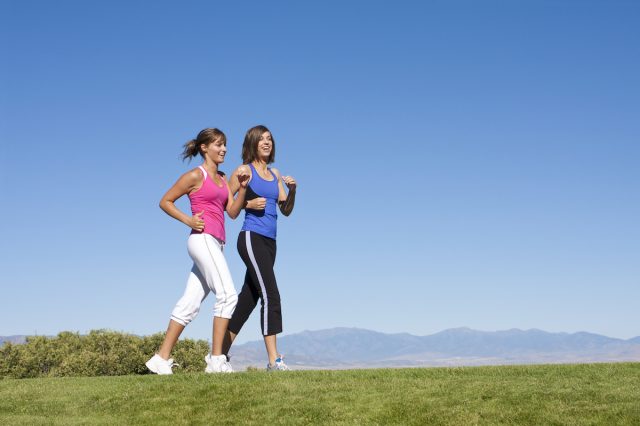
- Execution: Focus on driving off the ball of your foot and toes with each step, imagining you are pushing the earth behind you. This action should originate from the glutes and hamstrings, creating a powerful, forward momentum. Maintain an upright posture with a slight lean forward from the ankles, not the waist, allowing your arms to swing naturally to assist with propulsion.
- Benefits: This technique enhances the power and endurance of the glutes, hamstrings, and calves, which are critical for stability, climbing stairs, and maintaining an efficient gait. It also improves cardiovascular fitness by increasing the intensity of the walk.
2. Graded Inclination Ascents
Incorporating inclines into your walking routine is one of the most effective, equipment-free methods to significantly challenge the lower body and elevate cardiovascular output. Walking uphill forces the leg muscles to work against gravity with greater intensity, recruiting a broader spectrum of muscle fibers.
- Execution: Seek out natural hills, ramps, or utilize the incline setting on a treadmill. Begin with a moderate incline and pace, gradually increasing both as your strength and endurance improve. Focus on lifting your knees higher and driving through your heels, engaging the glutes and quadriceps more forcefully. Maintain a slightly forward lean, keeping your core engaged.
- Benefits: Graded inclination ascents are particularly effective for strengthening the quadriceps, glutes, and calf muscles. They also provide an excellent cardiovascular workout, improve bone density through increased weight-bearing stress, and enhance proprioception (the body’s awareness of its position in space), which is vital for fall prevention.
3. Elongated Stride with Posterior Drive
This practice consciously shifts the focus from extending the leg forward to powerfully driving the leg backward from the hip. Many common gait patterns, especially those that develop with age, involve reduced hip extension, leading to weaker glutes and hamstrings (the posterior chain). The Elongated Stride with Posterior Drive directly addresses this by emphasizing the propulsive phase of the gait cycle.

- Execution: Instead of focusing on how far forward your foot lands, concentrate on extending your trailing leg fully behind you, pushing off with intent. Imagine your heel lifting high as your foot leaves the ground, indicating strong glute activation. The stride length should feel natural but purposeful, ensuring a full range of motion at the hip joint.
- Benefits: This technique profoundly strengthens the glutes and hamstrings, crucial for hip stability, power, and correcting common postural imbalances. It can improve walking efficiency, reduce strain on the lower back, and enhance overall balance by fortifying the muscles responsible for maintaining upright posture.
4. Intermittent High-Intensity Pacing
Integrating short bursts of faster walking into your routine provides a powerful challenge to both your muscular and cardiovascular systems. These intervals create a dynamic workout that builds power, endurance, and metabolic efficiency, directly translating to improved performance in daily activities.
- Execution: After a warm-up period, alternate between periods of brisk, fast walking (where you feel challenged and slightly out of breath) and periods of recovery at a moderate pace. For example, walk rapidly for 1-2 minutes, then recover for 2-3 minutes, repeating this cycle throughout your walk. The duration and intensity of the fast intervals can be progressively increased.
- Benefits: Fast walking intervals enhance muscular power, particularly in the lower limbs, and significantly boost cardiovascular health. They improve the body’s ability to utilize oxygen efficiently, increase caloric expenditure, and can help maintain muscle mass by stimulating fast-twitch muscle fibers that are often neglected in steady-state walking.
5. Deliberate Downhill Decents
While uphill walking focuses on concentric muscle contractions (muscle shortening under tension), controlled downhill walking primarily engages eccentric contractions, where muscles lengthen while resisting gravity. This type of loading is paramount for building muscle resilience, improving shock absorption, and enhancing joint control, making it a critical component of a comprehensive leg strengthening program.

- Execution: When descending a slope, consciously control your pace, avoiding the tendency to let gravity pull you down quickly. Engage your quadriceps and glutes to act as brakes, slowly lowering your body with each step. Focus on a soft landing with each footfall, absorbing the impact through your leg muscles rather than jarring your joints.
- Benefits: Deliberate downhill descents build eccentric strength, which is vital for preventing injuries, improving joint stability (especially in the knees), and enhancing the body’s ability to absorb impact. It also contributes to stronger muscles that are more resistant to fatigue and soreness.
6. Integrated Postural Alignment Finishes
Maintaining optimal posture throughout a walk is fundamental, but it becomes even more crucial as fatigue sets in towards the end of a session. Integrating a posture-focused finish ensures that proper biomechanics are reinforced, preventing compensatory movements and reinforcing efficient movement patterns even when the body is tired.
- Execution: In the final 5-10 minutes of your walk, actively refocus on your posture. Imagine a string pulling gently from the top of your head, lengthening your spine. Keep your shoulders relaxed and pulled slightly back, core gently engaged, and gaze directed forward. Ensure your steps remain purposeful, driving through the ground, rather than allowing your gait to become sloppy or shuffled due to fatigue.
- Benefits: This practice strengthens the core stabilizers, back muscles, and the deep postural muscles that support the spine. It teaches the body to maintain proper alignment under fatigue, reducing the risk of strain and injury, and promoting a more graceful and efficient movement quality in everyday life. This holistic approach ensures that the entire kinetic chain benefits from the walking exercise, not just the legs.
In conclusion, the journey to robust lower body strength and sustained mobility after the age of 50 does not necessarily require complex gym equipment or an intimidating regimen. By consciously transforming the ubiquitous act of walking into a series of intentional, strategically modified exercises, individuals can unlock a powerful and accessible pathway to enhanced functional strength, improved balance, and greater independence. These six expert-backed techniques offer a practical framework for leveraging the body’s natural movement patterns, proving that often, the most effective tools for lifelong fitness are those we already possess.
About the Author