As individuals advance in age, maintaining robust lower body strength becomes an increasingly critical component of preserving independence, enhancing mobility, and mitigating the risk of falls. The natural physiological processes associated with aging, such as sarcopenia—the progressive loss of muscle mass and strength—can significantly impact daily activities, transforming once simple movements into challenging endeavors. For many older adults, conventional strength training exercises, often performed in a gym setting or requiring significant balance and coordination, can be intimidating or even inaccessible. However, a highly effective and remarkably accessible approach involves leveraging the comfort and stability of one’s own bed to engage and fortify crucial thigh muscles. This article explores a series of four bed-based exercises designed to systematically rebuild and enhance lower body power, offering a safe, low-impact alternative that prioritizes functional strength and sustained well-being for those over 65.
The importance of strong thighs extends far beyond athletic performance in later life; it is intrinsically linked to the ability to navigate everyday living with ease and confidence. Adequate quadriceps and hamstring strength facilitates actions like rising from a chair, ascending stairs, maintaining balance while walking, and recovering from minor stumbles. When these muscle groups are compromised, individuals may experience reduced walking speed, diminished postural control, and an elevated susceptibility to accidental falls, which can have severe consequences for health and quality of life. Therefore, any regimen that promotes the development of resilient lower extremities offers substantial benefits, translating directly into greater autonomy and improved overall physical function.
One of the primary advantages of incorporating bed exercises into a fitness routine for older adults lies in the inherent support and safety provided by the mattress surface. This cushioned foundation reduces the impact on joints, which can be particularly beneficial for individuals managing conditions like arthritis or osteoporosis. Furthermore, the stability offered by the bed minimizes the need for intricate balancing, thereby reducing the psychological barrier of fear of falling that often deters seniors from engaging in physical activity. By removing these common obstacles, bed-based movements empower individuals to concentrate fully on muscle activation and proper form, fostering a deeper connection with their bodies and ensuring each repetition contributes effectively to strength development. This focused engagement is paramount for stimulating muscle growth and neural adaptation, making these gentle movements surprisingly potent for building foundational strength.
The Glute Bridge: Laying the Foundation for Posterior Chain Power
The Glute Bridge serves as an excellent starting point for any lower body strengthening program, particularly for seniors, due to its effectiveness in engaging multiple muscle groups while being performed in a supine position. This exercise specifically targets the glutes, hamstrings, and quadriceps, simultaneously promoting hip extension and core stability. It plays a vital role in counteracting the common tendency to over-rely on the knee joints during movements like standing or walking, encouraging a more balanced distribution of effort across the hip and thigh musculature. By activating the posterior chain, the Glute Bridge helps to enhance postural alignment and improve the biomechanics of daily movements, fostering a greater sense of stability and control.
- Muscles Engaged: Primarily gluteus maximus, hamstrings, and quadriceps, with significant involvement from core stabilizers.
- Execution Protocol:
- Lie comfortably on your back on the bed with your knees bent and feet flat on the mattress, hip-width apart. Ensure your heels are positioned close enough to your buttocks so that you can lightly touch them with your fingertips.
- Keep your arms resting at your sides, palms facing down, providing additional stability.
- Engage your abdominal muscles slightly, drawing your belly button towards your spine, and press your lower back gently into the bed.
- Exhale as you press through your heels and lift your hips off the bed until your body forms a straight line from your shoulders to your knees. Avoid arching your lower back excessively at the top.
- Hold this peak position momentarily, consciously squeezing your glutes.
- Inhale slowly as you lower your hips back down to the starting position with control, ensuring your movement is smooth and deliberate.
- Recommended Volume: Aim for three sets of 10 to 15 repetitions, incorporating a rest period of approximately 45 seconds between each set to allow for muscle recovery.
- Progression Options: To increase the challenge, consider holding the top position for a longer duration (e.g., 5-10 seconds), elevating your heels slightly on a pillow, or performing repetitions with a slower, more controlled tempo to maximize time under tension.
Glute Bridge Marching: Cultivating Unilateral Strength and Balance
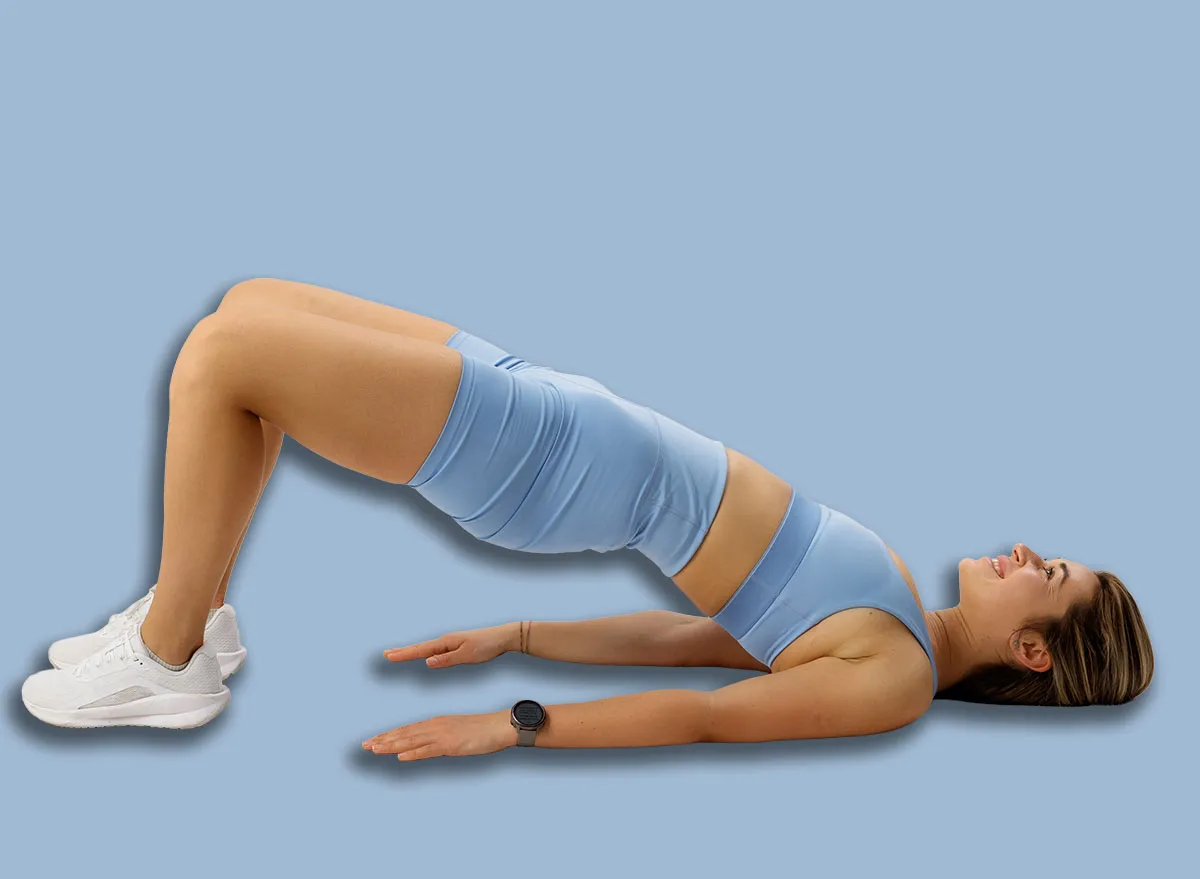
Building upon the foundational strength established by the static Glute Bridge, the Glute Bridge Marching variation introduces a dynamic element that significantly enhances unilateral (single-leg) stability and coordination. This exercise is particularly valuable as it closely mimics the alternating leg movements inherent in walking and stepping, directly translating to improved gait and balance in everyday life. By requiring one leg to stabilize the pelvis while the other lifts, it intensifies the engagement of the core and hip stabilizers, crucial components for preventing falls and maintaining an upright posture. The bed’s supportive surface ensures that this balance challenge is introduced in a safe and controlled environment, minimizing any apprehension.
- Muscles Engaged: Quadriceps, hamstrings, glutes, and a heightened activation of core and hip abductor stabilizers.
- Execution Protocol:
- Begin in the elevated Glute Bridge position, with your hips lifted and a straight line from shoulders to knees. Ensure your core is firmly engaged to prevent hip sagging.
- While maintaining the elevated hip position, slowly lift one foot a few inches off the bed, bringing your knee gently towards your chest. The movement should be controlled, preventing any significant shift or drop in your hips.
- Hold the lifted leg momentarily, focusing on the stability provided by the standing leg and your core.
- Gently lower the foot back to the bed, ensuring a soft landing.
- Repeat the movement with the opposite leg, alternating sides in a rhythmic "marching" pattern.
- Recommended Volume: Perform three sets, aiming for 10 total marches (5 per leg). Allow approximately 60 seconds of rest between each set.
- Progression Options: Increase the duration of the leg lift, perform slower marches to emphasize control, or alternate the tempo (e.g., lift quickly, lower slowly). Visualizing a glass of water on your hips and striving to keep it perfectly still can enhance focus on core and hip stability.
Sit-to-Stand from Bed: Mastering Functional Independence
Perhaps one of the most directly applicable exercises for daily living, the Sit-to-Stand from the edge of the bed is a powerful functional movement that directly strengthens the quadriceps, hamstrings, and glutes in a manner that mirrors everyday tasks. This exercise is invaluable for reinforcing the motor patterns required to transition from a seated to a standing position, a movement performed countless times throughout the day, whether getting out of bed, rising from a chair, or using the toilet. The varying height of the bed provides a unique advantage, allowing individuals to modify the difficulty by adjusting their starting position, making it gentler on joints while still providing an effective muscular challenge. Proficiency in this movement significantly contributes to sustained independence and confidence in performing routine activities.
- Muscles Engaged: Quadriceps, glutes, hamstrings, and hip stabilizers, with secondary engagement of core muscles for upright posture.
- Execution Protocol:
- Sit upright on the edge of your bed, with your feet flat on the floor, shoulder-width apart, and positioned directly under your knees. Ensure your back is straight and your gaze is forward.
- Lean your torso slightly forward, shifting your weight over your feet. You may use your hands for support on your thighs or the bed initially, if needed.
- Push powerfully through your heels and the entire sole of your foot to stand up fully, extending your hips and knees until you are in an upright standing position.
- Control your descent back to the seated position, slowly bending at your hips and knees, ensuring a smooth and deliberate movement rather than simply dropping onto the bed.
- Recommended Volume: Complete three sets of 8 to 12 repetitions, taking a 60-second rest period between sets.
- Progression Options: To increase the challenge, gradually reduce reliance on hands, cross your arms over your chest, or perform the lowering phase (eccentric contraction) more slowly, pausing briefly at the bottom before standing again.
Clamshells: Fortifying Lateral Hip Stability and Knee Health
The Clamshell exercise specifically targets the often-underestimated outer thigh muscles, primarily the gluteus medius and gluteus minimus, which are crucial for hip abduction and external rotation. These muscles play a foundational role in stabilizing the pelvis during walking and standing, preventing the hip from dropping on the unsupported side—a common issue known as Trendelenburg gait. Strong hip abductors are also instrumental in maintaining proper knee alignment, which can help alleviate knee pain and reduce the risk of injury. Performing Clamshells on the bed offers a comfortable and controlled environment to isolate these vital muscles, promoting greater stability and support throughout the lower kinetic chain.
- Muscles Engaged: Primarily gluteus medius, gluteus minimus, and other hip abductors and external rotators.
- Execution Protocol:
- Lie on your side on the bed, with your hips and knees bent at approximately a 90-degree angle. Stack your knees and ankles directly on top of each other.
- Support your head with your bottom arm or a pillow for comfort. Your top hand can rest gently on your top hip to monitor stability.
- Keep your feet together throughout the exercise.
- While keeping your core engaged and preventing your hips from rolling backward, slowly lift your top knee towards the ceiling, opening your legs like a clamshell. Focus on initiating the movement from your hip, not your lower back.
- Hold the top position for a moment, feeling the contraction in your outer hip and glute.
- Slowly and with control, lower your top knee back to the starting position.
- Recommended Volume: Execute three sets of 12 to 15 repetitions on each side. Rest for approximately 30 seconds between sets.
- Progression Options: Increase the duration of the hold at the top of the movement, perform repetitions with a slower tempo, or introduce a light resistance band placed around your thighs, just above your knees, to add external resistance.
Optimizing Your Thigh Strength Regimen: Broader Considerations for Seniors
Beyond the specific mechanics of these bed-based exercises, several overarching principles are essential for maximizing results and ensuring safety in a senior fitness program. Consistency is paramount; regular engagement with these movements, even for short durations daily, will yield far greater benefits than sporadic, intense sessions. Progressive overload, gradually increasing the difficulty (e.g., more repetitions, longer holds, slower tempos, or introducing light resistance bands), is key to continued muscle adaptation and strength gains.
Furthermore, always prioritize listening to your body. Any sharp pain indicates a need to stop and reassess the movement. Proper form should never be sacrificed for higher repetitions. Incorporating a gentle warm-up before starting and a cool-down with light stretching afterward can enhance flexibility and prevent muscle soreness. Hydration and a balanced diet rich in protein are also vital for muscle repair and growth. Finally, before embarking on any new exercise regimen, particularly after the age of 65 or if managing pre-existing health conditions, it is always advisable to consult with a healthcare professional or a qualified physical therapist to ensure the exercises are appropriate for individual needs and capabilities.
By integrating these accessible and effective bed-based routines into a daily regimen, older adults can significantly enhance their thigh strength, improve overall mobility, and bolster their confidence in performing everyday activities. This proactive approach to physical well-being fosters greater independence and a higher quality of life, demonstrating that powerful improvements can indeed begin right in the comfort of one’s own bed.
About the Author