Maintaining robust lower body strength and mobility becomes a critical aspect of health and independence as individuals progress beyond the age of 55. While traditional resistance training undeniably offers significant benefits for muscle development across all age groups, its efficacy for consistent, daily muscle restoration in older adults can be uniquely challenged by physiological shifts inherent to the aging process. The pursuit of powerful, resilient legs does not always necessitate high-impact, heavy-load workouts; rather, a targeted approach focusing on sustained activation, improved circulation, and enhanced neuromuscular coordination can often yield superior, more consistent results for daily function and long-term vitality.
The human body undergoes a series of transformations with advancing age, particularly impacting musculoskeletal health. Sarcopenia, the progressive and generalized loss of skeletal muscle mass and strength, is a well-documented phenomenon that typically begins in the fourth decade of life and accelerates after 50. This decline is not merely cosmetic; it profoundly affects gait, balance, metabolic rate, and overall capacity for daily living. Contributing factors include a reduced rate of muscle protein synthesis, a decrease in the number and size of muscle fibers, particularly fast-twitch fibers, and a less efficient recovery process post-exertion. For many older adults, the intense micro-trauma induced by heavy resistance training, while beneficial for hypertrophy, can sometimes outpace the body’s diminishing capacity for rapid repair and regeneration. This can lead to prolonged soreness, increased risk of injury, and a plateau in progress, making daily consistency difficult to achieve.
An alternative paradigm, rooted in the principles of rehabilitation and functional fitness, emphasizes restoring muscle function through regular, controlled movements that prioritize neural activation and circulatory health over sheer mechanical load. This approach acknowledges that the aging musculature benefits significantly from consistent, gentle stimulation that promotes blood flow, oxygen and nutrient delivery, and efficient waste removal, all crucial for tissue repair. Moreover, by focusing on movements that improve balance, coordination, and postural alignment, these exercises enhance the nervous system’s ability to recruit muscle fibers effectively, leading to more efficient and safer movement patterns in everyday life. This strategy is often observed in physical therapy protocols, where the goal is to rebuild strength and function without overwhelming compromised systems. The emphasis shifts from maximal force production to consistent, high-quality muscle engagement that supports sustained activity and reduces the cumulative stress on joints and connective tissues.
Here are five foundational exercises, widely recognized in therapeutic and senior fitness contexts, that embody this restorative philosophy, fostering muscle development and functional independence without the typical recovery demands of heavy lifting:
1. Controlled Chair-to-Stand Transitions
The ability to move from a seated to a standing position independently is a cornerstone of functional autonomy. This seemingly simple movement is a complex biomechanical act, engaging a multitude of lower body and core muscles, including the quadriceps, glutes, hamstrings, and erector spinae. Rather than simply standing up, the "controlled chair-to-stand" emphasizes a deliberate, slow tempo during both the ascent and descent phases. This extended time under tension forces the muscles to work harder against gravity without adding external load, effectively stimulating muscle fibers and improving muscular endurance. The slow, controlled execution also enhances proprioception—the body’s awareness of its position in space—and strengthens the neuromuscular pathways responsible for balance and coordination. Regular practice of this movement directly translates to improved ease in daily activities such as rising from a sofa, getting out of a car, or using the toilet, significantly reducing fall risk and boosting confidence in navigating one’s environment. It teaches the body to utilize its own weight as resistance, making it an inherently safe yet profoundly effective exercise for building foundational leg strength.
2. Sustained Standing Calf Raises with Apical Hold
The calf muscles, comprising the gastrocnemius and soleus, are often underestimated despite their pivotal role in locomotion, balance, and even circulation. They act as the "second heart," aiding in venous return from the lower extremities. As we age, calf strength and power can diminish, impacting walking efficiency and increasing instability. The standing heel raise, particularly when executed with a deliberate pause at the peak of contraction, specifically targets these vital muscles. The "apical hold"—the pause at the top of the movement—maximizes time under tension, stimulating more muscle fibers and enhancing their endurance. This sustained engagement is crucial for developing the stamina needed for prolonged walking or standing. Furthermore, the act of lifting and lowering the heels improves ankle stability and flexibility, which are critical components of dynamic balance. By promoting robust blood flow through the lower legs, this exercise also supports the circulatory system, aiding in nutrient delivery and waste removal, which are essential for muscle recovery and overall leg health. Its low-impact nature makes it suitable for daily performance, contributing to continuous muscle restoration.
3. Articulated Standing Hamstring Hinge
Modern lifestyles often lead to shortened, weakened hamstrings and glutes, with an over-reliance on the quadriceps and lower back for movement. This imbalance can result in poor posture, back pain, and inefficient walking mechanics. The standing hamstring hinge is a sophisticated movement that re-educates the body to move from the hips, rather than the spine, fostering strength and flexibility in the posterior chain. It requires an independent hip hinge, where the hips move backward while maintaining a neutral spine, engaging the hamstrings and glutes without placing undue stress on the lower back. This movement pattern is fundamental for activities like bending over to pick something up, gardening, or tying shoes. By consistently activating these powerful muscles, the exercise helps to counteract the rigidity that can develop with age, improving overall mobility and reducing compensatory movements that often lead to injury. Regular practice of the hamstring hinge not only builds muscle mass and strength in the back of the thighs and buttocks but also enhances body awareness and coordination, crucial for maintaining dynamic stability and preventing falls.
4. Supported Reverse Step-Backs
Unilateral leg strength and stability are paramount for navigating uneven terrain, climbing stairs, or simply maintaining balance during everyday movements. While forward lunges are effective, they can place significant shear stress on the knees, which may be problematic for older adults. The supported reverse step-back offers a knee-friendly alternative that effectively targets the glutes, quadriceps, and hip stabilizers of the lead leg, while also engaging the trailing leg for balance. By stepping backward, the forces on the knee are directed more axially, reducing strain. Utilizing light support—such as a wall, sturdy chair, or railing—allows the individual to focus intently on muscle engagement and proper form rather than struggling with balance. This focus on controlled descent and powerful ascent helps to rebuild strength asymmetries that often develop with age, ensuring both legs contribute equally to functional tasks. The movement directly mimics the action of stepping up or down stairs, providing highly specific training for real-world challenges and enhancing overall lower body resilience.
5. Sustained Standing March Hold
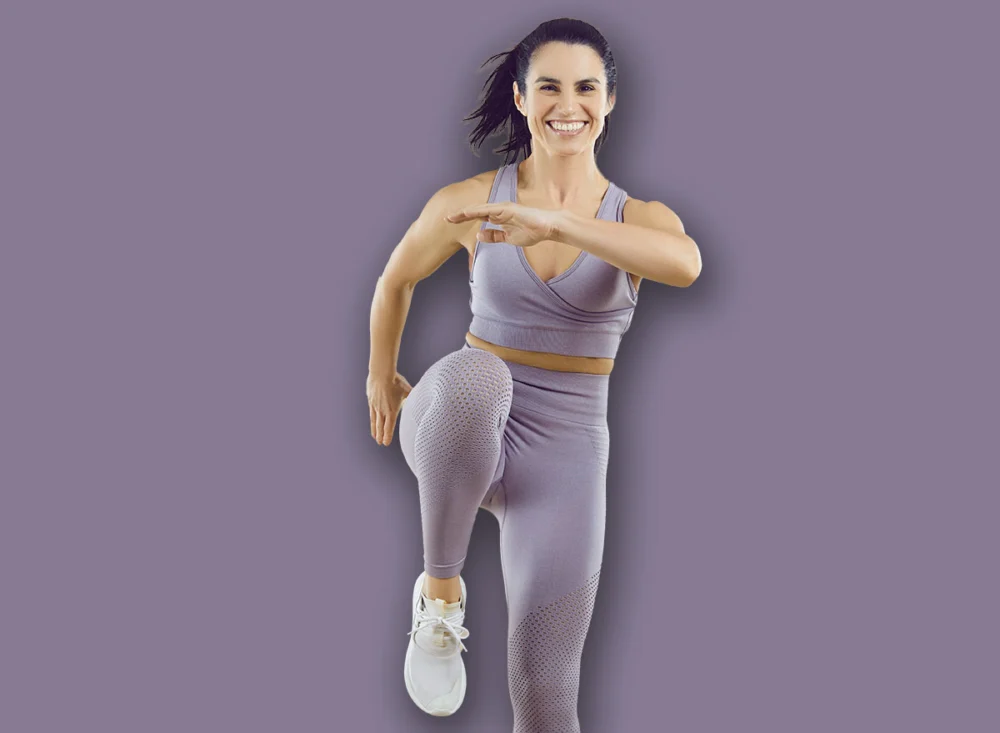
True muscle restoration and functional strength extend beyond simply moving through a range of motion; they involve the nervous system’s ability to maintain muscle activation and control for extended periods without succumbing to fatigue. The standing march hold is an isometric exercise that excels at developing this type of endurance in the hip flexors, quadriceps, and core stabilizing muscles. By lifting one knee to a comfortable height and holding it for a sustained duration, the body is challenged to maintain balance and posture while the working muscles endure static tension. This strengthens the intricate network of smaller stabilizing muscles around the hip and pelvis, which are crucial for dynamic balance during walking and standing. Unlike dynamic exercises, the isometric nature of the march hold allows for significant muscle activation without impact or extensive joint movement, making it ideal for daily practice. It builds neuromuscular endurance, improving the body’s ability to sustain effort in daily tasks, from standing in line to walking longer distances, contributing significantly to a sense of effortless movement and independence.
Incorporating these five exercises into a consistent daily routine can profoundly impact an individual’s lower body strength, mobility, and overall quality of life after 55. This approach champions the idea that consistent, intelligent movement, tailored to the body’s evolving needs, can be more effective for daily muscle restoration and functional longevity than an exclusive reliance on high-intensity weight training. By prioritizing recovery, circulation, and neuromuscular control, this framework offers a sustainable path to cultivating robust lower body resilience, fostering greater independence, and enhancing vitality well into later adulthood. As with any exercise regimen, consulting with a healthcare professional or certified fitness expert is always advisable to ensure the program is appropriate for individual health conditions and fitness levels. This proactive engagement with one’s physical health empowers individuals to navigate the aging process with strength, confidence, and continued freedom of movement.
About the Author