As individuals transition into their sixth decade and beyond, maintaining robust physical health, particularly core strength and a healthy body composition, becomes a pivotal aspect of overall well-being. The prevalent advice often points towards high-intensity abdominal workouts or strenuous weightlifting as the primary means to address changes in the midsection, frequently referred to as "belly overhang." However, this conventional wisdom often overlooks the unique physiological considerations and potential limitations faced by older adults. Intense crunches can exacerbate existing lower back discomfort, and heavy resistance training might prove daunting or even hazardous for those managing joint pain, balance challenges, or reduced mobility. A more nuanced and accessible approach, focusing on targeted, low-impact movements, offers a safer and often more effective pathway to strengthening the core and improving abdominal contour.
The phenomenon of increased abdominal adiposity and diminished core tone in later life is not merely a cosmetic concern; it is intricately linked to a series of age-related biological transformations. One of the most significant factors is sarcopenia, the progressive and generalized loss of skeletal muscle mass and strength that occurs with aging. Research indicates that after the age of 30, adults can lose 3-8% of their muscle mass per decade, a rate that accelerates after 60. This decline in lean muscle tissue has profound metabolic consequences. Muscle is metabolically active, burning a considerable number of calories even at rest. When muscle mass dwindles, the body’s resting metabolic rate consequently decreases, making it more challenging to manage weight and fat accumulation, regardless of consistent dietary habits. Compounding this, a reduction in daily physical activity and a general slowing of metabolic processes further contribute to the accumulation of visceral fat, which is particularly stubborn and resides deep within the abdominal cavity, contributing to the "overhang" appearance.
Recognizing these physiological shifts, fitness experts specializing in geriatric and adaptive exercise increasingly advocate for tailored routines that prioritize safety, accessibility, and functional strength. Instead of high-impact or aggressive movements that can strain joints or compromise balance, the focus shifts to controlled, seated exercises that effectively engage the deep core musculature. These exercises are designed to stabilize the spine, strengthen the abdominal wall, and improve posture without putting undue stress on vulnerable areas. The benefits extend beyond aesthetics, contributing to enhanced balance, greater independence in daily activities, and a reduced risk of falls.
Integrating a specialized set of seated core exercises into a regular routine can provide a powerful solution for older adults seeking to improve their abdominal strength and appearance. These movements harness the power of isometric holds and controlled ranges of motion to activate critical muscle groups, including the rectus abdominis, obliques, and transverse abdominis – the deep core muscle that acts like a natural corset. By consistently engaging these muscles, individuals can work towards a stronger, more supported midsection, which in turn can contribute to a firmer, more streamlined abdominal profile.
Let’s delve into five highly effective chair-based exercises that offer a safe yet challenging pathway to a stronger core and potentially a reduction in abdominal laxity:
1. Seated Knee Lifts
This fundamental exercise is exceptionally potent for isolating and engaging the lower abdominal muscles, often a challenging area to target without stressing the lumbar spine. By focusing on controlled elevation of the knees, individuals activate the iliopsoas group and the lower fibers of the rectus abdominis, promoting pelvic stability and drawing the lower abdomen inward over time. The key lies in precise, deliberate movement rather than momentum.
- Execution: Begin by sitting upright in a sturdy chair with your feet flat on the floor, hip-width apart. Ensure your back is straight and slightly away from the chair back, engaging your core from the start. Place your hands lightly on your thighs or the sides of the chair for gentle support. Exhale slowly as you lift one knee towards your chest, maintaining a bent knee and keeping your foot flexed. Concentrate on using your lower abdominal muscles to initiate and control the lift. Hold the knee at the peak of the movement for a brief moment, then inhale as you gently lower your foot back to the starting position. Alternate legs, performing 10-15 repetitions on each side for 2-3 sets.
2. Seated Torso Twists
Targeting the oblique muscles, which run along the sides of the waist, seated torso twists are crucial for developing rotational core strength and improving trunk control. Strengthening these muscles contributes significantly to a cinched waistline appearance and provides vital support for daily movements involving turning and reaching. When performed with control, this exercise also encourages spinal mobility without excessive flexion.
- Execution: Sit tall in your chair, with your feet flat on the floor and your core actively braced. Place your hands gently behind your head, elbows pointing out to the sides, or cross your arms over your chest. Keeping your hips stable and facing forward, exhale as you slowly twist your upper body to one side, leading with your rib cage. Avoid leaning back or using momentum. Feel the engagement in your side abdominal muscles. Hold the twist briefly, then inhale as you return to the center. Alternate twisting to the opposite side. Aim for 10-15 twists per side, completing 2-3 sets.
3. Seated March and Hold
This variation of a traditional march introduces an isometric component, significantly intensifying core engagement and challenging balance while seated. The act of holding the knee in an elevated position forces the deep stabilizing muscles of the abdomen and pelvis to work harder, enhancing endurance and proprioception—the body’s sense of its position in space. This static hold builds foundational strength critical for dynamic movements.
- Execution: Position yourself in the chair as you would for seated knee lifts, maintaining an upright posture and engaged core. Lift one knee towards your chest, just as in the knee lift, but this time, hold the elevated position for a count of 5-10 seconds. Focus on keeping your torso stable and preventing any rocking motion in the chair. Breathe deeply and consistently throughout the hold. Slowly lower the leg back down and immediately repeat on the other side. Perform 5-8 holds per leg, for a total of 2-3 sets.
4. Seated Leg Extensions with Core Brace
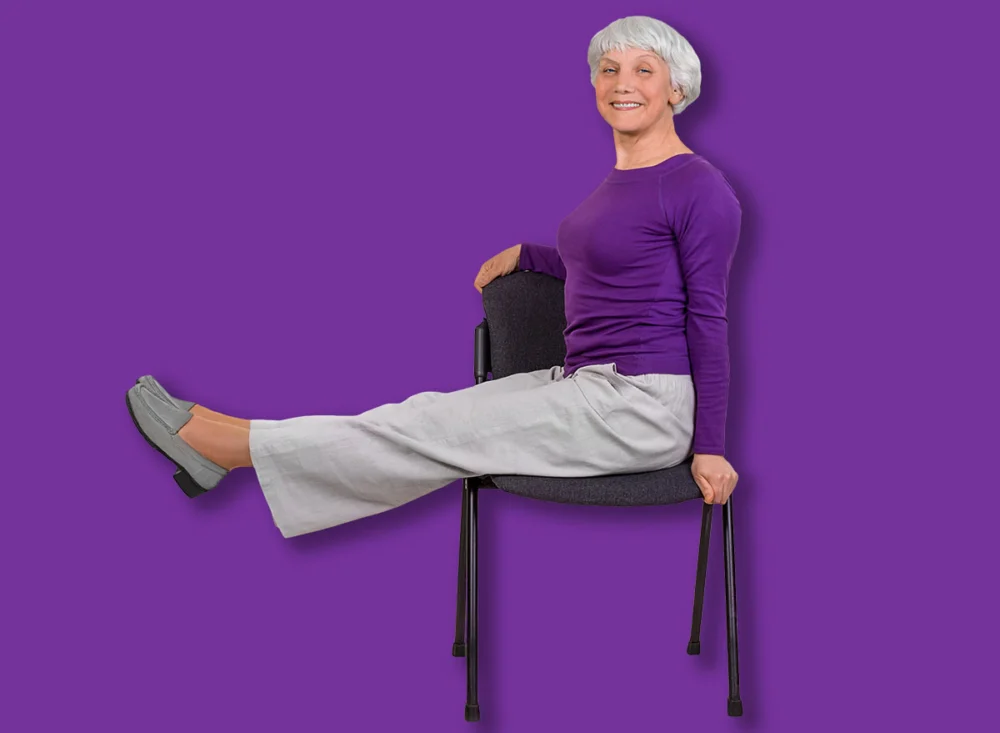
While primarily targeting the quadriceps (thigh muscles), this exercise simultaneously demands significant core stabilization to counteract the movement of the legs. This dual action makes it highly functional, mimicking the core engagement required for activities like walking and standing. The intentional bracing of the core ensures that the lower abdominal muscles are actively involved throughout the extension.
- Execution: Sit comfortably with your back straight and your feet flat on the floor. Engage your abdominal muscles by imagining you are gently pulling your navel towards your spine. Keeping your core tight and your back stable, slowly extend one leg straight out in front of you, without allowing your back to arch or your torso to lean. Point your toes or flex your foot. Hold the extended position for 2-3 seconds, feeling the contraction in your quadriceps and the brace in your core. Inhale as you slowly lower your foot back to the starting position. Alternate legs, completing 10-15 repetitions on each side for 2-3 sets.
5. Chair Sit-Backs
Chair sit-backs offer a modified, safer alternative to traditional sit-ups, providing a comprehensive workout for the entire abdominal wall without placing excessive strain on the neck or lower back. This exercise promotes controlled movement and reinforces proper spinal alignment, building strength and endurance in the rectus abdominis and obliques. It’s an excellent way to simulate the action of rising from a seated position with core control.
- Execution: Begin by sitting towards the front edge of a sturdy chair, feet flat on the floor, hip-width apart. Cross your arms over your chest or place your hands lightly behind your head. Engage your core, then slowly lean back, allowing your back to approach the chair’s backrest, but without fully resting against it. Maintain a straight spine, avoiding any slouching or arching. Only go as far back as you can maintain control and feel your abdominal muscles working. Exhale as you slowly lean back, and inhale as you use your core muscles to pull yourself back to the upright starting position. Perform 10-12 repetitions for 2-3 sets.
While these targeted exercises are highly beneficial, it is crucial to remember that they are components of a broader wellness strategy. A holistic approach to health after 60 also encompasses balanced nutrition, prioritizing lean protein intake to support muscle maintenance, adequate hydration, sufficient restful sleep, and consistent engagement in other forms of daily physical activity, such as walking or gardening. Consulting with a healthcare provider or a certified fitness professional before embarking on any new exercise regimen is always advisable, particularly for individuals with pre-existing health conditions.
In conclusion, the journey to a stronger core and a more defined midsection in older adulthood is not about strenuous, potentially injurious workouts. It is about smart, consistent, and accessible movement. By integrating these expertly designed chair-based exercises into a regular routine, older adults can effectively strengthen their abdominal muscles, enhance overall stability, and cultivate a sense of vitality and independence, proving that age is merely a number when it comes to prioritizing physical well-being.
About the Author