As men navigate the fifth decade of life and beyond, the emphasis on physical fitness naturally shifts from achieving peak athletic performance to fostering sustainable health, robust functional capacity, and enduring independence. The physiological changes inherent to aging, particularly the gradual decline in muscle mass and strength, known as sarcopenia, present a significant challenge to maintaining vitality. However, this natural progression is not an insurmountable barrier; instead, it underscores the critical importance of a proactive and intelligent approach to daily movement. Rather than focusing on lifting maximal weights or achieving new personal records, the goal becomes one of preserving essential mobility, bolstering resilience against injury, and ensuring the continued ability to engage fully in life’s activities without limitation.
Scientific literature consistently highlights the age-related reduction in skeletal muscle mass and overall strength when these systems are not adequately stimulated through resistance training. This decline can impact everything from metabolic health and bone density to balance and overall quality of life. Encouragingly, a wealth of research also demonstrates that consistent, resistance-based physical activity possesses the remarkable capacity to not only decelerate or halt muscular degradation but, in many instances, to partially reverse these trends well into advanced age. This emphasizes that age is not a determinant of physical capability, but rather a call for a strategic adjustment in exercise philosophy.
While engaging in structured strength training sessions several times a week undoubtedly yields significant benefits, the integration of daily physical activity is paramount for a holistic approach to age-defying fitness. Regular, consistent movement serves multiple critical functions: it actively contributes to the preservation of existing muscle tissue, provides crucial support for joint health by promoting synovial fluid circulation and nutrient delivery, and enhances neuromuscular coordination, which is vital for balance and preventing falls. For men over the age of 50, who may experience a slightly altered recovery capacity compared to their younger counterparts, consistent, moderate mechanical stimulation is particularly beneficial. This approach minimizes the risk of overtraining while still providing the essential stimulus required to maintain strength and muscular integrity. The challenge often lies in sifting through the vast and sometimes contradictory information available to identify the most effective and appropriate exercises. To demystify this process, experts frequently recommend a foundational set of movements designed to target key muscle groups and functional patterns.
A certified personal trainer, Abbie Watkins from OriGym, advocates for a set of six fundamental exercises tailored specifically to help men over 50 sustain strength and mobility. These movements are selected for their efficacy in promoting overall body strength and can be adapted to suit a wide spectrum of fitness levels, ensuring accessibility for nearly everyone. These exercises collectively address major muscle groups and movement patterns crucial for daily living, promoting a balanced and resilient physique.
Bodyweight Squats: The Foundation of Lower Body Function
Bodyweight squats stand as an indispensable cornerstone of any daily strength regimen for men beyond the age of 50. This compound exercise effectively engages the powerful muscle groups of the legs, including the quadriceps, hamstrings, and glutes, while simultaneously activating the core for stability. Its profound importance lies in its direct correlation to fundamental everyday movements such as rising from a chair, sitting down, and navigating stairs. As we age, the ability to perform these actions independently is a key indicator of functional autonomy. Regular squatting helps to maintain the strength and mobility necessary for these tasks, thereby significantly reducing the risk of falls and supporting a higher quality of life. The movement involves lowering the hips as if to sit, keeping the chest upright and the back straight, ensuring the knees track in line with the toes. For those requiring less intensity, performing squats to a chair or bench can provide a controlled range of motion and support, while more advanced individuals can focus on increasing depth or slowing the movement for enhanced muscle engagement.
Push-ups: Cultivating Upper Body Strength and Postural Integrity
The classic push-up is an incredibly versatile and effective bodyweight exercise that targets the chest, shoulders, triceps, and core musculature. Integrating push-ups into a daily routine offers a powerful means to maintain upper body strength without imposing excessive impact on joints, which can become a concern with heavier free weights as one ages. Beyond mere strength, regular push-ups contribute significantly to maintaining good posture, counteracting the tendency for rounded shoulders that can develop over time due to sedentary lifestyles or prolonged desk work. The exercise requires a stable plank position, lowering the body towards the ground while maintaining a rigid torso, and then pushing back up. Modifications such as performing push-ups against a wall, on an incline (e.g., using a sturdy table or bench), or from the knees can make this exercise accessible to various fitness levels, allowing for gradual progression as strength improves.
Hip Hinges or Glute Bridges: Safeguarding the Lower Back and Powering Movement
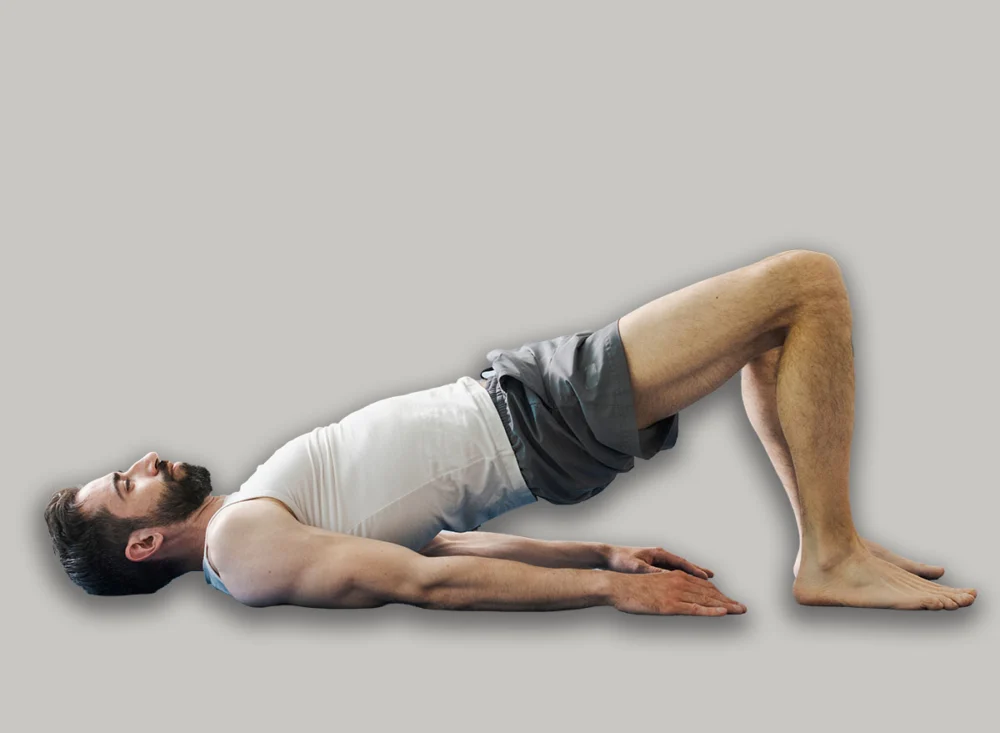
Exercises that specifically focus on the hip musculature, such as the hip hinge or glute bridge, are absolutely vital for men over 50. These movements play a critical role in protecting the delicate structures of the lower back by strengthening the glutes and hamstrings, which are primary movers of the hips and often become underactive in modern lifestyles. A strong posterior chain (the muscles on the back of the body) is essential for maintaining power and stability in the hips, translating directly to improved walking mechanics, balance, and the ability to lift objects safely from the floor. The glute bridge, performed lying on the back with knees bent and feet flat, involves lifting the hips off the ground to create a straight line from shoulders to knees, squeezing the glutes at the top. The hip hinge, often performed standing or with light weights, teaches the fundamental movement pattern of bending at the hips while maintaining a neutral spine, a crucial skill for lifting and daily activities. These movements are foundational for healthy aging, supporting mobility and reducing strain on the lumbar spine.
Standing Rows or Banded Rows: Reversing Postural Decline and Strengthening the Back
Rows are a superior exercise for targeting the muscles of the upper back and biceps, and their daily inclusion in a fitness regimen can be transformative. Many individuals, particularly as they age, develop a hunched or rounded posture, often exacerbated by gravitational forces, prolonged sitting, and reduced muscle activation in the back. Standing or banded rows directly counteract this postural slump by strengthening the rhomboids, trapezius, and latissimus dorsi muscles, pulling the shoulders back and down, and promoting an upright spinal alignment. This not only improves aesthetic appearance but, more importantly, enhances functional capacity, reduces neck and shoulder pain, and supports better breathing mechanics. Using resistance bands anchored to a stable object or performing bodyweight rows with a sturdy bar allows for adjustable intensity and excellent muscle engagement, making it a safe and effective option for daily practice. The key is to initiate the pull from the shoulder blades, squeezing them together, rather than relying solely on the arms.
Plank Hold: The Cornerstone of Core Stability and Injury Prevention
The plank hold is widely recognized as a classic and exceptionally effective core-strengthening exercise. Far from merely targeting the superficial abdominal muscles, the plank engages the deep intrinsic core stabilizers—including the transverse abdominis, multifidus, and obliques—which are crucial for spinal stability. Integrating plank holds into a daily routine significantly contributes to maintaining robust lower back health and substantially reduces the risk of injury during everyday movements, from lifting groceries to simply bending over. A strong and stable core acts as a protective girdle for the spine, distributing forces more efficiently and preventing undue stress on the vertebral discs and ligaments. The exercise involves maintaining a rigid, straight line from head to heels, supported by forearms and toes, actively bracing the abdominal muscles. Modifications such as performing the plank from the knees or against a wall can make it accessible, while increasing hold time or introducing subtle movements can offer progression.
Step-ups: Enhancing Leg Strength, Balance, and Joint Function
Step-ups are a deceptively simple yet profoundly powerful exercise for fostering overall leg strength, improving dynamic balance, and supporting joint health for men over 50. Their efficacy stems from mimicking a highly common and functionally critical daily movement: climbing stairs. As individuals age, balance can diminish, and the strength required for ascending steps can become challenging. Regular step-ups help to fortify the quadriceps, hamstrings, and glutes, while simultaneously improving proprioception—the body’s awareness of its position in space—and coordination. This translates directly to increased confidence and safety when navigating uneven terrain or staircases. The exercise involves stepping onto a sturdy elevated surface (like a stair, box, or bench) with one leg, pushing through the heel to lift the body, and then stepping back down in a controlled manner. Alternating legs and focusing on controlled, deliberate movements helps to build unilateral leg strength and refine balance, making it an invaluable addition to a daily fitness regimen.
Integrating Movement into a Lifestyle: Beyond the Exercises
While these six exercises form an excellent foundation for daily movement, their maximum benefit is realized when integrated into a broader, holistic approach to well-being. Consistency is paramount; even short bursts of these movements performed regularly can yield cumulative positive effects that infrequent, intense sessions might not. Listening attentively to one’s body is crucial, distinguishing between healthy muscle fatigue and pain that might indicate an injury. Recovery is just as vital as exertion, emphasizing the importance of adequate sleep, proper hydration, and a nutrient-rich diet to support muscle repair and overall physiological function.
Furthermore, these foundational movements can be complemented by other forms of physical activity such as walking, swimming, cycling, or yoga, which contribute to cardiovascular health, flexibility, and mental well-being. Consulting with a healthcare provider before embarking on any new exercise program, particularly for men over 50, is always recommended to ensure safety and appropriateness. Seeking guidance from a certified personal trainer can also provide a tailored approach, accounting for individual health histories and fitness goals. By embracing a strategic and consistent commitment to these daily movements, men over 50 can not only mitigate the effects of aging but actively cultivate a stronger, more mobile, and functionally independent life for years to come.
About the Author