
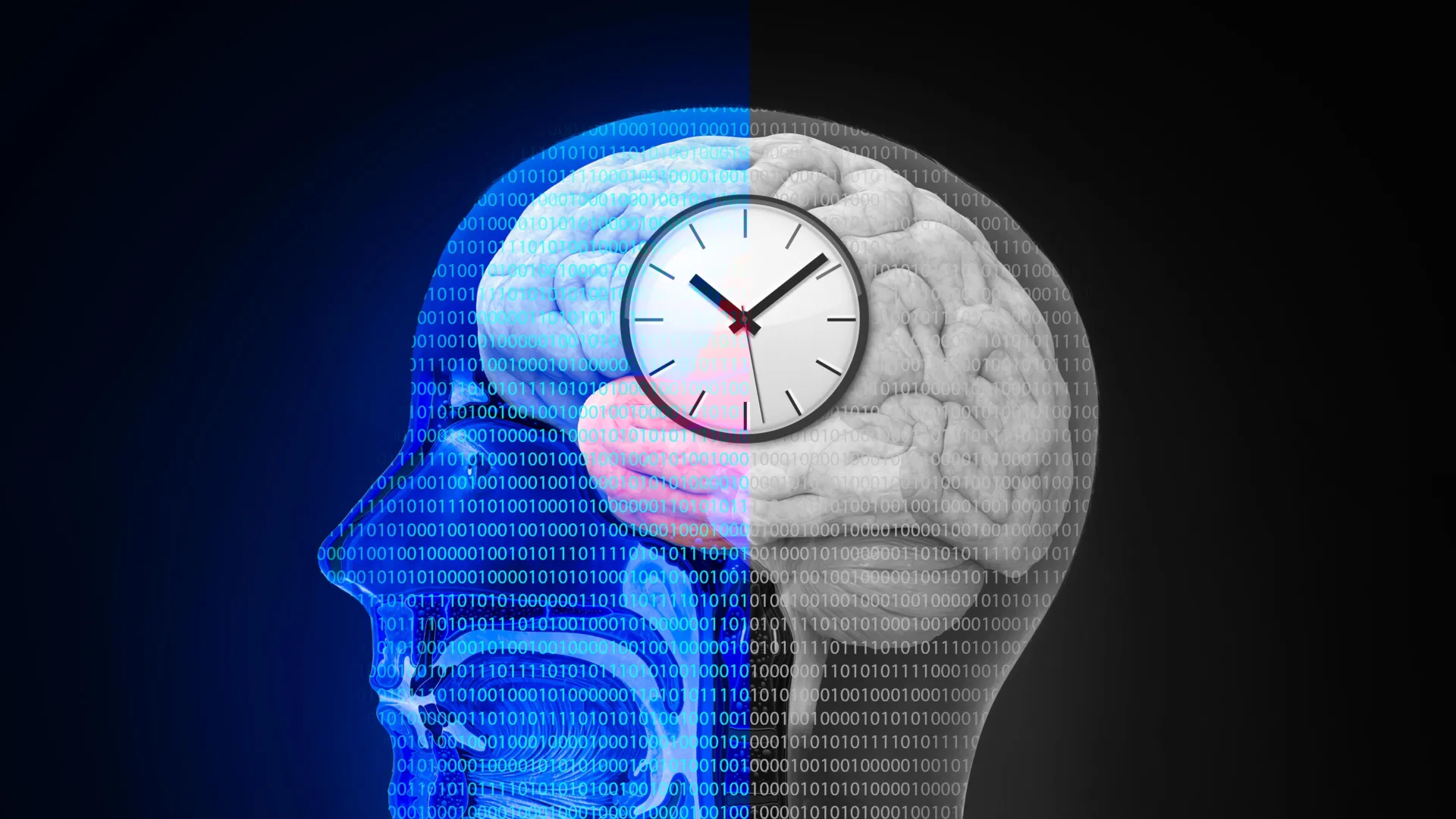
The intricate machinery of the human brain continuously processes a diverse influx of sensory and internal signals, each arriving with its own distinct temporal signature. Some stimuli necessitate immediate responses to environmental shifts, while others require a more deliberate, protracted engagement to discern meaning, context, or underlying intent. A recent groundbreaking investigation, spearheaded by researchers at Rutgers Health and published in the esteemed journal Nature Communications, delves into the sophisticated mechanisms by which the brain orchestrates this temporal symphony, harmonizing rapid and protracted information streams to underpin higher cognitive functions. The core of this research lies in elucidating how the brain’s intricate network of white matter tracts facilitates communication between disparate neural regions, thereby enabling complex thought processes, informed decision-making, and adaptive behaviors.
At the fundamental level, different areas of the brain do not operate under a uniform temporal paradigm; instead, each neural region possesses its own characteristic processing window, a concept known as intrinsic neural timescales (INTs). These timescales essentially dictate the duration for which a particular brain region retains and integrates incoming information before transitioning to the next available signal. Dr. Linden Parkes, an assistant professor of Psychiatry at Rutgers Health and the senior author of the study, emphasizes the critical role of this temporal integration: "To effectively interact with our environment through purposeful action, our brains must adeptly synthesize information that is processed across vastly different temporal scales." He further elaborates that the brain accomplishes this feat by strategically utilizing its white matter architecture to foster information exchange between regions, a process that is unequivocally vital for the emergence of sophisticated human behavior.
To meticulously map and comprehend the intricacies of this neural integration, Dr. Parkes and his collaborators embarked on an ambitious analysis of brain imaging data acquired from a substantial cohort of 960 individuals. This extensive dataset enabled the construction of highly detailed individual brain maps, often referred to as connectomes, which delineate the structural and functional connections within each participant’s brain. Subsequently, the research team employed advanced mathematical models, specifically those designed to describe the temporal evolution of complex systems, to trace the dynamic flow of information as it traversed these intricate neural networks.
Dr. Parkes, a distinguished member of both the Rutgers Brain Health Institute and the Center for Advanced Human Brain Imaging Research, articulated the study’s objective: "Our investigation probes the underlying biological mechanisms of this temporal integration in humans by directly modeling the intrinsic neural timescales of different brain regions based on their connectivity patterns." He underscored the direct correlation established by their work: "This establishes a direct link between how brain regions process information in isolation and how that localized processing is disseminated across the entire brain to ultimately manifest as observable behavior."
The research revealed a compelling insight: the spatial organization of these neural timescales across the cerebral cortex plays a pivotal role in determining the brain’s efficiency in transitioning between large-scale neural activity patterns that are intrinsically linked to behavioral output. Notably, this temporal architecture was not uniform across all individuals, suggesting a source of inter-individual variability. Dr. Parkes highlighted this crucial finding: "We discovered that variations in how the brain processes information at differing speeds contribute significantly to explaining why individuals exhibit distinct cognitive proficiencies."
Further expanding on these findings, the study demonstrated a profound connection between these temporal processing patterns and fundamental biological elements, including genetic predispositions, molecular profiles, and cellular characteristics of brain tissue. This discovery effectively bridges the gap between higher-level cognitive phenomena and their underlying biological substrates. Intriguingly, similar correlational patterns were observed in the brains of mice, suggesting that these temporal integration mechanisms are evolutionarily conserved and likely share common ancestral roots across species. "Our work underscores a fundamental nexus between the brain’s white matter connectivity and its intrinsic computational capabilities at the regional level," Dr. Parkes stated. "Individuals whose brain wiring exhibits a more harmonious alignment with the way different regions handle both rapid and slow information streams tend to demonstrate enhanced cognitive capacities."
Building upon this foundational understanding, the research team is actively extending their methodology to investigate a range of neuropsychiatric conditions, including schizophrenia, bipolar disorder, and depression. The overarching objective is to meticulously identify how disruptions in neural connectivity might impair the brain’s capacity to effectively process information across varying temporal dimensions, thereby offering new avenues for understanding and potentially treating these complex disorders. This collaborative endeavor involved significant contributions from Avram Holmes, an associate professor of psychiatry and a core member of the Rutgers Brain Health Institute and the Center for Advanced Human Brain Imaging Research, alongside postdoctoral researchers Ahmad Beyh and Amber Howell, and Jason Z. Kim from Cornell University.
About the Author












