
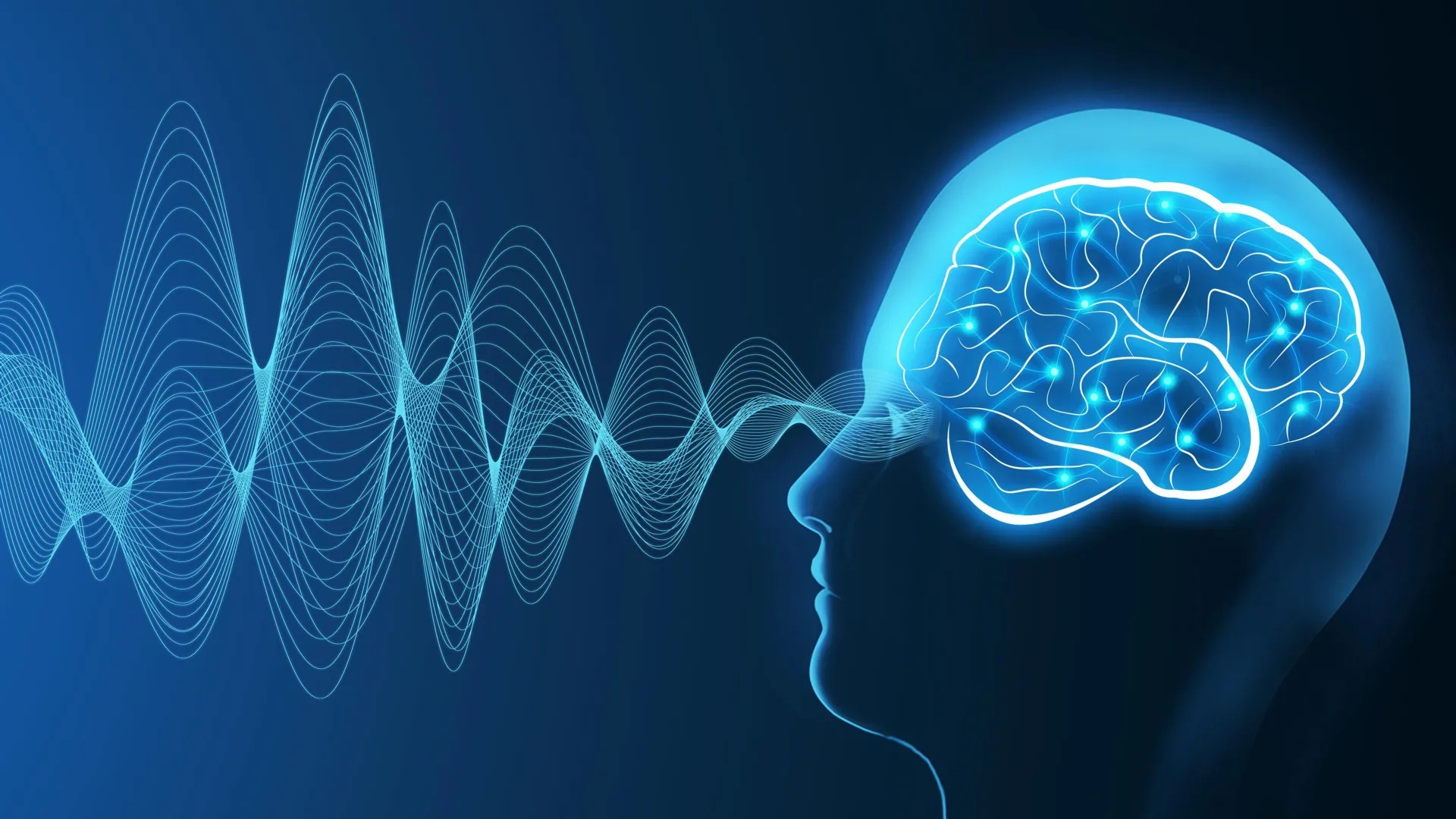
Individuals afflicted by damage to the spinal cord frequently experience a profound cessation of voluntary movement in their extremities, rendering arms and legs unresponsive. In numerous instances, the underlying neural infrastructure within these limbs remains intact, and the brain’s cognitive processes continue to function as usual, a testament to the resilience of the nervous system. The debilitating loss of mobility stems not from peripheral failure, but from an interruption in the critical communication lines that transmit commands from the brain to the body, effectively severing the intricate feedback loop essential for coordinated action.
This fundamental disconnect has spurred a dedicated community of scientists to explore innovative strategies for re-establishing this vital neural dialogue, without the necessity of surgically repairing the damaged spinal cord itself. The focus of this research has shifted towards harnessing the brain’s own electrical signals, seeking to interpret and re-route them to bypass the compromised spinal pathways.
A groundbreaking study, recently detailed in the esteemed journal APL Bioengineering under the auspices of AIP Publishing, has illuminated a promising avenue by investigating the potential of electroencephalography (EEG) as a non-invasive tool to bridge this communication chasm. Researchers affiliated with leading academic institutions in Italy and Switzerland have meticulously examined whether EEG, a well-established neuroimaging technique, can effectively capture the complex brainwave patterns associated with intended movements and subsequently facilitate their transmission to activate dormant motor pathways.
The underlying principle of this innovative approach rests on the observation that even when a limb is paralyzed, the brain continues to generate distinct electrical signatures when an individual consciously attempts to initiate movement. The central hypothesis is that if these subtle yet specific neural signals can be accurately detected and deciphered, they could then be channeled to an external device, such as a spinal cord stimulator. This stimulator, in turn, would be programmed to translate the decoded brain commands into electrical impulses that stimulate the nerves responsible for eliciting movement in the targeted limb.
This exploration into non-invasive brain signal acquisition represents a significant departure from previous research paradigms that often relied on more invasive methods. Historically, many promising studies in this domain utilized surgically implanted electrodes to directly record neural activity from within the brain itself. While these intracranial recording systems have yielded encouraging preliminary results, demonstrating the feasibility of brain-controlled prosthetics and assistive devices, the research team behind the current study harbored a strong desire to investigate whether EEG could offer a substantially safer and more accessible alternative.
EEG systems are typically configured as specialized caps adorned with a multitude of electrodes, meticulously positioned to capture the electrical activity emanating from the scalp. While the application of such a cap might initially appear intricate, the researchers emphasize its profound advantage: it completely bypasses the inherent risks and complications associated with invasive surgical procedures. These risks can include, but are not limited to, the potential for infections, the need for extensive recovery periods, and the general anxieties surrounding any form of internal implantation. As articulated by Dr. Laura Toni, a key author on the study, the objective was to ascertain "whether that could be avoided," thereby democratizing access to such potentially life-altering technologies.
However, the endeavor to accurately decode intended movement signals using surface-based EEG presents considerable technical hurdles, pushing the boundaries of current neuroscientific and engineering capabilities. The fundamental challenge lies in the physical placement of EEG electrodes on the exterior of the head. This superficial positioning inherently limits their capacity to detect subtle electrical signals that originate from deeper structures within the brain.
This inherent limitation proves less problematic for decoding signals related to the control of the upper limbs, such as the arms and hands. The neural pathways and cortical areas responsible for orchestrating these movements are generally located in more peripheral regions of the brain, making their electrical signatures more readily detectable by scalp electrodes. Conversely, the signals that govern the movement of the legs and feet emanate from areas situated closer to the central core of the brain. As Dr. Toni further elaborated, "The brain controls lower limb movements mainly in the central area, while upper limb movements are more on the outside. It’s easier to have a spatial mapping of what you’re trying to decode compared to the lower limbs." This spatial disparity creates a more pronounced signal-to-noise ratio challenge for lower limb movement decoding.
To surmount the complexities of interpreting these nuanced and often faint brainwave patterns, the research team strategically employed a sophisticated machine learning algorithm. This algorithm was specifically engineered to adeptly process small, intricate, and often noisy datasets, a common characteristic of EEG recordings. During the experimental phase, participants, who were individuals experiencing paralysis, were fitted with EEG caps and instructed to perform a series of simple motor intentions. The system meticulously recorded the resultant brain activity, and this data was subsequently utilized to train the machine learning algorithm, enabling it to differentiate and categorize these distinct neural signals.
The initial results demonstrated a significant level of success: the system was capable of reliably distinguishing between periods when participants actively attempted to move and moments when they remained at rest. This capability is a crucial first step, confirming that the EEG can indeed capture discernible neural correlates of volitional intent. However, the algorithm encountered greater difficulty in accurately differentiating between various specific types of movement attempts. For instance, it struggled to reliably distinguish between an intention to, say, flex a foot versus extend it, or between an attempt to stand versus to walk.
Despite these current limitations, the researchers remain optimistic about the future trajectory of their work. They firmly believe that their developed methodology can be substantially refined and enhanced through continued investigation and technological advancement. The immediate future plans for the team involve further optimizing the machine learning algorithm to achieve a higher degree of specificity, enabling it to recognize and categorize a broader spectrum of distinct actions, such as standing, walking, or even climbing stairs. Furthermore, the researchers aspire to explore the practical application of these decoded neural signals, investigating how they could be seamlessly integrated to activate implanted stimulators within patients recovering from spinal cord injuries.
Should these ambitious research endeavors prove successful, this innovative, non-invasive approach could represent a significant leap forward in the quest to restore meaningful motor function for individuals living with paralysis. By moving beyond the need for invasive brain implants and leveraging the power of advanced signal processing, this research holds the potential to bring the promise of brain-computer interfaces closer to widespread clinical reality, offering a renewed sense of hope and independence to a population facing profound mobility challenges.
About the Author












