
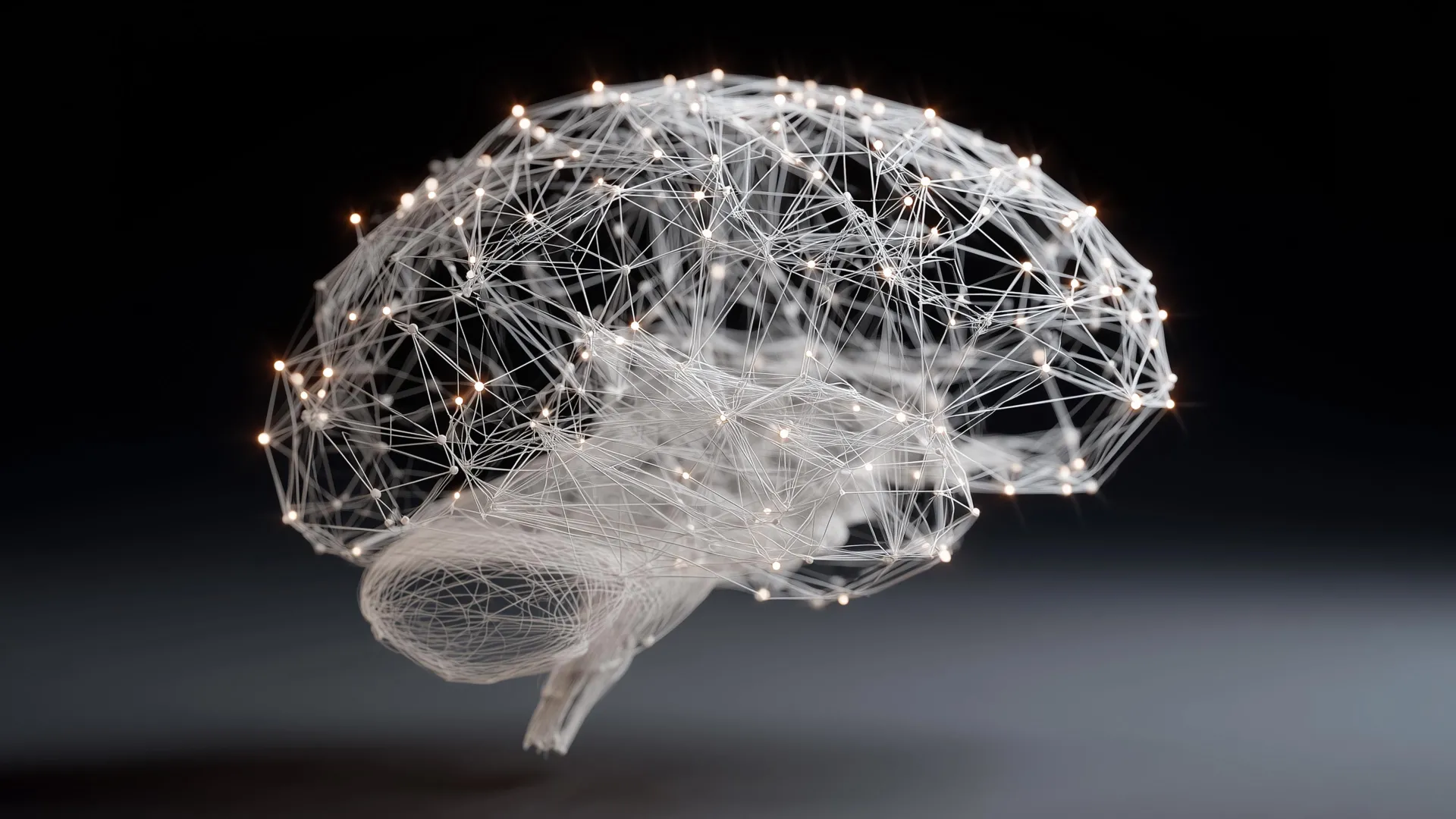
For generations, the scientific endeavor to comprehend the human mind has largely proceeded by dissecting its constituent parts, much like an engineer might examine individual components of a complex machine. Neuroscience, in particular, has achieved remarkable success in mapping specific cognitive faculties—such as the ability to focus attention, process sensory input, store and retrieve memories, articulate language, and engage in logical reasoning—to distinct, localized neural networks. This specialized approach, focusing on the discrete roles of segregated brain systems, has yielded significant insights into the mechanics of our mental landscape. However, this siloed methodology has encountered a fundamental limitation: it has struggled to articulate how these disparate, specialized operations coalesce to form the seamless, integrated experience of consciousness and a singular, unified intelligence.
Addressing this persistent enigma, a team of researchers at the University of Notre Dame embarked on an ambitious investigation, employing sophisticated neuroimaging techniques to scrutinize the brain’s macro-level organizational principles and to elucidate how this overarching architecture gives rise to generalized intelligence. Professor Aron Barbey, a leading figure in the field and director of the Notre Dame Human Neuroimaging Center, articulated the core challenge: "While neuroscience has excelled at defining the contributions of particular neural pathways, it has been considerably less adept at explaining the emergence of a coherent, singular mind from the intricate interplay of these pathways." This quandary has long been a focal point for cognitive scientists and psychologists.
A fundamental observation within psychology, predating modern neuroimaging, is the consistent association between various cognitive skills. Individuals who demonstrate exceptional aptitude in areas like attentional control, memory capacity, perceptual acuity, or linguistic fluency often exhibit a corresponding strength in other cognitive domains. This pervasive pattern, colloquially termed "general intelligence," has been recognized as a significant determinant of an individual’s effectiveness in learning new information, resolving complex problems, and adapting to diverse circumstances across a wide spectrum of life’s arenas, including academic pursuits, professional endeavors, social interactions, and personal well-being. The enduring presence of this interlinked cognitive performance has long hinted at a profound underlying unity in human cognition, a unity whose precise neurobiological underpinnings have remained elusive.
Professor Barbey emphasized that the quest to understand intelligence should not be narrowly confined to identifying specific brain regions responsible for its manifestation. "The problem of intelligence is not one of functional localization," he stated, challenging the prevailing tendency to pinpoint a singular network, often situated within the frontal and parietal cortex, as the seat of general intelligence. Instead, he proposed a more expansive conceptualization: "The more fundamental question is how intelligence emerges from the principles that govern global brain function—how distributed networks communicate and collectively process information." This perspective shifts the focus from "where" intelligence resides to "how" it is generated through the dynamic interactions of the brain as a whole.
To rigorously test this broader hypothesis, Professor Barbey and his research collaborators, including lead author and doctoral candidate Ramsey Wilcox, adopted the theoretical framework known as the Network Neuroscience Theory. Their groundbreaking findings, which challenge conventional understandings of intelligence, were published in the esteemed scientific journal Nature Communications.
The Network Neuroscience Theory posits that general intelligence is not an isolated capacity or a specific mental strategy. Rather, it is conceptualized as an emergent property arising from the interconnectedness and functional efficiency of the brain’s distributed networks. The theory suggests that the observed positive correlation among diverse cognitive skills is a direct consequence of the brain’s structural organization and the effectiveness with which its various systems collaborate.
To empirically validate this theory, the research team meticulously analyzed extensive datasets comprising neuroimaging scans and cognitive performance metrics from a substantial cohort of 831 adults participating in the Human Connectome Project. Complementing this, they also examined data from an independent group of 145 adults enrolled in the INSIGHT Study, an initiative supported by the Intelligence Advanced Research Projects Activity’s SHARP program. By integrating measures of both brain structure and ongoing brain function, the researchers were able to construct a comprehensive and nuanced portrayal of the brain’s large-scale organizational landscape. This integrated approach allowed them to move beyond the limitations of studying isolated regions and instead examine the brain as a dynamic, interconnected system.
Crucially, this research reframes intelligence not as a localized function but as a characteristic of the entire brain system. Within the Network Neuroscience Theory’s paradigm, intelligence is understood to be contingent upon the brain’s capacity for efficient network coordination and its ability to fluidly reconfigure these networks in response to varying cognitive demands.
Wilcox described this conceptual shift as a paradigm transformation: "We discovered evidence for system-wide coordination within the brain that is both robust and adaptable," he noted. "This coordination does not directly perform cognitive tasks, but rather dictates the range of cognitive operations that the system can effectively support." This implies that the brain’s fundamental organizational properties act as a scaffold upon which all cognitive functions are built.
Expanding on this, Wilcox elaborated, "Within this framework, the brain is modeled as a network whose behavior is constrained by global properties such as efficiency, flexibility, and integration." He further clarified that these overarching properties are not confined to specific tasks or individual neural pathways but are inherent characteristics of the system as a complete entity, influencing every cognitive process without being reducible to any single component. This fundamental reorientation of the research question, from pinpointing the location of intelligence to understanding the principles of system organization, naturally led to a redirection of empirical investigation.
The experimental findings provided robust support for four central tenets of the Network Neuroscience Theory. Firstly, the research definitively indicated that intelligence is not housed within any single neural network but rather emerges from distributed processing that spans numerous interconnected networks. This underscores the brain’s necessity to delegate tasks to specialized systems while simultaneously integrating their collective outputs for higher-order cognition.
Secondly, the study highlighted the critical role of robust integration and efficient long-distance communication in facilitating successful cognitive coordination. Professor Barbey explained this by referring to "a large and complex system of connections that serve as ‘shortcuts’ linking distant brain regions and integrating information across the networks." These specialized pathways act as conduits, enabling swift and efficient information exchange between anatomically separated brain areas, thereby fostering a unified processing environment essential for complex thought.
Thirdly, the research identified the indispensable function of regulatory regions in orchestrating information flow across the brain’s intricate network. These key control hubs play a vital role in guiding and synchronizing neural activity, ensuring that the appropriate specialized systems are recruited and engaged for specific cognitive tasks. Whether an individual is engaged in discerning subtle social cues, acquiring a new skill, or navigating a decision between thorough analytical deliberation and rapid intuitive judgment, these regulatory areas are instrumental in managing and directing the cognitive process.
Finally, the findings established that general intelligence is fundamentally dependent on achieving a delicate equilibrium between local specialization and global integration. The brain operates at its peak efficiency when localized clusters of specialized neural circuitry function optimally while simultaneously maintaining short, effective communication pathways to more distant regions. This intricate balance is paramount for enabling flexible, adaptive, and effective problem-solving capabilities across a broad range of challenges.
Across both independent participant groups studied, observed variations in general intelligence scores consistently correlated with these identified large-scale organizational features of brain networks. Notably, no single brain area or a predefined "intelligence network" could adequately account for the observed patterns in cognitive performance. Professor Barbey summarized this crucial insight: "General intelligence becomes visible when cognition is coordinated, when many processes must work together under system-level constraints."
The implications of this research extend far beyond the confines of understanding human intelligence. By shifting the scientific lens to focus on the macro-level organization of neural systems, these findings offer profound insights into the very basis of why the human mind functions as a cohesive and integrated entity. This new perspective also provides a potential explanation for observed developmental trajectories of intelligence, such as its typical increase during childhood, its gradual decline with aging, and its particular vulnerability to widespread brain injury. In each of these scenarios, it is the large-scale coordination and interconnectedness of brain networks that appear to be most significantly affected, rather than the isolated functioning of specific cognitive faculties.
Furthermore, these results contribute meaningfully to the ongoing discourse surrounding artificial intelligence. If human intelligence is indeed an emergent property of system-level organization rather than the result of a singular, all-purpose cognitive mechanism, then the pursuit of artificial general intelligence may necessitate approaches that move beyond simply scaling up specialized, task-specific tools. Professor Barbey suggested that "This research can push us into thinking about how to use design characteristics of the human brain to motivate advances in human-centered, biologically inspired artificial intelligence." He pointed out a key limitation of current AI systems: "Many AI systems can perform specific tasks very well, but they still struggle to apply what they know across different situations." The hallmark of human intelligence, he concluded, is this remarkable flexibility, a characteristic deeply rooted in the unique organizational architecture of the human brain. The research was conducted with co-authors Babak Hemmatian and Lav Varshney from Stony Brook University.
About the Author












