
As individuals progress through their fifth decade and beyond, concerns regarding body composition and the natural changes that occur with aging often come to the forefront. Among these, the appearance of excess adipose tissue and diminished muscle tone in the upper back region, commonly referred to as "back rolls," can be a source of considerable self-consciousness. While a pervasive misconception suggests these developments are an inevitable and irreversible consequence of advancing years, expert insights from seasoned fitness professionals reveal a different reality. With a thoughtfully designed regimen of bodyweight exercises and mindful nutritional practices, it is entirely feasible to significantly reduce and ultimately resolve these concerns, fostering a smoother, more sculpted dorsal profile and robust posture without the need for specialized gym apparatus.
The propensity for the upper back to accumulate subcutaneous fat and exhibit reduced firmness after the age of 55 stems from a confluence of physiological shifts. One primary factor is sarcopenia, the progressive, age-related loss of muscle mass and strength. After the age of 30, individuals typically experience a decline of approximately 3-8% of their muscle mass per decade, a rate that frequently accelerates past 50. This reduction in the underlying musculature, encompassing critical components like the rhomboids, middle trapezius, and posterior deltoids, means that even a stable amount of body fat can appear more pronounced, as there is less firm tissue beneath the skin to provide structure. The weakening of these crucial postural muscles also leads to a forward rounding of the shoulders and an increased curvature in the upper spine, a phenomenon known as kyphosis. This altered posture physically compresses and folds the skin and any localized fat, contributing to the visible rolls.
Furthermore, hormonal fluctuations play a significant role in altering fat distribution patterns. In women, the decrease in estrogen levels during and after menopause often results in a shift of fat storage from the hips and thighs towards the abdomen and upper body, including the posterior torso. Men experience analogous effects with declining testosterone, increasing the likelihood of central and upper-body fat accumulation. This hormonal repartitioning makes the upper back a more challenging area to manage through diet alone. Compounding these physiological changes is the pervasive influence of modern sedentary lifestyles. Many daily activities—such as prolonged desk work, extended periods driving, or using handheld electronic devices—inadvertently reinforce a hunched-forward posture for many hours each day. This chronic positioning underutilizes and further weakens the posterior chain muscles, creating a self-perpetuating cycle where poor posture exacerbates muscle weakness, which in turn amplifies the appearance of upper back adiposity. Breaking this cycle requires a deliberate and consistent intervention focused on strengthening and mobilizing these neglected muscle groups. It is crucial to understand that while targeted fat reduction (spot reduction) from a specific area is not physiologically possible, the simultaneous rebuilding of muscle, correction of posture, and systemic fat loss through appropriate exercise and nutrition can dramatically transform the appearance of the upper back.

For many, the idea of an effective fitness routine conjures images of crowded gyms and complex machinery. However, for addressing upper back health and aesthetics, bodyweight exercises often prove to be a superior and more accessible solution. Unlike gym machines, which typically isolate individual muscle groups and guide movements along fixed planes, bodyweight training compels multiple muscles to collaborate, mimicking real-life functional movements. For instance, a lat pulldown machine may strengthen the latissimus dorsi, but it does not necessarily train the intricate coordination required for proper scapular movement or integrated upper back posture. Bodyweight movements, conversely, demand the engagement of numerous stabilizing muscles simultaneously, teaching the nervous system to coordinate these muscles effectively. When performing an exercise like a Wall Angel or a Prone Y Raise, the entire network of postural muscles in the upper back must activate in concert, building not just isolated strength but also functional endurance and proprioceptive awareness. This holistic approach ensures that the body learns to maintain optimal alignment and movement patterns in everyday activities. Moreover, the inherent accessibility of bodyweight exercises eliminates common barriers to consistency, such as gym memberships, travel time, and the intimidation factor of unfamiliar equipment, allowing individuals to integrate their routine seamlessly into their home environment.
The timing of exercise can also significantly influence adherence and physiological responses, particularly for individuals over 55. Incorporating physical activity into the early morning hours offers several distinct advantages. The body’s natural circadian rhythm dictates that cortisol levels are typically highest upon waking. While often associated with stress, optimal cortisol levels in the morning play a beneficial role in mobilizing fat stores, enhancing energy, and supporting overall metabolism. Engaging in exercise during this peak period can therefore work synergistically with the body’s innate hormonal profile to aid fat loss. Furthermore, morning workouts often occur in a "fasted" or "semi-fasted" state, meaning the body has had an extended period (typically 8-10 hours) without food. Research suggests that fasted training can enhance fat oxidation during exercise, teaching the body to utilize its fat reserves more efficiently as fuel. However, arguably the most compelling advantage of a morning routine is the profound impact on consistency. Postponing exercise until later in the day frequently leads to it being de-prioritized or abandoned due to competing demands, fatigue, or unforeseen events. Completing the workout first thing in the morning ensures it is accomplished before the day’s obligations can derail it, establishing a powerful habit that, over time, yields far greater results than sporadic, intense efforts. While any consistent exercise is beneficial, the early morning commitment often proves to be the most sustainable pathway to long-term success.

A highly effective, equipment-free regimen for enhancing upper back definition and posture for mature adults involves six specific bodyweight exercises:
- Wall Angels: This exercise is paramount for counteracting the forward-rounded shoulders prevalent from prolonged sitting. By guiding the arms along a wall, it promotes thoracic extension, strengthens the rhomboids, middle trapezius, and posterior deltoids, and improves the coordinated movement of the shoulder blades. It effectively "opens up" the chest and teaches the scapulae to retract and depress properly, reversing years of detrimental postural habits.
- Prone Y Raises: Targeting the critical middle and lower trapezius muscles, this movement directly contributes to smoothing the upper back. These muscles are responsible for pulling the shoulder blades down and together, creating a more toned and defined appearance. Engaging the rear deltoids simultaneously, Prone Y Raises build strength in the muscles essential for maintaining an upright, stable posture.
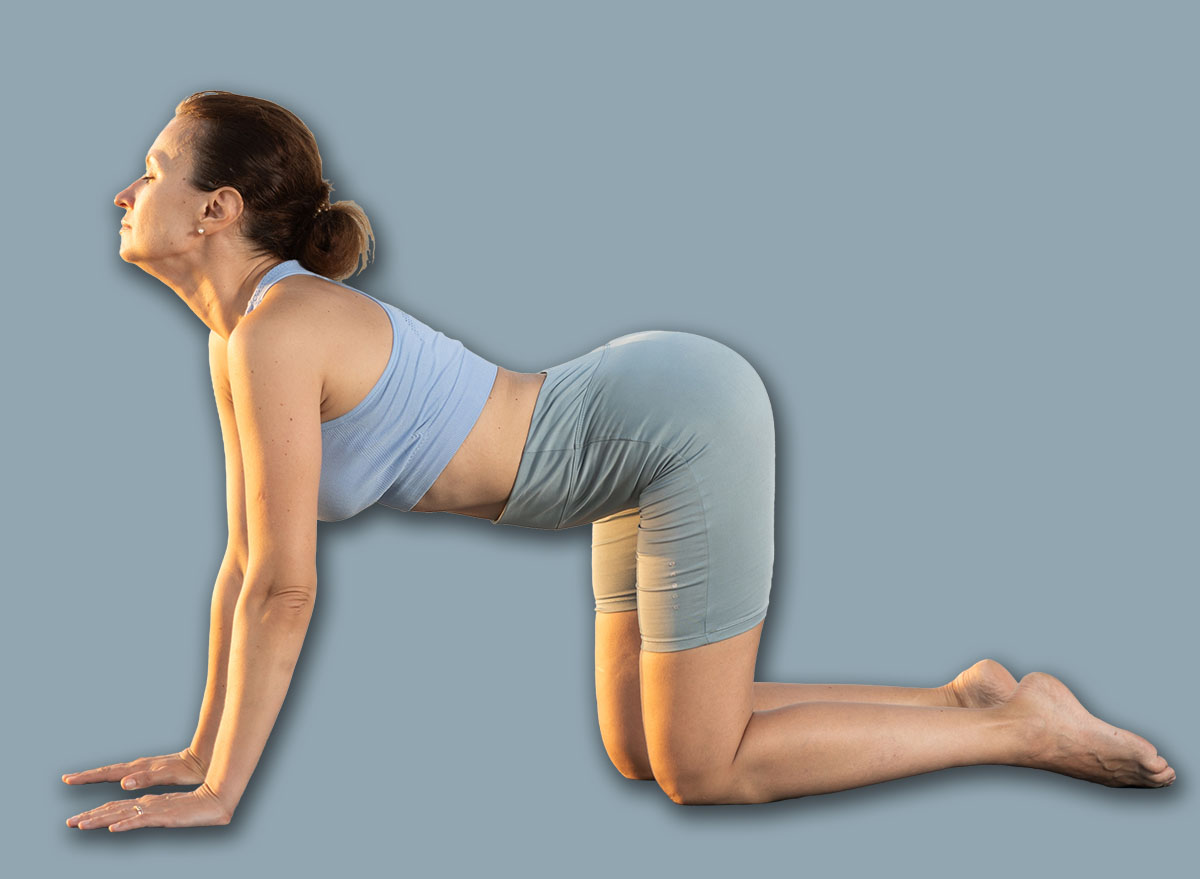
- Cat-Cow Stretch: More a mobility exercise than a strength builder, the Cat-Cow dynamically mobilizes the entire spine, from the cervical to the lumbar regions. By flowing between spinal flexion (cat) and extension (cow), it enhances flexibility in the thoracic spine, which often becomes stiff with age and sedentary behavior. Improved spinal mobility reduces stiffness and can lessen the visible impact of upper back adiposity by promoting a more fluid and elongated spinal alignment.
- Reverse Snow Angels: This movement specifically strengthens the muscles that retract the shoulder blades (rhomboids and middle trapezius) while also engaging the rear deltoids. Performed lying face down, it encourages precise control and endurance in these crucial postural muscles, actively pulling the shoulders back and helping to flatten the upper back contours.
- Thread the Needle: Incorporating a rotational element, this exercise targets the thoracic rotators and provides a deep stretch for the muscles along the upper back and shoulders. Improving spinal rotation is vital for overall spinal health and functional movement, contributing to a more supple and less "bunched" appearance in the upper back. Enhanced rotational capacity also supports better daily movement patterns, reducing stiffness.
- Superman Holds: As a foundational posterior chain exercise, Superman Holds strengthen the lower back (erector spinae), glutes, lower trapezius, and rear deltoids simultaneously. By lifting the arms and legs off the ground, this isometric hold builds endurance across the entire back, fostering robust core stability and maintaining the strong, upright posture developed through the preceding exercises. It serves as an excellent finishing move to integrate and solidify the gains in postural strength.
For sustained progress, implementing strategic overload is essential, even with bodyweight exercises. The initial phase of progression involves increasing time under tension. Instead of quick repetitions, focus on slower, more controlled movements, holding peak contractions for several seconds. For instance, a Wall Angel might take 8-10 seconds per repetition, or a Superman Hold could extend from 10 to 20 seconds. The next step is to incrementally add repetitions. If a set of 10 repetitions feels comfortable, gradually increase to 12, then 15, and eventually 20, challenging muscle endurance. Once volume is maximized, altering the angle of execution can provide further challenge; for example, performing Prone Y Raises on an incline or moving feet closer to the wall during Wall Angels to demand greater stability. Introducing light external resistance can follow, using household items like small cans of food or light resistance bands to increase the load. Finally, transitioning to more challenging variations of the exercises, such as standing Y raises with bands or bent-over Y raises, offers advanced stimulus. It is crucial to only advance when the current routine feels genuinely easy and proper form can be maintained throughout. For most individuals over 55, prioritizing increased time under tension and higher repetitions will yield significant benefits in postural muscle endurance before the need for added resistance arises.
Beyond structured exercise, several daily habits significantly accelerate and maintain positive outcomes. Foremost is nutrition. No amount of exercise can entirely compensate for a consistently poor diet. A focus on adequate protein intake (approximately 1.2-1.6 grams per kilogram of body weight daily) supports muscle repair and growth. Emphasizing whole, unprocessed foods and a diverse array of vegetables, while minimizing excessive consumption of refined sugars and unhealthy fats, provides the necessary building blocks for body recomposition. Secondly, consistent daily movement outside of the dedicated routine is vital. Prolonged periods of inactivity, particularly in rounded postures, counteract the benefits of exercise. Incorporating regular walks, standing breaks, and stretching throughout the day helps maintain spinal mobility and muscle activation. Thirdly, sleep is a foundational pillar of recovery and adaptation. Aiming for 7-8 hours of quality sleep nightly allows muscles to repair, hormones to regulate, and the body to consolidate the benefits of training. Inadequate sleep can impede progress. Fourthly, hydration impacts skin elasticity and overall metabolic function. Consuming roughly 2 liters of water daily, adjusted for activity levels and climate, contributes to healthier skin appearance and can reduce the emphasis on perceived lumps and rolls. Lastly, stress management plays a critical role. Chronic stress elevates cortisol levels, which can influence fat distribution and hinder progress. Integrating relaxation techniques such as mindfulness, reading, or gentle outdoor activity can help mitigate these effects. Small, consistent improvements across these lifestyle domains collectively create a powerful synergy that amplifies the results of the exercise regimen.
While this bodyweight routine is designed to be safe and accessible for most healthy individuals over 55, certain medical conditions necessitate prior consultation with a healthcare professional. It is imperative to seek guidance from a doctor or physiotherapist before commencing if you have any pre-existing shoulder injuries or conditions, such as rotator cuff tears, adhesive capsulitis (frozen shoulder), or impingement syndrome, to ensure the exercises do not exacerbate these issues. Individuals diagnosed with osteoporosis or severe osteopenia, particularly affecting the spine, should also consult their physician. While the spinal movements in this routine are generally low-impact, a doctor may recommend specific modifications to ensure safety. Those experiencing spinal stenosis, herniated discs, or chronic back pain that radiates into the extremities must also obtain medical clearance, as certain spinal extension movements could potentially aggravate these conditions. Furthermore, if you have undergone recent surgery (within the last six months) on your shoulders, spine, or any part of the upper body, defer starting until explicitly cleared by your surgeon or physical therapist. Individuals with uncontrolled high blood pressure or significant cardiovascular issues should also discuss any new exercise program with their doctor, even if it is low-intensity. Crucially, if you experience any sharp or radiating pain, dizziness, chest discomfort, or severe breathlessness during any exercise, cease activity immediately and seek medical attention. Mild muscle fatigue is a normal response to exercise; acute pain is a warning sign.

Adhering to this consistent routine will yield tangible results over time. Within the initial two weeks, while visible changes may be subtle, individuals typically report a noticeable reduction in upper back stiffness and an improved sense of postural awareness, with less involuntary slouching. Simple daily movements like rising from a chair may feel easier. By the four-week mark, the first visual improvements often become apparent. The area around the shoulder blades may begin to appear more defined, and the upper back may present a flatter profile when viewed from the side. The "rolls" will likely be smoother, though not entirely eliminated. Concurrently, shoulders may appear broader due to better retraction and alignment. By eight weeks, the cumulative effects become more pronounced and are often noticed by others. Posture will be overtly improved, clothing may fit differently across the upper back and shoulders, and the combined impact of increased muscle tone, enhanced posture, and any associated modest fat loss will result in a significantly transformed and strengthened upper back. The journey to a more confident and robust physique is a testament to consistent effort, demonstrating that age is merely a number when it comes to prioritizing physical well-being.
About the Author